

Shukun Technology Completes RMB 200 Million Series B1 Financing to Accelerate Industrialization of AI in Healthcare

SHUKUN
Provider of Intelligent Products and Innovative Solutions
Recently, medical AI company SHUKUN announced the completion of a RMB 200 million Series B1 financing round. The round was led by Bank of China International, with joint investment from Jianxing Medical Fund managed by CCB International. Existing investors CCV Capital and Huagai Capital also participated in the follow-on investment. According to SHUKUN, the funds will be used to further strengthen its industry-leading advantages in cardiology, neurology, oncology, and other fields, while focusing on new healthcare infrastructure development to accelerate the deployment of advanced AI technologies across hospitals at all levels and enhance intelligent health management for residents.
In June 2017, SHUKUN, founded in Beijing, embarked on its exploration of the AI healthcare industry, initiating its research with a focus on cardiovascular diseases.
Over the past few years, SHUKUN has achieved numerous milestones. In March 2019, its coronary CT angiography image analysis software for vascular stenosis was approved through the Special Examination and Approval Procedure for Innovative Medical Devices, gaining access to the green channel for innovative device review. In May 2019, SHUKUN globally launched multiple AI-powered products for cardiac and head-and-neck applications, along with the first multi-center study results comparing AI performance against gold standards, sparking extensive discussion within the industry.
In terms of financing, SHUKUN has maintained a steady pace, expanding rapidly with annual funding rounds and attracting numerous high-quality institutional investors. The latest round of financing has been bolstered by two major industrial funds—BOC International and CCB International—undoubtedly further accelerating the deployment of SHUKUN’s products.
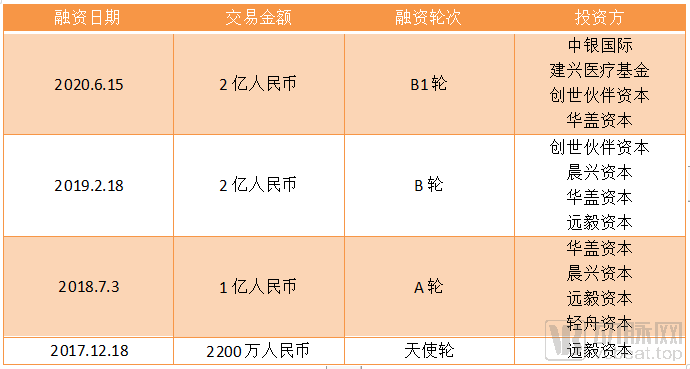
SHUKUN's Financing Path
As the AI healthcare sector enters the second half of its game, there has been a surge in new entrants into the cardiovascular AI space. As one of the leaders in this field, how does SHUKUN maintain its competitive edge and stand out among numerous AI companies?
Impacted by the COVID-19 pandemic, the development of the medical technology industry has been constrained, and corporate financing processes have slowed significantly. Against this backdrop, it is no small feat for SHUKUN to secure funding of up to RMB 200 million. Underpinning this achievement is the substantial market demand for cardiovascular and cerebrovascular solutions.
The "Report on Cardiovascular Diseases in China 2018," released by the National Center for Cardiovascular Diseases, indicates that the prevalence of cardiovascular diseases in China continues to rise. In 2018, the number of patients with cardiovascular-related diseases reached 290 million, with cardiovascular disease ranking as the leading cause of death. Among these cases, there were 11 million patients with coronary heart disease (CHD). As a highly prevalent condition among cardiovascular diseases, CHD is one of the leading causes of mortality worldwide.
To curb this trend, the most effective approach is to promote early screening for cardiovascular diseases to detect potential issues at an earlier stage. For patients already diagnosed, timely follow-up examinations are essential to monitor disease progression. Current statistics show that the annual volume of coronary computed tomography angiography (CTA) scans exceeds 6 million, which does not align with the total prevalence of coronary heart disease. The underlying reason is that limited medical resources hinder the widespread adoption of early cardiac screening; in hospitals located in central Shanghai, for instance, patients often face a one-month waiting period just to undergo a CTA scan.
“Artificial intelligence is one of the key tools for addressing the shortage of medical professionals. However, in 2017, entrepreneurs favored lung nodule imaging, where data was more readily accessible, while few ventured into cardiac CT. ‘The difficulty in acquiring cardiac imaging data and the lack of open-source models were the primary reasons that limited AI companies’ entry into the cardiovascular field at that time. Moreover, post-processing of 3D cardiac images is significantly more challenging than that of 2D lung nodules,’ recalled Ma Chun’e, CEO of SHUKUN.”
“Therefore, we took a different approach by selecting cardiovascular care as the breakthrough area for AI technology. On one hand, this was to differentiate ourselves from competitors; on the other, it aimed to alleviate the increasingly severe shortage of medical resources in the cardiovascular field and improve diagnostic efficiency.”
After three full years of dedicated development, SHUKUN’s AI technology has reached maturity. Currently, the company’s AI-powered cardiovascular product series is in clinical use at top-tier hospitals across China, including Peking Union Medical College Hospital, Beijing Friendship Hospital, Beijing Anzhen Hospital, Fuwai Hospital, Shanghai Ruijin Hospital, The First Affiliated Hospital of Sun Yat-sen University, Peking University Shenzhen Hospital, and Xijing Hospital. Endorsement by these leading medical institutions underscores the reliability of its technology.
To date, SHUKUN’s AI product line has expanded beyond standalone cardiac CT processing. After conquering the most technically challenging frontiers, SHUKUN has begun to accelerate the expansion of its product portfolio.
Initially, SHUKUN focused on the digital processing of cardiac computed tomography angiography (CTA), leveraging artificial intelligence to automate tasks traditionally performed by physicians, including 3D reconstruction, interpretation, assessment, and report review of coronary CTA. This reduced the image post-processing time from 30–40 minutes to just 5 minutes. At that stage, SHUKUN targeted thousands of Tier III Grade A hospitals with capabilities in diagnosing and treating cardiovascular diseases, aiming to enhance the efficiency of CTA examinations through AI and enable physicians to treat more patients.
In the second half of 2019, SHUKUN began to break through scenario limitations by extending its digital diagnosis and treatment capabilities for coronary heart disease to secondary hospitals and primary healthcare institutions. In December 2019, SHUKUN jointly established China’s first Beijing-Tianjin-Hebei Primary Care AI Imaging Diagnosis Center with the Pinggu District Health Commission, linking Pinggu District Hospital with 25 primary hospitals in the Beijing-Tianjin-Hebei region, thereby setting a benchmark for AI-enabled regional healthcare.
When discussing the path of product research and development, Ma Chun’e highlighted three development logics of SHUKUN.
First is the depth of cardiovascular analysis. SHUKUN’s first-generation AI products were limited to measuring vascular stenosis and performing corresponding post-processing. With the second generation, functional assessments such as calcium scoring and plaque analysis were gradually incorporated, enabling SHUKUN to provide physicians with more comprehensive data references. In the upcoming third generation, SHUKUN is attempting to extend the role of AI into surgical navigation and consumable selection, thereby achieving a leap for artificial intelligence from “diagnosis” to “diagnosis and treatment.”
Second, the depth of artificial intelligence. On one hand, after completing the design of cardiovascular AI, SHUKUN has already possessed advanced image processing algorithms and rich AI design experience. At this point, for the research and development of other disease scenarios such as pulmonary nodules, there is a foundation, and both direction and speed have seen exponential improvements.
On the other hand, in medicine, the pathogenesis of coronary heart disease is not limited to the heart and its associated vascular tissues; patients often exhibit corresponding symptoms in the brain as well. Therefore, SHUKUN has developed an Intelligent Assistant Diagnosis System for Head and Neck CTA and an Intelligent Analysis System for CT Brain Perfusion, expanding clinical scenarios to pursue more precise diagnostics.
Third is the depth of application scenarios. The value of medical artificial intelligence largely lies in the generalization of medical resources; AI can only maximize its value when resources from higher-level medical institutions are shared with lower-level ones. Therefore, SHUKUN has established grassroots AI imaging diagnostic centers to aggregate imaging data from primary healthcare institutions and have it uniformly interpreted by AI systems overseen by senior physicians, thereby achieving inclusive access to artificial intelligence.
Building on these three logical pillars, SHUKUN has further enriched its product portfolio.
SHUKUN has expanded its focus from cardiovascular to cerebrovascular and cardiovascular health. In addition to its existing CT-based fractional flow reserve (CT-FFR) measurement system and intelligent auxiliary diagnostic system for the aorta, SHUKUN has developed an intelligent auxiliary diagnostic system for head and neck CT, thereby extending its AI capabilities from cardiovascular to comprehensive vascular applications. Among the top 30 hospitals in Fudan University’s specialty ranking for cardiovascular care, 26 are intensive users of SHUKUN’s cerebrovascular and cardiovascular products. The company is subsequently launching its proprietary “Digital Brain” and “Digital Chest” solutions, advancing along a comprehensive disease-specific R&D pathway into stroke and thoracic diseases.
During the pandemic, SHUKUN’s AI-assisted diagnostic product for COVID-19 was deployed at Wuhan Central Hospital in early February. This AI system can rapidly read chest X-rays, identify inflammatory lesions and perform segmentation and localization within 2–3 seconds, accurately delineate infected areas, and provide quantitative assessment of lesion regions. It effectively assisted Wuhan Central Hospital in evaluating patients’ conditions and facilitating triage processes.
Beyond AI-assisted diagnosis, SHUKUN has also launched a Regional Smart Medical Imaging Cloud Platform. Residents no longer need to visit central hospitals for initial consultations, whether for minor or major conditions; they can access “expert-level medical services” at nearby healthcare facilities. With fewer errands and shorter wait times, health protection is enhanced. SHUKUN AI enables the general public to truly benefit from intelligent, continuous, and high-quality medical care.
As of June 2020, SHUKUN’s AI products had established partnerships with more than 200 hospitals across 42 cities, assisting in the AI-aided diagnosis of over one million imaging cases.
In addition, SHUKUN successively joined the GE and Philips AI ecosystems in 2019 and partnered with Sinovision, a domestic CT manufacturer. By leveraging the hospital resources of these device manufacturers, SHUKUN’s commercialization pathways have become more diversified.
In terms of regulatory review and approval, with the coronary CT angiography image-based vascular stenosis analysis software entering the green channel for expedited approval and the issuance of the first Class III medical device certificate for artificial intelligence, SHUKUN’s path to commercialization will soon become a reality.
Regarding the question of why to continue investing in SHUKUN, Zhou Wei, Founding Managing Partner of CCV Capital, stated: “We are a fund focused on technology investment, firmly believing that technological advancements can resolve the severe supply-demand imbalances faced by many industries. The shortage of medical resources has always been one of the root causes of healthcare challenges in China, particularly acute in the primary care market. We believe the most efficient solution is to leverage advanced technologies such as AI to assist physicians and enhance their diagnostic capabilities—thereby addressing supply imbalances through technology. SHUKUN’s AI products for cardiovascular and cerebrovascular diseases are globally leading, and it is one of the few companies in China dedicated to AI imaging in this field. With significant clinical value, these solutions have substantial application potential in the primary care market. During the global outbreak of the COVID-19 pandemic, SHUKUN rapidly developed an AI-based COVID-19 detection system within a short period, earning high recognition from doctors and hospitals both domestically and internationally, which further validates this point.”
Mr. Wang Lixin, Managing Director of BOC International, the wholly-owned investment banking subsidiary of Bank of China and an investor in this round, stated: “By empowering medical imaging with artificial intelligence (AI) technology, we have enabled faster and more effective collection and analysis of medical data, significantly enhancing patient experience and the diagnostic efficiency of radiologists. Meanwhile, leveraging AI to empower primary healthcare, improve service quality, and standardize diagnosis and treatment will better facilitate the implementation of the tiered diagnosis and treatment policy. As an industry leader and technological pioneer, the SHUKUN team possesses unique R&D capabilities and innovative thinking in developing AI-empowered medical products. We are delighted to see that an increasing number of medical institutions and equipment manufacturers have engaged in deep cooperation with SHUKUN. These innovative collaborations will actively promote higher-quality development of China’s healthcare sector. SHUKUN Technology has been widely praised for its outstanding performance during epidemic prevention and control, demonstrating the strong sense of social responsibility held by the SHUKUN team.”
The COVID-19 pandemic has accelerated the progress of addressing weaknesses and establishing a systematic framework for primary healthcare in China. Medical “new infrastructure,” represented by AI, cloud computing, and internet technologies, has become a key focus of China’s health sector development by promoting the construction of smart healthcare systems and enhancing primary care capabilities. SHUKUN will leverage its technological advantages to collectively advance the development of this new medical infrastructure.
“A spokesperson for the Jianxing Medical Fund, managed by CCB International, stated: ‘SHUKUN’s products demonstrate significant differentiated advantages. Particularly during the COVID-19 pandemic response, the company responded swiftly and delivered outstanding performance, providing scientific support for precise prevention and control. The Jianxing Medical Fund was jointly established under the organization of the Beijing Municipal Bureau of Economy and Information Technology and the Daxing District People’s Government, with capital contributions from the Beijing High-Precision Advanced Industry Development Fund and the Daxing Development Guidance Fund. We will fully leverage the comprehensive strengths of our fund platform to provide greater and more valuable support for SHUKUN’s future product R&D and commercialization.’”
Ms. Meng Nan, Executive General Manager of Huagai Capital’s Healthcare Fund, stated, “Huagai Capital led SHUKUN’s Series A financing and has chosen to increase our investment in each subsequent round. Over the past two years, the company has grown into a leading enterprise in medical imaging AI, achieving outstanding results in clinical reputation, medical device registration progress, and product commercialization. During the COVID-19 pandemic, the company successfully developed an intelligent imaging analysis system for COVID-19, making its due contribution to the fight against the epidemic. We believe that SHUKUN will maintain its leading position in the medical AI industry, drive the development of the healthcare sector, and create substantial commercial and social value.”
With the deep accumulation of tens of thousands of cases daily, rapid coverage of numerous districts and counties each month, and intelligent services for millions of patients annually, SHUKUN is delivering intelligent value to Chinese hospitals, continuously accelerating global progress in improving health outcomes. Today, SHUKUN’s AI solutions are increasingly expanding overseas, positioning this Chinese AI enterprise as a potential rising star in the global medical AI landscape.