

Cheetah Mobile Deploys Over 10,000 Service Robots Across 20+ Scenarios Amid Pandemic Response Breakthrough
As the 618 shopping festival heats up and consumers rush to clear their shopping carts, a major development has emerged in China’s robotics industry: over 10,000 robot “employees” from Cheetah Mobile and OrionStar have officially begun work across China. They are deployed in more than 20 industry scenarios, including large shopping malls, exhibition centers and tourist attractions, KTVs, libraries, corporate reception desks, medical institutions, hotels, government services, legal services, and tax administration.

Not Just in China! The “African Youth’s Anti-Epidemic Story” recently featured on CCTV-1’s Evening News also highlighted OrionStar’s Leopard Secretary robot. Leveraging the knowledge he acquired in China, this young African man helped combat the epidemic in his hometown, with the Leopard Secretary robot playing a key role in his tech-driven anti-epidemic efforts. This exemplifies Chinese enterprises and robots fulfilling their social responsibilities and putting into practice the vision of a community with a shared future for mankind.
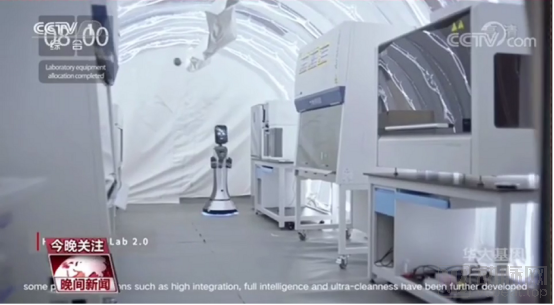 (Screenshot of Bao Xiaomi appearing in the CCTV-1 "Evening News" report. Source: CCTV Video)
The deployment of tens of thousands of robots and their performance in the global fight against the pandemic signal that the service robotics industry has reached a significant milestone. Cheetah Mobile and OrionStar have also achieved new breakthroughs through their sustained, long-term investments in AI and intelligent service robotics.
Data shows that as of May 2020, Cheetah Mobile’s OrionStar intelligent service robots had served over 200 million individuals in total, with daily voice interactions exceeding 5 million. More than 10,000 robots were deployed to serve over 1,600 clients.
To a certain extent, this marks a milestone for Chinese service robot brands! The large-scale deployment of robotic “employees” across various industries and job roles enables creative tasks to be assigned to young people while repetitive labor is handled by robots. This human-robot collaboration model helps businesses reduce costs and improve efficiency, while leveraging big data from robots to enhance the productivity of the offline economy.
Why Has OrionStar’s Intelligent Service Robot Carved Out a Unique Niche and Achieved Such Remarkable Success?
In new retail scenarios, OrionStar’s intelligent service robots have been consistently deployed daily as “information kiosks plus on-site promoters.” They currently track daily data on the recovery of foot traffic in China’s urban retail sectors and mask-wearing rates among mall visitors, and have released brand popularity rankings for shopping malls across various cities, thereby supporting the resumption of production and operations in supermarkets and retail stores.
In medical settings, it enables remote diagnosis and treatment and can deliver medical supplies on behalf of doctors, effectively reducing healthcare workers’ risk of infection and alleviating their work burden. Following the outbreak of the epidemic, Cheetah Mobile Inc., together with OrionStar, promptly donated medical service robots to designated hospitals including Wuhan Huoshenshan Hospital, Beijing Haidian Hospital, and Zhengzhou Qiboshan Hospital.
In enterprise application scenarios, Cheetah Mobile’s “Robot Employment Program” has assisted numerous companies in resuming production and operations. OrionStar’s intelligent service robots act as corporate smart stewards, assuming multiple roles such as front-desk receptionists, administrative assistants, and financial consultants. They handle visitor invitations, address employee benefits inquiries, and provide information on company policies and social security procedures.
In public service settings such as libraries, museums, government service halls, and courts, OrionStar’s intelligent service robots also undertake tasks including guided tours, inquiries, and explanations.
OrionStar’s intelligent robots can serve as “super employees” competent in a variety of roles and professions, boasting not only strong professional capabilities but also excellent service attitudes. They can handle dirty and strenuous tasks, while also connecting to the internet and cloud platforms to help “employers” reduce costs, improve efficiency, and enhance service experiences through high-tech solutions. Who wouldn’t love such an “employee”? No wonder even an African friend brought Leopard Secretary (Bao Xiaomi) to the front lines of epidemic prevention in his hometown to assist him.
Beyond the wide range of tasks robots can perform and the diverse roles and industries they can serve, the more critical challenge lies in matching these promising “employees” with the “employers” that need them most and are best suited for them. This raises key questions: How should we define robots? How can we develop effective industry-specific robotic solutions? And how can we help industries and enterprises leverage robots to their fullest potential?
First, from tools in the PC era to cleaning and gaming software in the smartphone era, Cheetah Mobile’s core focus has always been addressing a single issue: “human-computer collaboration.” This advantage has extended into its robotics business. At the heart of OrionStar’s robotic applications is the goal of making robots—the ultimate tool—more user-friendly, enabling humans and robots to coexist and generate greater value.
Secondly,Cheetah Mobile and OrionStar RedefineIntelligent Service Robots: AI + Software + Hardware + Services = Robot. In this robotic formula, all four components are indispensable, each accounting for 25% of the overall importance. By leveraging the industry’s only full-chain AI technology, a family of intelligent service robots, an open Robot OS system, and scenario-based robotic solutions, we enable robots to serve as standardized carriers connecting the physical world with the information world.
Finally, Cheetah Mobile’s robotics business is driven by product applications rather than purely by technology. This enables OrionStar robots to undergo OTA (Over-The-Air) cloud upgrades every two weeks, much like smartphones. Meanwhile, dozens of partners across China are jointly developing robotic scenario-based apps on the OrionStar Robot OS. The company combines fully self-developed, end-to-end AI technologies at the foundational level with an open robotics ecosystem for its partners.
Numerous industry partners, including Lvcheng Technology, Qingdun Group, Suzhou Yimi, Guangdong Changxiang Cloud, Xiezhu Technology, Yiche, Zhaopin, and CIIC Human Resources, have sent congratulatory messages. While celebrating OrionStar’s achievement of deploying over 10,000 intelligent service robots, they also shared their vision for collaboratively building a future ecosystem for intelligent robotics.
Chen Haibin, Founder and CEO of Xiezhu Technology, a company focused on smart living and smart hotels, stated in his message: “Xiezhu Technology has always maintained a close strategic partnership with Cheetah Mobile. Together, we have promoted intelligent service robot products such as Bao Xiaomi to numerous hotels, effectively helping them reduce costs and increase revenue, while also enhancing the guest experience and technological appeal. These solutions have become important vehicles and signature markers for the intelligent upgrading of hotels. We look forward to deepening our collaboration with Cheetah Mobile in the future to jointly usher in the era of smart hotels.”
Qi Qi, General Manager of CIIC (Beijing) Human Resources Outsourcing Service Co., Ltd., stated in his message that, in addition to performing functions such as guided tours and reception, the robot is interconnected with the smart terminals and exhibition equipment at CIIC’s offline physical stores, forming an intelligent, interconnected control system. In the future, Bao Xiaomi will undertake more online and offline service tasks, evolving into a human resources service expert. It will grow alongside CIIC to deliver more professional, approachable, and empathetic human resources services to workers and enterprises alike.
In the age of AI’s great voyage, Cheetah Mobile, as a representative of the service robotics industry, is pioneering a new blue ocean. By leveraging intelligent service robotics technology, it helps traditional industries reduce costs, improve efficiency, and achieve industrial upgrading, jointly drawing the “blueprint for new infrastructure.”