

Yunqueyi: A One-Stop "Education + Service" Platform Empowering Grassroots Doctors and Bridging the Gap to Quality Healthcare
Primary healthcare institutions in China account for 95% of the total number of medical facilities, yet they handle only 55% of patient visits. In contrast, hospitals, which make up merely 3% of the total, account for as high as 41.2% of patient visits. This indicates an overcapacity in primary healthcare services. To address this, it is essential to enhance residents’ trust in primary care, with the top priority being the improvement of the professional competence of primary care physicians.
With the gradual implementation of healthcare reform policies, China’s primary healthcare system has seen significant improvements in scale, medical personnel numbers, and service capacity. However, compared with tertiary hospitals, primary healthcare institutions still lag in bed supply and equipment sophistication, and the imbalance between urban and rural development remains a prominent issue.
Headquartered in Shanghai, PICA is dedicated to leveraging internet technology to achieve equitable access to medical and educational resources through innovations in education and service models. PICA aims to ensure that primary care physicians, regardless of their location, have access to high-quality medical education, and that residents everywhere can find competent physicians close to home.
Xing Fei, the founder of Yunque Yi, holds an M.D. from Stanford University School of Medicine and began his career as a surgeon. To understand why he ultimately transitioned from physician to entrepreneur, we must look back at an on-campus entrepreneurial experience during his time at Stanford.
Stanford’s Biodesign program taught Xing Fei how to identify market needs from a clinician’s perspective. Subsequently, collaborating with peers from the business and engineering schools and leveraging the Biodesign theoretical framework, she attempted to launch a medical device startup on campus.
In an interview with VCBeat, Xing Fei stated, “My entrepreneurial experience at university was highly engaging. It allowed me to understand patient needs from a physician’s perspective while also identifying previously intractable problems that could now be addressed through innovative approaches from different angles. This led me to realize that I might be better suited as an entrepreneur, prompting me to pursue an MBA at Harvard Business School.”
During her time at business school, Xing Fei observed that China’s vast population has led to an uneven distribution of medical resources. Upon returning to China and serving as a partner at Yucheng Capital, she recognized that the domestic market for primary healthcare education was virtually untapped. Consequently, she decided to enter the digital health sector and, in her capacity as an investor, incubated PICA (Yunque Yi).
PICA was founded in 2016, primarily serving grassroots medical institutions in townships and surrounding residents. So how does PICA achieve its mission of “making quality healthcare resources no longer distant”?
Xing Fei explained to VCBeat that improving primary healthcare requires addressing two key issues: first, ensuring physicians have access to more and higher-quality educational resources, and second, providing them with better service conditions and tools.
Based on the above two points, PICA’s current business operations can be broadly divided into two major segments: education and services. The education segment provides grassroots physicians with greater learning opportunities, while the services segment enables rural residents to access high-quality medical care locally.
Primary healthcare has long faced the challenge of insufficient training opportunities and learning resources for physicians, hindering the improvement of their professional competencies and, in turn, limiting local residents’ access to high-quality medical care. Therefore, PICA has prioritized providing primary care physicians with expanded educational channels and resources.
Yunqueyi has assembled over 2,000 experts from across China, including physicians, nurses, and pharmacists. By delivering authoritative educational courses through online video, audio, and problem-based learning (PBL) interactive teaching methods, it builds an online platform that enables zero-distance communication between primary care healthcare professionals and specialists. This initiative helps primary care providers supplement and reinforce core medical knowledge while staying synchronized with the latest domestic and international clinical pathways and research findings.
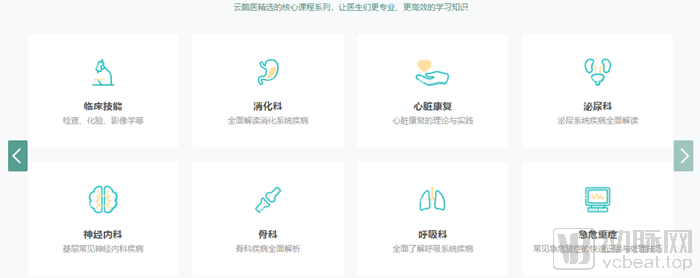
(Image source: PICA official website)
In addition,In 2026, Yunqueyi also partnered with the Chinese Medical Electronic Audio-Video Publishing House to obtain authorization for online credit examination and training accredited by the Chinese Medical Association; additionally, it collaborated with the editorial office of Chinese Health Talent to secure qualification for physician professional title examination training authorized by the National Health Commission’s Talent Exchange Service Center.
Xing Fei told VCBeat that PICA had invited 200 primary-care physicians with the highest learning points on its platform to attend an academic symposium in Beijing. Many arrived with tears in their eyes, as they might previously have had to wait many years for a single opportunity to receive training at the provincial or municipal level. With platforms like PICA, abundant learning and training resources have become readily accessible.
In addition to providing educational resources to enhance the capabilities of primary care physicians, PICA also assists doctors in conducting early disease screening and chronic disease management in townships. It offers an online platform for doctor-patient interaction and communication, along with patient education materials, thereby helping physicians manage patients more efficiently.
Medical services for township residents differ from those provided by large hospitals. PICA believes that the most significant distinction lies in the patient populations served. Physicians at large hospitals, particularly tertiary Grade A hospitals, treat patients from across China, whereas primary care physicians predominantly serve acquaintances and local residents with whom they share close, familiar relationships. Leveraging this characteristic can significantly enhance early disease screening and chronic disease management.
Building on this, PICA seeks to enhance interaction and communication between healthcare professionals and residents through services such as chronic disease screening, health management, and recruitment for new drug clinical trials. Leveraging the PICA app, WeChat mini-programs, and SMS reminders, it helps physicians provide medication adherence reminders, follow-up care, and scheduled regular health check-ups for nearby residents. This strengthens primary care physicians’ understanding of chronic and geriatric conditions within their catchment areas, thereby facilitating early and effective intervention by high-quality medical resources.
Furthermore, PICA employees regularly conduct in-depth community outreach to promote health education, enhance residents’ health awareness, and help them modify unhealthy lifestyle habits and discontinue behaviors detrimental to health. Meanwhile, through free clinic services, they enable residents to detect potential diseases early and receive timely and effective interventions.
For patients, the core pain point in primary care is distrust, which essentially stems from a lack of understanding. This includes a lack of understanding of their own medical conditions, as well as of physicians’ clinical skills and treatment plans.
Thus, starting in 2017, PICA began exploring how to assist physicians in conducting patient education. Given the relatively low health literacy among rural residents, highly professional materials often prove ineffective for outreach. Therefore, PICA developed educational content in more accessible formats, such as comics and videos, which are better received at the grassroots level. Physicians can use the PICA APP to send these comics with a single click to residents who have signed up for family doctor services, thereby achieving the goal of popularizing medical knowledge.
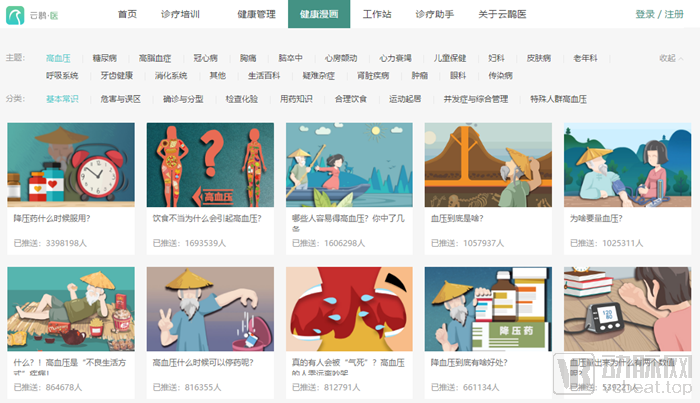
(Image source: PICA official website)
This accessible and easy-to-understand science popularization tool has received unanimous acclaim from both physicians and residents. Physicians no longer need to resort to time-consuming and labor-intensive methods for patient education, such as painting wall murals, posting posters, or conducting free clinic outreach. Furthermore, doctors can send themed comics tailored to patients’ specific conditions for educational purposes, offering greater targeting and higher effectiveness.
PICA believes that the internet can play a more significant role in grassroots healthcare settings than in urban areas, where the needs of residents are also more pronounced. For grassroots healthcare, the greatest challenge lies in coverage; only by achieving sufficiently broad coverage can we truly address the current shortage of educational resources for grassroots physicians and the difficulty in improving their professional standards. To achieve such extensive coverage, a substantial scale is first required.
Currently, PICA has onboarded nearly 400,000 medical institutions and accumulated over 2 million registered users. The platform covers all 31 provincial-level administrative regions and 37,744 township-level administrative divisions across China, reaching more than 500 million residents. Notably, 91% of its coverage is in second-tier cities and below, and over 50% of primary healthcare professionals working in community health service centers (stations), township health centers, and village clinics have become registered users of the PICA platform.
Regarding future development plans, Xing Fei stated that focus is crucial for any enterprise. Therefore, in the coming years, PICA will continuously upgrade its education and service offerings, remaining dedicated to providing physicians with high-quality educational resources. This will empower doctors to deliver better care to grassroots communities, truly realizing the vision of “making quality medical resources accessible to all.”