

Huami Establishes AI Research Institute to Lead Health Infrastructure Innovation
On June 15, Huami Technology (NYSE: HMI) held its inaugural AI Innovation Conference in Hefei, Anhui Province. Under the theme “AI to Decode Future,” Huami Technology officially unveiled its next-generation smart wearable chip “Huangshan No. 2,” the second-generation PPG biometric tracking optical sensor BioTracker™ 2, and a suite of new AI algorithms for human body data analysis. The company also announced the establishment of the Huami Technology Artificial Intelligence Research Institute. Leveraging a comprehensive AI-driven health management technology architecture, Huami Technology is committed to building a new type of health infrastructure platform and reshaping the global healthcare industry.
The highlight of this AI Innovation Conference was the official upgrade of Huami Technology’s Artificial Intelligence Laboratory to the Huami AI Research Institute. Wang Kongqiao, Vice President of Huami Technology, has been appointed as the Dean of the institute. Ramesh Jain, a renowned artificial intelligence research expert, known as the “Father of Multimedia Computing,” and a professor at the University of California, Irvine, has been invited to serve as the Chief Advisor of the institute. Wu Feng, Assistant to the President of the University of Science and Technology of China and Director of the National Engineering Laboratory for Brain-inspired Intelligence Technology and Applications, has assumed the role of Chairman of the institute’s Expert Committee.
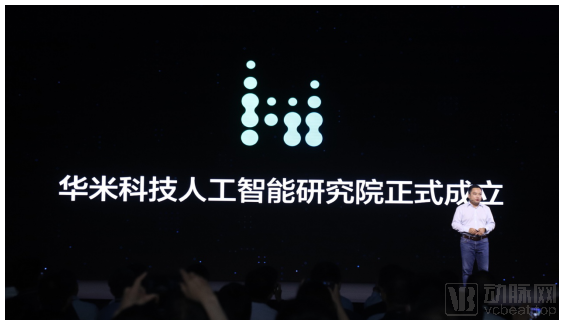
Currently, the Research Institute has established three joint laboratories: the Wrist-Worn Intelligent Wearable Joint Laboratory with Academician Zhong Nanshan’s team, which will jointly promote applied research and the translation of achievements for intelligent wearable products in respiratory health management; the Athletics Joint Laboratory with the Chinese Athletics Association, which will conduct research on elite athletes and amateur sports enthusiasts by leveraging AI algorithmic models and big data analytics technologies based on wearable devices; and the Brain-Computer Intelligence Joint Laboratory with the Institute of Advanced Technology at the University of Science and Technology of China, which will further advance research on both non-invasive and invasive brain-computer interfaces.
Furthermore, the research institute announced a strategic partnership with Unisound, a unicorn in the field of intelligent voice technology, to jointly develop smart voice assistants for wearable watches. The two parties will also expand their comprehensive collaboration into the automotive, healthcare, and IoT sectors in the future.
Huang Wang, Founder, Chairman, and CEO of Huami Technology, emphasized that the establishment of the Artificial Intelligence Research Institute aims to bring together top experts from various disciplines, dedicate efforts to core technological innovations in artificial intelligence related to health big data, and explore vertical applications of AI in the wearable sector. Meanwhile, the institute will conduct frontier technological exploration and innovation in areas such as health big data mining, smart healthcare, and brain-computer interfaces.
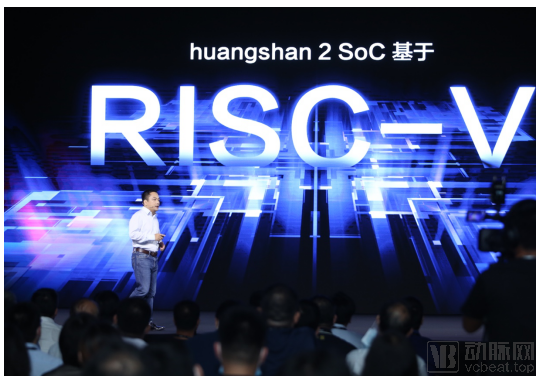
After more than 450 days of intensive development, Huami Technology’s new-generation smart wearable chip, “Huangshan No. 2,” has finally been unveiled.
“Huangshan 2” is still based on the advanced RISC-V architecture, offering two major advantages: high computational efficiency and low power consumption. Its atrial fibrillation (AFib) detection speed is seven times faster than that of its predecessor and 26 times faster than other software algorithms currently available on the market. It also incorporates an ultra-low-power sensor Always-On (AON) mode and, like Apple, integrates a C2 co-processor. Theoretically, this can reduce overall power consumption by 50%, allowing users to completely eliminate battery-life anxiety.
Currently, the “Huangshan No. 2” chip has successfully completed tape-out and is expected to enter mass production in the fourth quarter of this year. New wearable devices powered by the “Huangshan No. 2” will also be launched in the first half of next year (2021).
Cardiac health has always been a key focus for Huami Technology. At this conference, Huami Technology unveiled its new AI heart rate engine, RealBeats™ 2, which effectively eliminates noise interference in heart rate signals during physical activity. The effective monitoring time for atrial fibrillation at night and during the day reached 1.87 times and 6.64 times that of the previous generation, respectively. It also successfully achieved highly accurate AI-based automatic differentiation of reentrant tachycardia and frequent supraventricular premature beats.
Blood oxygen saturation is also a critical indicator of health status. After two years of independent research and development, Huami Technology has created OxygenBeats™, an AI-powered biological engine for blood oxygen data. Validation through desaturation experiments demonstrated a 100% success rate for the algorithm, compared to less than 90% for similar products on the market. The average deviation from professional pulse oximeter readings was only 1.67%, surpassing the accuracy of most wrist-worn wearable devices’ blood oxygen detection algorithms.
Huang Wang revealed that, building on their previous collaboration, Huami Technology will also work with Academician Zhong Nanshan’s team to conduct follow-up assessments of COVID-19 patients during their recovery, leveraging the high-precision blood oxygen monitoring capabilities of OxygenBeats™. Smartwatches equipped with this engine are expected to be launched as early as the third quarter of this year (2020).
Meanwhile, Huami Technology also released the SomnusCare™ AI Bio-Engine for sleep data. This algorithm enables accurate identification of sleep states, with a sleep data detection accuracy exceeding 80%, and can detect nap data lasting longer than 25 minutes with nearly 100% accuracy.
Meanwhile, targeting sleep apnea syndrome, the “invisible killer” that poses a serious threat to health, Huami Technology leverages its OxygenBeats™ blood oxygen engine to conduct in-depth analysis from two dimensions: sleep state determination and blood oxygen saturation monitoring. This enables intelligent identification of sleep apnea syndrome and provides timely alerts to take necessary medical measures.
Previously, during the COVID-19 pandemic, Huami Technology leveraged its bio-data engine, integrating external factors such as weather, seasons, and historical cycles, to establish a predictive model for epidemiological trends. With the comprehensive upgrade of the bio-data engine, future capabilities for epidemic prediction and even early warning will become an integral part of the new health infrastructure platform.
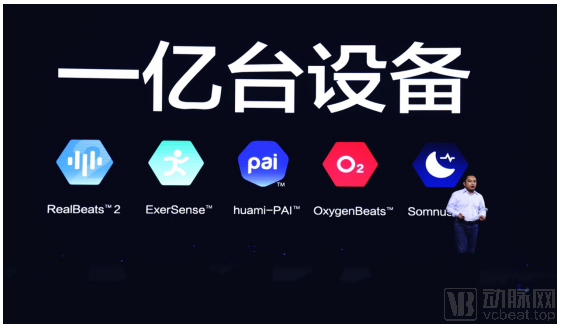
The changes brought about by AI are also evident in sports and exercise. Based on big data analysis of physical activity and heart rate, Huami Technology has launched ExerSense™, an AI-powered engine for recognizing human activity patterns. This engine can intelligently determine the user’s current exercise status and automatically match the corresponding activity mode. It is currently capable of automatically identifying 19 types of exercises, including brisk walking, running, cycling, and swimming, covering 95% of users’ daily exercise scenarios.
Also based on the same intelligent concept is the Huami-PAI™ personal health assessment system. By leveraging user heart rate data, daily activity duration, and multi-dimensional physiological metrics, the system employs algorithms to convert these inputs into an intuitive PAI score, enabling users to intelligently monitor their daily exercise levels. Furthermore, by incorporating personalized physiological parameters such as age, gender, and resting heart rate, it delivers a tailored health assessment experience.
According to the findings of the HUNT Fitness Study, maintaining a PAI score above 100 helps reduce the risk of cardiovascular mortality and increase life expectancy. Led by Professor Ulrik Wisloff of the Faculty of Medicine at the Norwegian University of Science and Technology, the study spanned more than 35 years and involved over 230,000 participants.
Furthermore, at this AI Innovation Conference, Huami Technology also launched the next-generation BioTracker™2 PPG biometric tracking optical sensor.
Compared with its predecessor, BioTracker™ 2 supports up to five biological data engines (RealBeats™, OxygenBeats™, SomnusCare™, ExerSense™, and huami-PAI™), making it the most feature-rich and highly accurate human biosensor ever developed by Huami Technology. With the powerful AI computing performance of the upcoming “Huangshan 2” chip, BioTracker™ 2 is poised to become the world’s most powerful wearable optical biosensor.