

Huaxintong Technology Files IPO Prospectus: Developing Medical-Grade Digital Multi-Parameter Vital Signs Monitors Targeting Masimo's Global Benchmark
Vital signs data serve as a critical basis for assessing an individual's health status. Particularly when patients are receiving treatment in hospitals, physicians rely on these metrics as key indicators to evaluate the severity of their condition. Consequently, for patients with more severe conditions, hospitals typically equip them with medical devices designed to monitor vital signs such as heart rate, pulse, and blood pressure.
However, vital signs monitoring devices currently used in hospitals primarily rely on manual data collection and entry by healthcare personnel. Since monitoring technologies are often designed for critically ill patients, changes in patient position and movement frequently trigger false alarms. Conventional pulse oximeters operate by isolating pulsatile signals from non-pulsatile ones to measure SpO2 without the need for calibration. Although this represented a significant advancement in pulse oximetry, it has a major limitation: it assumes that arterial blood is the sole pulsatile component. Unfortunately, in conventional pulse oximetry, venous blood also moves with each patient movement or breath. This causes traditional pulse oximeters to display inaccurately low or high SpO2 and pulse rates, resulting in false alarm rates as high as 90% in ICUs and general wards. The high error rate leads to inefficient record-keeping. For instance, when measuring vital signs such as body temperature, blood oxygen saturation, and blood pressure, healthcare staff must regularly enter patient rooms to perform manual checks and documentation. This process is cumbersome and time-consuming, significantly disrupting patient rest.
Manual monitoring cannot provide 24-hour surveillance for every patient, yet vital signs are constantly changing. For patients in particular, even subtle moment-to-moment fluctuations in vital signs can indicate the trajectory of their condition. Therefore, continuous dynamic monitoring of vital signs has become a critical component of clinical diagnosis and treatment. It enables healthcare professionals to promptly detect abnormalities and initiate timely intervention.
VCBeat recently engaged with Sichuan Huaxintong Technology Co., Ltd. (hereinafter referred to as “Huaxintong Technology”), a high-quality innovative enterprise dedicated to the development of non-invasive vital signs monitoring instruments. Established in 2014, the company’s iCares wearable monitor is an independently developed, medical-grade, intelligent digital multi-parameter vital signs monitoring device. It offers a comprehensive portfolio of patient monitoring solutions that better support clinical decision-making and improve patient care, while helping healthcare providers optimize care efficiency.
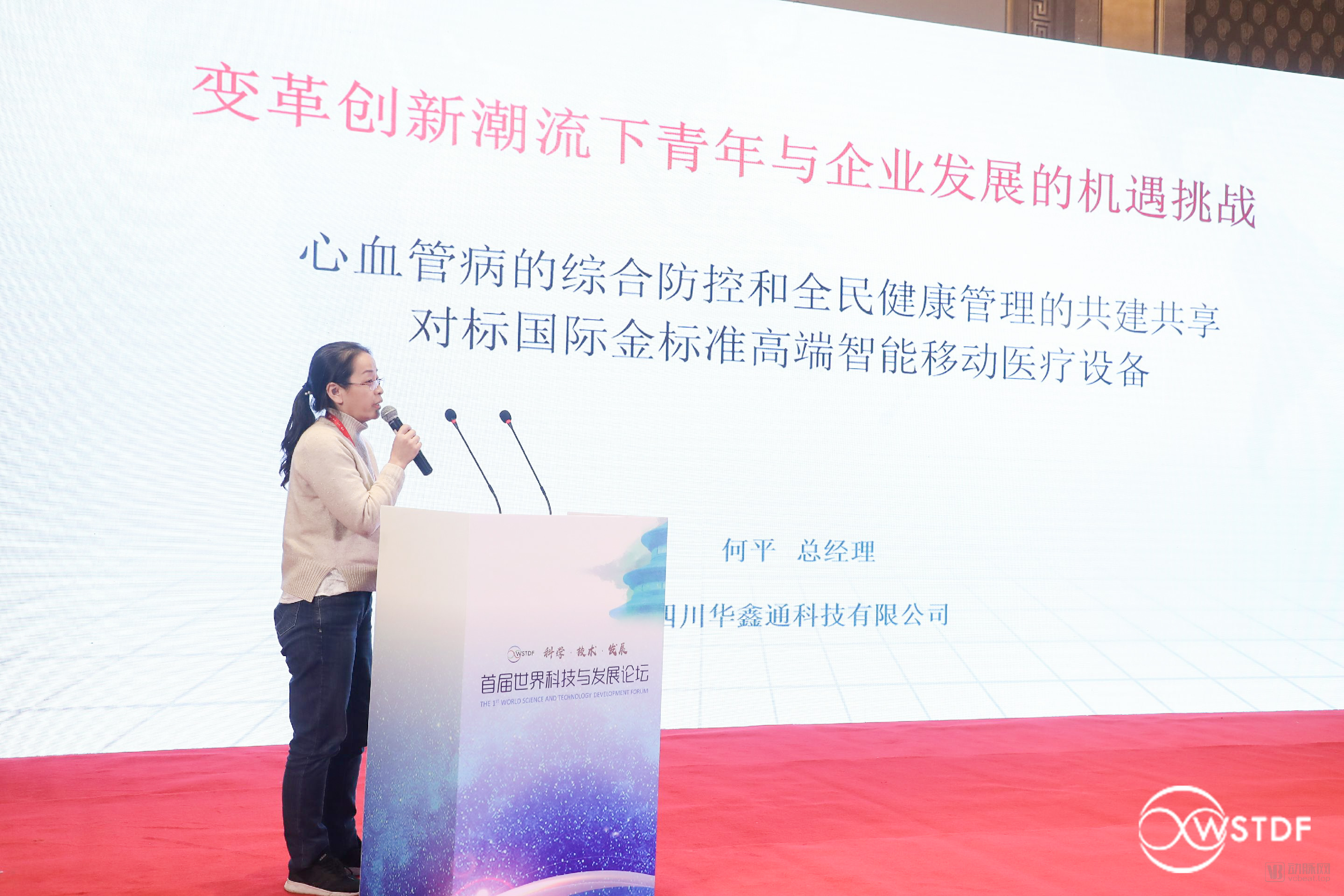
He Ping, General Manager of Huaxintong Technology
According to data from the World Health Organization, more than 17 million people die from cardiovascular diseases each year, accounting for 30% of global deaths. In China, the mortality rate from cardiovascular diseases stands at 40%, ranking highest worldwide. The population of patients with cardiovascular diseases has reached 290 million, with approximately 3.5 million deaths annually due to these conditions—equating to 9,590 deaths per day, 400 per hour, and one death every 10 seconds.
In fact, 90% of these deaths could be prevented through early warning systems. “Out-of-hospital cardiovascular early warning is critical; therefore, hospitals urgently need out-of-hospital patient data to support decision-making and analysis. Continuous monitoring of vital signs can provide timely feedback on health status to both patients and hospitals,” He Ping, founder of Huaxintong Technology, told VCBeat.
Specifically, the iCares monitor can accurately perform real-time, continuous monitoring of vital signs such as heart rate, blood pressure, blood oxygen saturation, perfusion index, temperature, and movement. It also provides services including data acquisition and upload, analytical feedback, health behavior intervention, and value-added health solutions.
Moreover, iCares offers an integrated solution featuring precise, continuous dynamic data acquisition, quantitative stratification, intelligent analysis, and the provision of charts and digital outputs. “Leveraging our experience in the hospital sector, our devices can provide healthcare institutions with patients’ unstructured data and generate actionable recommendations. This helps alleviate the workload of healthcare professionals and provides decision support, thereby improving work efficiency,” said He Ping.
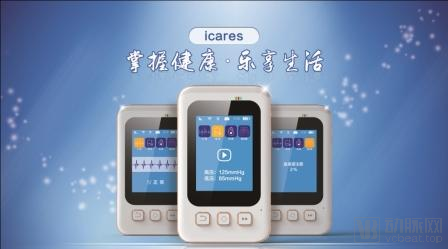
The ability to deliver an integrated solution for multi-parameter monitoring and output is attributable to Huaxintong Technology’s years of technical accumulation, with its technological advantages summarized in the following eight points.
First, the accuracy of blood oxygen saturation monitoring is benchmarked against Masimo, the international gold standard, with both specificity and sensitivity exceeding 90%.
Second, non-invasive blood pressure measurement, with accuracy benchmarked against the international gold standard Spacelabs ABP, offers superior performance in mobile monitoring. It employs AI to filter out invalid data and enables result sharing through hospital information system interfaces compliant with HL7 and DICOM standards.
Third, it features strong electromagnetic interference resistance; its proprietary algorithm effectively removes motion artifacts, enabling accurate extraction of human arterial blood signals during hypoperfusion and movement.
Fourth, the independently developed real-time scheduling operating system, iCares OS, ensures faster device response, guarantees secure data preservation and unlimited storage capacity, and automatically generates monitoring reports with data visualization capabilities.
5. Conduct health data analysis and prioritization, and implement critical alerts.
6. Highly integrated, compact size, and low power consumption.
7. Full-network support enables data collection, upload, and analytical feedback to be completed entirely using a handheld PDA.
8. It integrates emergency call functions with audio, video, intercom, and positioning capabilities.
High-quality products and cutting-edge technology have continuously expanded the list of institutional and corporate partners collaborating with Huaxintong Technology. On the B2B front, in addition to Grade-A tertiary hospitals and universities such as Chongqing Medical University, its partners also include real estate and health-care institutions like Country Garden, as well as China Telecom and China Mobile.
“We have always believed that developing medical device products requires a strong sense of mission, as they are directly related to people’s life safety and physical health,” said He Ping. To better align with patient needs, Huaxintong Technology comprehensively considers the demands of both hospitals and patients during the product development process, striving to create solutions that balance the interests of both parties.
For hospitals, the key consideration is how to deliver efficient medical services. For instance, when a patient experiences an emergency, monitoring devices can automatically and promptly trigger alerts on the platform and prioritize patients across all hospital campuses, thereby identifying those with the most critical conditions.
On the patient side, key attention should be paid to providing appropriate recommendations for patient behavior. “Patient data accumulated on the platform will be analyzed by our professional medical team, which will then generate a health analysis report. This report will be provided to patients to help them understand their health status and offer personalized health advice.”
In response to the COVID-19 pandemic this year, iCares also has significant potential for application. It reduces contact with healthcare workers, enables patients to monitor their condition at home, and allows medical staff to manage and intervene in patients’ health without exposing themselves. He Ping stated that iCares uses virtual visits to assess and treat patients, making healthcare workers safer and healthier, thereby further enhancing the capacity to manage and prevent the spread of the COVID-19 pandemic. “By monitoring, managing, and treating known or suspected SARS-CoV-2-infected individuals at home, more patients can be discharged from hospitals. This involves moving low-acuity patients out of hospitals or transferring high-risk infection patients out of hospital settings. Continuous remote monitoring of a larger number of patients across the hospital can also improve ICU triage capabilities and facilitate earlier step-down care.”
In terms of the team, nearly 80% of Huaxintong Technology’s staff are R&D personnel. Core members include PhDs from Queen’s University Belfast, professors from the University of Electronic Science and Technology of China, and a doctoral team specializing in cardiology from West China Medical Center. Among them, Liu Jiaxu, Co-founder and CTO, holds a bachelor’s degree from Harbin Engineering University and a master’s degree in Computer Application Technology from the University of Electronic Science and Technology of China. He previously served as a Senior R&D Specialist at Motorola and as a Sales Representative at Thermo Fisher Scientific.
Driven by population aging and rising household incomes, medical demand has continued to grow. Coupled with the outbreak of the COVID-19 pandemic and the normalization of epidemic prevention measures, telemedicine has become commonplace. Consequently, the market for wearable and smart medical monitors is poised for rapid growth, with the market size for smart portable medical monitors also expanding steadily. In the international market, Masimo and Caretaker are currently the two leading companies in this field. Masimo’s high-end products are primarily focused on hospital settings, whereas Caretaker targets mobile healthcare and elderly care sectors. Masimo’s consumer-facing products have not obtained FDA clearance; they are positioned for hikers, mountaineers, athletes, and other individuals who require on-the-go measurement of blood oxygen levels.
From the perspective of the domestic market, the medical-grade portable multi-parameter monitoring device sector remains a blue ocean. Giants such as Huawei, Alibaba, and Tencent are actively seeking portable monitoring devices that benchmark against gold standards, while other companies’ products are primarily concentrated in the field of ECG monitoring. Therefore, Huaxintong Technology is well-positioned to capitalize on favorable market opportunities.
Regarding future plans, He Ping stated, “We have secured five patents and five trademark categories, with an additional ten patents currently under application. Our products are undergoing pre-inspection by the National Medical Products Administration (NMPA). Through years of accumulation and diligent efforts, we have grown increasingly confident in our products. Moving forward, Huaxintong Technology will continue to refine its products and optimize its market layout, delivering high-quality health management solutions to a broader population.”