

Over 300 Brands Compete in China's Electric Toothbrush Market with Only 8% Penetration: Key Challenges Ahead for Full-Scale Expansion
The vast disparity in penetration rates also signals the potential of China’s future electric toothbrush market. How to tap into the untapped market space in China and increase the adoption rate of electric toothbrushes has become a pressing challenge for the oral care industry.
However, for industry insiders, expanding the electric toothbrush market in China is not something that can be achieved overnight. What they are currently more focused on is how to find their own positioning and seize niche segments in this already fiercely competitive "red ocean" market. VCBeat (WeChat ID: vcbeat) conducted exclusive interviews with several entrepreneurs deeply involved in the electric toothbrush industry. When asked how they ensure their products' market share against the backdrop of low penetration rates of electric toothbrushes in China, their responses invariably revolved around two key terms: "future prospects" and "population base."
With a massive population of 1.4 billion, China’s market—where just an 8% share has sustained over 300 electric toothbrush brands—ranges from professional oral care giants like Philips, Braun, and Oral-B to a dazzling array of innovative domestic brands such as usmile and Qianshan, as well as tech ecosystem cross-over players like Xiaomi, Lenovo, and Huawei. As China’s per capita GDP surpasses the $10,000 threshold, public attention to personal health has intensified, driving up demand for personalized services in medical aesthetics and daily care. The surge in electric toothbrush sales in recent years further underscores the growing emphasis on health and wellness among Chinese consumers.
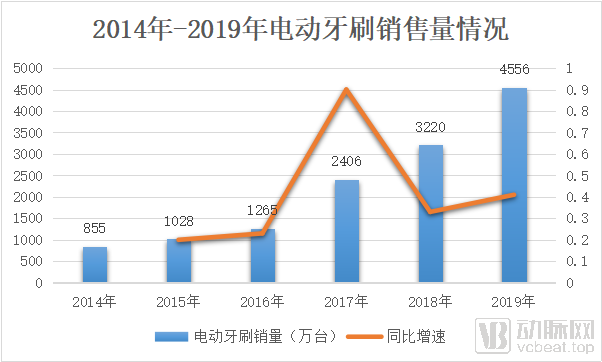
(Data source: compiled from public information; compiled by VCBeat)
Electric toothbrushes have been in the Chinese market for nearly two decades. In the early stages, the market was characterized by monopolization by foreign brands and high unit prices. In recent years, breakthroughs in technology by domestic brands have led to significant price reductions, triggering explosive growth in the industry. According to third-party monitoring data from Taobao, sales of electric toothbrushes on the platform amounted to approximately RMB 1.8 billion in 2017, rose to RMB 3.8 billion in 2018, and reached a peak of RMB 5.7 billion in 2019.
However, the high sales growth has also sown numerous hidden risks in the electric toothbrush industry:The industry lacks standardized regulations, has low barriers to entry, and features products of uneven quality.;Consumers Lack Awareness of Oral Care and Knowledge of Proper Practices; Efficacy of Electric Toothbrushes Remains in Question, Hindering Widespread Adoption。
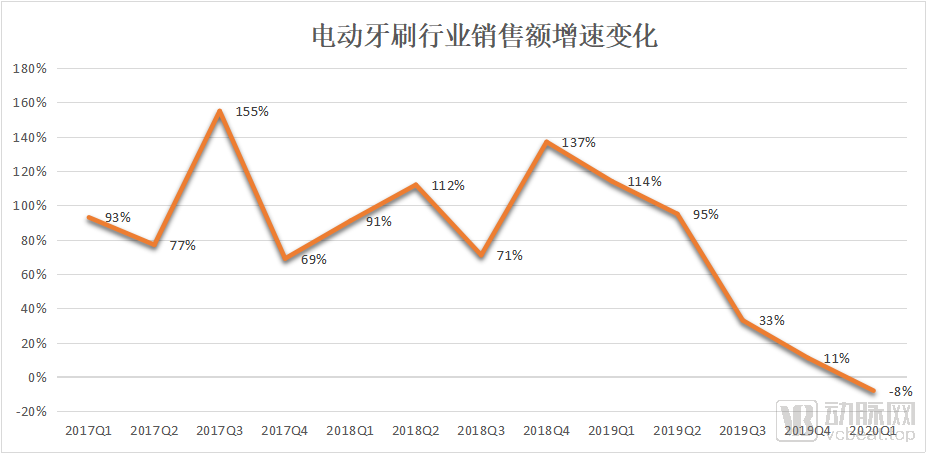
(Data source: Huachuang Securities; graphic by VCBeat)
Prior to 2020, the electric toothbrush industry maintained a high growth rate. Notably, 2017 witnessed a surge in sales volume, with the highest quarterly sales growth reaching 155%. However, starting in 2019, the growth rate of electric toothbrush sales began to slow down significantly, although it still maintained a quarterly growth rate of approximately 63.25%. It was not until 2020 that the electric toothbrush industry experienced negative sales growth for the first time. The industry not only became increasingly saturated but also suffered from the impact of the COVID-19 pandemic. According to the latest data from May 2020, the revenue growth rate of the electric toothbrush industry hit a historic low of -12%.
Tracing the Origins: From Custom-Designed for Individuals to Mass Adoption, Ultrasonic Toothbrushes May Represent the Future Direction of Technological Development
In the "Biography of Dongfang Shuo" in the Book of Han, a person’s white and neatly aligned teeth are described as “teeth like arranged cowrie shells,” a phrase that also connotes an attractive appearance. Since ancient times, humans have associated teeth with facial aesthetics, making a healthy set of teeth an indispensable element of beauty.
In recent years, as the living standards of the Chinese people have improved, an increasing number of consumers have begun to pursue a high-quality, healthy lifestyle, with dental care becoming a topic of growing concern. Compared with conventional manual toothbrushes, electric toothbrushes have entered the public spotlight and rapidly captured market share from traditional toothbrushes, leveraging advantages such as “automated convenience” and “superior cleaning efficacy.”
The electric toothbrush first appeared on the historical stage in the 1950s, when Swiss inventors Bemann and Woog created the world’s first electric toothbrush. It was launched by Squibb Pharmaceuticals in 1959 to commemorate the centennial of the American Dental Association and was named “Broxodent.” In 1961, General Electric introduced the first cordless, rechargeable electric toothbrush.
Electric toothbrushes were originally designed to assist individuals with limited mobility in maintaining oral hygiene. With technological advancements, various models based on different operating principles have been introduced, evolving from simple imitations of manual toothbrushes to the adoption of rotary and sonic technologies. These distinct bristle motion patterns offer varied user experiences and cleaning efficacies. Over time, electric toothbrushes have gradually become a commonplace household item in daily life.
Currently, electric toothbrushes can be categorized into rotary-oscillating, interdental-space-oriented vibrating, gingival-sulcus-oriented vibrating, and percussive vibrating types based on their vibration mechanisms. Some new models also adopt composite vibration designs. Different vibration directions enable the bristles to perform pendulum-like rotary oscillation, left-right oscillation, up-down oscillation, and front-back oscillation. The interdental-space-oriented and gingival-sulcus-oriented vibrating types meet the requirements of the Roll method and the Bass method of brushing, respectively, with Philips and Panasonic electric toothbrushes serving as representative examples.
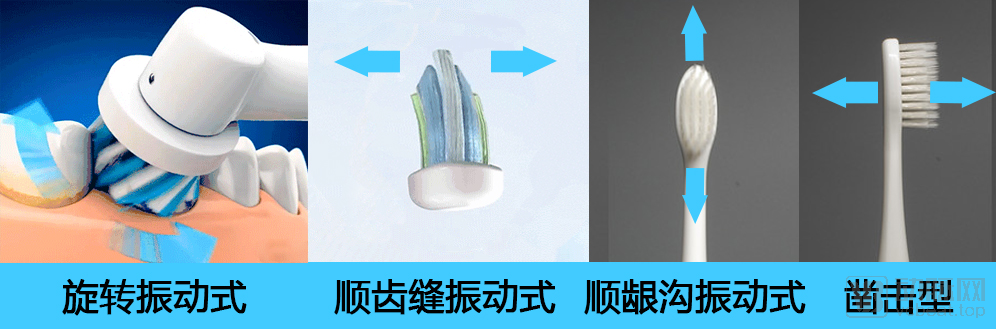
(Chart by VCBeat)
Among these types of vibrating toothbrushes, rotary-oscillating models provide stronger cleaning power and can effectively remove surface stains from teeth. However, they are less effective at cleaning hidden areas such as interdental spaces and gingival sulci, and improper use may easily cause gingival bleeding, redness, and swelling.
It is worth noting that, whether rotary-oscillating or percussion-oscillating, their internal driving force is mechanically provided by a motor housed within the electric toothbrush body, which drives the movement of the brush head. The vibration frequency of these toothbrushes typically ranges from 20 Hz to 20,000 Hz. By using the motor to drive the brush head in high-speed reciprocating vibrations that reach the sonic frequency range, they are also referred to as sonic electric toothbrushes.
However, this is an inaccurate statement. Sonic electric toothbrushes do not rely on "sound waves" for oral cleaning; rather, they are marketed as "sonic electric toothbrushes" because the vibration frequency of their bristles is similar to that of sound waves. Their core working principle remains the removal of plaque and debris through the mechanical vibration of the bristles.
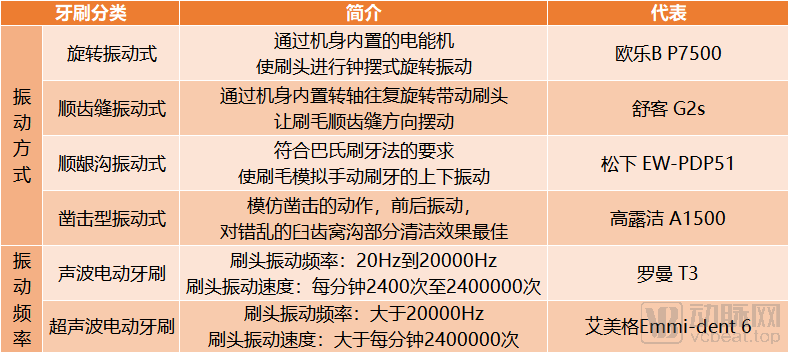 Classification and Differences of Electric Toothbrushes
So, are there toothbrushes that truly utilize "sound waves" for oral cleaning? They do indeed exist—namely, ultrasonic toothbrushes. These toothbrushes operate at vibration frequencies beyond the range of human hearing, exceeding 20,000 Hz, with 40,000 vibrations per second, which translates to over 2.4 million vibrations per minute.
However, due to the similarity between the terms “ultrasonic” and “sonic,” these two are often confused in the marketplace, with sonic electric toothbrushes frequently mislabeled as ultrasonic toothbrushes. Currently, there are very few electric toothbrushes on the market that truly achieve ultrasonic levels (above 20,000 Hz). At present, only Germany’s EMAG Emmi-dent 6 electric toothbrush (1.4 million Hz) and the United States’ ULTRASONEX SU700/800/200 SB202U electric toothbrushes (1.6 million Hz) can be legitimately classified as ultrasonic toothbrushes.
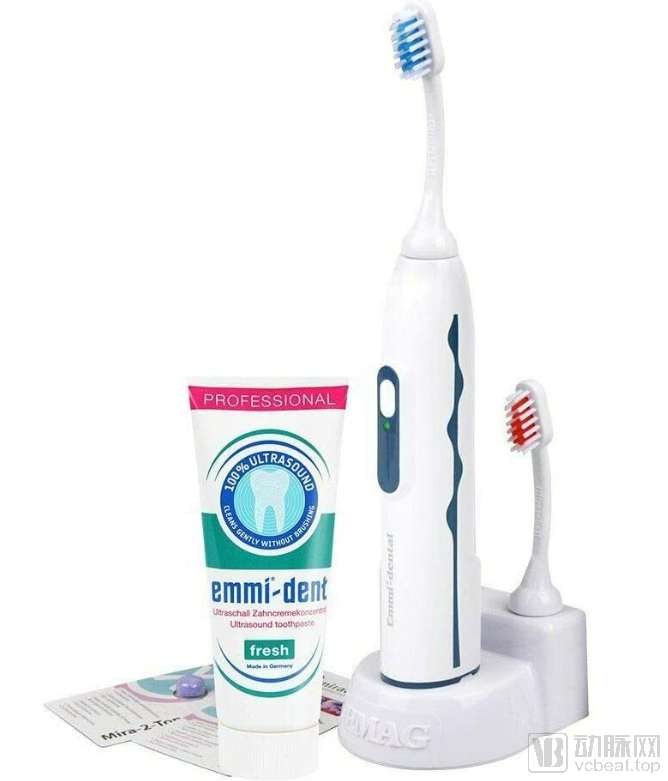
Schematic Diagram of the EMAG Emmi-dent 6 Electric Toothbrush (Source: Amazon)
The Difference Between Sonic Toothbrushes and Ultrasonic ToothbrushesThe difference between sonic toothbrushes and ultrasonic toothbrushes is not merely a matter of vibration frequency. The acoustic amplitude of ultrasonic toothbrushes may even be lower than that of sonic toothbrushes with similar frequencies. However, the "cavitation effect" inherent to ultrasound enables ultrasonic toothbrushes to disrupt bacterial chains without relying on mechanical vibration for removal; a gentle sweep is sufficient for the ultrasound to break down these bacterial chains, resulting in superior cleaning efficacy. This advantage is far beyond what conventional vibrating sonic toothbrushes can offer. Therefore, ultrasonic toothbrushes are poised to become synonymous with high-end oral care devices and represent the future direction of professional electric toothbrush development.
Getting to the Root: How to Increase Electric Toothbrush Penetration? From Raising Public Oral Health Awareness to Reducing Unit Costs
Electric toothbrushes have been in the Chinese market for about 20 years, but their growth was very slow during the first decade or so. According to AC Nielsen’s 2015 research data, the penetration rate of electric toothbrushes in China was only 3%, a situation similar to the market introduction phase faced by the electric toothbrush industry in its early stages in the United States and Japan.
However, with the rise of domestic brands in recent years and improvements in public health awareness and consumption levels, the electric toothbrush industry has entered a period of rapid growth. In 2018, the market penetration rate of electric toothbrushes in China was between 6% and 8%. From January to April 2019, the number of consumers purchasing electric toothbrushes on Taobao and Tmall increased by 175% year-on-year. Consumption of electric products such as electric toothbrushes and water flossers also showed an upward trend, indicating consumers’ willingness to purchase high-end products.
According to industry insiders, the current actual market share of electric toothbrushes has reached 8%, approaching a penetration rate of 10%, with the industry’s compound annual growth rate (CAGR) standing at 40% to 50%. Nevertheless, this still lags significantly behind developed countries such as Japan and the United States. It is reported that the market penetration rate of electric toothbrushes is approximately 42% in the United States and about 40% in Japan. The adoption rates in Germany, Italy, the United Kingdom, France, and Japan range from 30% to 40%, with some countries reaching as high as 50%—more than five times the penetration rate in China.
“But this is also a good start,” Gao Jie, co-founder of Panda Brushing, told VCBeat. “A few years ago, we saw e-commerce sales of 9.9-yuan electric toothbrushes frequently exceeding 100,000 units. This marked the beginning of consumers’ transition from manual to electric toothbrushes. As consumers raise their expectations for quality of life, the penetration of electric toothbrushes will continue to expand, with people gradually shifting from models priced at tens of yuan to those costing hundreds or even thousands of yuan.”
The 2018 consumer survey on electric toothbrushes revealed that 57.6% of consumers were female, primarily consisting of young and middle-aged adults. Nearly half of the consumers were aged 21 to 30, with monthly incomes mainly ranging from RMB 3,000 to RMB 7,000. As this demographic places considerable emphasis on aesthetic appeal, current electric toothbrush designs have increasingly prioritized visual attractiveness.
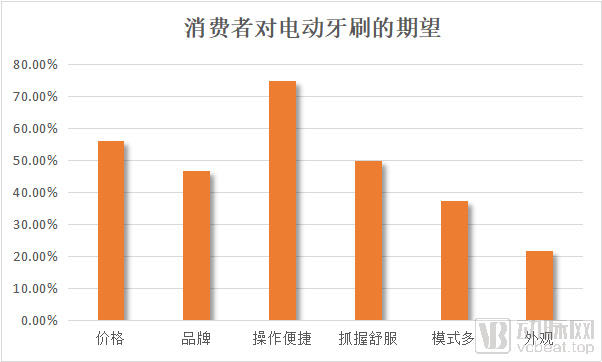
“It’s not just about aesthetics; as consumption upgrades, so do consumers’ expectations for electric toothbrushes,” added Gao Jie. “Consumers who have used electric toothbrushes now have corresponding expectations, going beyond merely completing the brushing action to placing increasing emphasis on the functional performance of these devices.” According to data from the study “Research on Design Psychology in Electric Toothbrush Design” by South China University of Technology, consumers prioritize ease of operation when purchasing electric toothbrushes, followed by factors such as price and comfort.
Despite the promising sales growth of electric toothbrushes in recent years, brands still face the challenge of persuading consumers to change their oral hygiene habits and increasing the penetration rate of electric toothbrushes if they wish to sustain continuous growth and reach a broader consumer base. To this day, 70% of people still believe they do not need to switch to electric toothbrushes, whereas in developed European countries, nearly 80% of households use them.
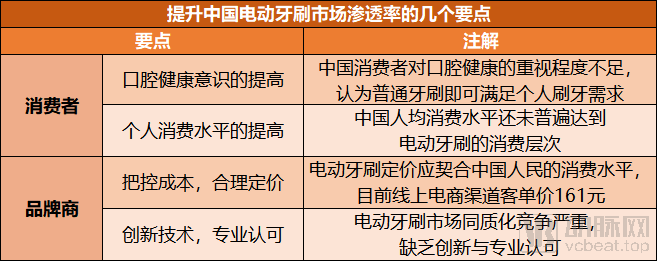
“A toothache isn’t a disease, but when it hurts, it’s excruciating.” This common Chinese folk saying reflects the general public’s insufficient attention to oral health. “Even among China’s highly educated individuals, adequate emphasis on oral care is not guaranteed. Often, people only seek dental treatment when tooth decay has become severe,” Gao Jie lamented, noting that Chinese people’s awareness of oral hygiene remains far from sufficient.
The Bass method is internationally recognized as the correct way to brush teeth. However, this technique requires users to fully master brushing skills and perform them carefully and accurately to effectively remove plaque. This proves challenging for many individuals, and consistent adherence is even more difficult.
Moreover, maintaining oral health is not something that can be achieved by an electric toothbrush alone. Oral health is the result of multiple factors working together; the choice of toothbrush and toothpaste, as well as brushing techniques, all influence the final effectiveness of oral cleaning.
Insufficient awareness of oral health is one of the reasons for the low penetration rate of electric toothbrushes in China. In addition, as China’s per capita GDP has surpassed the $10,000 mark and living standards have steadily improved, there has been a rise in personalized consumption, including electric toothbrushes. However, given the remaining gap with the United States in terms of per capita GDP, the penetration rate of small home appliances such as electric toothbrushes in China still lags far behind that of the U.S. Nevertheless, with rising national income driving increased consumer spending, it is only a matter of time before the market penetration of electric toothbrushes in China surpasses that of European and American countries.
The Battle for Interdental Spaces: A Multi-Billion-Yuan Electric Toothbrush Market Crowded with Domestic Brands and Marked by Cross-Industry Integration of Giants
According to data from Huachuang Securities’ “Tracking Report on the Household Electric Appliance Industry,” the average transaction value per electric toothbrush from 2018 to May 2020 was RMB 161. Assuming China’s entire population of 1.4 billion represents potential users, with a market penetration rate of 8% and an average replacement cycle of one electric toothbrush per consumer every two years, the estimated current addressable market size for electric toothbrushes in China amounts to RMB 9 billion.(161 yuan * 1.4 billion * 8% * 0.5)。
This data also aligns more closely with the electric toothbrush industry size statistics compiled by Zhiyan Consulting. According to Zhiyan’s data, the industry size was RMB 2.654 billion in 2014 and rose to RMB 9.3 billion by 2018.
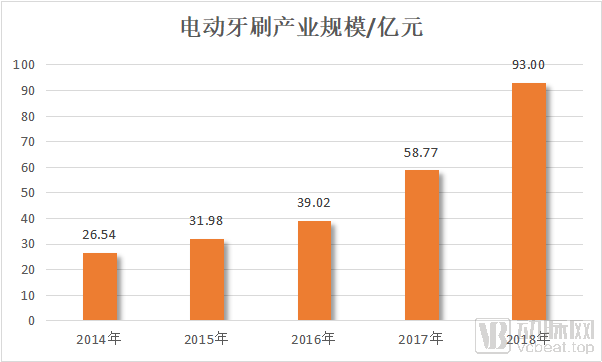
(Data Source: Zhiyan Data)
Currently, the electric toothbrush industry in China is no longer dominated by foreign brands as it was a decade ago. A growing number of domestic brands have emerged rapidly, gradually eroding the market share of foreign electric toothbrushes thanks to their advantages in attractive design, affordability, strong performance, and multifunctionality. According to third-party monitoring data from Taobao, as of February 2020, there were still 357 active electric toothbrush brands on the Taobao and Tmall platforms. This figure represents a month-on-month decline of 21.88% compared with January of the same year, possibly due to the impact of the COVID-19 pandemic.
China’s electric toothbrush market remains highly fragmented. VCBeat has conducted a brief overview and classification of prominent brands in this sector, categorizing professional oral care brands with certain technical barriers that are suitable for clinical settings as “Professional Brands”; electric toothbrush brands backed by internet technology companies or traditional home appliance manufacturers as “Tech Brands”; and domestically produced electric toothbrush brands that have emerged in the Chinese market in recent years as “Innovative Brands.”
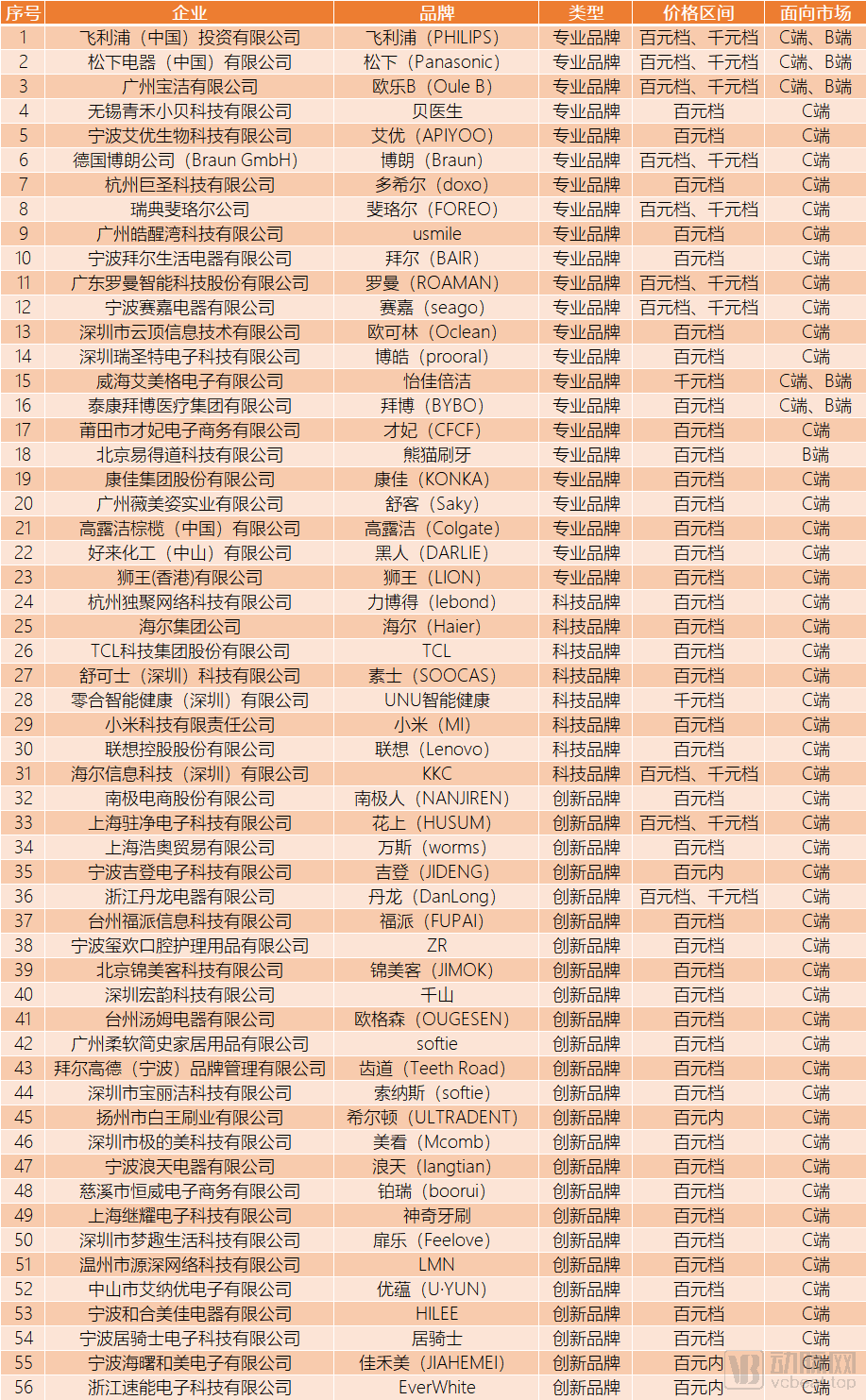
(Chart compiled from publicly available online sources)
Our analysis reveals that domestic innovative brands targeting consumers directly currently hold the largest share of China’s electric toothbrush market, which has become a highly competitive “red ocean.” Most electric toothbrushes in this market are priced between RMB 100 and RMB 1,000. An interesting phenomenon is that many domestically produced and sold innovative electric toothbrush brands claim in their marketing that their core technology originates from foreign countries, aiming to increase product visibility and enhance brand prestige. However, our actual research found that these brands claiming foreign origins do not have corresponding companies in the alleged countries; they are entirely Chinese-made products from start to finish.
Due to the lack of clear industry standards regulating China’s electric toothbrush sector, product quality varies significantly, leaving consumers confused when making purchases: which one is truly better? When faced with products from well-known foreign brands such as Philips and Longbo, consumers’ initial trust is highest. In this context, rather than adopting fake foreign branding to boost consumer confidence, domestic brands should focus on improving quality and refining craftsmanship. Only by doing so can they earn consumers’ trust and enhance public confidence in Chinese-made brands.
usmile is a leading Chinese innovative brand in this segment. The brand focuses on integrating aesthetic design with functional efficacy in its electric toothbrushes and operates an R&D laboratory established with an investment of RMB 200 million. In November 2019, usmile jointly released the “T/CHEAA 0009-2019 Electric Toothbrush Standard” with the China Household Electrical Appliances Association, establishing performance standards for the electric toothbrush industry, breaking the long-standing absence of industry standards, and driving progress in the sector.
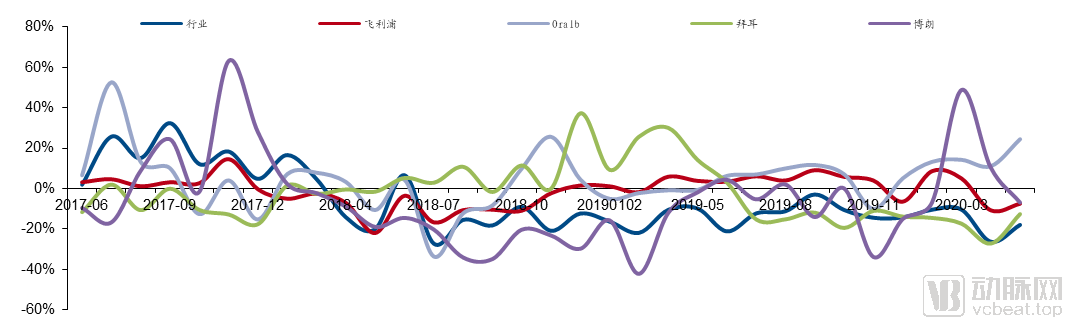
Year-on-Year Change in the Unit Price of Electric Toothbrushes (Image Excerpted from "Follow-up Report on the Household Appliance Industry")
In terms of pricing, electric toothbrushes range from tens to thousands of yuan, with the largest proportion falling within the 100–500 yuan range. Foreign brands are generally priced higher than domestic brands. However, according to Taobao’s monthly sales data, electric toothbrushes priced under 100 yuan sell the best, among which models like the Xiaomi T100 have achieved monthly sales exceeding 150,000 units.
As part of Xiaomi Technology’s smart home appliance ecosystem, Mijia electric toothbrushes feature sonic models that connect via Bluetooth to a mobile app. The app monitors brushing metrics such as duration, coverage, and uniformity, allows users to check brush head lifespan, and enables personalized settings for brushing time and modes.
In addition to launching its own Mijia electric toothbrush, Xiaomi Technology has also invested in Soocas (Shenzhen) Technology Co., Ltd., a tech company focused on consumer electronics for personal healthcare. Its brand “Soocas” is a well-known name in the domestic electric toothbrush market.
In the consumer market for electric toothbrushes, in addition to Xiaomi’s active engagement in the industry to capture market share, leading electronics and technology companies such as Lenovo and TCL have also followed suit, crossing over into the electric toothbrush sector and competing to develop corresponding products.
It is worth noting that in the sub-100-yuan electric toothbrush market, aside from ecosystem brands backed by tech companies such as Xiaomi, a significant share is captured by Pinduoduo’s 9.9-yuan free-shipping electric toothbrushes. This has led to a clear polarization in the under-100-yuan segment: ten-yuan products catering to consumers with low expectations who are merely trying out electric toothbrushes, and tens-of-yuan products offering assured quality through brand endorsement.
Post-Competition Era: Intelligent Iteration Captures the High-End Niche Market, and Model Innovation Drives the Development of the Electric Toothbrush Industry
From European and American brands such as Philips and Colgate dominating the vast majority of China’s electric toothbrush market, to the rapid rise of domestic brands, the market has become fragmented, with the leading brand holding less than 8% market share and the top ten brands accounting for under 50%. This landscape presents greater opportunities for new entrants.
However, behind this opportunity lies a fiercely competitive “red ocean” market. Brands that sell directly to consumers (C-end) via e-commerce channels are facing increasingly severe homogenization of competition. “It has become more difficult for consumers to recognize products; the landscape is no longer merely fragmented—it is approaching ‘dust-like’ fragmentation. Therefore, brand building has become even more critical,” said Gao Jie in an interview. “Many domestic innovative brands have expanded their sales channels by leveraging influencer-driven livestreaming and promotion. While this model may work in the short term, it is not sustainable in the long run. Products must be backed by proprietary technological capabilities and professional distribution channels.”
Lv Qiang, founder of Yijiabeijie, added, “It is no longer suitable to target the consumer market directly through e-commerce channels. Consumers do not have high demands for the cleaning efficacy and core technologies of electric toothbrushes, whereas medical-grade products focused on oral health are increasingly adopting clinic-based distribution channels to guide consumer demand.”
Yijiabeijie is a domestically produced ultrasonic toothbrush brand independently developed by Weihai Aimeige Electronics Co., Ltd. It adopts a differentiated competitive strategy against electric toothbrush brands in e-commerce channels, primarily targeting individuals requiring oral care after periodontal disease treatment and specialized maintenance following dental implant surgery. Previously, the company served as the agent for the production and sales of German EMAG ultrasonic electric toothbrushes in the Chinese market.
Technological upgrades are only one aspect; to establish a firm foothold in the electric toothbrush market, deliver a novel user experience, and foster customer loyalty, innovation in electric toothbrush design and functionality is equally indispensable.
The innovative trajectory of electric toothbrushes is inevitably moving toward intelligence and user-centric design. The most common approach in this direction is connecting the electric toothbrush to a mobile app via Bluetooth, enabling the app to record users’ brushing data, allowing the toothbrush to recognize brushing postures and provide corrective feedback, thereby gradually cultivating proper brushing habits. Here, we briefly highlight several cases of intelligent innovation in electric toothbrushes to explore potential future development directions.
Philips HX9903 Electric Toothbrush
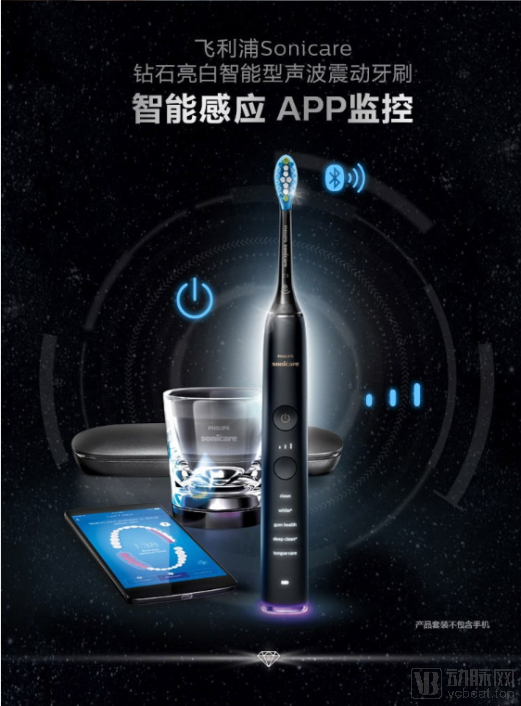
The Philips Sonicare DiamondClean Smart HX9903 electric toothbrush connects to the PHILIPS Sonicare app, which intuitively displays a map of the entire oral cavity in the center of the screen, allowing users to quickly locate the corresponding area in their mouth while brushing.
The Smart Series electric toothbrush features three Bluetooth-enabled smart sensors: intelligent positioning, intelligent friction, and intelligent pressure sensing.
Intelligent Positioning Sensors: Divides the oral cavity into 12 zones, tracks each zone, and provides customized "missed spot reminders" for areas not adequately cleaned during each brushing session. Intelligent Friction Sensors: Helps users develop proper brushing habits by promptly alerting them when incorrect horizontal scrubbing motions are detected, thereby reducing gum abrasion. Intelligent Pressure Sensors: Detects the force applied during brushing; if excessive pressure is sensed, it alerts the user through handle vibrations and a flashing purple light at the base.
Oral-B P8000 Smart Electric Toothbrush
The app corresponding to the Oral-B P8000 Smart Electric Toothbrush features camera position detection and FUN ZONE functionality. The app divides the oral cavity into six zones, represented by a circular chart, and provides reminders on areas requiring attention during the next brushing session after cleaning is complete.
The FUN ZONE feature automatically applies various animated filters to users as they brush their teeth in front of the camera. When you open your mouth wider, a smiling face appears on the screen to encourage you to keep brushing; if you close your mouth, a frowning face is displayed, expressing disappointment that you are not brushing properly as instructed. This feature enhances interactivity during electric toothbrush use, offering an enjoyable experience through expressive emojis and playful filters, making it particularly suitable for users who often lack patience while brushing their teeth.
Braun iBrush 9000 Plus Electric Toothbrush
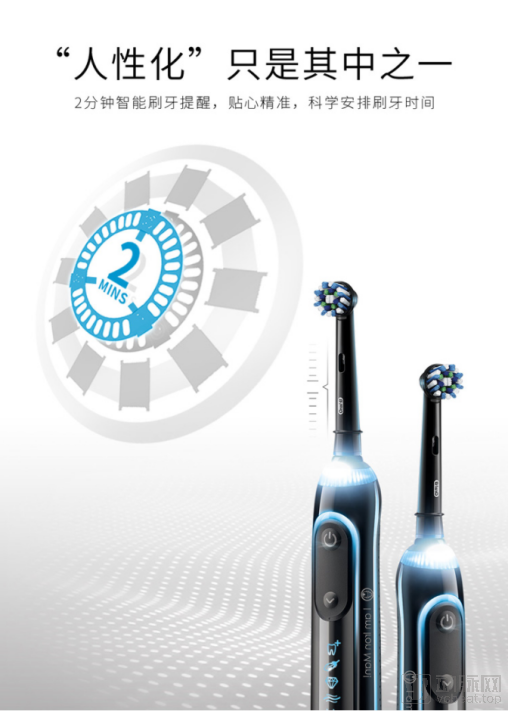
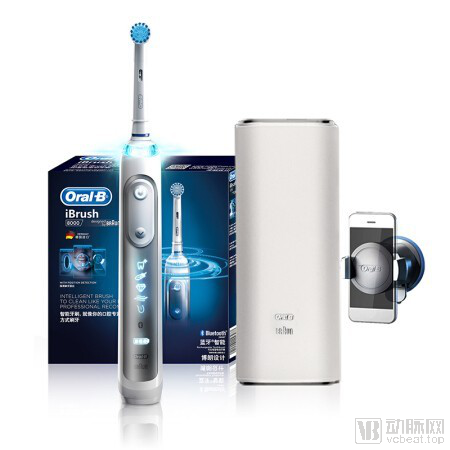
The Braun iBrush 9000 Plus electric toothbrush features “position detection.” When using the device, users align their face with the smart app interface, enabling the brush head to detect its position. During brushing, users can observe the blue squares representing plaque gradually fade on the app, visually tracking the removal of plaque until it disappears.
The toothbrush can also fully record the user's daily usage time and frequency. During the timing process, the smart app will also display rolling news and broadcast the day's weather forecast.
Panda Brushing Teeth (Shuya)
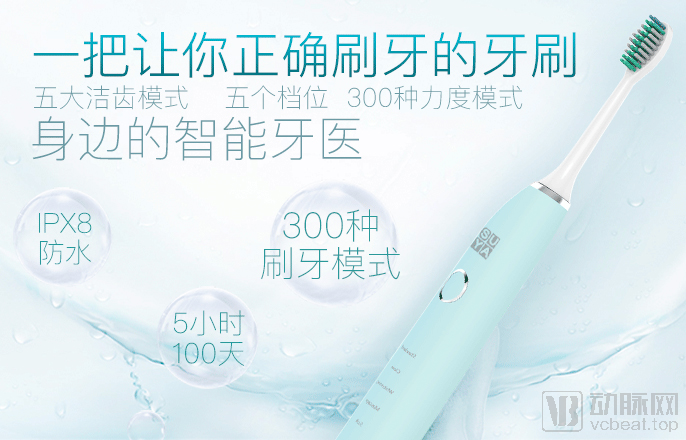
Panda Toothbrush offers a comprehensive brushing monitoring system that utilizes motion sensors to collect brushing data. Through algorithmic processing, the system captures the trajectory and posture changes of the toothbrush relative to a 3D oral model, tracks brushing coverage for each individual tooth, and provides analysis and recommendations on the brushing process, thereby helping users correct improper brushing habits.
Panda Brushing has independently developed a Bass Method brushing algorithm that uses the Bass Technique as the standard for toothbrushing, providing real-time correction of users’ improper brushing habits. Users can first learn the Bass Technique through instructional videos offered in the Panda Brushing mini-program. During actual brushing, if an incorrect technique is detected, the toothbrush will issue a vibration alert via the handle. Conversely, when users brush correctly, they will receive corresponding point rewards, with the amount varying based on their brushing performance score.
Xrush Toothbrush
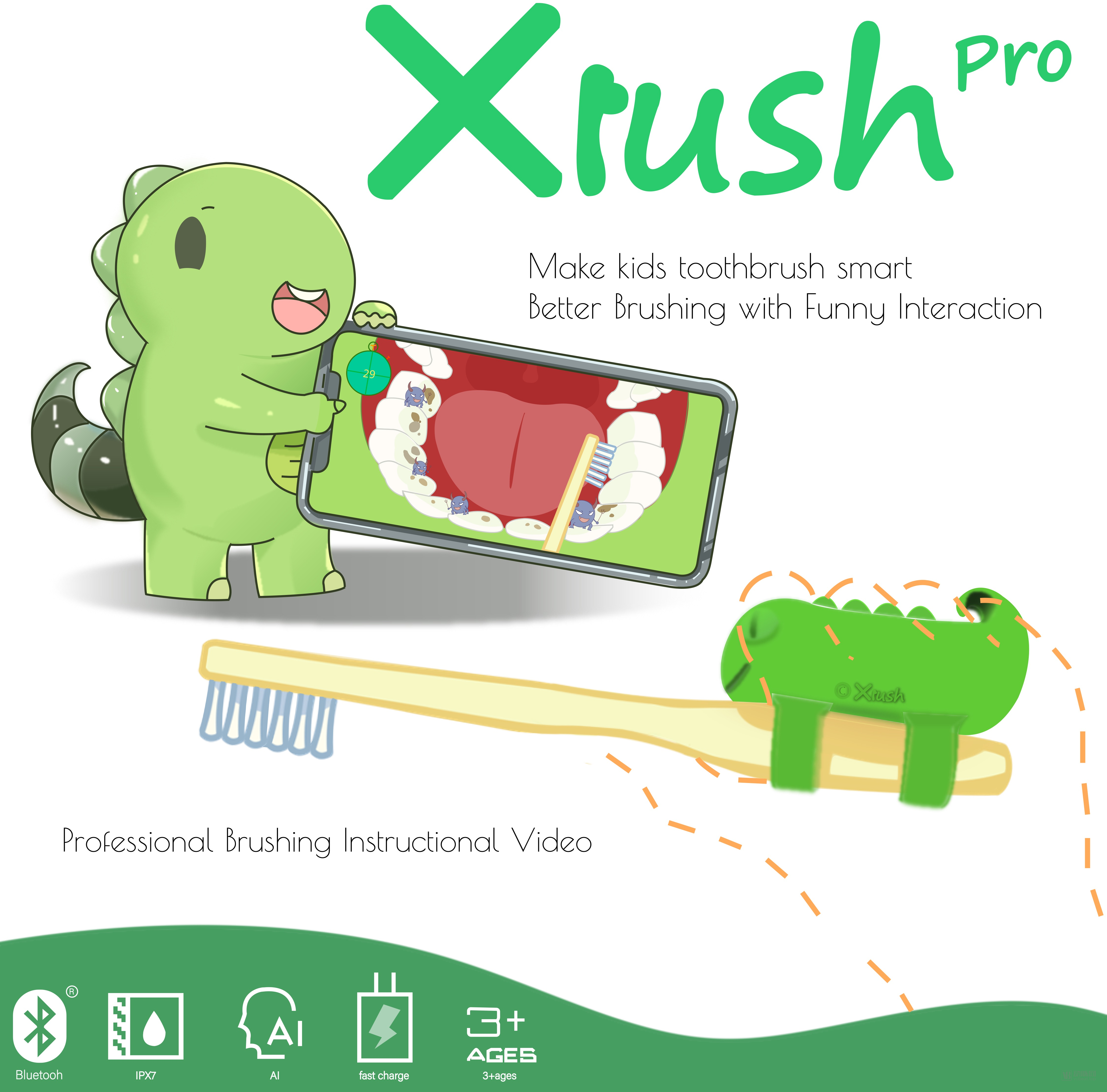
The Xrush toothbrush is an oral hygiene tool composed of the Xrush smart hardware and a standard children’s toothbrush. Xrush is an innovative smart device compatible with most conventional toothbrushes. Equipped with built-in sensors, it tracks brushing patterns, connects to a mobile app via Bluetooth, automatically generates data reports, and analyzes the quality of children’s brushing. At the end of each week, Xrush produces a weekly brushing report and flags any anomalies. Overall, Xrush comprehensively guides and encourages children to brush correctly by monitoring factors such as brushing duration and technique.
Special Thanks:
Lu Qiang, Founder of the Yijiabeijie Brand
Gao Jie, CEO of Beijing Yidedao Technology Co., Ltd. (Panda Brushing)
Zhou Yu, Head of Chongqing Xiantao Frontier Consumer Behavior Big Data Co., Ltd. (Xrush)
(The above rankings are listed in no particular order.)