

Huami Unveils Next-Gen AI-Powered Health Wearables and 'Huangshan 2' Chip at Inaugural AI Innovation Conference
On June 16, 2020, Huami Technology (NYSE: HMI) successfully held its inaugural AI Innovation Conference in Hefei, Anhui Province, home to the University of Science and Technology of China, as tech companies affiliated with the USTC ecosystem once again sought to lead the trend.
In the Name of AI, Huami Continues to Scale New Heights. In a brief one-hour launch event, five AI engines and one optical sensor were unveiled. Of course, the most eye-catching announcement was the “Huangshan 2,” the new generation of AI chip for the wearable device sector.
Today, Huami has achieved leapfrog upgrades in its three core areas: algorithms, sensors, and chips. Once again, it leverages technology to connect itself with daily life and health.
Although the long-anticipated product launch had to be shifted from an in-person event to an online format, Huang Wang, who serves as the founder, chairman, and CEO, still appeared remarkably confident. This confidence stemmed not only from the impressive 220,000 online attendees but also from the strong financial performance achieved over the past year.
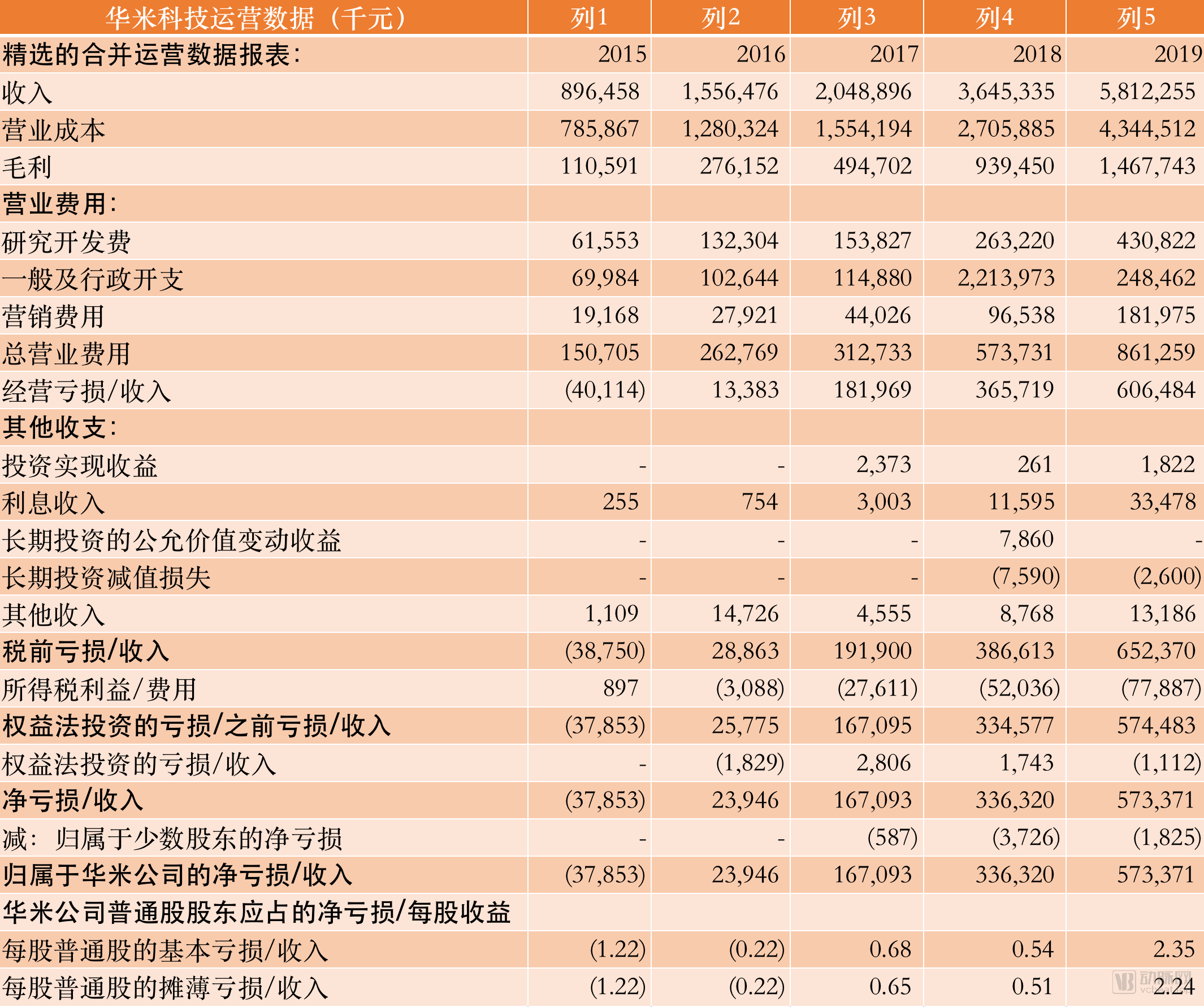
In March 2020, Huami released its financial report for the fourth quarter and full year of 2019. The data showed that the company's total revenue for the year reached RMB 5.8123 billion (USD 834.9 million), a 59.4% increase from the full year of 2018; the adjusted net profit for the year was RMB 630.3 million (USD 90.5 million), a 32.8% increase from the full year of 2018. Both revenue and profit maintained high-speed growth.
In terms of shipment volume, Huami continues to maintain its leading position in the global smart wearable device market. In both the fourth quarter and the full year of 2019, year-over-year growth exceeded 50%. Specifically, total shipments in the fourth quarter reached 14.7 million units, representing a 59.8% year-over-year increase from the 9.2 million units shipped in the fourth quarter of 2018, thereby setting a new record for single-quarter shipments. Meanwhile, total shipments for the full year of 2019 amounted to 42.3 million units, marking a 53.8% increase compared to the 27.5 million units shipped in 2018.
The pandemic has had virtually no impact on Huami’s offensive; even as total shipments across the entire wearables industry declined by 7.1%, Huami’s first-quarter financial report still showed growth against the market trend.
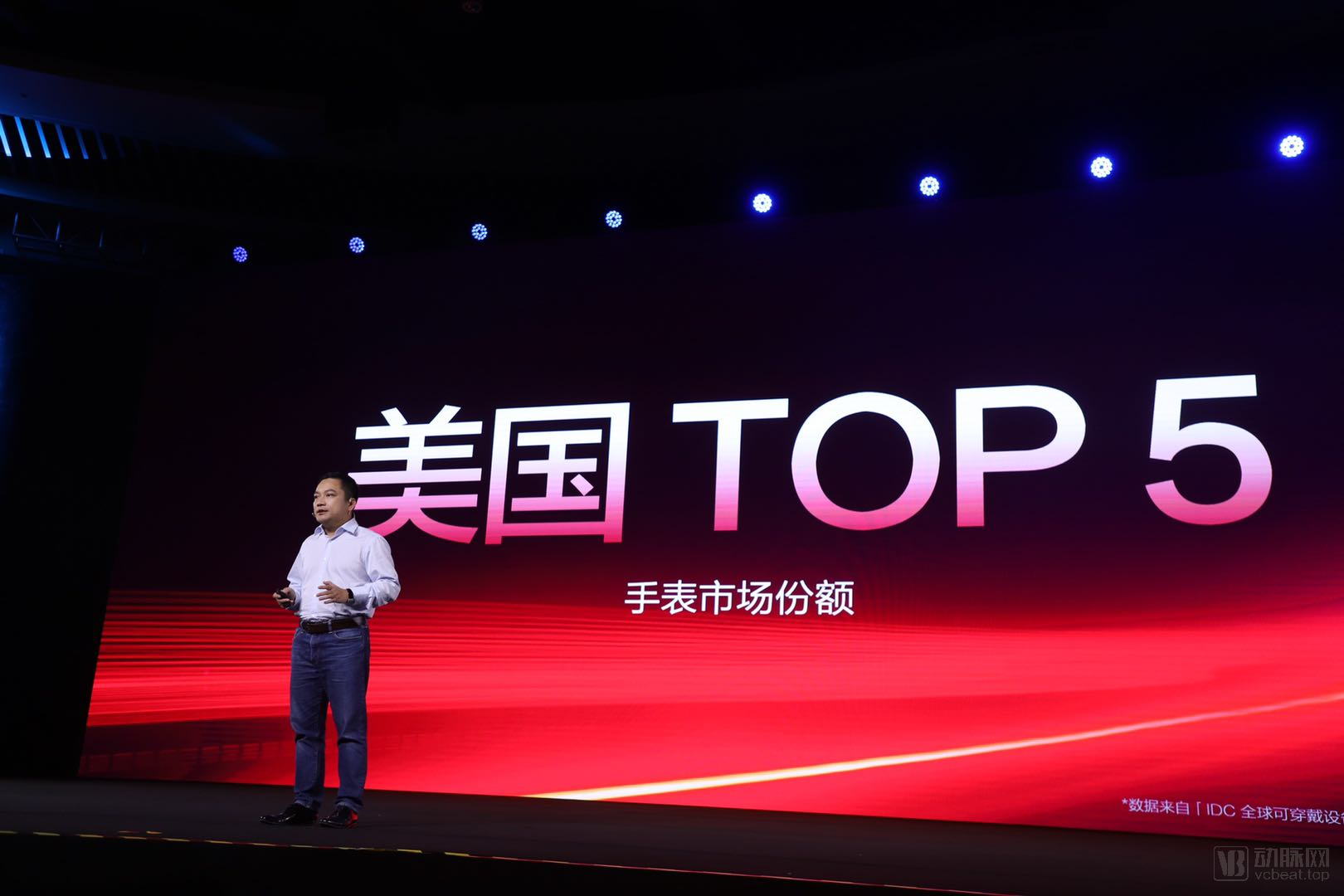
“In the first quarter of 2020, Huami’s smartwatches achieved global shipments of 980,000 units, representing a year-on-year increase of 80.2%. Single-quarter revenue reached a record high of RMB 1.08 billion, up 36.1% year on year. Notably, Huami’s proprietary smartwatch brand, AMAZFIT, entered the top five in U.S. market share for the first time. On a global scale, Huami has secured the number one position in market share in four countries: Indonesia, Italy, Spain, and India.” At the press conference, Huang Wang summarized Huami’s impressive first-quarter performance with this set of figures.
In 2018, Huami established its global supply chain management headquarters in Shenzhen, leveraging a unified platform to coordinate production and the supply of related materials from global suppliers. The company also acquired a series of overseas enterprises, focusing heavily on expanding into international markets. These strategic moves have underpinned Huami’s continued growth and success to date.
Looking back, it took Huami less than six years to evolve from a contract manufacturer within the Xiaomi ecosystem into an independent global giant in smart wearable devices. Empowered by AI, wearable devices are no longer “of little value”; they are becoming true health management products.
So, what wearable products are truly suitable for health management? At the conference, Huang Wang used three short sentences to describe his vision of health management enabled by wearables.
“Exercise should be accessible anytime, anywhere.”
“Records should be accessible anytime, anywhere.”
“Accumulation should be ongoing and ubiquitous.”
Behind this ideal, Huami has put forward new requirements for data recording in wearable devices. Huang Wang stated, “Manufacturers of smartwatches are constantly repeating one thing to users: telling them that their devices can support dozens or even hundreds of sports modes, as if the more sports modes supported, the smarter their product is. However, if we carefully consider the user experience, such rhetoric seems somewhat insincere. To be precise, there is a problem with the direction manufacturers are focusing on.”
“True intelligence should enable users to forget about ‘settings,’ allowing devices to intelligently capture users’ exercise patterns and data, and provide intuitive feedback—users do not need complex, incomprehensible, or non-actionable exercise information.”
Clearly, slogans and blueprints alone are insufficient to genuinely align wearable devices with the aforementioned health management philosophy. At the inaugural AI Innovation Conference, Huami unveiled five AI-powered health engines in one go, aiming to fully implement its product design philosophy.
RealBeats™ Biometric Data Engine: Automatic identification of arrhythmias by analyzing PPG optical heart rate data and ECG electrocardiogram data.
Huami Technology has jointly completed a clinical medical study on atrial fibrillation monitoring using smart bands with Peking University First Hospital. The accuracy of atrial fibrillation detection by the smart band’s PPG and ECG functions, powered by RealBeats™, reached 93.27% and 94.76%, respectively, which is largely consistent with manual interpretations by professional physicians. Thanks to this engine, Huami Technology has detected 91,100 suspected cases of atrial fibrillation to date.
The newly launched second-generation AI bio-engine for cardiac data, RealBeats™ 2, is arguably the most advanced AI heart rate engine globally. It effectively eliminates noise interference in heart rate signals during physical activity, with effective atrial fibrillation monitoring time at night and during the day reaching 1.87 times and 6.64 times that of the previous generation, respectively. Furthermore, by establishing a big data model for cardiac health, it has successfully achieved AI-based automatic differentiation of reentrant tachycardia and frequent supraventricular premature beats.
OxygenBeats™ Blood Oxygen Data AI Bio-Engine:This algorithm preprocesses blood oxygen signals based on a health big data model to eliminate signal noise, thereby improving measurement accuracy by up to 50%. Furthermore, it addresses errors caused by improper user wear through calibration using multiple sets of blood oxygen detection values, thus enhancing the accuracy of the collected data.
Huang Wang introduced that Huami adopted oxygen desaturation experiments to verify the accuracy of its algorithm. The results showed a detection accuracy rate of up to 100%, compared to less than 90% for similar products on the market. The average error relative to professional pulse oximeters was only 1.67%, with precision surpassing the blood oxygen detection algorithms of most wrist-worn wearable devices.
He revealed that, building on their previous collaboration, Huami Technology will continue to work with Academician Zhong Nanshan’s team to conduct post-recovery follow-ups for COVID-19 patients, leveraging the high-precision blood oxygen monitoring capabilities of OxygenBeats™. Smartwatches equipped with the OxygenBeats™ AI bio-engine for blood oxygen data are expected to be launched in the third quarter of this year (2020).
SomnusCare™ Sleep Data AI Bio-Engine:Based on Huami's extensive health big data, this algorithm accurately identifies sleep states and helps users understand their sleep status and quality through multi-dimensional data. Its sleep data detection accuracy exceeds 80%, and it can detect nap data lasting longer than 25 minutes with nearly 100% accuracy.
Meanwhile, targeting sleep apnea syndrome, the “invisible killer” that poses a serious threat to health, Huami Technology leverages its OxygenBeats™ blood oxygen engine to conduct in-depth analysis from two dimensions—sleep state determination and blood oxygen saturation monitoring—thereby enabling intelligent identification of sleep apnea syndrome and promptly alerting users to take necessary medical measures.
Previously, during the COVID-19 pandemic, Huami Technology leveraged its BioTracker™ engine, integrating external factors such as weather, seasons, and historical cycles, to establish a predictive model for epidemic incidence trends. With the comprehensive upgrade of the BioTracker™ engine, future capabilities for epidemic prediction and even early warning will become part of the new health infrastructure platform.
AI-Powered Human Activity Pattern Recognition Engine ExerSense™:As mentioned above, nearly all smartwatches currently on the market require users to manually select a workout mode before exercise begins in order to start recording data. Huami Technology has addressed this by analyzing exercise and heart rate data across different workout modes.
By leveraging data from the motion and heart rate sensors on Huami wearable devices, this engine detects and matches exercise models in real time, ultimately enabling intelligent identification of the user’s current activity mode. Currently, ExerSense™ can automatically recognize 19 types of activities, including brisk walking, running, cycling, and swimming, covering 95% of users’ daily exercise scenarios. Users can enjoy truly seamless, automatic selection of smart activity modes without the need for cumbersome manual operations.
Huami-PAI™ Human Health Assessment System:This system leverages user heart rate data, combined with daily activity duration and multi-dimensional physiological metrics, to algorithmically convert these inputs into the more intuitive PAI (Personal Activity Intelligence) score, thereby helping users intelligently monitor their daily exercise volume. Furthermore, PAI tailors a fully personalized health assessment system for each individual by incorporating personalized physiological data such as age, gender, and resting heart rate.
The system also incorporates a temporal dimension to analyze physical activity levels. Users can freely set exercise goals based on their work schedules and daily routines. To achieve a PAI score of 100, you can opt for low-intensity exercise spread over multiple days or concentrate high-intensity workouts over a few days.
According to the findings of the HUNT Fitness Study, maintaining a PAI score above 100 helps reduce the risk of cardiovascular disease mortality and increase life expectancy. Led by Professor Ulrik Wisloff from the Faculty of Medicine at the Norwegian University of Science and Technology, the study spanned more than 35 years and involved over 230,000 participants.
According to Huang Wang, Huami already has many wearable devices that support huami-PAI™, including the newly released Mi Band 5. More devices will be equipped with this feature in the future, enabling every user to scientifically set and achieve fitness goals, thereby improving their physical health.
With algorithmic support alone, Huami still struggles to realize its vision; it also requires a superior data acquisition device. In the field of wearable technology, sensors are at the core.
“Those who are serious about big data must build their own sensors.”
This statement originates from the company-wide letter issued at the end of 2019. At the conference, Huami unveiled its next-generation BioTracker™ 2 PPG biometric tracking optical sensor.
Compared to its predecessor, BioTracker™ 2 supports up to five biometric data engines (RealBeats™, OxygenBeats™, SomnusCare™, ExerSense™, and huami-PAI™). It is the most feature-rich and highest-precision human biosensor ever developed by Huami Technology, capable of supporting data acquisition for biometric data engines such as exercise, sleep, heart rate, blood oxygen, and the Personal Activity Intelligence (PAI) health assessment system. It is the world’s most powerful wearable optical biosensor.
However, to unleash its full potential, it requires the support of a unique chip. This brings us to the most core product of this conference—the “Huangshan 2” next-generation AI chip for the wearable sector.
In September 2018, Huami Technology officially released “Huangshan No. 1,” the world’s first AI chip for the wearable sector. Now, after more than 450 days of intensive R&D efforts, the next-generation “Huangshan No. 2” has finally been unveiled.
According to reports, like “Huangshan 1,” “Huangshan 2” is still based on the advanced RISC-V architecture. Just as Intel’s x86 architecture dominated the PC era and ARM architecture prevailed in the mobile internet era, RISC-V is widely recognized as the most promising chip architecture for the IoT (Internet of Things) era. It offers two major advantages: high computational efficiency and low power consumption. Compared with the ARM Cortex-M4 processors commonly found in wearable devices, its overall computational efficiency is improved by 38%.
Huang Wang revealed that Huami Technology has redesigned the AI on-device biological data computing NPU for the “Huangshan 2” chip, adopting convolutional neural network acceleration technology to significantly enhance the performance of local AI data computation and accelerate recognition speed. Based on heart rate data, the atrial fibrillation detection speed of “Huangshan 2” is seven times that of “Huangshan 1” and 26 times faster than other software algorithms available on the market.
Meanwhile, the Huangshan 2 also incorporates an ultra-low-power sensor AON mode and, like Apple, is equipped with a coprocessor—the C2 coprocessor. This processor can independently handle data collection, continuously recording health data even when the main chip is in sleep mode or completely powered off. Theoretically, this reduces the overall power consumption of the Huangshan 2 by 50%, thereby eliminating users’ battery life anxiety associated with wearable devices.
Currently, the "Huangshan No. 2" chip has successfully completed tape-out and is expected to enter mass production in the fourth quarter of this year. In the first half of next year (2021), new wearable devices powered by the "Huangshan No. 2" will also be launched.
It is worth noting that the features created by this hardware-software integration will gradually extend to products across various price segments. “We will not compromise users’ right to pursue health.”
With these capabilities in place, we may need to rethink Huami’s positioning. The company is no longer just a contract manufacturer; it has evolved into a life sciences company with big data analytics capabilities in the field of smart wearables.
Under the new positioning, Huami must consider some new questions.
First is the approval issue. As Huami’s smartwatches move closer to medical health devices, they will inevitably face more stringent review and approval processes. Certifications from agencies such as the NMPA and FDA are crucial for market access.
According to statistics from VCBeat, a search on the official website of the National Medical Products Administration (NMPA) using keywords such as “wearable,” “ECG,” “wrist blood pressure,” and “arm blood pressure”—excluding cases of certification renewal upon expiration—identified products from certain companies that have obtained certification. Nevertheless, the list may be incomplete because many companies’ products do not use the aforementioned keywords in their names or are produced under original equipment manufacturer (OEM) arrangements. We welcome any corrections regarding omissions. With the exception of one sleep apnea syndrome monitor from Itamar Medical, all identified devices are domestically produced in China. The majority of these devices are used for electrocardiogram (ECG) recording and blood pressure monitoring, indicating that these two functions remain among the primary medical applications of wearable devices at present.
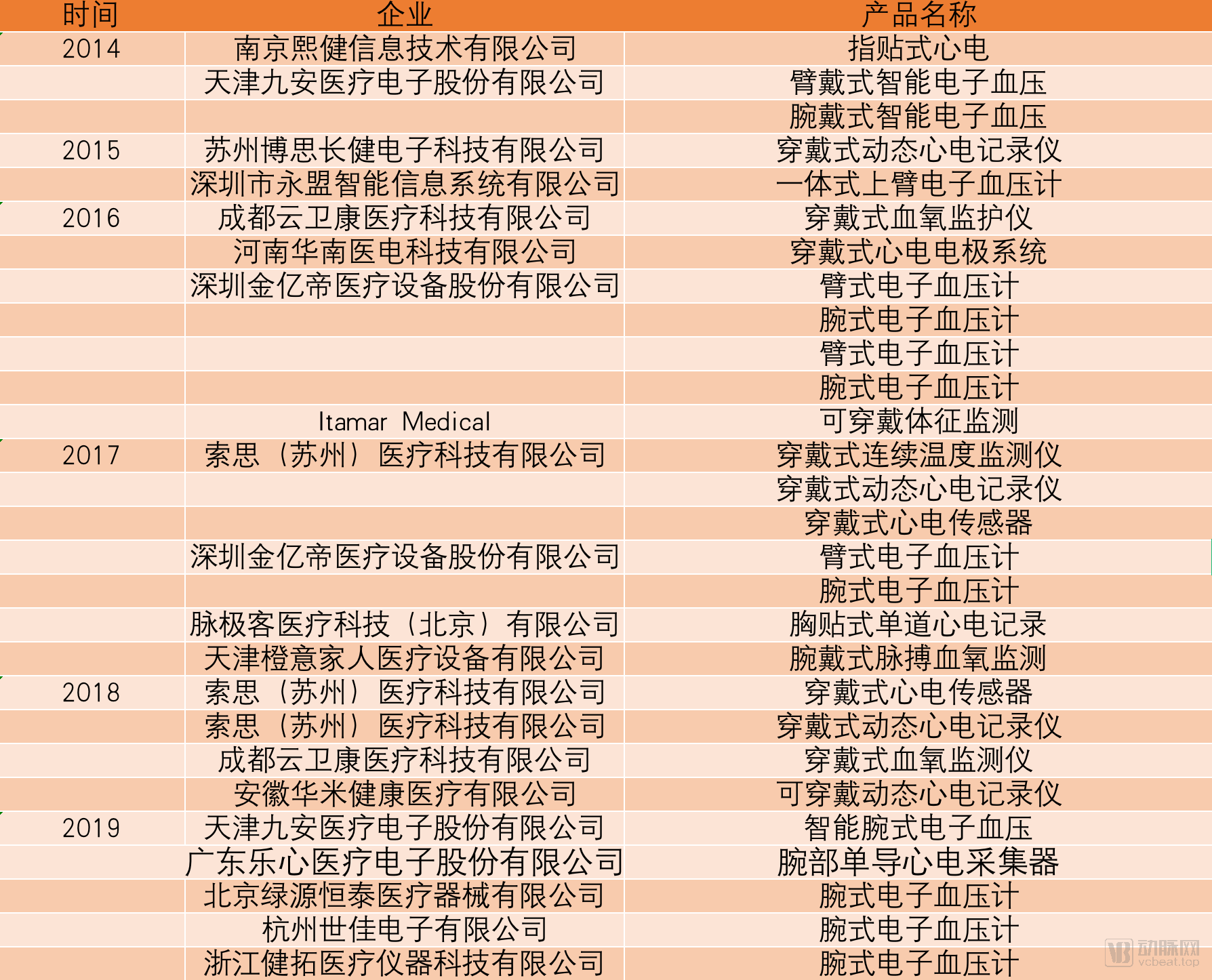
Data sourced from the VCBeat database
Huami obtained regulatory approval for its wearable dynamic ECG recorder in 2018, but with the addition of new features, the company may need to update its existing functionalities.
The second issue is data security. At the inaugural AI Innovation Conference, Huami did not address this issue or its solutions; however, obtaining NMPA certification to some extent demonstrates the safety of Huami’s products.
However, as the scale of data management continues to expand, further investment in security is essential for Huami to mitigate potential risks, given that data security has become the next core technological frontier for tech companies to compete in.
At the close of his speech, Huang Wang shifted the topic to collaboration.
One key initiative is the establishment of the Huami Artificial Intelligence Research Institute. Specifically, Wang Kongqiao, Vice President of Huami Technology, will serve as the Dean of the Institute; Ramesh Jain, a renowned expert in artificial intelligence research, Professor at the University of California, Irvine, and founder of the Institute for Future Health, will serve as the Chief Advisor; and Wu Feng, Assistant to the President of the University of Science and Technology of China and Director of the National Engineering Laboratory for Brain-inspired Intelligence Technology and Applications, will chair the Institute’s Expert Committee.
Currently, the Research Institute has established three joint laboratories: the Wrist-Worn Intelligent Wearable Joint Laboratory with Academician Zhong Nanshan’s team, the Track and Field Sports Joint Laboratory with the Chinese Athletics Association, and the Brain-Computer Intelligence Joint Laboratory with the Advanced Technology Research Institute of the University of Science and Technology of China.
Collaboration with Unisound was another highlight of the conference. This AI unicorn, specializing in speech technology, has already established significant competitive barriers in the field of intelligent interaction. The partnership between these two companies originating from the University of Science and Technology of China ecosystem may pave the way for wearable devices to break new ground in voice interaction.
Next, we will fully embrace the broader health and wellness sector.
Today, Huami has established a comprehensive AI-driven health management architecture through its self-developed smart wearable chips, algorithms, and sensors. In the future, Huami Technology will leverage AI as its technological cornerstone to continuously advance new health infrastructure and reshape the global healthcare industry.
Huami’s future is worth looking forward to.