

Uromems Secures $17.5M Series B Funding to Advance Implantable eAUS Technology for Stress Urinary Incontinence
UroMems
Implantable Medical Device Developer
Recently, VCBeat learned that UroMems, a developer of the electronic artificial urinary sphincter (eAUS), has completed a $17.5 million Series B financing round. The round saw participation from new investors including Savings Bank, Banque Populaire du Maroc, Credit Agricole SA, Bpifrance, and BNP Paribas, while existing investor HIL-INVENT Ges.mbH also participated in this round.This round of financing will be used to advance the development of its implantable mechatronic device for the treatment of stress urinary incontinence.
Stress Urinary IncontinenceAccording to statistics from the American Continence Association, approximately 200 million people worldwide suffer from urinary incontinence. Of these, 75% to 80% are women, and the majority of cases are stress urinary incontinence.
The three internationally recognized primary causes of urinary incontinence are: pelvic floor muscle injury resulting from pregnancy and childbirth, increased intra-abdominal pressure due to obesity, and declining estrogen levels associated with aging. As the issue of population aging intensifies, the prevalence of urinary incontinence continues to rise, imposing a significant medical and economic burden on society; however, attention to this field remains insufficient.
Currently, the two primary medical technologies used overseas for the treatment of urinary incontinence areSuburethral SlingandAMS 800 Artificial Urinary Sphincter。However, there has been no significant progress in the treatment of stress urinary incontinence over the past few decades, and major deficiencies persist.According to statistics, 25% of patients encounter infection issues when using urethral slings, with some even experiencing mesh migration. When using artificial urinary sphincters, 30% of patients develop complications such as urethral erosion, urethral infection, and urethral atrophy due to mechanical failure.
UroMems has identified the pain points in urinary incontinence treatment. Leveraging its team’s professional expertise and patented technologies, the company has designed and developed an active implantable medical device for urinary incontinence, offering new possibilities for current treatment options.
UroMems was founded in 2011 and is headquartered in Grenoble, France. UroMems specializes in the design, development, and commercialization of active implantable medical devices, providing implantable solutions for the current treatment of urinary incontinence.The company’s product development goals are to create solutions that are easier for patients to use and simpler for healthcare professionals to operate, while being more effective, reliable, and less invasive than current therapeutic technologies. Leveraging innovations in urinary incontinence treatment, UroMems has secured a total of $48.7 million in financing.
UroMems has established over 80 related patents by leveraging its specialized technical barriers and has developed technologies based on embedded intelligent systems.
As CEO and Co-Founder of UroMems, Hamid Lamraoui has been leading the company’s development since its inception. He holds a Ph.D. in Bioengineering and has participated in multiple projects involving the development of novel medical devices, including implantable wireless communication systems and implantable self-regenerating glucose biofuel cells.
Stéphane Lavallée, another co-founder of UroMems, specializes in “smart” medical devices (such as computer-assisted surgery, robotics, medical imaging, smart implants, and instruments) and holds more than 60 independent patents.

The Two Founders of UroMems (Left: Hamid Lamraoui; Right: Stéphane Lavallée)
Image source: UroMems official website
With over 40 years of experience in the pharmaceutical industry, Dr. Hillebrand believes that UroMems’ team—comprising highly skilled engineers, medical technology experts, and entrepreneurs—enables the industrial-scale production of the company’s products. Its scalable manufacturing capability is a critical component of its market entry strategy.
It is precisely the professional background of UroMems’ founding team that gives the company a competitive edge in the research and development of urinary incontinence products, enabling it to achieve technological innovation in the field of urinary incontinence treatment device development.
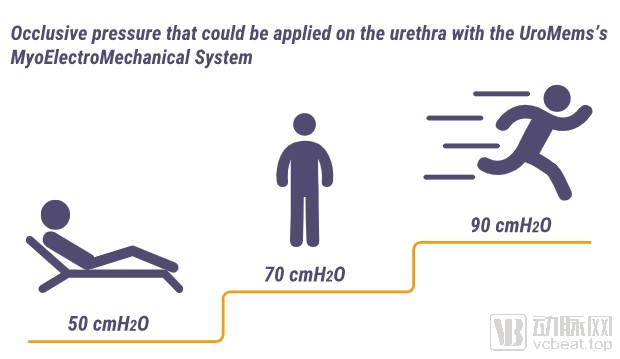
UroMems leverages embedded systems and microtechnology to develop implantable devices for the treatment of urinary incontinence, compensating for sphincter insufficiency through a MyoElectroMechanical system. This innovative system, positioned around the urethra, automatically adjusts pressure in response to patient activity, enhancing ease of use and enabling smarter product performance.
As Clayton Christensen, the father of disruptive innovation, stated: “We should embed physicians’ expertise into instruments and devices to enable broader application of such expertise, making treatment equipment more affordable and accessible.” UroMems is putting this principle into practice. Leveraging its professional expertise and interdisciplinary collaboration model, UroMems integrates healthcare with artificial intelligence as a driving force to address gaps in urinary incontinence treatment, thereby continuously optimizing and improving therapeutic solutions for urinary incontinence.
Reduce treatment complications and make urinary incontinence therapy smarter
So, how exactly do UroMems' products work? And what makes them special?
The eAUS electronic artificial urinary sphincter is an active implantable medical device that compensates for sphincter insufficiency via the MyoElectroMechanical system. Specifically, the eAUS electronic artificial urinary sphincter utilizes next-generation micro-sensors embedded within the implant to measure patient activity in real time. Advanced algorithms integrated into the device’s electronics interpret the data from these micro-sensors and transmit it to the MyoElectroMechanical system to adjust urethral pressure.
This technological innovation enhances device ease of use, while reducing atrophy or tissue damage caused by the use of related therapeutic devices, as well as the associated increased rates of urinary leakage and reintervention.
Schematic Diagram of Working Principle
Image source: UroMems official website
Leveraging its proprietary patented technology, UroMems offers a safer and more effective solution for patients with severe urinary incontinence., it incorporates various mechanisms to ensure patient safety and has gained recognition in other medical applications.
The company's founder, Lamraoui, stated: "The device can be simply and rapidly implanted into the patient’s body without surgical intervention. Once the system is implanted, physicians can reconfigure it. It can also retrieve relevant information from the electronic artificial urinary sphincter memory. This enables real-time assessment of therapeutic efficacy for each patient and allows for adjustments as needed.”
Thus, compared with traditional urinary incontinence treatments, which involve complex procedures and carry certain risks of infection and complications, the eAUS features an ergonomic design and a real-time feedback mechanism enabled by algorithmic technologies, making the device easier to use and safer.
UroMems Secured Three Rounds of Financing in Just Four Years: What Drives Its Rapid Growth Is Worth Pondering.
In fact, it is UroMems’ proprietary technological advantages and its deep expertise in the field of urinary incontinence treatment that have enabled the company to carve out new market space in this sector. Targeting patients with moderate to severe stress urinary incontinence, the company leverages the more than 80 patents protecting its eAUS device to address significant unmet needs in a market valued at approximately $2 billion annually.
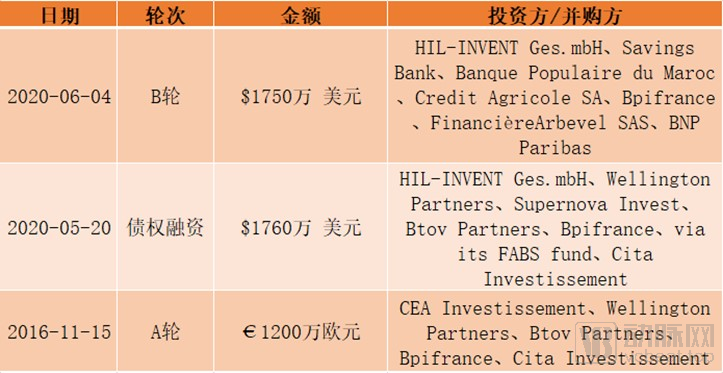
UroMems combined equity and debt financing to develop its first prototype products in 2011, completed product testing the following year, and prepared for Phase I clinical trials.
UroMems' Historical Financing Details
In 2016, UroMems secured €12 million in Series A financing, which was allocated to completing preclinical studies and Phase I clinical trials for patients with stress urinary incontinence caused by sphincter deficiency, as well as to the development of the eAUS device.
In May 2020, UroMems secured $17.6 million in debt financing, which will be used to fund ongoing preclinical studies and initiate the first clinical trials of UroMems’ eAUS device.
In June 2020, UroMems completed a $17.5 million Series B financing round to advance the development of its eAUS device for the treatment of stress urinary incontinence.
A review of UroMems’ financing history reveals that the majority of its capital has been allocated to core areas such as product development, clinical trials, and technological research. The company’s ability to achieve continuous breakthroughs in the treatment of stress urinary incontinence, open up new market opportunities, and establish product barriers is attributable not only to the professional expertise of its team but also to the substantial financial investment and research dedicated to its core technologies.
Dr. Hamid Lamraoui, Co-founder and CEO of UroMems, once stated, “Before we begin developing devices that truly address the clinical problems we aim to solve, we devote considerable time to contemplating every detail.” In addition to investing in its core technologies, UroMems places significant emphasis on dedicating resources to the product development process, even to the extent of scrutinizing every detail. The company’s professionalism and commitment to its products have been key factors enabling the development of this breakthrough innovation.
“With our unique technology and extensive intellectual property portfolio, we are now at the forefront of the industry,” said Dr. Hamid Lamraoui.
Meanwhile, the prolonged lack of technological advancements in urinary incontinence treatments to meet patient needs, contrasted with the rising prevalence of urinary incontinence driven by an increasingly aging population, has created a demand gap, opening up a vast blue-ocean market for UroMems.UroMems targets a patient population of 200 million, leveraging its proprietary technologies and capabilities to innovate therapeutic approaches, disrupt this vast potential market, and capture market dividends.。
Domestic epidemiological surveys have found that 50% of women over the age of 40 suffer from urinary incontinence. This indicates that there is still a substantial population with unmet needs in the field of urinary incontinence in China.However, there are only three types of surgical treatments for urinary incontinence available in China: anterior vaginal wall repair, retropubic bladder neck suspension, and mid-urethral sling.
These three categories of treatment are associated with drawbacks such as high costs, mesh erosion or infection, sling erosion, potential urethral injury, and surgical site infection.Yet, in response to the unmet therapeutic needs of patients, China has yet to develop corresponding innovative products and continues to lack sufficient attention to the field of urinary incontinence.
UroMems’ business model not only serves as a reminder for domestic researchers to pay greater attention to the field of urinary incontinence, but also provides insights for the medical device industry at large: companies should focus on unmet needs in disease treatment and achieve breakthroughs from within these specific therapeutic areas. The most critical factor remainsSustained focus on the field and in-depth product research, coupled with specialized practical expertise, drive innovative disruption in the industry and therapeutic landscape, establishing robust product barriers to secure a leading market position.。