

Changjiang Biotech's Fully Automated Thromboelastography System Drives Domestic Breakthrough in China's High-End Coagulation Diagnostics Market
Over the past two decades, domestic in vitro diagnostic (IVD) products have achieved import substitution in the mid- and low-end markets. However, the high-end market, which demands higher product performance, remains dominated by imported products. Gaining recognition in the high-end segment has become the central theme for the development of China’s IVD industry.
The coagulation testing market is a niche segment that cannot be bypassed in the domestic substitution of in vitro diagnostics (IVD) in China. China boasts the largest market size and the fastest growth rate for coagulation IVD products. Within the domestic coagulation IVD market, valued at approximately RMB 3.5 billion, imported brands account for 90% of the market share. (Data source: IVD Network)
Coagulation IVD testing is a mandatory panel for preoperative and postoperative patients, hospitalized patients, and those with hematologic disorders, serving as an essential measure for preventing medical errors and monitoring postoperative outcomes. However, routine coagulation assays alone are insufficient, as they exhibit low sensitivity in detecting thrombotic phenotypes. The sensitivity of phenotypic detection for thrombotic diseases can be enhanced through Thromboelastography (TEG) and Thrombin Generation Tests (TGT), thereby better supporting the diagnosis and treatment of thrombotic disorders.
Thromboelastography provides a comprehensive overview of coagulation function. It is a diagnostic test that dynamically monitors the entire process of coagulation and fibrinolysis, fully describing the progression of a blood sample from coagulation initiation through clot formation to clot lysis. This enables clinicians to rapidly assess a patient’s coagulation status (hypercoagulability, hypocoagulability, or hyperfibrinolysis) and analyze the underlying causes. It holds significant value in clinical evaluation of coagulation function, guiding component blood transfusion, predicting thrombotic or hemorrhagic risks, and informing medication management.
In the clinical management of COVID-19, thromboelastography (TEG) serves as an essential adjunct to extracorporeal membrane oxygenation (ECMO). Bleeding, one of the most significant complications associated with ECMO, occurs in 20% to 40% of cases. Therefore, coagulation management is critical. Real-time monitoring of coagulation parameters is a vital measure that guides clinicians in adjusting medication dosages, ensuring the proper functioning of ECMO, and safeguarding patient safety.
In clinical practice, incorporating thromboelastography (TEG) into routine coagulation testing is becoming a prevailing trend. There is also growing clinical demand for higher levels of automation and throughput in TEG systems. Consequently, the TEG market is poised to present new opportunities.
Thromboelastography (TEG) was first invented in 1948 and became an important tool for guiding component blood transfusion in the 1980s. However, in China, it was not until around 2000 that many tertiary hospitals began using TEG to guide the use of intraoperative component blood and coagulation-related medications in departments such as anesthesiology, intensive care units (ICU), cardiopulmonary bypass, and organ transplantation. It was not until April 2019 that the Chinese blood transfusion industry standard "Internal Medicine Blood Transfusion" explicitly stated that guidance on component blood transfusions should refer to the results of thromboelastography tests.
As can be seen, although thromboelastography (TEG) has a long history of application, it remains an emerging market in terms of clinical adoption in China.
As a niche segment within coagulation testing, the thromboelastography (TEG) market in China started later than the broader coagulation market but has been growing at a rapid pace. Currently, China’s coagulation testing market is relatively mature, with a market size of RMB 7 billion. In contrast, TEG analyzers represent an emerging market, with total domestic market capacity ranging from RMB 800 million to RMB 1 billion. The TEG analyzer market is expected to maintain a compound annual growth rate (CAGR) of over 25%, reaching a market size of RMB 3 billion within the next five to ten years.
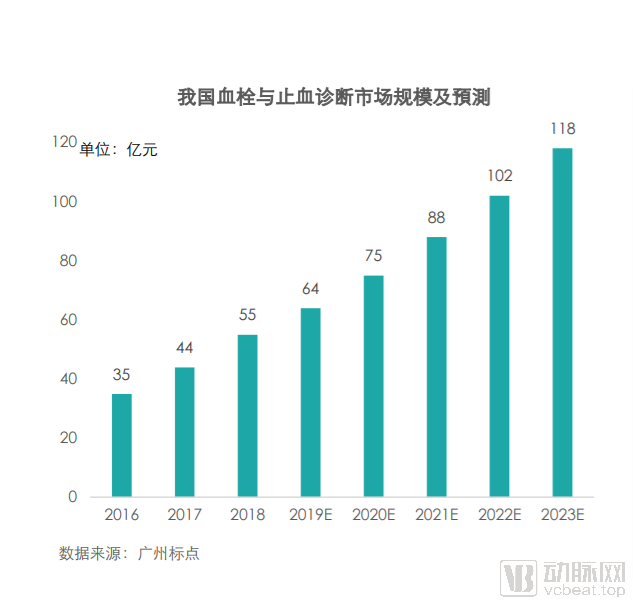
The rapid growth of the thromboelastography market is driven by three factors.
First, on the demand side, the market for thrombosis and hemostasis diagnostics is expected to expand further, driven by the rising incidence of cardiovascular and cerebrovascular diseases and chronic conditions due to an aging population, an increase in the number of surgical procedures, and advancements in thrombosis and hemostasis diagnostic technologies.
Second, on the physician side, clinicians are gaining a deeper understanding of coagulation testing, and market education continues to intensify. In July 2019, a national academic organization—the Thrombosis and Hemostasis Professional Committee of the Chinese Research Hospital Association—was established to promote the development of the thrombosis and hemostasis field in China.
Third, advancements in testing technology have driven a greater diversity of test items.
Driven by technological iterations and evolving clinical demands, thromboelastography instruments have significantly lagged behind current clinical needs.
First, in terms of efficiency, current thromboelastography (TEG) analyzers on the market are either manually operated or semi-automated. They suffer from slow overall testing speeds, high demands on operator skill and patience, and elevated labor costs. Most TEG analyzers available commercially feature only two channels. In China, large medical institutions need to process hundreds of samples daily; however, two-channel TEG analyzers rely entirely on manual operation, resulting in low throughput—typically no more than 10–20 samples per day—which fails to meet the sample processing demands of large healthcare facilities. Furthermore, existing reagents are primarily supplied as lyophilized powders that require on-site reconstitution. This prevents immediate use and can lead to inadequate mixing, thereby introducing errors into test results.
Secondly, in terms of accuracy, semi-automatic thromboelastography devices are limited by their hanging-wire design, which is not conducive to full automation and involves numerous manual operational steps. Due to the reliance on manual operation, there is significant human interference, resulting in a coefficient of variation (CV) > 20%, making it difficult to meet the requirements of clinical laboratories.
Amid growing clinical demand, fully automated thromboelastography analyzers have emerged as a key direction for industry breakthroughs. Among the many companies dedicated to developing fully automated thromboelastography systems, VCBeat has learned that Changjiang Biology’s fully automated thromboelastography analyzer is the world’s first and only fully automated product to have obtained both registration certification and a production license, filling the global gap in the lack of full automation for thromboelastography testing.
Changjiang Bio’s fully automated thromboelastography (TEG) analyzer is its flagship product developed for the high-end market of Grade III Class A hospitals. It resolves the long-standing dilemma in the TEG industry, where it has been difficult to balance the “iron triangle” of product performance, operational convenience, and cost.
Regarding the thromboelastography (TEG) instrument product line, Changjiang Biology has developed eight-channel and sixteen-channel fully automated TEG analyzers based on its independently developed detection design principles, thereby achieving true high-throughput capability. In terms of test result precision, the Changjiang Biology fully automated TEG system features automatic calibration and automatic mixing, with a coefficient of variation (CV) of less than 5%. This eliminates variability caused by human factors, ensuring reliable data results with clinical significance. For reagents, Changjiang Biology offers all-liquid TEG reagents that cover all testing items. These liquid reagents require no on-site preparation, are ready-to-use upon opening, and exhibit no inter-bottle variation. The proprietary ELA kit can completely replace existing kaolin reagents, offering a ready-to-use format without the need for stirring or shaking, thus ensuring reliable test results.
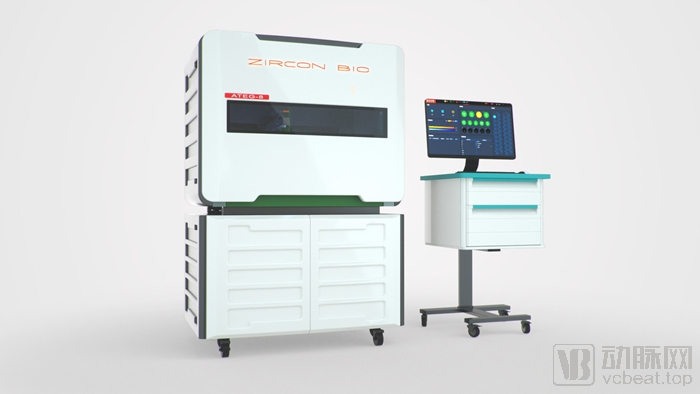
Changjiang Bio Automated Thromboelastography Analyzer
In product R&D and promotion, Changjiang Bio adheres to a steady and pragmatic strategy. Leveraging the stable and robust cash flow from its existing coagulation business, Changjiang Bio is expanding across multiple product lines. Starting with routine coagulation testing, the company has strategically laid out offerings in thromboelastography, high-speed constant-rate coagulation analysis, platelet function analysis, and coagulation automation lines, thereby providing comprehensive coagulation solutions.
In addition to achieving innovative breakthroughs and establishing high barriers through individual products, Changjiang Bio has also adopted automation, informatization, and modularization as one of its strategic directions. By leveraging multiple self-developed automated products, it provides assembly line solutions, thereby constructing a wide and deep competitive moat.
Coagulation testing automation lines can effectively reduce errors caused by human factors, shorten turnaround time (TAT), and improve the efficiency and throughput of clinical laboratory testing.
Taking the COVID-19 pandemic as an example, the State Council previously issued a notice requiring all tertiary hospitals to possess nucleic acid testing capabilities. It is foreseeable that national fiscal and policy support will increasingly favor the development of a more robust public health system. In the long run, the pandemic will accelerate hospital automation, significantly enhancing the level of automation in the field of in vitro diagnostics (IVD).
From the perspective of the development direction of China's healthcare system, preventive medicine, precision medicine, and healthcare cost containment are three major trends. IVD products can facilitate earlier disease detection and accurate diagnosis, thereby reducing healthcare insurance expenditures; consequently, the IVD industry is poised for continued growth.
In the future, Changjiang Bio aims to leverage its high level of expertise and extensive product portfolio in coagulation testing to drive improvements in the quality of clinical thrombosis and coagulation management, striving to become an innovative leader in China’s coagulation diagnostics sector.