

Jianhai Tech Secures Tens of Millions in Series A2 Funding to Advance AI-Powered Specialized Disease Management
VCBeat learned that in June 2020,Hangzhou Jianhai Science and Technology Co., Ltd. (hereinafter referred to as “Jianhai Tech”) has completed its A2 round of financing, amounting to tens of millions of yuan. This round was led by Silicon Valley Bank Capital, with additional investment from Sherpa Partners, and Probe Capital served as the exclusive financial advisor.This Round of FinancingIt will be deployed in the direction of specialty disease management, delving deeply into the vertical field of specialty disease management.
Founded in 2015, Hangzhou Jianhai Science and Technology Co., Ltd. is an AI-driven patient management company providing healthcare informatics and medical health services. Guided by the philosophy of “Making Care a Potent Remedy” and centered on its “Jishi Brain” core technology, the company integrates mainstream technical approaches such as Internet Plus and the Internet of Things (IoT). Leveraging the accumulation and refinement of massive knowledge bases, it is committed to driving the transition from disease treatment to disease management, thereby achieving intelligent, closed-loop management of patient follow-up care spanning from hospital discharge to home care and potential readmission.
Thanks to its in-depth strategic layout in the field of patient follow-up, Jianhai Technology has continued to attract strong interest from investors in recent years. In July 2019, Jianhai Technology completed a Series A+ financing round of nearly RMB 100 million, drawing significant attention within the industry. The round was led by the well-known investment firm Sherpa Capital, with strategic investment from iFlytek, and additional follow-on investments from existing shareholders Haibang and Lihan.
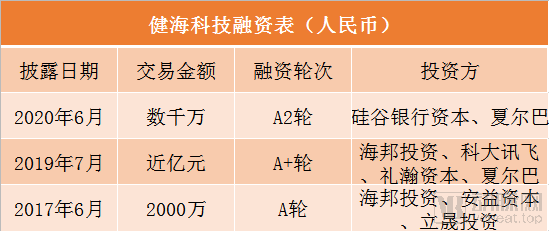
(Hangzhou Jianhai Science and Technology Co., Ltd. Financing Table)
Wang Jian, CEO of Hangzhou Jianhai Science and Technology Co., Ltd., stated that the company’s ability to secure a leading position in the field of patient follow-up is attributable to the following key advantages:
I. The product enjoys a first-mover advantage. For hospitals, the cost of switching is high.
II. Possess a follow-up knowledge graph with medical value to impress clinicians.
III. “Strong” Accumulation of AI Technology. Leveraging AI to significantly reduce the workload of patient follow-up.
In the “2016 Insight Report on Physicians’ Demand for Internet Healthcare in China,” 58.9% of physicians considered follow-up important, and 26% regarded it as very important. Regarding follow-up channels, 60.3% of physicians had their own follow-up channels, primarily telephone and hospital-based follow-up systems, while 39.7% lacked independent follow-up channels. Among physicians, 43.1% reported having used internet applications such as post-consultation follow-up platforms, and 13.6% identified these as their most frequently used tools.
Data indicates that the vast majority of physicians recognize the importance of follow-up care, yet nearly half lack independent channels for conducting such follow-ups. This discrepancy underscores a substantial demand among physicians for follow-up management solutions. However, existing internet-based follow-up platforms typically struggle to achieve an optimal balance between limited medical resources and the large patient population.
So, what kind of follow-up application is most likely to break through the market?
Wang Jian, CEO of Jianhai Technology, believes that AI-based follow-up products will effectively address these challenges.
He introduced that Jianhai Technology focuses on the field of AI-driven post-discharge patient management. Designed for various stakeholders—including health bureaus, hospitals, healthcare professionals, and patients—it provides a continuum of post-discharge services, such as disease course management, specialty-specific follow-ups, health education, chronic disease management, doctor-patient communication, and health monitoring.
Jianhai Technology’s Core Product: “Jishi Brain”, equipped with intelligent interactive assistance, intelligent diagnostic support, and intelligent processing engines, it integrates technologies such as deep learning, big data processing, speech synthesis, recognition, and analysis. It assists medical staff in completing hospital follow-ups, satisfaction surveys, revisit reminders, and chronic disease management via telephone, WeChat, and other channels. This not only improves the efficiency of follow-ups but also alleviates physicians’ workload and enhances patients’ adherence to out-of-hospital treatment.
““Leveraging the core AI technologies of ‘Jishi Brain’ to fully empower three key areas: follow-up care (large hospitals), chronic disease management (small hospitals), and disease management services (operations).”Wang Jian, CEO of Jianhai Technology, pointed out that its three major products—Zhi Suifang (an AI-powered post-discharge follow-up platform), Man Jiankang (an AI-powered chronic disease management platform), and third-party disease management services—have gained significant clinical and market recognition since their launch.
Firstly,Increased Coverage Volume, growing from 200 hospitals in the past toCoverage of 400+ hospitals at the Grade II, Class A level and above; Secondly,Quality Improvement in AI Follow-Up, on the Zhi Suifang and Man Jiankang platforms,AI Follow-up Call Duration Averages 3.5 Minutes, far exceeding traditional manual customer service; finally, in terms of the success rate of AI-based follow-up visits,AI follow-up call connection rate exceeds 70%, a 40% improvement over manual follow-ups.
“Based on this, we will continue to pioneer in the field of AI-driven follow-up care in the next phase, particularly in the management of specialized vertical diseases, such as laying out strategies in neurology, obstetrics, and cardiology,” said Wang Jian, CEO of Jianhai Technology.
Finally, Wang Jian, CEO of Jianhai Technology, told VCBeat,In the future, Jianhai Technology will fully leverage AI and knowledge graphs to empower specialty-specific disease management, thereby creating greater value in medical services.