

JD Pharmacy Offers Subsidized Chronic Disease Medications Below '4+7' Tender Prices During 618 Shopping Festival

JD Health
Internet Medical and Health Service Platform Provider
Amid the impact of the pandemic this year, the implementation of China’s “4+7” volume-based drug procurement policy has accelerated significantly. In the “Notice on Issuing the Key Points for 2020 to Rectify Unhealthy Practices in Pharmaceutical Purchasing and Sales and Medical Services,” jointly issued by nine ministries and commissions, including the National Health Commission, on June 5, the document not only emphasized a stringent crackdown on pharmaceutical bribery but also clarified the gradual promotion of best practices from the pilot program for centralized drug procurement and usage (the “4+7” pilot), encouraging various regions to carry out volume-based procurement for drugs that have not yet passed consistency evaluation and for high-value medical consumables. Market forecasts suggest that the third round of national centralized procurement is expected to officially launch in July this year.
As a result, during this year’s “618” shopping festival, many mainstream pharmaceutical e-commerce platforms in China launched subsidy programs for drugs included in the “4+7” volume-based procurement program. Taking JD Pharmacy, under JD Health, as an example, the prices of many “4+7” drugs it sells were already aligned with the winning bid prices. With the addition of special “618” platform subsidies, prices dropped significantly, with final out-of-pocket costs substantially lower than the previously announced “4+7” winning bid prices. This allows consumers to enjoy online prices that are equivalent to or even lower than those covered by medical insurance, without needing to visit hospitals.
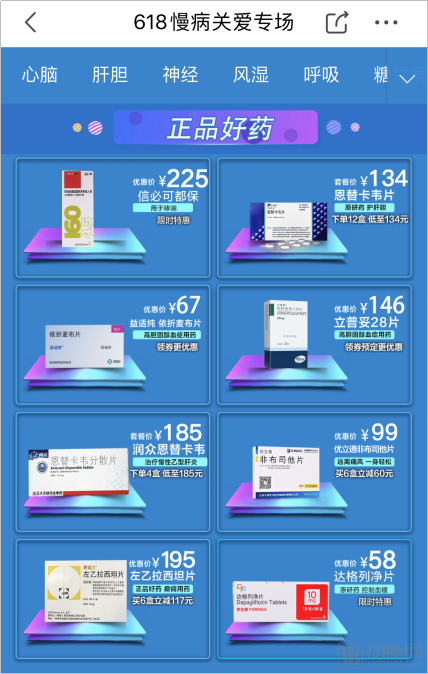
(The image shows the page of JD Pharmacy’s “618 Chronic Disease Care Special Event” on June 17)
Following the Implementation of the "4+7" Drug Price Policy, JD Pharmacy Launches Special Welfare Subsidies for the 618 Shopping Festival
As is well known, the treatment course for chronic diseases is prolonged, with many conditions requiring continuous, long-term medication, thereby imposing a significant economic burden on patients and their families. Statistical data indicate that chronic diseases account for 70% of the disease burden in China, having become a major public health and social issue.
Since the national pilot implementation of the “4+7” volume-based drug procurement program, JD Pharmacy has engaged in negotiations with multiple pharmaceutical companies and has successively reduced prices for drugs included in the program. As of June 17 this year, JD Pharmacy offered nearly 40 drugs that won bids in the “4+7” program, among which 17 were priced in line with the winning bid standards.
It is reported that during the 618 shopping festival, JD Pharmacy significantly expanded its special subsidy program for chronic diseases on top of previous initiatives. Through platform subsidies, the prices of medications for chronic conditions were further reduced to alleviate the financial burden on patients, enabling more people to benefit from the “4+7” policy.
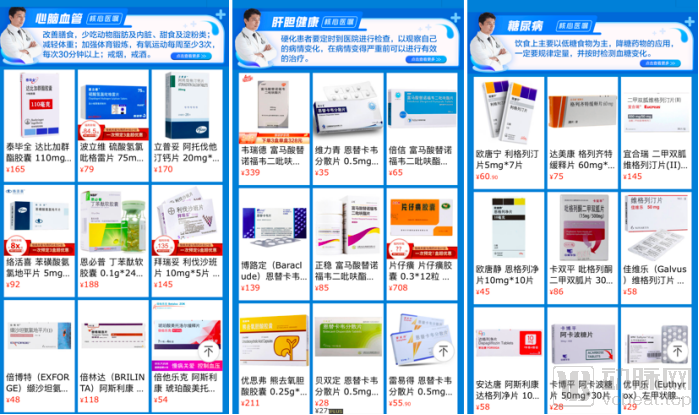
(The image shows the page of JD Pharmacy’s “618 Chronic Disease Care Special Event” on June 17)
Upon entering the JD Pharmacy page, statistics reveal that a total of 29 drugs from the “4+7” Volume-Based Procurement (VBP) program are included in the 618 Special Subsidy Initiative for Chronic Diseases. These medications cover common treatments for chronic conditions such as coronary heart disease, hypertension, hyperlipidemia, diabetes, hepatitis, asthma, gout, rheumatic diseases, and maintenance therapy for cancer. The average price reduction is approximately 40%, with some drugs seeing price cuts exceeding 80%.
For example, Clopidogrel Bisulfate Tablets (28 tablets per box), with a market price of RMB 339 per box, were available for only RMB 61.2 after subsidies on JD Pharmacy’s 618 Shopping Festival day, representing an 82% price reduction; Dapagliflozin Tablets (14 tablets per box), with a market price of RMB 204 per box, were priced at just RMB 40 after subsidies on the same day, marking an 80% decrease; and Irbesartan/Hydrochlorothiazide Tablets (28 tablets per box), with a market price of RMB 102 per box, were sold for only RMB 29.5 after subsidies, a 71% drop. All these prices were lower than the winning bid prices under the “4+7” Volume-Based Procurement program.
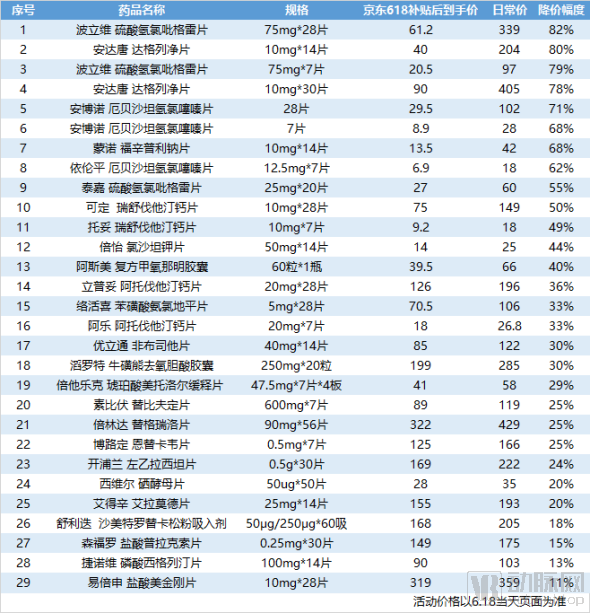
(JD Pharmacy Platform Special Subsidy Drug List for June 18)
Benefiting Patients with Chronic Diseases: The "4+7" Centralized Procurement Policy Benefits the People
Mr. Hu, a resident of Chaoyang District in Beijing, has two elderly family members suffering from hypertension and diabetes, respectively. As someone who has long purchased related medications online, he is highly price-sensitive. “We family members of patients have a dedicated WeChat group, where anyone who spots news of price reductions shares it with the group.”
Mr. Hu stated, “During this year’s 618 Shopping Festival, our group members compared prices across multiple platforms and offline pharmacies, and found that JD Pharmacy offered the most substantial subsidies. For example, dapagliflozin tablets for type 2 diabetes, which previously cost RMB 204 for a two-week supply, can now be purchased for just RMB 40. This translates to annual savings of nearly RMB 4,000, significantly alleviating the financial burden.”
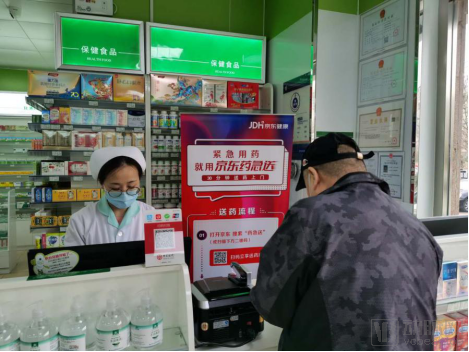
From the initial batch of "4+7" volume-based procurement, which involved 11 pilot cities and 25 drug varieties in late 2018, to the nationwide expansion covering all 25 varieties by September 2019, and further to the second batch of volume-based procurement involving 33 varieties in early 2020. As the frequency of national volume-based procurement has gradually increased, the price reductions for drugs under this policy—characterized by exchanging lower prices for higher volumes—have become significantly more pronounced.
As major domestic e-commerce platforms continue to enter the pharmaceutical sales market, it is predictable that drug prices, particularly for commonly used medications for chronic diseases, will have further room for overall decline.