

Beijing Bonsci Medical: Pioneering High-End Biomaterials in Orthopedics with Groundbreaking Bone Cement Portfolio

Bangsai
Medical Device R&D Developer
In June 2020, Beijing Bonser Technology Co., Ltd. (hereinafter referred to as “Beijing Bonser”) received welcome news: its independently developed antibiotic-loaded bone cement for joint applications obtained the Class III Medical Device Product Registration Certificate issued by the National Medical Products Administration (NMPA). This marks another significant breakthrough in the localization of Beijing Bonser’s bone cement product series, following the certification of China’s first domestically produced spinal bone cement product. The approval of this series of bone cement products has broken the long-standing monopoly of imported bone cements, filled a gap in domestic production, and achieved import substitution.
Beijing Bangsai Technology Co., Ltd. was founded in November 2011. The company focuses on the research, development, and industrialization of high-end biomedical material-based medical devices, committed to improving and enhancing patients' quality of life through leading medical device products. Upholding innovation as its core principle, the company boasts robust R&D capabilities and has established a multidisciplinary professional technical team with complementary expertise, along with a strong advisory board of academicians.
After years of persistent efforts, the company has independently developed a series of high-end medical device products that provide comprehensive solutions for multiple clinical specialties. These include spinal bone cement and antibiotic-loaded joint bone cement used in orthopedic surgeries; balloon kyphoplasty catheters and auxiliary instruments for minimally invasive spinal procedures; and dural (spinal) patches for neurosurgical applications. These product lines have obtained medical device registration certificates from the National Medical Products Administration (NMPA) and are currently applied in clinical practice within orthopedics and neurosurgery. In the future, a serialized range of surgical implant consumables and biomaterials targeting orthopedics, neurosurgery, and dentistry will be gradually launched to the market.Beijing Bangsai will continue to strengthen its efforts in the fields of orthopedic biomaterials, neurosurgical biomaterials, and oral biomaterials and devices, filling more gaps in domestically produced products.
Beijing Bangsai focuses on high-end biomaterial medical devices because its founding team identified the industrial shortcomings of domestic biomaterials and their vast application potential.
Regarding the concept of biomaterials, the academic community previously defined them as: non-living materials used in medical devices. The International Consensus Conference on the Definition of Biomaterials, held in 2018, expanded the scope of biomaterials, defining their core essence as: materials designed to interact with living systems. In other words, biomaterials must interact with living systems to fulfill their role in guiding therapeutic and diagnostic applications.
The company’s founder stated, “Biomaterials are widely used in the medical device industry, spanning clinical specialties such as orthopedics, neurosurgery, dentistry, cardiovascular medicine, and diagnostic reagents. In selecting our industrial integration strategy, we have focused on the implantable and interventional sectors, which offer substantial market potential.”
In 2019, the global orthopedics market size approached USD 50 billion, with biomaterials for bone tissue repair accounting for approximately one-quarter of this total. For polymethyl methacrylate (PMMA) bone cement alone, around 5 million patients worldwide use bone cement and related products annually, with China representing about one-fifth of this figure. Bone cements can be categorized into two types: joint bone cement and spinal bone cement. Joint bone cement is primarily used to fix prostheses to human bone during joint replacement surgeries, while spinal bone cement is mainly employed for vertebral filling and stabilization in vertebroplasty or kyphoplasty procedures. Statistics show that over 1 million joint and spinal surgeries involving bone cement were performed in China in 2018. The annual number of such procedures is projected to maintain a growth rate of 20%–30% in the coming years, indicating substantial market potential.
However, this critical implant was long monopolized by imported products prior to the approval of Beijing Bangsai’s series of bone cement products. At the outset of the company’s establishment, many people repeatedly asked the founding team a common question: Given the numerous domestic orthopedic enterprises and the wide variety of orthopedic consumables and implants available, why had bone cement, as an implant, not yet achieved localization in China?
Company Founder: “To answer this question, we need to examine the broader industrial context. China’s research capabilities in materials science are relatively advanced on the global stage, whereas its development in engineering lags behind. Given the close interplay between materials science and engineering—with engineering often requiring integration with applications and products—the translation of scientific research capabilities into product development capabilities has long been a weakness in China. The longstanding dominance of imported products in China’s bone cement market is a direct reflection of this industrial shortcoming.”
From a technical perspective, the high-value consumables produced by numerous domestic orthopedic companies are predominantly hardware-oriented, with their industrialization capabilities mainly focused on mechanical design and manufacturing. As the research, development, and production of bone cement span two distinct fields—orthopedics and biomaterials—bone cement products have long constituted a key technical challenge for China’s biomaterial medical device industry due to their exceptionally high technical barriers.
Beijing Bangsai was founded with the initial mission of leveraging biomaterials technology to drive innovation in the field of high-end medical devices. While the functionality of existing medical device implants is largely limited to repair, Beijing Bangsai aims to use biomaterials to advance implant functionality from mere repair to true regeneration.
When selecting niche applications for biomaterials, the company’s founding team was drawn to the cross-departmental utility of bone cement. “Bone cement has market applications across orthopedics, neurosurgery, and dentistry, allowing biomaterials to play a broad role in clinical practice.”
Guided by this understanding, Beijing Bangsai’s series of bone cement products, independently developed over nine years, have gained widespread market recognition for their superior performance since their launch. Renowned physicians at numerous Grade A tertiary hospitals, including Beijing Friendship Hospital affiliated with Capital Medical University, have fully affirmed the performance of Beijing Bangsai’s bone cement products.
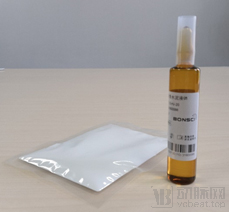
Beijing Bangsai Spinal Bone Cement Products
Guided by a deep understanding of the characteristics of the biomaterials and medical device industries, Beijing Bangsai has established a strategy focused on “achieving breakthroughs in single products with critical clinical needs,” starting with domestic substitution and progressively advancing toward global innovation.
From the perspective of the company’s founding team, the challenges of commercializing technology are no less daunting than those of overcoming technical barriers. This requires the founding team to rapidly transition from R&D to industrialization, adapt to new regulatory and legal frameworks, gain familiarity with upstream and downstream segments of the global supply chain, and independently manage product development and manufacturing. The most difficult aspect is achieving the “zero-to-one” breakthrough, as being a domestic pioneer means there is no prior experience to follow or draw upon.
Despite the numerous hardships encountered in this process, the company’s founding team firmly believes that with the advent of an aging population and rising living standards, domestic demand for high-quality medical products will continue to grow at a rapid pace.
The company’s founder pointed out, “To give a simple example, in accordance with epidemiological principles, China has a population of 1.4 billion. Based on the incidence rate of osteoporosis, there are nearly 100 million affected individuals, including approximately 15 million patients with vertebral compression fractures caused by osteoporosis. The United States has a total population of nearly 300 million, yet its annual volume of bone cement procedures is several times higher than that of China.”
Looking back on the company’s development journey, the founder stated that the key to Beijing Bangsai’s continuous breakthroughs in areas previously devoid of domestic products lies in the team’s technical expertise and market acuity. By targeting products with large market potential, strong unmet clinical needs, and no existing domestic alternatives, the company has remained focused on addressing core technological challenges in China’s biomaterial medical device sector. Deeply rooted in the three strategic segments of orthopedics, neurosurgery, and dental biomaterials, Beijing Bangsai actively explores solutions for applying biomaterials in high-end medical devices and has developed a portfolio of essential products with independent intellectual property rights, thereby establishing itself as an industry leader in the commercialization of high-end biomaterial medical devices.