

Genetron Health Lists on Nasdaq with $10 Billion RMB Valuation, Sparking IPO Wave in China's Oncology NGS Sector

Genetron Health
Researcher of Precision Personalized Diagnosis and Treatment Solutions for Cancer

VCBeat learned that on June 19, 2020, cancer precision medicine company Genetron Holdings Limited listed on the NASDAQ, becoming a focal point of the industry.
In this IPO, Genetron Holdings Limited issued a total of 16 million American Depositary Shares (ADS), with an initial public offering price of $16 per share, raising approximately $260 million in gross proceeds (before the exercise of the over-allotment option). This marked the largest-ever listing of a cancer precision medicine company globally (calculated before the exercise of the over-allotment option).
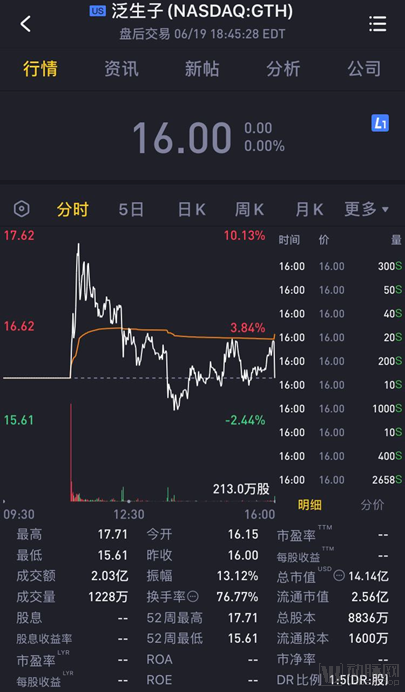
Image from Tiger Brokers
Genetron Holdings Limited opened slightly higher at $16.15 on its trading debut today. The stock rose rapidly after the opening, reaching an intraday high of $17.71. By market close, Genetron’s share price settled at $16, bringing its total market capitalization to $1.414 billion, equivalent to approximately RMB 10 billion.
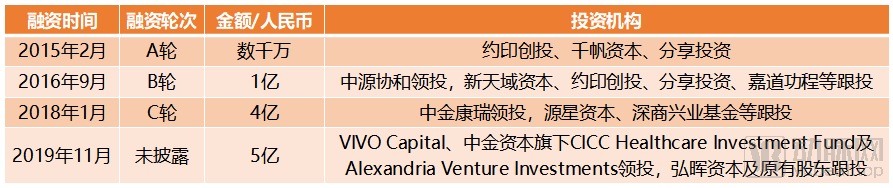
Genetron Holdings’ Pre-IPO Financing History
Since its inception, Genetron Holdings Limited has completed four rounds of financing, raising a total of over RMB 1 billion. In its latest funding round in 2019, the company attracted lead investments from prominent institutions such as Vivo Capital, CICC Capital, and Alexandria Venture Investments, with follow-on investments from Hui Capital and existing shareholders.
The day after the completion of its new round of financing, Genetron Holdings Limited immediately filed its initial prospectus with the Nasdaq Stock Exchange, thereby becoming the first oncology NGS companion diagnostics company to submit an IPO application. At that time, VCBeat conducted an in-depth interpretation of the information disclosed in Genetron’s prospectus, providing a detailed analysis of its financial data and business model.
In June 2020, Genetron Holdings Limited updated its prospectus, primarily to incorporate financial data for the fourth quarter of 2019 and the first quarter of 2020. Comparing the two versions of the prospectus, we note two key changes.
First, a heavyweight figure, Dr. Hu Yunfu, has joined the team at Genetron Holdings Limited.
Prior to joining Genetron Holdings Limited, Dr. Hu Yunfu held a key position at the U.S. FDA, where he was responsible for the review and approval of products in the field of molecular diagnostics. During his tenure, he approved several landmark products, including the first NGS-based LDT companion diagnostic service (Foundation Medicine’s FoundationFocus CDxBRCA), the first NGS-based companion diagnostic kit (Thermo Fisher’s Oncomine Dx Target Test), the first liquid biopsy companion diagnostic kit for NSCLC (Roche’s cobas EGFR Mutation Test v2), and the only two cancer early screening products currently approved by the FDA (Exact Sciences’ Cologuard and Epigenomics’ Epi ProColon).
Dr. Hu Yunfu also spent over a decade working in product development at world-class diagnostic and pharmaceutical companies. As a result, he is not only well-versed in the product approval process but has also made significant contributions to precision medicine research and the development of oncology biomarkers.
After joining Genetron Holdings Limited, Dr. Yunfu Hu assumed the role of Chief Medical Officer. On one hand, he has applied his extensive experience in regulatory review and approval to the registration of Genetron’s in vitro diagnostic (IVD) devices, a strategy that aligns closely with the company’s hospital market access pathway, which we will analyze later. On the other hand, he has enhanced Genetron’s ability to empower pharmaceutical companies in drug development, which is currently one of the company’s key strategic focuses. Furthermore, his rich experience with FDA regulations will significantly contribute to promoting industry standardization and规范化 development in the field of precision cancer diagnostics in China.
Another key change is that the description of the HCCscreen early screening product in Genetron Holdings Limited’s prospectus has been updated to include information related to ctDNA methylation.
In its previous prospectus, Genetron Holdings Limited described its HCCscreen early screening technology as “simultaneously using ctDNA variants and protein biomarkers for analysis,” whereas in the latest prospectus, the description has been revised to “a combination of detecting ctDNA mutations and methylation alterations, along with protein biomarkers.”
Those familiar with Genetron Holdings Limited are well aware that the company has long maintained a strategic presence in the field of DNA methylation-based early cancer screening.
The core technology of the HCCscreen method is Mutation Capsule. Mutation Capsule can detect a wide range of ctDNA variations, from simple point mutations and insertions to more complex translocations, HBV integration, and methylation changes. These details were clearly described in Genetron Holdings Limited’s initial prospectus. The large-scale cohort study on early liver cancer screening currently being conducted by Genetron, involving up to 4,500 participants, has also included methylation changes as part of its detection targets.
Therefore, this update to HCCscreen merely provides a clearer articulation of the analytical dimensions covered by HCCscreen.
The Laboratory Developed Test (LDT) model can be regarded as the most suitable service model for tumor next-generation sequencing (NGS) companion diagnostics. In particular, for NGS companion diagnostic products with large panels, various metrics—including detection scope, sequencing depth, and related algorithms—are continuously upgraded and iterated as testing volume increases. The LDT model ensures that testing companies consistently provide patients with the latest and most cutting-edge diagnostic content.
To address the diverse needs of different patients, Genetron Holdings Limited has developed a portfolio of products tailored to various application scenarios, categorized by panel size and cancer type. These technologies and products constitute Genetron’s strategic layout in Laboratory Developed Tests (LDT) services, featuring distinctive advantages in its specialized approach to specific cancer types.
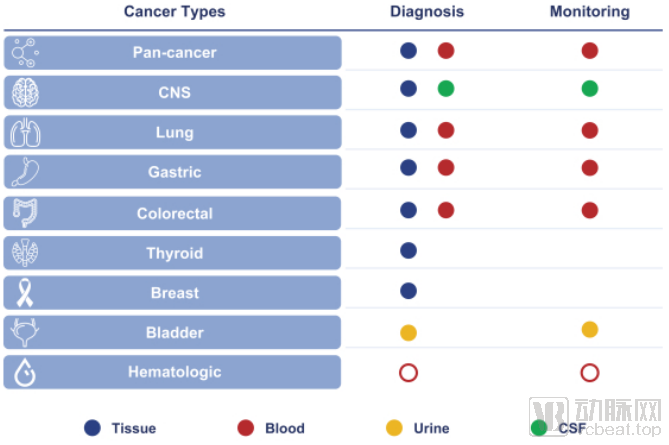
Genetron's LDT Companion Diagnostic Products
Most peer companies offer tumor companion diagnostic products that are only applicable to the testing of FFPE (formalin-fixed, paraffin-embedded tissue) samples and blood samples. In contrast, Genetron has expanded its offerings beyond these two categories to include urine and cerebrospinal fluid testing. This has enabled Genetron to achieve an industry-leading position in the fields of bladder cancer and brain tumors.
Urinary liquid biopsy is relatively more common. Traditional diagnostic methods for bladder cancer require invasive procedures such as cystoscopy or ureteroscopy, whereas urinary liquid biopsy enables non-invasive diagnosis of bladder cancer. In 2020, Genetron Holdings Limited’s research findings on urinary liquid biopsy were presented at the American Association for Cancer Research (AACR) Annual Meeting. The study demonstrated a sensitivity of 94% and a specificity of 96% across 75 cases of urothelial carcinoma, 75 cases of benign urological diseases, and 100 healthy individuals.
Brain tumors are relatively more unique. Genetron Holdings Limited originated from research and product development in brain tumors, discovering that mutations in the IDH1 and TERT genes are common in gliomas, which are the most prevalent type of brain tumor. Due to the presence of the blood-brain barrier, blood-based ctDNA testing does not accurately reflect the true status of brain tumors. Therefore, Genetron opted to perform ctDNA testing for brain tumors using cerebrospinal fluid, achieving a detection rate of 97.3%.
In the broader tumor companion diagnostics market, Onco PanScan is Genetron Holdings Limited’s flagship product. Onco PanScan is applicable to all patients with solid tumors, including those newly diagnosed, those with drug resistance, and those experiencing disease recurrence. It provides comprehensive assessment metrics such as point mutations, insertions, fusion proteins, TMB (tumor mutational burden), and MSI (microsatellite instability). Moreover, this product is compatible with both Illumina and MGI sequencing platforms, thereby expanding the potential applications of the product.
With the approval of new drugs, updates to clinical guidelines, and Genetron’s own research findings, Onco PanScan has been continuously iterated. The most recent major update occurred in December 2018, expanding its scope to a large panel covering 831 genes.
In this update to the prospectus, Genetron Holdings Limited also disclosed a significant development regarding Onco PanScan. In December 2019, the Guangdong Provincial Center for Clinical Laboratory Approval authorized the pilot operation of Onco PanScan. This marked the first pilot program in China for tumor next-generation sequencing (NGS) companion diagnostics using a large panel.
In regard to its self-provided testing services, Genetron Holdings Limited has implemented a series of technological innovations. For instance, the Genetron One-Step Seq technology enables high-quality library construction within a short timeframe, reducing the library preparation time to 1.5 hours. The liquid biopsy low-frequency mutation detection technology enhances sample specificity during library preparation, preventing false positives arising from PCR amplification and sequencing processes. Furthermore, artificial intelligence and big data technologies bolster Genetron’s bioinformatics capabilities, continuously improving the sensitivity and accuracy of its products.
Genetron Holdings Limited’s diversified product portfolio meets the needs of cancer patients with various types of tumors. From January 1, 2017, to March 31, 2020, a period of three and a half years, Genetron provided over 50,000 testing services to cancer patients through the Laboratory Developed Tests (LDT) model.
Although the LDT model is clearly more suitable than IVD for tumor NGS companion diagnostics with continuously iterating algorithms, relevant products in China must currently obtain a Class III medical device license to legitimately enter hospitals and provide diagnostic basis for patients.
Moreover, given China’s national context, hospitals are virtually the only option for cancer patients seeking treatment. Therefore, to establish effective sales channels for their products, tumor NGS companies must forge high-stickiness collaborative partnerships with hospitals.
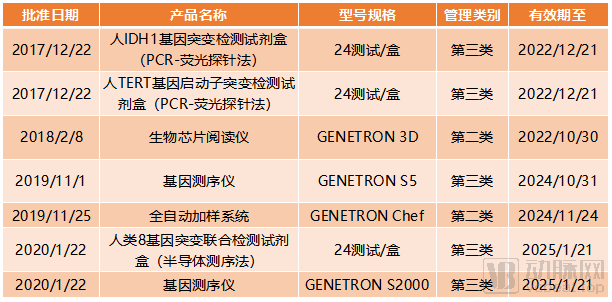
List of Genetron Holdings Limited’s Products with Medical Device Registration Certificates
All supplies used in hospital diagnosis and treatment must obtain medical device registration certificates. Therefore, since 2017, Genetron Holdings Limited has been progressively advancing its products toward obtaining medical device registration certificates. In terms of overall planning, Genetron is pursuing the registration and certification of three major categories of products in a sequential manner, thereby deepening its in-hospital services through a three-step approach.
Step 1: The first to gain approval were the diagnostic kits for IDH1 and TERT gene detection. These two kits utilize PCR-based methods, allowing hospital pathology departments to use them proficiently without requiring additional training.
At a time when most peer companies were focusing on major cancer types such as lung cancer and gastrointestinal tumors, Genetron’s glioma testing kits stood out in the market and quickly gained access to hospitals. According to Genetron’s prospectus, these two products have been approved for inclusion in centralized volume-based procurement programs in ten provinces, including Zhejiang, Guangdong, Sichuan, and Shandong.
Step two: After enhancing its visibility among hospitals through PCR products, Genetron Holdings Limited began to strategically position itself in the field of instrumentation and equipment, providing hospitals with more in-depth testing services. The successive regulatory approvals for biochip readers, medium- and high-throughput NGS sequencers, and automated liquid handling systems enabled Genetron to complete its layout of an instrument platform in the testing sector. Genetron has also filed registrations with the drug administrations in relevant regions for reagents, kits, samplers, and other materials used during the sequencing process. Among the testing services provided by Genetron, nearly all components, from instruments and equipment to related supplies, are independently manufactured. This approach not only helps control costs and increase gross profit margins but also better ensures product quality.
Moreover, empowered by its robust equipment platform, Genetron Holdings Limited can help hospitals with such needs enhance their molecular diagnostic capabilities. The company has established a dedicated team to provide end-to-end services for the development of in-house molecular diagnostic centers, covering laboratory design, equipment procurement, system installation, and post-installation training. Underpinning this service offering is, of course, a comprehensive suite of instruments and equipment that have obtained medical device regulatory approvals.
Step 3: A growing number of more in-depth companion diagnostic products are being approved sequentially, continuously empowering the testing platform. With the testing platform in place, a more diverse and broader range of testing products is required to fully leverage its advantages. Promoting the approval of more testing products tailored to different scenarios is precisely the key initiative currently being advanced by Genetron Holdings Limited.
The “Human 8-Gene Mutation Joint Detection Kit (Semiconductor Sequencing Method),” serving as the vanguard product, was successfully approved in February 2020. According to Genetron Holdings Limited’s prospectus, three additional products in its pipeline have also entered the clinical trial phase; upon successful completion of these trials, product registration activities can be initiated.
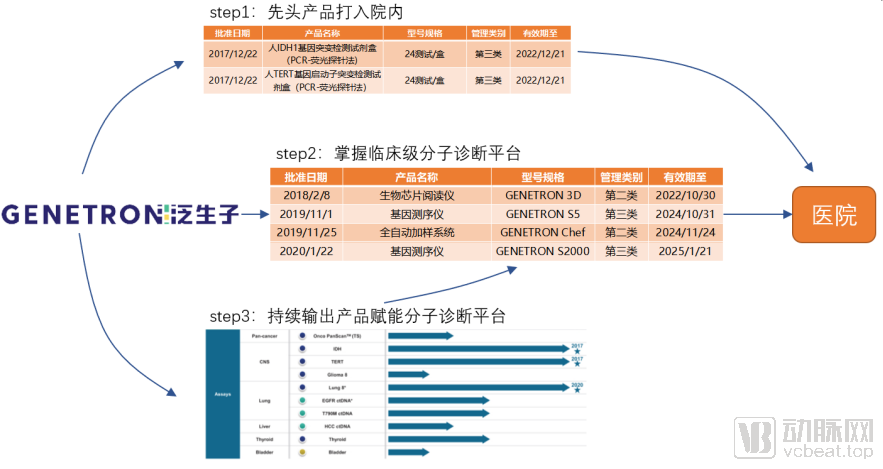
Genetron's Three-Step Hospital Admission Strategy
At present, Genetron’s three-step strategy has achieved initial success. As of the release of its prospectus, Genetron had established collaborations with more than 30 hospitals, including in-house testing partnerships with 17 of them. As competition within the industry intensifies, its self-developed, clinical-grade testing platform will only further strengthen Genetron’s competitive advantage in hospital-based services.
Early cancer screening has been one of the hottest topics in the tumor NGS companion diagnostics industry in recent years. As a leading company in the industry, Genetron Holdings Limited has naturally made early strategic arrangements in this area.
In its early screening strategy, Genetron Holdings Limited targeted the field of liver cancer at an early stage, focusing on tackling this challenging issue in tumor treatment.
Hepatocellular carcinoma (HCC) is highly correlated with hepatitis B virus (HBV) infection. With approximately 73.9 million HBV carriers in China, HCCscreen holds significant market potential. Genetron Holdings’ HCCscreen utilizes liquid biopsy for early HCC screening, primarily by detecting surface antigens in asymptomatic HBV (HBsAg)-positive individuals to identify hepatocellular carcinoma at an early stage.
HCCscreen has achieved preliminary milestones. In a prospective cohort of 331 asymptomatic HBV carriers, HCCscreen identified 24 positive cases. Among these, four were diagnosed with hepatocellular carcinoma (HCC) during the 6-month follow-up, and all four cases were at an early stage (tumor size <3 cm). Meanwhile, no HCC cases occurred among the remaining 307 individuals during the 12-month follow-up. Based on these data, HCCscreen demonstrated a positive predictive value (PPV) of 17%, 100% sensitivity, and 94% specificity.
Genetron Holdings Limited is continuously iterating HCCscreen, incorporating methylation changes as an additional metric. A multicenter cohort study currently underway will involve more than 4,500 HBV-positive individuals.
Genetron Holdings Limited’s work in early screening for liver cancer has also been recognized by relevant government authorities. The company has been approved to join the National Science and Technology Major Project on Prevention and Control of Major Infectious Diseases, including AIDS and Viral Hepatitis, led by the Ministry of Science and Technology. In this capacity, Genetron is responsible for identifying and developing biomarkers for early liver cancer screening, as well as validating related screening products.
Genetron Holdings Limited also stated in its prospectus that it will focus its near-term R&D efforts over the next three to five years on early screening for liver cancer, lung cancer, and gastrointestinal cancers, with registration expected to be pursued as in vitro diagnostic (IVD) products. Notably, research on lung cancer and gastrointestinal cancers has been included in the National Major Science and Technology Projects of the Ministry of Science and Technology.
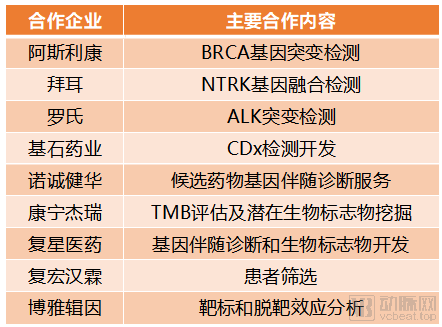
Selected Innovative Pharmaceutical Companies Partnering with Genetron
Collaboration with pharmaceutical companies is the area where Genetron Holdings Limited is currently intensifying its efforts. By leveraging molecular testing technologies such as genomics, clinical trial protocols can be designed in a targeted manner to shorten the drug development cycle.
Genetron Holdings Limited collaborates with pharmaceutical companies through diverse models. The most common approach is providing companion diagnostic services for clinical trials or leveraging specific molecular targets to stratify and enroll patients. Leveraging its robust R&D capabilities, Genetron can also develop customized assay products tailored to the specific needs of pharmaceutical companies’ clinical trials. Biomarkers have emerged as a hot topic in the pharmaceutical industry in recent years, and Genetron’s research infrastructure supports pharmaceutical companies in biomarker development. Furthermore, based on its proprietary core technologies, Genetron provides technical support to other enterprises, such as off-target effect analysis.
Based on the aforementioned major categories of collaboration models, as of the latest prospectus release, Genetron Holdings Limited has entered into collaborations with 26 biopharmaceutical companies, a number that places it at the forefront of the industry.
In early 2020, during the COVID-19 pandemic, Genetron Holdings Limited also joined the fight against the epidemic.
On February 6, 2020, Genetron Holdings Limited announced that it had completed the development of a nucleic acid testing kit for the novel coronavirus.
Subsequently, during the construction of Wuhan Huoshenshan Hospital in early March, Genetron donated a GENETRON S5 sequencer and its associated products to the hospital. This instrument became the only next-generation sequencing (NGS) platform at Huoshenshan Hospital at that time.
As the domestic epidemic gradually subsided, Genetron Holdings Limited also turned its attention overseas, aiming to contribute to global epidemic prevention and control through its technology.
On June 6, Genetron Holdings Limited’s independently developed SARS-CoV-2 nucleic acid test kit, “Genetron SARS-CoV-2 RNA Test,” received Emergency Use Authorization (EUA) from the U.S. FDA and CE certification from the European Union, and was included in the China Chamber of Commerce for Import and Export of Medicines and Health Products’ white list of manufacturers of COVID-19 test kits.
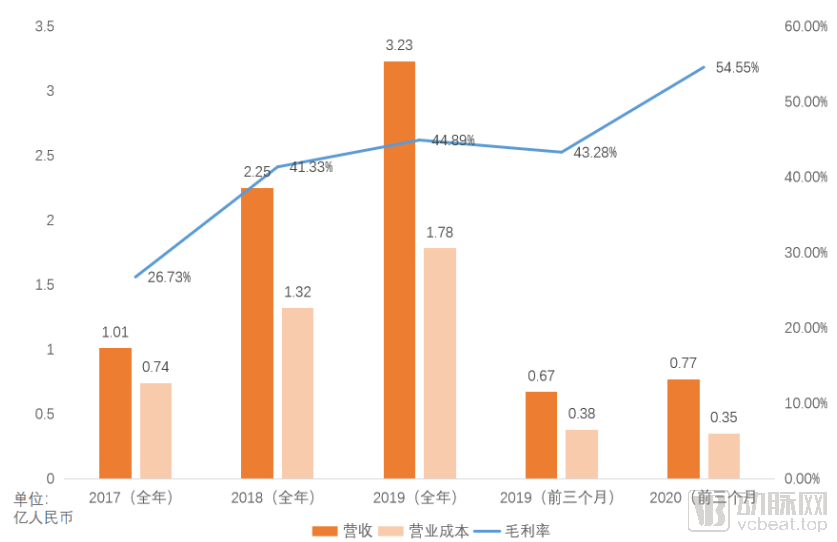
Genetron Holdings Limited’s Revenue and Gross Margin Changes Over the Past Three Years
Genetron Holdings Limited maintained its growth momentum in 2019, with total revenue reaching a new high of RMB 323 million, representing an increase of approximately 319.8% compared to 2017 and a compound annual growth rate (CAGR) of approximately 78.7%.
Notably, from 2017 to 2019, Genetron Holdings Limited’s gross profit margin surged from 26.7% to 44.9%. This demonstrates that the company’s strategy of end-to-end in-house production has had a highly significant impact on improving its gross profit margin.
In the first quarter of 2020, Genetron Holdings Limited’s revenue was not only unaffected by the pandemic but also achieved a year-on-year growth of 15.3%. This performance was closely tied to a series of strategic initiatives implemented by Genetron during the outbreak. The gross profit margin for the first three months of 2020 further expanded to 54.6%, primarily driven by the rapid revenue growth of its in vitro diagnostic (IVD) products, which carried higher gross margins and thereby boosted the overall gross profit margin.
Genetron Holdings Limited’s R&D investment also remained uninterrupted during the pandemic. The latest version of its prospectus shows that Genetron’s R&D expenditure reached approximately RMB 91.7 million in 2019. In the first three months of 2020, R&D spending further increased, rising by 42.3% quarter-on-quarter.
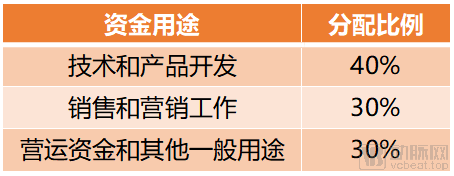
Use of Proceeds from Genetron Holdings’ IPO
The proceeds from Genetron Holdings Limited’s initial public offering will be allocated to technology and product research and development, market expansion, working capital needs, and general corporate purposes. According to the prospectus, Genetron plans to invest up to 40% of the net proceeds in R&D, primarily focusing on basic scientific research, IVD product registration, and early-screening technology development.
Over the years of development, Genetron Holdings Limited has largely charted a course and strategy tailored to its own strengths. LDT products serve as the main line to meet patient needs; IVD product registration and approval facilitate access through hospital channels; early cancer screening focuses on liver cancer as a breakthrough point for growth. These business lines work in concert, forming Genetron’s networked layout for precision oncology diagnosis and treatment.