

HaiChuang Pharma: Building a World-Leading Deuterated Drug R&D Platform with Nearly $100 Million in Total Funding
Hinova pharma
Clinical-Stage Innovative Drug Developer
In the mid-1990s, Dr. Chen Yuanwei, who was conducting new drug research at AbbVie, a well-known Fortune 500 company in the United States, received a letter from his master’s thesis supervisor, a renowned professor at Sichuan University. The professor informed Dr. Chen that he had been diagnosed with prostate cancer and that his physician had prescribed bicalutamide, a medication for the treatment of prostate cancer; however, this drug was neither manufactured nor marketed in China.
“I was very anxious after receiving the letter, so I immediately reviewed the literature and found that bicalutamide was available in the United States. I purchased the medication and had it shipped from the U.S. to my mentor in China. Bicalutamide significantly alleviated my mentor’s condition, which led me to focus on the field of prostate cancer thereafter,” Dr. Chen Yuanwei told VCBeat.
It was from this incident that Dr. Chen Yuanwei developed the aspiration to research, develop, and manufacture in China new drugs that are “accessible and affordable” for the general public. In 2013, Dr. Chen embarked on his entrepreneurial journey in innovative drug development within China by founding Chengdu Hinova Pharmaceuticals Co., Ltd. (hereinafter referred to as “Hinova Pharma”). The direction chosen for its first product was the research and development of deuterated drugs targeting prostate cancer.
As a high-tech enterprise focused on the research and industrialization of innovative domestically developed drugs, Hinova Pharmaceuticals Inc. has established a comprehensive drug R&D and industrialization system encompassing medicinal chemistry, biological screening, process development, quality research, clinical trial applications, clinical studies, and contract manufacturing. In its current product pipeline, HC-1119 (a Class 1 new drug for the treatment of advanced prostate cancer) has initiated global multicenter Phase III clinical trials, while HP501 (a new drug for the treatment of gout and hyperuricemia) has entered Phase II clinical trials.
As is well known, the development of innovative drugs is an arduous journey that tests a company’s innovation capability, execution strength, and team cohesion. Hinova Pharmaceuticals Inc., which has continuously gained recognition from investors and secured financing, has undoubtedly progressed steadily through this process. With backing from Yingchuang Power, Haisco Pharmaceutical, Tongde Capital, Fosun Pharma, Langsheng Investment, Yinglian Health Fund, Jilin Aodong, GF Xinde, Nanling Fund, Guofa Venture Capital, and Boyuan Capital, Hinova Pharmaceuticals has completed three rounds of financing, raising a cumulative total of nearly USD 100 million. Technologically, Hinova Pharmaceuticals has filed nearly 120 PCT and Chinese invention patent applications and has obtained 30 patent grants in China, the United States, Japan, Europe, and other countries and regions.
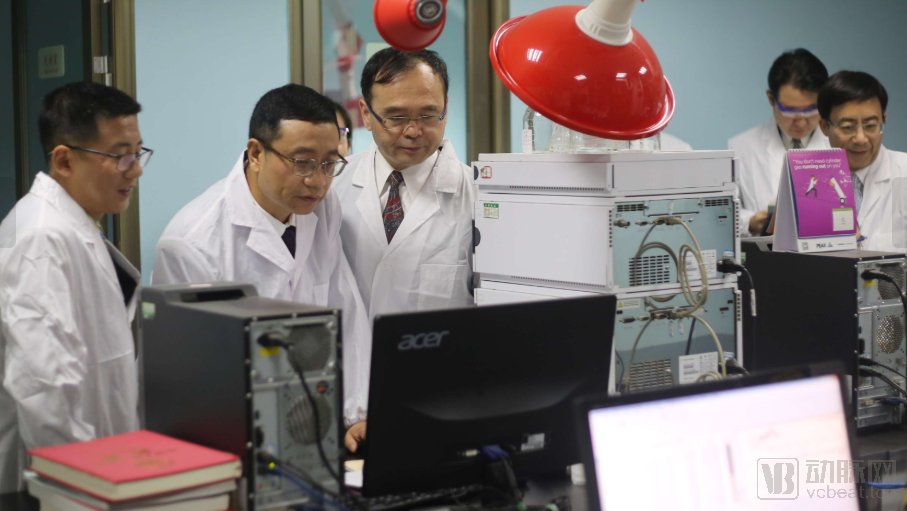
Deuterated drugs refer to pharmaceutical agents containing deuterium atoms. Deuteration involves replacing hydrogen atoms within the pharmacophore of an active drug molecule with its isotope, deuterium. As deuterium is non-toxic and non-radioactive, and forms bonds that are approximately 1–9 times more stable than carbon-hydrogen bonds, it can block metabolic sites, thereby extending the drug’s half-life. This allows for reduced therapeutic dosing and improved pharmacological activity, making deuteration a highly regarded approach in innovative drug research. Since 2005, the deuteration strategy has been widely applied in drug development, emerging as one of the most effective and direct methods to circumvent compound patents and mitigate the risks associated with new drug R&D.
HC-1119, developed by Hinova Pharmaceuticals, is a deuterated version of enzalutamide, a prostate cancer treatment drug with global sales of $4.3 billion in 2019. This achievement is underpinned by Hinova Pharmaceuticals’ globally leading deuterated drug R&D platform. Dr. Chen Yuanwei stated that the company has accumulated extensive experience in project initiation, candidate screening, and clinical pathway development for deuterated drugs. Meanwhile, Hinova Pharmaceuticals has filed over 120 invention patents related to pharmaceutical technologies, including those for deuterated drugs, laying a solid foundation for its innovative drug research and development.
Due to their advantages in rapid development, low cost, and reduced risk, deuterated drugs have become a highly competitive arena for global biopharmaceutical companies. In 2014, the U.S.-based deuterated drug company Auspex successfully listed on the NASDAQ. Following the release of Phase III clinical trial data for its flagship deuterated product, SD-809 (deutetrabenazine), in 2015, Auspex was acquired by TEVA for $3.2 billion, representing a 42% premium. In April 2017, TEVA announced that SD-809, a treatment for Huntington’s disease, had received FDA approval under the brand name AUSTEDO, making it the first deuterated innovative drug approved by the FDA. AUSTEDO received approval from China’s National Medical Products Administration this May.
Concert, founded in 2006, listed on the NASDAQ in 2014 with a market capitalization of $700 million. Currently, Concert boasts the most extensive pipeline of deuterated drug candidates, with over 50 deuterated products having filed for U.S. patents. Moreover, several major international pharmaceutical companies, such as BMS and GSK, have established their presence in the field of deuterated drugs. Suzhou Zelgen Biopharmaceuticals, the first company to go public on the STAR Market under the fifth set of listing criteria, has donafenib as its core product, which is also a deuterated drug. The current market capitalization of Suzhou Zelgen is nearly RMB 20 billion.
Hinova Pharmaceuticals Inc. leverages its globally leading R&D platforms for deuterated drugs, PROTACs, and prostate cancer therapeutics to develop novel drug candidates with significant market potential. Currently, multiple innovative drugs targeting conditions such as prostate tumors, breast tumors, and gout are at various stages of preclinical and clinical development.
The “genetic makeup” of Hinova Pharmaceuticals’ team has played a crucial role in enabling the company to become an enterprise with strong R&D capabilities.
Currently, Hinova Pharmaceuticals has over 80 employees, with returnees from overseas accounting for 15% of the workforce. “The name ‘Hinova’ signifies entrepreneurship by returnees,” stated Dr. Chen Yuanwei. “The advantages of our returnee team lie in their ability to bring foreign drug R&D experience and an international perspective. By complementing the strengths of other team members, they contribute significantly to the company’s development, such as accelerating product R&D progress.”
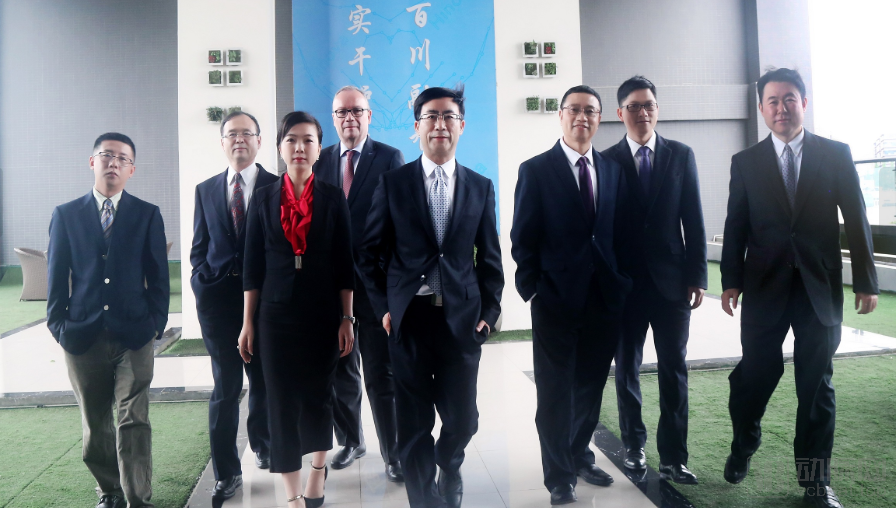
Chen Yuanwei, Founder and Chairman, holds a Ph.D. in Organic Chemistry from the University of Lausanne in Switzerland and completed his postdoctoral research at the Scripps Research Institute in the United States. He has previously held positions at renowned pharmaceutical companies such as Bayer and Abbott in the U.S., as well as WuXi AppTec (Shanghai) in China. Dr. Li Xinghai, Chief Scientific Officer, earned his Ph.D. in Oncology from the Huntsman Cancer Institute at the University of Utah in the United States and conducted postdoctoral research at the Howard Hughes Medical Institute at the University of Pennsylvania. He has previously worked at major pharmaceutical firms including Merck & Co. and AstraZeneca in the U.S., as well as WuXi AppTec (Shanghai), where he was responsible for drug research and development.
Frank G.E. Perabo, Chief Medical Officer, holds an M.D. from Ludwig Maximilian University of Munich in Germany. He previously served as Chief Medical Officer and Executive Vice President at ESSA Pharmaceuticals in the United States, and as Executive Director of Clinical Development at Astellas Pharma US. With 15 years of experience in prostate cancer drug development, he oversaw the global clinical studies of enzalutamide at Astellas, successfully secured approval for new drug clinical trials in China, and advanced multiple novel therapeutics into clinical development.
How to Strategize Market Layout? Dr. Chen Yuanwei Believes It Should Be Measured Mainly from Two Aspects. First, whether the potential market for the product is large enough. "For example, the cancer market is enormous, and within it, the prostate cancer market holds a significant share." According to Frost & Sullivan's forecast, China's prostate cancer drug market will grow at a compound annual growth rate of 25.2% from 2018 to 2023, reaching RMB 12.3 billion by 2023 and expanding to RMB 32.6 billion by 2028. "Another example is gout, where there is also substantial unmet clinical demand in the Chinese market. This constitutes the first factor we consider."
Second, whether there is core technology in fields with sufficient market demand. “Without the right tools, one should not take on porcelain work; only by possessing core competitiveness can enterprises gain a significant advantage in market competition.”
Regarding future development, Dr. Chen Yuanwei stated that Hinova Pharma strives to expand from Chengdu to the global stage. “We aim not only to develop the Chinese market but also to penetrate markets in the United States, Europe, and other regions worldwide, committed to transforming Hinova Pharma into a globally renowned innovative enterprise integrating R&D, manufacturing, and sales.”