

Tu Chongqi and the Spirit of Craftsmanship: Pioneering 3D-Printed Orthopedic Implants at West China Hospital
When West China Hospital is mentioned, what comes to mind? Is it the elite critical care team during the COVID-19 pandemic, or its robust strength in equally prioritizing medical care, education, and research?
While most people recognize West China Hospital as one of the top medical institutions in China, few may be aware that its Department of Orthopedics is a global leader in 3D-printed orthopedic applications. The department’s 3D-printed implants are at the international forefront in key technical areas, including surgical planning, material selection, precise structural and interface design, and load-bearing performance.
These achievements are inseparable from Professor Tu Chongqi, the academic leader of the Bone and Soft Tissue Tumor Center within the Department of Orthopedics at West China Hospital. Since graduating from Shandong Medical University in 1986, Professor Tu has achieved multiple world-firsts during his 34-year tenure at West China Hospital.
In 2015, Professor Tu’s team completed the world’s first “3D-printed tibial diaphyseal metal trabecular prosthesis reconstruction with knee joint preservation.”
In 2019, the team led by Tu Chongqi and the team of Academician Zhang Xingdong joined forces to publish a paper in Science Advances, pioneering the discovery of a novel material that not only inhibits tumor cell proliferation but also promotes osteoblast growth, demonstrating potential as a substitute material for repairing large segmental bone defects following resection of bone tumors.
In 2020, Tu Chongqi’s team at the Sichuan Provincial Medical 3D Printing Innovation Studio published an academic paper on the “Design, Manufacturing, Application, Efficacy, and Evaluation of 3D-Printed Integrated Hemipelvis” in *Clinical Orthopaedics and Related Research* (CORR), a top-tier international orthopedic journal.
……
Throughout his extensive clinical career, Professor Tu Chongqi has consistently embodied the craftsman’s spirit of treating “surgery” as a “work of art,” a dedication that serves as a testament to the history of 3D printing technology’s application in orthopedics in China.
As a key pioneer and witness to the development of this technology’s application in orthopedics in China, Professor Tu is most concerned that this highly valuable new technology for patients will be reduced to mere conceptual hype. He is even more opposed to the clinical use of 3D-printed products when surgeons do not personally participate in critical processes such as “prosthesis design, manufacturing, acceptance, surgery, and follow-up evaluation.”
At the Global Summit on 3D Printing, How Does Professor Tu Chongqi View the Prospects and Bottlenecks of 3D Printing in Orthopedics? VCBeat Conducted an Exclusive Interview with Professor Tu Chongqi, Director of the Bone and Soft Tissue Tumor Center at West China Hospital of Sichuan University, Director of the Sichuan Provincial Medical 3D Printing Innovation Studio, and Academic and Technical Leader of the Sichuan Provincial Health Department.
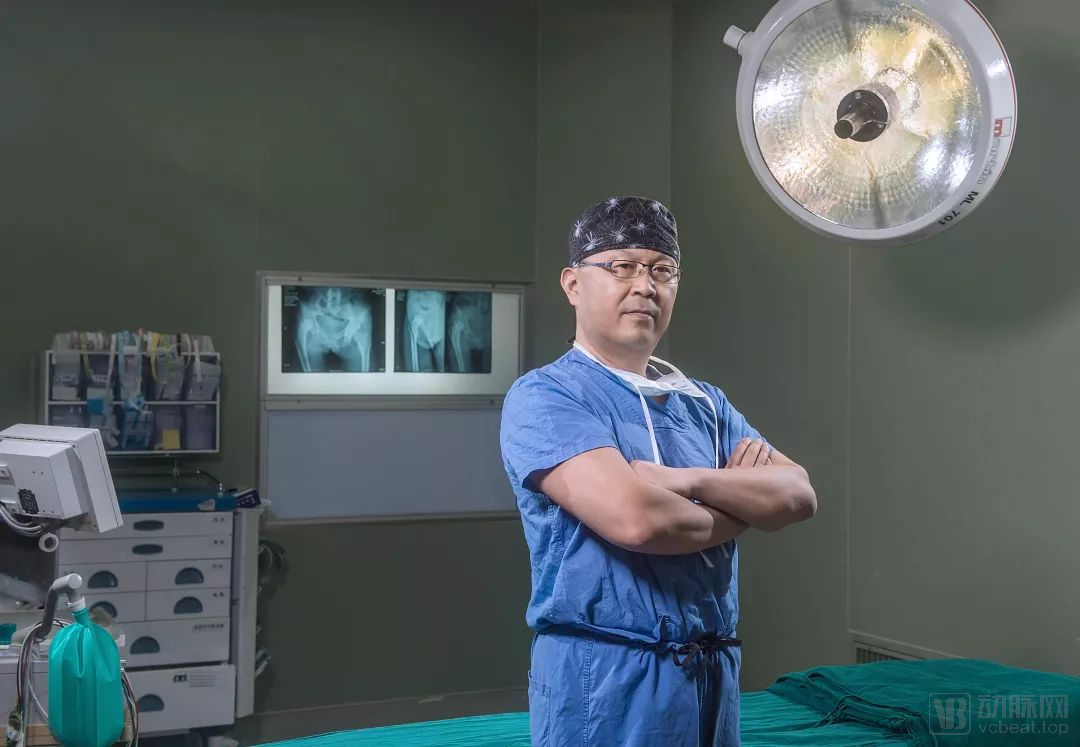
Prof. Chongqi Tu
The prestige of Professor Tu’s professional achievements has never created a sense of distance. Throughout his 34-year career in medicine, Professor Tu has been affectionately nicknamed “Grandma Tu” for his approachable and down-to-earth demeanor. If you have had the opportunity to converse with him, you would discover that he embodies the characteristic affability, resilience, integrity, and sense of responsibility typical of people from Shandong Province.
In Professor Tu’s view, 3D printing is not some groundbreaking “black technology” that has emerged out of nowhere; it has a history of more than 30 years of research, development, and application abroad. When he first encountered the concept of 3D printing 19 years ago, the term had not yet been coined in China, and the technology was still referred to as rapid prototyping.
As early as 2001, Professor Tu Chongqi collaborated with Tsinghua University on research into rapid prototyping, with orthopedic applications primarily limited to ex vivo uses such as molds and teaching models. After extensive preliminary animal experiments conducted since 2013, Professor Tu did not attempt to initiate research on the implantation of 3D-printed metal implants in humans until 2015. At that time, both this decision and the surgical procedure itself were highly challenging.
Professor Tu still remembers the first patient who received a 3D-printed titanium prosthesis implant in 2015. The patient was a 15-year-old with osteosarcoma. After tumor resection, allogeneic bone transplantation was performed to reconstruct the tibial defect while preserving the knee joint. However, the allograft in his leg developed chronic rejection. Although the limb was salvaged through eight surgeries over a prolonged period of three years, the patient remained unable to walk due to the extensive segmental bone defect in the tibia.
Professor Tu considered that if the traditional treatment method—manual tumor knee arthroplasty—were continued, the patient would have to sacrifice their own knee joint, with a 10-year prosthesis failure rate of approximately 20-40% and poor long-term outcomes. Therefore, the team designed and customized a treatment plan for this patient: "3D-printed trabecular metal prosthesis replacement preserving the tibial shaft of the knee joint."
The patient’s parents, both senior engineers, were highly supportive of this cutting-edge solution. Professor Tu has maintained continuous follow-up with the patient; five years later, he has graduated from university and is now contributing to society, with functional outcomes indistinguishable from those of healthy individuals.
“The boy from back then has grown into an adult, and the 3D-printed implant in his body has integrated well.”
To date, the Bone Tumor Center at West China Hospital has performed more than 200 surgeries involving 3D-printed orthopedic implants. Professor Tu believes that completing the implantation procedure is merely the beginning of medical care; the ultimate goal of surgery is to ensure the long-term functionality and durability of the implant within the patient’s body. Upholding a longstanding spirit of craftsmanship, Professor Tu’s team conducts comprehensive follow-up for all patients receiving 3D-printed implants, and all surgical cases to date have achieved satisfactory outcomes.
West China Hospital’s Department of Orthopedics performs approximately 14,000 orthopedic surgeries annually. Although 3D-printing-assisted surgeries are neither the most frequently performed nor the easiest to conduct, Professor Tu has remained committed to advancing and mastering this innovative technology.
Two decades ago, when selecting a subspecialty in orthopedics, Professor Tu Chongqi chose the field of bone tumors, which is characterized by its broad scope and high level of difficulty. Malignant bone tumors, represented by osteosarcoma, span two highly challenging domains: rare diseases and malignant neoplasms. This field involves eight related specialties, including oncology, orthopedics, pathology, and radiology. Despite these challenges, the majority of patients with bone tumors are adolescents, bearing a significant disease burden. Professor Tu believes that physicians should possess the determination and sense of responsibility to advocate for their patients.
Professor Tu chose to research 3D printing technology because he recognized its value in orthopedic applications; for certain complex cases, it can access anatomical regions that are beyond the reach of existing technologies.
In terms of morphology, 3D printing enables the fabrication of bionic joint geometries that are unattainable through conventional manufacturing methods. Structurally, 3D-printed interfaces feature a bionic trabecular porous structure, with pore size and porosity specifically designed to induce and promote bone growth, thereby facilitating rapid integration between autologous bone and the implant. Regarding strength and stability, 3D-printed implants exhibit excellent initial stability and biomechanical properties, better aligning with clinical requirements.
Professor Tu stated candidly that there is currently a misconception regarding the understanding of innovation. Simply put, innovation primarily encompasses two aspects: offering what others do not have, and excelling in what others already possess. First, innovative technologies must address key challenges that conventional technologies cannot resolve; second, they must be more refined, faster, and superior to conventional technologies. Innovation should not be defined merely by being different from conventional technologies or by lacking validation.
In the past, most patients with malignant bone tumors required high-level amputations. However, with the development and refinement of the “neoadjuvant chemotherapy + surgery + postoperative chemotherapy” model, these patients now have the opportunity to preserve their limbs and function. 3D-printed biological metal prosthetic reconstruction is an important approach for limb and joint preservation. Within the integrated workflow encompassing individualized 3D design, printing, implantation, follow-up, and evaluation of biological prostheses, Professor Tu’s team is currently the world’s most prolific in performing the widest variety of single-piece 3D-printed procedures.
Orthopedic 3D-printed implant surgery is the earliest applied and most thoroughly researched area in the global medical field. Since bone defects resulting from bone tumor resection are often irregular, 3D-printed metal prosthetic implantation was first adopted in the specialty of orthopedic oncology. This approach provides superior personalized bionic implants, representing a form of precision surgical treatment. The second major application is revision surgery following failed artificial joint replacement, where massive bone defects require precise reconstruction through 3D printing, also constituting precision surgical treatment. The third application involves patients requiring interbody fusion for spinal degeneration; 3D-printed interbody fusion cages can be used to enhance spinal fusion rates. These products can be mass-produced and are currently commercially available both domestically and internationally.
“The hallmark of 3D printing is its ability to customize not only the external shape but also the internal structure. In clinical applications, we leverage precise CT and MRI data to identify the multimodal morphological and structural characteristics of a patient’s own bone, distinguishing between solid and hollow regions. Through computer-aided design and simulation, we calculate the fit and mechanical performance of the prosthesis relative to the bone, ultimately fabricating an implant with a similar morphological structure via 3D printing. Furthermore, the strength of the implant can be customized based on the patient’s body weight and activity level.”
Since 2013, Professor Tu’s team has joined forces with Academician Zhang Xingdong’s team to conduct in-depth research on 3D-printed biomaterials for hard tissue repair in orthopedics, achieving remarkable results. Since 2015, the team has further collaborated with Beijing Chunli Zhengda Medical Instrument Co., Ltd. and Beijing Zhongnuo Hengkang Biotechnology Co., Ltd., establishing the only “Sichuan Provincial Medical 3D Printing Innovation Studio.” They have performed 3D-printed metal implant surgeries for over 200 patients with bone tumors, with both surgical volume and clinical outcomes ranking among the most advanced worldwide.
“3D printing requires the meticulous craftsmanship of a master artisan to truly shine in clinical applications, rather than being used merely as a glamorous stepping stone. China still has a long way to go in the research and development of 3D printers and printing materials, product design and manufacturing, and clinical applications.”
The first issue concerns 3D printers and printing materials. Developed countries began researching this technology in the 1890s and have experienced rapid development over the past 35 years, thereby accumulating decades of technological advantages. Currently, the medical metal 3D printers, bioprinters, and their corresponding printing materials used in China are almost entirely imported from developed countries in Europe and the United States. In this regard, China has virtually no independently developed original products, achieving self-sufficiency only in printers and materials based on nylon or resins. This technological lag and deficiency have constrained the clinical application and development of 3D printing in China.
Secondly, there is a shortage of high-quality 3D printing digital engineers. “Although China has trained a large number of digital imaging engineers over the past 5–10 years, they currently only meet the basic clinical needs, primarily due to a lack of relevant knowledge in clinical medicine.”
The third challenge lies in the integration of medicine and engineering. "The clinical application of 3D printing in orthopedics requires senior orthopedic specialists who are not only proficient in clinical expertise and skills but also well-versed in related disciplines such as digital imaging, materials science, engineering, and biomechanics. Currently, there is a significant shortage of such physicians."
“For instance, when there is a bone defect, it is not feasible for physicians to simply restore the bone according to its original morphology. Because bone strength varies, the requirements for the strength and structure of implants also differ. Designing optimal implants necessitates multidisciplinary discussions involving clinical experts, materials scientists, and biomechanics specialists, encompassing a broad range of knowledge including material properties and characterization, biomechanics, and interface mechanics. Therefore, while the integration of medicine and engineering may appear straightforward, its actual implementation is quite challenging. There is a significant shortage of talented professionals capable of effectively integrating physics, biomechanics, materials science, manufacturing, and clinical medicine to ensure that orthopedic implants produced meet the needs of the Chinese population—a task that is inherently difficult. In recent years, we have been striving toward this goal, a process that has been arduous.”
The fourth challenge lies in achieving precision and stability in the manufacturing process, as well as establishing an industry evaluation system. First, suppliers must guarantee product precision. 3D-printed metal implants impose stringent requirements on materials and manufacturing processes, demanding a high degree of accuracy. Professor Tu believes that the precision of implants requires rigorous third-party assessment, with quantitative evaluations of metrics such as the morphology, porosity, pore size, and strength of 3D-printed trabecular bone structures. Second, post-processing of the finished products must be carefully considered and evaluated. Currently, relevant national authorities attach great importance to this issue and are progressively releasing industry standards in batches.
From Professor Tu’s perspective, the application of 3D printing in orthopedics is not some form of “black magic.” No matter how novel it may seem, its fundamental nature as an implantable device cannot be overlooked. 3D printing is merely a tool for physicians to treat patients, not a technology that dictates medical practice. Therefore, doctors must exercise extreme caution when using 3D-printed implants. Currently, many hospitals in China are performing 3D-printed metal implant surgeries, but the quality of these procedures varies significantly. “We hope that domestically produced medical metal or biological 3D printers will soon replace foreign products. We also urge all relevant teams involved in 3D-printed implants to diligently address key technical challenges in design, printing, and surgical implementation, so that this technology can truly become the ‘sword of God’ for clinicians in their fight against disease.”