

DeWei Medical Cuts Medical Device Time-to-Market by 30%: A Leading CRO Unveils Its Strategy in IPO Prospectus
CRO (Contract Research Organization) is a highly specialized outsourcing service that primarily includes clinical trial protocol design, clinical trial monitoring, project management, data management, and statistical analysis. Its target market is mainly focused on pharmaceutical and medical device companies, providing services such as clinical trials and medical statistics for drugs and medical devices.
As companies increase their R&D investments, pharmaceutical and medical device firms are becoming increasingly reliant on CROs. The value proposition of “high-quality research with low-cost investment” has increasingly highlighted the importance of the CRO industry, which has rapidly evolved into an indispensable part of the medical R&D supply chain. These favorable factors are driving robust growth in the global CRO market.
According to the "Research Report on the Prospects and Investment Opportunities of China's Medical Device Industry from 2019 to 2024" released by China Business Industry Research Institute, China's medical device market maintained a rapid growth trend from 2014 to 2018. In 2017, the market size reached RMB 445 billion, with a growth rate of 20.3%, and exceeded RMB 500 billion in 2018. The cost incurred by domestic medical device companies for Clinical Research Organization (CRO) services prior to market launch in China accounts for approximately 3% of their market sales. Based on China's medical device market size of RMB 500 billion in 2018, the estimated market size for Medical Affairs (MA) services could reach RMB 15 billion.
As a rapidly evolving field, what is the current state of the medical device CRO industry? What market opportunities remain? How should companies strategize their positioning? To address these questions, VCBeat conducted an exclusive interview with a leading medical device CRO firm—Beijing Dewei Medical Technology Co., Ltd. (hereinafter referred to as “Dewei Medical”).
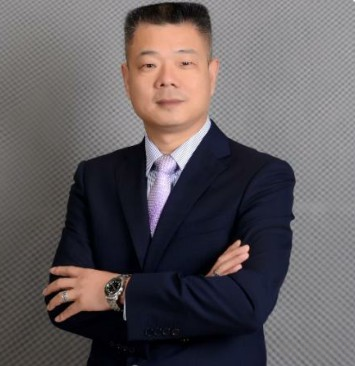
Zhao Xiaodong, Founder and General Manager of Dewei Medical
Currently, the development of the medical device CRO industry exhibits two characteristics.
First, government oversight is becoming increasingly stringent. In June 2016, the China Food and Drug Administration (CFDA) implemented the Good Clinical Practice for Medical Devices and conducted a series of more rigorous clinical trial inspections. Clinical trials for medical devices are now governed by clear regulations, with progressively stricter requirements. For instance, upon completion of a trial, sponsors must consider whether the trial design aligns with the review principles of the Center for Medical Device Evaluation, and whether they are confident in passing the CFDA’s verification of clinical trial authenticity and compliance. These are critical factors that must be taken into account.
Second, the entry barriers are not particularly high. Although CRO companies provide outsourcing services with extremely high professional requirements—primarily engaged in clinical trial protocol design, clinical monitoring, project management, data management, and statistical analysis, with their target market concentrated among pharmaceutical and medical device companies—there are no clear qualification requirements for market entry, resulting in uneven industry standards.
“We are highly confident in the industry’s development, but it is also important to note that, as a service-oriented medical device CRO, service quality is of paramount importance to clients,” said Zhao Xiaodong, Founder and General Manager of Devie Medical. He emphasized that when serving medical device companies, it is essential not only to ensure effective control over the trial process but also to focus on delivery outcomes. This is the key determinant of whether a medical device CRO can achieve long-term sustainability.
DeWei Medical, established in March 2017, evolved from Beijing Chengxin Medical Technology Co., Ltd., which was founded in October 2014. “Headquartered in Beijing, the company has subsidiaries in Sichuan, Chongqing, Fujian, Zhejiang, Hubei, Guangdong, Liaoning, and other regions, with business operations covering all of China,” said Zhao Xiaodong. The company provides services such as quality management systems, clinical trials, and registration filings to enterprises within the industry.
Currently, Dewei Medical is serving 20 clients across the quality system, registration, and clinical aspects of nearly 35 products. It has helped nearly 20 clients obtain 30 regulatory approvals, including NMPA, FDA, and CE certifications.
Specifically, the advantages of Devai Medical are manifested in four aspects.
First, service advantages. Devai Medical adopts an on-site and end-to-end service model. For all projects, professional personnel are assigned to provide on-site services based on enterprise needs. Throughout the process, we assist companies in cultivating their medical enterprise systems and training regulatory affairs professionals, delivering one-stop services. We help enterprises achieve compliance from the outset, reduce initial investment costs, and shorten product time-to-market by 30%.
Second, professional advantages. All employees of Devwei Medical have frontline production experience, strong practical expertise, and comprehensive background at entry-level, mid-level, and senior management positions in relevant fields. They are highly familiar with corporate needs and regulatory requirements. Our specialized R&D team, composed of expert technical researchers, helps companies reduce burdens, avoid costly missteps, and deliver value-added services.
3. Technological Advantages. By leveraging specialized knowledge and experience, we provide clients with the highest-quality, most comprehensive services across all aspects—including strategic analysis, facility design, product development, product testing, regulatory registration, quality management systems and compliance, clinical trials, and investment and financing—delivering a seamless, end-to-end service experience.
Fourth, terminal advantages. With established end-product sales channels, it enables enterprises to rapidly enter the market, build a comprehensive final medical industry chain, and help companies achieve faster, more precise, and superior market penetration.
In the CRO sector, talent is the core resource. Among the core team members, Zhao Xiaodong, General Manager of DeWei Medical, has previously served as factory director, deputy general manager, and CEO at several large domestic orthopedic manufacturing enterprises. With nearly 20 years of corporate management experience, he possesses extensive practical expertise and has repeatedly facilitated financial advisory (FA) transactions, serving as an investment and financing consultant for multiple medical device companies.
Clinical Director Long Chunguang previously served at the Clinical Center of the First Hospital of the People's Liberation Army. With nearly 15 years of clinical experience, he specializes in orthopedics, urology, and neurosurgery. He has established top-tier clinical trial teams in China and provided services to dozens of medical device companies. He Cuixia, Director of Quality Control, previously held technical management positions at companies such as Jingwei and Weili. She brings nearly 15 years of experience in medical device technical management, with expertise in establishing, maintaining, quality controlling, and supervising management systems for sterile and implantable medical devices.
Mr. Ren Baogang, Commercial Director, previously served as Regulatory Director at a leading domestic medical device consulting firm. With 13 years of experience in the medical device industry, he specializes in product registration for active devices, hemostatic products, software products, ophthalmic devices, and blood transfusion and infusion products. Mr. Xu Chang, Quality System Director, formerly served as Office Director of the Secretariat of the Medical Device Branch of the China General Chamber of Commerce’s Pharmaceutical Industry Chamber. He currently serves as a founding council member of the Shandong Food and Drug Vocational Education Group and as a guest lecturer in the Department of Medical Devices at Shandong Drug and Food Vocational College. He has nearly 15 years of experience in medical device quality system consulting.
Registration Director Chen Lili previously served as the Head of the Corporate Registration Department at Double Medical Technology Inc. She possesses nearly 13 years of experience in product registration, spanning orthopedics, dentistry, neurosurgery, general surgery, and active medical devices. She specializes particularly in regulatory guidance, clinical evaluation, and registration for implants used in joints, spine, trauma, sports medicine, dentistry, and craniomaxillofacial surgery. Technical Director Liu Chao has held technical management positions at leading domestic and international medical device companies, including Siemens, Abbott, and Livzon. With nearly a decade of corporate technical experience, he has overseen the registration and clinical affairs for multiple domestically pioneering medical devices, in vitro diagnostic (IVD) reagents managed as pharmaceuticals, and reference materials. He excels in the registration and clinical work for Class II IVD reagents and instruments, as well as Class III IVD reagents, covering technical platforms such as PCR, chemiluminescence, and immunochromatography.
Leveraging a high-caliber talent pool, Devive Medical has achieved increasingly smooth development. Discussing future plans, Zhao Xiaodong stated that Devive Medical will prioritize collaborations with industrial parks, government entities, and research institutes, while fully advancing its CDMO platform to facilitate the commercialization of more R&D-driven enterprises.
“In addition to launching the Chongqing CDMO, the Zhuhai Research Institute and Beijing Research Institute are currently planning their CDMO platform services.” Meanwhile, Devine Medical has established seven branch offices across China to deliver localized corporate services. In terms of talent acquisition, Devine Medical will recruit more specialized professionals, such as quality system specialists and technical personnel, to provide higher-level services in the CDMO sector.