

CereVasc Secures $43.9M Series A Financing to Advance Breakthrough Endovascular eShunt System for Hydrocephalus Treatment

CereVasc
Medical Device Developer

ATON Partners
Medical Device Investors

Perceptive Xontogeny
Corporate Investors
Recently, VCBeat learned that CereVasc has secured $43.9 million in Series A financing, led by Perceptive Xontogeny Venture and ATON Partners. The funding will be used to advance the first-in-human clinical trial of the eShunt system and its subsequent clinical studies.
As a medical device company specializing in the research and development of devices for neurological disorders, CereVasc has been approved by Argentina’s National Administration of Drugs, Foods and Medical Devices (ANMAT) to conduct a clinical study titled “Endovascular Treatment of Hydrocephalus via the eShunt System.”
The company has innovatively improved hydrocephalus treatment technologies by leveraging novel vascular and neural techniques to develop new, minimally invasive therapeutic approaches with reduced invasiveness.
So, what exactly is hydrocephalus? What dilemmas exist in the treatment of hydrocephalus? How has CereVasc broken through the current predicament through innovation? And what can it bring to the treatment of hydrocephalus? VCBeat will follow this logic to sort out information about CereVasc’s products and company team, with the aim of providing inspiration for the development of hydrocephalus treatment devices.
Hydrocephalus is a condition caused by the excessive accumulation of cerebrospinal fluid (CSF) within the brain's ventricles. This excess buildup primarily results from obstruction of CSF circulation, overproduction of CSF, or impaired absorption.
Excessive cerebrospinal fluid in the ventricles will increase intracranial pressure and may cause symptoms such as headache, neurological dysfunction, coma, and death.
According to epidemiological statistics, hydrocephalus has become a relatively common cranial disorder, predominantly affecting infants and individuals over the age of 60. The Hydrocephalus Association reports that there are more than one million cases of hydrocephalus in the United States, with an incidence rate of approximately 1 in 1,000 among infants; the prevalence may be even higher in developing countries.
Meanwhile, due to the prolonged treatment course, frequent complications, and propensity for clinical deterioration, hydrocephalus is widely recognized as a medical challenge in neurosurgery. Consequently, research efforts have yet to overcome these therapeutic dilemmas or achieve significant innovation and breakthroughs in hydrocephalus treatment technologies.
Currently, the cerebral shunts used in the treatment of hydrocephalus remain based on iterative improvements to technology developed in 1960, without achieving any technological breakthroughs. Relevant studies indicate that despite advancements in the design of therapeutic devices, challenges persist in the treatment of hydrocephalus.
This class of therapeutic devices can lead to issues such as catheter occlusion, postoperative infection, and implant dislodgement due to patient movement or growth.
Currently, the most common treatment for hydrocephalus is ventriculoperitoneal (VP) shunting. In simple terms, VP shunting involves using a shunt system to divert cerebrospinal fluid (CSF) through a catheter to other parts of the body. This system employs catheters and valves to redirect excess CSF. The components traverse the scalp, neck, and chest, terminating in the peritoneum, thereby facilitating the reabsorption of CSF.
Despite six decades of development in shunt systems, high failure rates persist. According to the proceedings of the Hydrocephalus Research Workshop sponsored by the National Institutes of Health (NIH), “Despite numerous advancements in the design of cerebrospinal fluid shunts, the failure rate remains unchanged. In the past two years, 40% of initial shunt placements have failed.”
Shunt malfunction can lead to complications such as excessive cerebrospinal fluid drainage, patient infection, and high treatment failure rates.
The eShunt system, developed by CereVasc, has achieved a breakthrough in addressing the limitations of current traditional treatment modalities. Approximately 5 centimeters in length, the system consists of an implantable cerebrospinal fluid (CSF) shunt and associated delivery components, designed to treat hydrocephalus by being implanted at the base of the brain. The implantation procedure employs a minimally invasive approach—threading the eShunt through the patient’s femoral vein in the groin to reach the target site. This system effectively avoids the invasiveness and need for general anesthesia associated with conventional hydrocephalus treatments, thereby reducing hospital stay duration and postoperative pain management costs for patients.
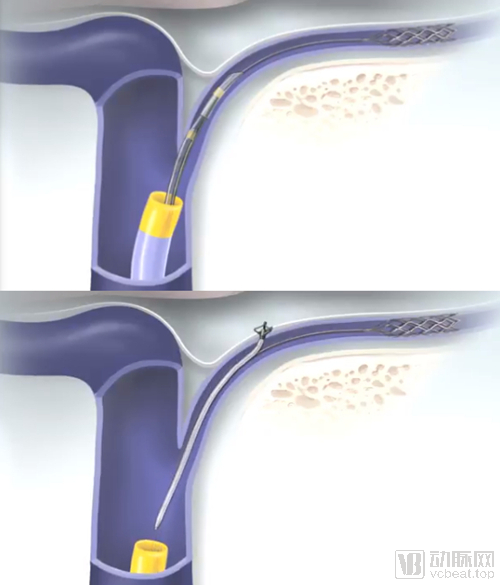
Schematic Diagram of eShunt Working Principle
Image sourced from the official website video
Meanwhile,The implantable vascular design of the eShunt system and updates to its related components have significantly reduced catheter obstruction and over-drainage issues caused by shunt system failures.。
For interventional neurologists, surgical procedures will also become simpler.The physician only needs to administer local anesthesia to the patient, use an angiography kit under X-ray guidance, and implant the eShunt into the patient’s vasculature via a percutaneous femoral venous approach. The deployment of the eShunt implant can be completed in less than one hour.
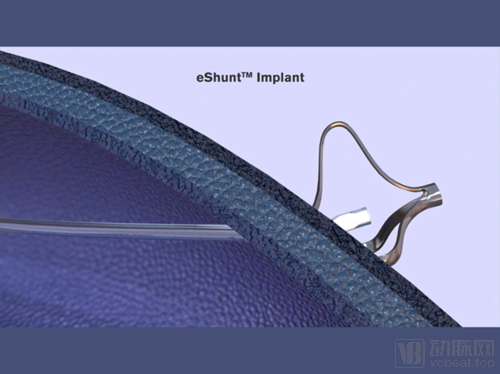
eShunt Implant Schematic Diagram
Image source: official website
CereVasc co-founder Levangie said, “Once implanted, the eShunt allows cerebrospinal fluid to flow normally. Furthermore,This procedure effectively reduces the risk of patient infection and eliminates the possibility of malfunctions associated with traditional shunt surgeries.”
So, what breakthroughs does eShunt offer in terms of treatment compared to traditional therapies?
Overall,eShunt’s innovation not only simplifies the treatment of communicating hydrocephalus, but also reduces the incidence of complications, length of hospital stay, and postoperative pain management costs for patients.
In terms of incision size, eShunt eliminates the need for rigid catheters to traverse the cerebral cortex and subcortical white matter, a complication associated with traditional hydrocephalus treatment.It avoids the need for multiple incisions and invasive shunt catheter punctures associated with conventional VPS placement and revision surgeries, thereby achieving a minimally invasive approach to the treatment of hydrocephalus.
Regarding common malfunctions in shunt systems, eShunt eliminates the problem of over-drainage of hydrocephalus caused by the siphoning effect of VPS devices.Meanwhile, eShunt significantly alleviates or eliminates postoperative pain, high infection rates, and complications that have long remained unresolved in the treatment of hydrocephalus.
“Over the past 60 years, there has been a lack of design improvements to address the high frequency of invasive procedures and high failure rates associated with shunt surgeries.,” said Adel Malek, MD.
It is precisely this major pain point in the treatment of hydrocephalus that drives CereVasc’s desire to bring technological innovation to the field of neurological disease therapy, thereby breaking through the current impasse.In 2014, CereVasc was established through a joint venture, becoming a provider of therapeutic devices for neurological disorders.
CereVasc has not only developed the eShunt system, an innovative medical device for the treatment of hydrocephalus, but has also conceptualized and conducted research on a series of subsequent innovative product concepts aimed at improving care for patients with neurovascular diseases.This follow-up care product has the potential to deliver therapy across the blood-brain barrier, effectively reducing the uncertainties and complications associated with intrathecal injection and implantable systems.
Meanwhile, CereVasc has also implemented a patent strategy.Since its inception, CereVasc has been seeking patent protection in the United States and abroad for its research on endovascular treatments for communicating hydrocephalus. To date, the eShunt system development project has secured several issued U.S. patents. Meanwhile, CereVasc continues to file additional patent applications in the United States and internationally.
Currently, the company holds the patent rights for the original intravascular cerebrospinal fluid shunt, as well as patent rights for device improvements licensed through Tufts Medical Center, Inc.
CereVasc’s expertise in driving innovative reforms in hydrocephalus treatment devices is underpinned by its dedicated professional team.
Patrick Sullivan, Co-Founder of CereVasc, holds a Bachelor of Science degree from the United States Naval Academy and an MBA from Harvard Business School. Since 2008, Sullivan has served as Chairman and CEO of PhysioMed Investments.Proven track record in managing medical device and diagnostics companies across all stages of development.. Sullivan’s strong academic background in management, combined with his years of experience managing healthcare companies, has enabled CereVasc to operate more efficiently and sustainably.
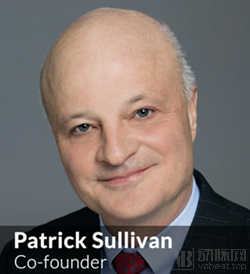
Patrick Sullivan, Chairman and CEO of CereVasc
Image source: official website
Daniel Levangie, Co-Founder and CEO of CereVasc, graduated from the Bouvé College of Health Sciences at Northeastern University in Boston, possessing a solid foundation in medicine. Meanwhile,Levangie also has years of research experience in the fields of medical devices and in vitro diagnostics.。

Dan Levangie, Chairman and CEO of CereVasc
Image source: official website
Among the company's co-founders,Carl Heilman serves as Chair of the Department of Neurosurgery at Tufts Medical Center and holds the title of Professor at Tufts University School of Medicine.Dr. Heilman has many years of research experience in neurosurgical techniques. He is the former president of the Boston Society of Neurology and Psychiatry, the New England Neurosurgical Society, the Congress of Neurological Surgeons, and the North American Skull Base Society. Currently, Dr. Heilman serves as one of the 14 directors of the American Board of Neurological Surgery.

CereVasc Co-Founder Carl Heilman
Image source: official website
Neurosurgeon Dr. Adel Malek serves as the Director of Cerebrovascular and Endovascular Neurosurgery in the Department of Neurosurgery at Tufts Medical Center.Dr. Malek completed his neurosurgical training at Brigham and Women’s Hospital and Boston Children’s Hospital in Boston, and his fellowship in neurointerventional radiology at the University of California, San Francisco. Dr. Malek’s clinical expertise includes multimodal and minimally invasive treatment of cerebral aneurysms, arteriovenous malformations (AVMs), and dural arteriovenous fistulas (DAVFs).
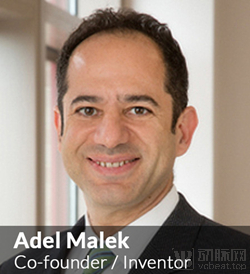
Adel Malek, Co-Founder of CereVasc
Image source: official website
CereVasc, Inc.’s team structure features Patrick Sullivan and Levangie, who bring deep academic backgrounds and years of experience to corporate management, as well as Dr. Carl Heilman and Dr. Adel Malek, who hold prominent positions in cerebrovascular therapeutic research within the product development division.This team composition has brought strong management to CereVasc and enhanced the company’s professional expertise in product development, enabling innovative breakthroughs.
This has precisely become CereVasc’s core competitive advantage in product research and development.
From early 19th-century anatomists’ exploration of the intracranial space to the late 19th-century discovery of “shunt surgery” as a treatment for hydrocephalus, the medical community underwent a long and tortuous process of trial and error.
From the updates in shunt tubing materials in the 1950s to the improvements in shunt valves in the 1970s, shunt surgery became established as a routine treatment option.
Tracing this historical trajectory, it becomes evident that advancements in the treatment of hydrocephalus have been gradual and incremental, spanning from the initial explorations of the intracranial space in the 19th century to the establishment of shunt surgery as a standard therapeutic modality in the 1970s.
However, upon closer examination, one can discoverTechnology remains the core driver behind the improvement and upgrading of therapeutic methods.。
Only through technological breakthroughs and innovation can the current impasse be broken, providing better treatment options for hydrocephalus. CereVasc is working towards this goal.