

Divergent Paths in China-US Health Screening Industries Signal Prime Opportunities in Post-Exam Health Management
According to public data, the number of health checkup visits in China was approximately 500 million in 2017, with a coverage rate of about 33%. In 2018, the number of health checkup visits reached 575 million, accounting for 42% of the total population. With the enhancement of residents' health awareness and policy support, the coverage rate of health checkups is expected to further increase.
In terms of market size, China’s health checkup market is sufficiently large. In 2019, the market size for health examinations in China was approximately RMB 168.6 billion. With the rise in national consumption capacity and heightened public health awareness, the market size for health examinations is expected to continue growing, reaching an estimated RMB 328.4 billion by 2024.
The health checkup industry boasts a large market size and rapid growth, making it a niche sector that VCBeat continues to monitor closely. What are the similarities and differences between the domestic and international health checkup industries? What new technologies and business models have emerged in the current stage of the industry? What is the future direction for the health checkup sector? Through research, VCBeat has compiled this article to provide insights for practitioners.
Physical Examination Methods
According to the 2019 annual report of Meinian Onehealth, a leading enterprise in the non-public health examination industry, public hospitals accounted for 70.8% of the market share in health examinations in 2019, while non-public health examination institutions held a 21.5% market share. This indicates that the current domestic health examination industry has formed a market structure dominated by public hospitals, supplemented by non-public health examination institutions. Notably, since 2015, non-public health examination institutions have maintained a year-on-year growth rate of over 15% in the number of individuals examined, suggesting that the market is poised for further expansion in the future.
In China, health examinations primarily rely on medical equipment-based testing, supplemented by physician interpretation and consultation. Non-public health examination institutions in China are increasingly incorporating large-scale imaging modalities—such as CT, MRI, and color Doppler ultrasound—into routine check-up packages. Since most screening and preventive assessments are based on the interpretation of relevant biomarker data and imaging findings, high-end diagnostic equipment holds strong competitive advantage.
Meanwhile, the role of physicians in interpreting medical reports should not be overlooked. Since ordinary customers often struggle to understand their health checkup reports, professional interpretation services offer a competitive advantage. Additionally, few domestic companies are currently involved in pre-examination consultation, which is an integral part of the health checkup industry and a key measure for enhancing public recognition of the sector. Increased public recognition plays a significant role in improving the penetration rate of the health checkup industry.
Concepts of Health Checkups
The domestic health checkup industry in China is divided into two categories: mandatory health examinations and commercial health examinations. Mandatory health examinations refer to those required by regulations or authorities, such as pre-enrollment medical exams for students, pre-employment physicals, and premarital health checks. Commercial health examinations are voluntarily undertaken by individuals to maintain their health. This category also includes group health checkup services purchased by enterprises to enhance employee health benefits.
According to Meinian Onehealth’s 2019 Annual Report, the company served a total of 26.02 million individuals in 2019 (including affiliated examination centers), with corporate group check-ups and individual check-ups accounting for 78% and 22% of its clientele, respectively. This indicates that China’s commercial health screening market is dominated by corporate clients, while individual customers represent a smaller segment. This also reflects that the majority of Chinese residents rarely proactively undergo health screenings. Consequently, the domestic health screening industry still needs to cultivate the market and enhance public awareness of health and preventive examinations.
In China, health checkups are often a passive practice. In fact, they are a crucial means of preventing disease onset and serve as a prerequisite for early medical intervention. Early intervention by physicians can prevent disease progression and enable the cure of major illnesses such as early-stage cancer.
Physical Examination Contents
As early as 2014, the Health Management Branch of the Chinese Medical Association and the Chinese Journal of Health Management jointly developed and released the “Expert Consensus on Basic Items for Health Checkups” (hereinafter referred to as the “Consensus”). The Consensus provides detailed recommendations on the content of health checkups.
The Consensus states that health checkup items adopt a “1+X” framework, where “1” refers to the basic or mandatory checkup items. These mainly include physical measurements such as height, weight, waist circumference, hip circumference, and blood pressure; physician-conducted examinations including general internal medicine and surgical examinations, otorhinolaryngological (ENT) examinations, and gynecological examinations; laboratory tests such as complete blood count, urinalysis, fecal routine, blood lipids, blood glucose, liver and kidney function, thyroid function, pathogenic microbial infections, and cervical smear tests; as well as instrumental examinations including electrocardiogram (ECG), chest X-ray, and ultrasound.
“X” denotes specialized or optional medical examination items, primarily designed for targeted screening based on age, gender, and chronic disease risk. For instance, individuals with prolonged sedentary lifestyles are advised to undergo additional cervical and lumbar spine examinations; those working long-term in environments with air pollution should receive pulmonary function tests and low-dose spiral CT scans of the chest. Men over 30 years of age should have their hormone levels assessed, while men over 40 should additionally undergo prostate ultrasound and testing for tumor markers such as PSA.
In fact, China’s health examination guidelines are highly advanced and provide strong guidance for public health screenings. For instance, Meinian Onehealth has incorporated low-dose spiral CT for lung cancer screening and magnetically controlled capsule gastroscopy for gastric disease screening as mandatory items in its health checkup packages, in accordance with the “Chinese Guidelines for Low-Dose Spiral CT Screening of Lung Cancer” and the “Expert Consensus on the Clinical Application of Magnetically Controlled Capsule Gastroscopy in China.”
Domestic private health checkup institutions generally offer corresponding packages tailored to specific population groups, such as the elderly, married pregnant individuals, married non-pregnant individuals, new employees, working professionals, patients with diabetes, and those with cardiovascular and cerebrovascular conditions. This package-based approach possesses a certain degree of scientific rationale and commercial scalability. The addition of pre-examination consultations and supplementary personalized checkup items would further enhance the comprehensiveness and scientific rigor of these services.
In 2019, CBNData and Ali Health jointly released the “2019 Online Health Checkup Consumption Report,” which noted that online health checkup packages primarily included cancer screening, checkups for middle-aged and elderly individuals, gender-neutral checkups, and women-specific checkups. In terms of pricing, mid-range checkups priced between RMB 588 and 868 constituted the mainstream segment, while the high-end market (above RMB 1,000) expanded rapidly. The average transaction value of online health checkup products has steadily increased over the past three years, with sales in the high-end segment (RMB 1,369 and above) surging by 110%. Regarding online repurchase rates, nearly 40% of consumers purchased health checkup services two or more times within the past year. This indicates that a segment of the Chinese population is placing greater emphasis on health and regular checkups, endorsing the principle of “early diagnosis, early treatment.”
Post-Examination Management
In China, the health checkup industry offers limited interpretation of medical examination reports. However, some private health checkup providers have introduced specialized expert interpretation services as a competitive advantage for their businesses. Meanwhile, post-examination health management remains underdeveloped due to factors such as public awareness and business model constraints, resulting in few enterprises entering this field. Nevertheless, it is foreseeable that post-examination health management will become one of the key development directions for the health checkup industry in the future.
Broadly speaking, health checkups can be divided into three stages: pre-examination consultation, the examination itself, and post-examination management. Some domestic enterprises are exploring new models and piloting new technologies across these three stages to promote the development of China’s health checkup industry.
During the pre-examination consultation phase, relevant companies are primarily driving innovation in areas such as patient intake, examination guidance, and personalized recommendations.
Physical Examination Entry
Entry points for health checkup institutions are typically local lifestyle platforms and e-commerce platforms; for instance, Meinian Onehealth’s physical stores have been launched on Alipay. Some companies also aggregate information from health checkup providers to offer traffic referral services. For example, Yitong Health’s Yitong Smart Service relies primarily on its smart health checkup service and management system to integrate the upstream and downstream segments of the health checkup industry, providing services such as pre-examination appointment scheduling, examination accompaniment, and guided examinations.
Intelligent Examination Guidance
Kangaroo Health previously launched the Kangaroo Smart Physical Examination System, a B/S architecture-based smart software for health checkups. Building on traditional physical examination workflows, the system leverages mobile internet and smart hardware to integrate intelligent services such as questionnaire assessments, facial recognition, self-service kiosks, smart examination guidance, and in-hospital navigation, thereby enhancing process efficiency and user experience.
Recommended Precision Health Checkup Plans
Chengdu Life Baseline Technology Co., Ltd.’s JanGene platform has launched a precision health checkup service. Leveraging genetic data for individual hereditary health risk analysis and integrating health assessment questionnaires, the company has developed and introduced an innovative enterprise-level employee health risk control and management system. It has established a comprehensive corporate health framework encompassing health education, personalized physical examinations, and chronic disease management, thereby providing users with tailored precision health checkup plans and continuous health risk control services.
During the health examination phase, relevant institutions focus on introducing innovative technologies, enriching examination content, developing intelligent health checkup systems, and improving examination efficiency.
Intelligent Health Checkup
On June 18, 2019, Sichuan Provincial People's Hospital and New Hope Group co-establishedXiaokang Home Health Management CenterOfficially launched, it is committed to providing the public with personalized, high-quality health management services throughout the entire life cycle. This smart healthcare project has engaged Alibaba Cloud and KPMG as intellectual support partners, achieving intelligent optimization of the entire physical examination process. Xiaokang Home Health Management Center has integrated end-customers with hospital smart hardware devices to deliver customized physical examination services. From online appointment booking, examination guidelines, and hospital navigation prior to the exam; to intelligent triage, route planning, and smart interactions during the exam; to post-exam health data analysis, health risk assessment, and management, Xiaokang Home Health Management Center provides consumers with a seamless, end-to-end physical examination experience.
Application of Innovative Screening Technologies in Health Checkups
Building on its existing lung cancer screening, early gastrointestinal cancer screening, and brain health risk assessment services, Meinian Onehealth has added immune-related genetic testing and breast ultrasound screening for women. The company is also actively deploying early cancer screening technologies for cervical, colorectal, gastric, and breast cancers to enhance screening efficiency. Meanwhile, Meinian Onehealth continues to introduce advanced screening equipment. Based on its current portfolio of low-dose spiral CT, capsule endoscopy, non-invasive coronary MRI, and genetic testing, the company is launching a new generation of AI-assisted breast ultrasound screening programs.
Intelligent Imaging Interpretation
A key member of the Meinian Onehealth ecosystem, Elephant Doctor is an innovative healthcare service company centered on the “Internet + Healthcare” model. Its core businesses include telemedicine, remote imaging services, and the Elephant Premier Physicians platform. The telemedicine services are anchored by remote consultation rooms, primarily focusing on the interpretation of CT scans, MRI scans, and capsule gastroscopy images. In addition to Elephant Doctor, Meinian Onehealth leverages medical resources such as Siemens and Philips analytical software systems and WeDoctor to deliver precise health examinations.
Public Health Examination Vehicle
As the mainstay of the physical examination industry, public health checkups are currently seeing vigorous expansion into grassroots-level services. Jianjian Family Doctor, a company deeply entrenched in the field of public health checkups, empowers primary healthcare institutions through digitalized workflows, intelligent equipment, and standardized services. Its flagship product, the Public Health Checkup Vehicle, uses specialized vehicles as carriers and is equipped with 14 types of devices for medical examinations and public health education. It is flexibly deployed in various out-of-hospital checkup scenarios, including communities, rural areas, and nursing homes. According to a representative from Jianjian Family Doctor, a single public health checkup vehicle can serve an average of 15,000 to 20,000 people annually. In addition to Jianjian Family Doctor, other players such as traditional automakers represented by Yutong and Dongfeng, with their checkup vehicles, and WeDoctor with its cloud-based mobile clinic vehicles, are also contributing to the advancement of public health checkups.
All-in-One Health Checkup Kiosk
The expansion of the health checkup market into lower-tier regions has been significantly facilitated by all-in-one health screening kiosks. At the 2020 Consumer Electronics Show (CES), Fourth Paradigm launched the Zhining All-in-One Device for Chronic Disease Management. Guided by intelligent voice instructions, users can complete over 20 routine health indicators—including height, weight, and blood pressure—within five minutes. Through modular expansions, the device can further assess bone mineral density, perform biochemical analyses, and conduct routine urine tests, thereby greatly simplifying the health examination process. The results are analyzed by an artificial intelligence system trained on a large-scale metabolic disease sample database, which provides chronic disease prediction, intervention analysis, and professional health management reports, thus enabling a comprehensive workflow for chronic disease prevention and management.
In the post-examination management phase, relevant enterprises leverage big data, the Internet, and other technologies to provide personalized health management solutions.
Health Management
Leveraging the vast health checkup big data of Meinian Onehealth, Youjiankang provides one-stop health risk management services. After the checkup, users can access their reports online via the Youjiankang app and receive complimentary expert interpretations, with professional physicians addressing health inquiries in real time. Additionally, Youjiankang utilizes big data as a sample base to establish assessment models, refine disease early-warning mechanisms, and deliver health risk prediction services.
In the future, U Health will build a global precision health big data platform starting with physical examinations. Based on health data, it will integrate various medical and healthcare services—such as appointment registration, patient accompaniment, medication management, and insurance—thereby connecting the entire “examination–diagnosis–treatment” health service chain.
Ji Jiankang is also targeting the post-checkup health management market. Leveraging users’ historical health data, Ji Jiankang provides effective, precise, and customized offline health services. Users can also communicate and interact with physicians promptly and conveniently via mobile devices, enabling online self-health management based on their checkup data.
Currently, the Ji Jiankang platform is capable of extracting tags for over 1,000 diseases, stratifying risk levels, and intelligently providing health management plans. It also conducts risk assessment and prediction through physiological age evaluation models, risk prediction models, and precision intervention models. Meanwhile, Ji Jiankang offers personalized services such as additional follow-up examinations and patient triage and referral based on user needs.
The COVID-19 Pandemic Accelerates the Application of 5G Technology in the Health Examination Industry
The COVID-19 pandemic has impacted the short-term revenue of health checkup institutions. However, as residents place greater emphasis on their health, the health checkup industry is becoming increasingly vibrant. In the long run, the rise in public health awareness will benefit the health checkup sector.
On March 24, 2020, the official website of the Ministry of Industry and Information Technology (MIIT) released the “Notice of the Ministry of Industry and Information Technology on Accelerating 5G Development.” The Notice proposed to further optimize and promote outstanding applications of 5G in combating the COVID-19 epidemic.Promote Remote Health Checkupsand other services, promoting the sharing of medical resources. Thus, 5G technology will empower health checkups, and the remote health checkup business will further develop.
An analysis of corporate innovations reveals that pre-examination appointment scheduling, AI-powered imaging analysis, and post-examination health management are the primary areas of innovation. It is anticipated that in the near future, the health checkup industry will achieve full integration across all stages, including pre-examination consultation, appointment scheduling, examination items and efficiency, and post-examination health management, thereby further safeguarding residents' health. Additionally, the penetration of the health checkup market into lower-tier markets will spur the emergence of a cohort of related service enterprises, such as developers of all-in-one checkup kiosks and mobile checkup vehicles, as well as providers of informatization management platforms for health checkups.
In addition, private health checkup institutions have also shifted their marketing of health checkup packages to online channels.
On June 18, 2020, during the Tmall 618 Shopping Festival, Meinian Onehealth Healthcare joined forces with AliHealth to actively participate in various online “618” campaigns. Targeting middle-aged and young adults with increasingly stable incomes and strong awareness of disease prevention, the company launched promotional packages such as “Gratitude to Parents” and “Care for Family,” thereby consolidating previously offline health checkup channels onto online platforms and accelerating the digital transformation of the health checkup industry. It is reported that Meinian Onehealth will leverage AliHealth’s consumer-facing traffic to shift its marketing channels to the internet in a more cost-effective, precisely targeted, and higher-conversion manner. Online marketing channels serve as an important complement to traditional marketing models. While it remains unclear which marketing model will dominate in the future, it is foreseeable thatDigitalization is also one of the key future development directions for the health checkup industry.
Health Checkup Coverage Rate
There are no publicly listed companies in the United States whose primary business is health checkups. However, given the highly developed healthcare services in the U.S., preventive health examinations have become a basic benefit for American residents. Data shows that the coverage rate for health checkups in the U.S. is 72%. Due to the high costs of physician services, checkup expenses are largely covered by insurance. For checkup items covered by insurance, U.S. residents typically undergo annual examinations; conversely, items not covered by insurance are generally overlooked. Based on this, it is estimated that there are approximately 240 million health checkup visits annually in the United States.
Examination Methods
Routine physical examinations for U.S. residents are primarily conducted by family physicians, mostly in hospitals or clinics, with rare visits to third-party examination centers. Generally, residents only go to third-party examination centers under special circumstances, such as pilot medical examinations.
In the United States, physicians emphasize patient–provider communication during health examinations, with diagnostic testing serving as a supplementary component. Prior to the examination, U.S. physicians obtain detailed information on the patient’s personal medical history, family medical history, medication history, and lifestyle habits. If risks for hereditary or infectious diseases are identified, the physician will recommend targeted screening; for example, if there is a family history of breast cancer among close relatives, the physician will advise breast cancer screening. In the absence of such risks, the physician will recommend a standard health examination panel. Throughout the routine examination, the physician also conducts a systematic assessment of the patient’s health status, including lifestyle factors and recent physical conditions, to tailor the selection of appropriate diagnostic tests.
Concepts of Health Checkups
In the United States, residents’ health screening needs are managed directly through their primary care physicians, who schedule (and remind) patients to undergo appropriate screening tests based on their individual health status. Additionally, U.S. physicians generally follow the guidelines issued by the U.S. Preventive Services Task Force (USPSTF) to scientifically and reasonably determine the content of health screenings.
Because insurance covers routine check-ups, U.S. residents proactively undergo annual physical examinations. However, they often overlook high-cost screening tests that are not covered by insurance.
In the United States, family physicians establish household health records for residents, which, combined with physical examination results, form a comprehensive and continuous health tracking profile. Consequently, after receiving health recommendations, U.S. residents manage their health under the guidance of their family physicians.
Physical Examination Items
In terms of health examination content, the U.S. Preventive Services Task Force (USPSTF), an authoritative issuer of preventive medicine guidelines, annually convenes experts in internal medicine, family practice, pediatrics, obstetrics and gynecology, and other fields to provide recommendations on disease screening, counseling, and preventive medications based on evidence-based medicine. The health examination items recommended by the USPSTF include hypertension, dyslipidemia, colorectal cancer, obesity, breast cancer, sexually transmitted infections, cervical cancer, diabetes mellitus, lung cancer, osteoporosis, and aortic aneurysm.
Physical Examination Items Recommended by the U.S. Preventive Services Task Force
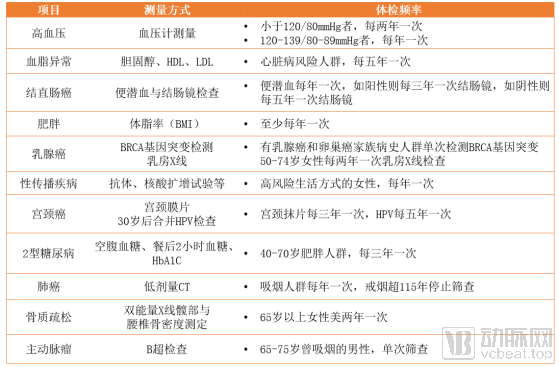
The U.S. Preventive Services Task Force recommends against the following screening services: testicular cancer screening in adolescents and adults; prostate-specific antigen (PSA)-based screening for prostate cancer; screening for asymptomatic bacteriuria; ultrasonography-based screening for carotid artery stenosis; spirometry-based screening for chronic obstructive pulmonary disease (COPD); colorectal cancer screening with colonoscopy in adults aged 85 years or older; electrocardiography (ECG)-based screening for coronary heart disease; serologic testing for genital herpes simplex virus infection; pancreatic cancer screening; BRCA-related genetic risk assessment and testing in women without a family history of breast, ovarian, tubal, or peritoneal cancer; cervical cancer screening in women younger than 21 years or older than 65 years; and CA-125–based screening for ovarian cancer.
According to public data, the average cost of a medical checkup in the United States is 5,500 yuan. Commonly performed checkup items—those covered by insurance—include screening for hypertension, blood glucose levels, and obesity, as well as physical examinations and collection of family and personal medical histories. High-cost checkup items not covered by insurance are utilized less frequently.
Post-Examination Management
In post-examination management, U.S. examining physicians provide health guidance based on the results, such as dietary control for diabetic patients and exercise recommendations for those with hypertension. Subsequently, the patient’s primary care physician develops a scientifically sound lifestyle and treatment plan tailored to the examination findings and determines the content of the next check-up.
The United States has seen fewer new models for health checkups, a phenomenon likely attributable to its established primary care physician system. Services such as pre-examination consultations, examination accompaniment, and patient navigation, which are currently being explored in China, are already provided by family physicians in the U.S. Furthermore, post-examination health management has developed more smoothly in the United States, a trend also linked to its reimbursement systems.
Kaiser Permanente, widely renowned for its HMO model, pioneered an integrated care approach that aligns insurance providers, hospitals, and physicians around the health of their members.
As of today, Kaiser Permanente has 12.2 million members. According to the 2019 annual report on its official website, Kaiser Permanente currently owns and operates 39 hospitals, 50 clinics, and 712 medical offices; it employs 218,000 staff members, including 23,000 physicians.
Kaiser Permanente’s core operational architecture comprises three main pillars: Kaiser Foundation Health Plan and its regional operating entities, Kaiser Foundation Hospitals, and The Permanente Medical Groups. While insurance constitutes Kaiser Permanente’s core business, its ultimate objective is to promote member health. Its profitability model hinges on effective health management and cost containment for members; surplus funds generated after service delivery are redistributed within the group. Consequently, lower medical expenditures translate into higher profits, thereby increasing the financial gains for both Kaiser hospitals and the physician groups.
Therefore, to safeguard members' health and enhance corporate profitability, Kaiser Permanente provides services covering the entire continuum of care, including disease prevention, diagnosis and treatment, and post-illness rehabilitation. Among these, Kaiser Permanente places particular emphasis on reducing disease incidence within disease prevention and lowering healthcare costs during diagnosis and treatment.
In the 1950s, Kaiser Permanente predictedRegular health check-ups and timely treatment can substantially mitigate the adverse effects of major diseases.For example, regular health check-ups can detect potential health issues in patients at an early stage. If treatment is administered promptly, the threat of major diseases to patients' lives will be significantly reduced, and medical expenditures will consequently decrease substantially.
Therefore, Kaiser Permanente’s health examination services were launched in 1951. In that year, the physical examinations offered by Kaiser Permanente included 15 items, such as height and weight measurements, blood pressure monitoring, chest X-rays, and electrocardiograms (ECGs). Today, Kaiser Permanente’s health examination offerings have expanded to encompass a wide range of screenings, including those for cervical cancer, diabetes, colorectal cancer, stroke, various cancers, and heart disease.
Pre-Examination Consultation
To better facilitate its health examination services, Kaiser Permanente has implemented an Electronic Medical Record (EMR) system. Once a member’s EMR is generated, it consolidates key information, including basic demographics, personal medical history, family medical history, and medication history. Physicians then leverage this data, along with insights gathered from patient consultations, to tailor personalized health examination packages for each member.
Kaiser Permanente’s primary objective is to help members reduce the incidence of disease. To this end, members’ care teams schedule physical examinations and screen for major diseases based on their electronic medical records (EMRs) and health histories. Kaiser Permanente’s secondary objective is to lower members’ healthcare costs. Accordingly, physicians optimize and adjust examination protocols based on EMRs, while personal health coaches and Kaiser Permanente’s medical team provide health management guided by examination results, aiming to slow disease progression or achieve cure.
Communication During Examination
To better safeguard members’ health, Kaiser Permanente staff can communicate across departments and regions. For instance, if a member is found to have tachycardia during a health screening, the screening staff will consult with cardiologists and provide specialized care when needed. During the examination, physicians prioritize communication with patients to understand their physical condition and lifestyle, thereby determining whether additional screening items should be added.
Post-Examination Management
Kaiser Permanente conducts risk assessments based on members’ health examination results. For instance, Kaiser Permanente has developed a risk assessment system leveraging big data analytics and lifestyle analysis. Following members’ health examinations, physicians use this system to evaluate the likelihood of developing major diseases and provide tailored guidance based on the assessed risk levels to prevent disease onset. Early detection and early treatment of diseases can significantly reduce their severity and impact.
Meanwhile, the medical team will provide assessment results along with health guidance on diet, exercise, and other aspects based on the member’s physical examination findings. Following the pre-examination consultation and completion of the examination services, the nursing team or personal health coaches will follow up with members to deliver ongoing health management. In terms of health management, physicians or the nursing team will monitor members’ exercise routines, assess their lifestyle habits, and offer appropriate recommendations.
With the support of its health examination services, Kaiser Permanente members significantly reduce their risk of developing diseases and lower their healthcare costs, enabling Kaiser Permanente to curtail medical expenditures and thereby boost corporate profits.
Actual Effectiveness
Actions speak louder than words. With the support of physical examination services and health management, Kaiser Permanente has maintained steady revenue growth over the past decade, achieving a compound annual growth rate (CAGR) of approximately 7% and an average profit margin of around 3.1%.
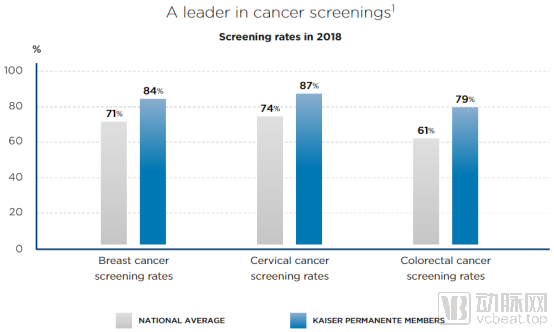
In 2018, Kaiser Permanente’s health plans ranked in the top 5% nationwide for prevention and screening, with breast cancer screening rates at 84%, cervical cancer screening rates at 87%, and colorectal cancer screening rates at 79%, all exceeding the U.S. national averages.
Kaiser Permanente Cancer Screening Rates vs. U.S. Average Screening Rates
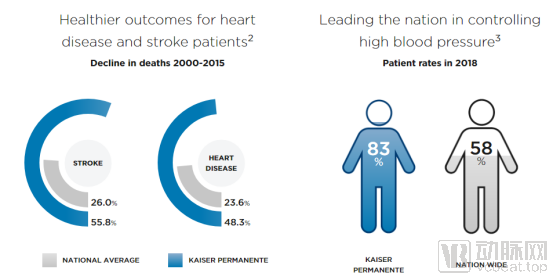
By detecting diseases early and providing timely treatment for its members, Kaiser Permanente has achieved remarkable results in chronic disease management. Among patients with heart disease, mortality among Kaiser Permanente members decreased by 48.3% from 2000 to 2015, compared with a national average decline of 23.6% in the United States. Notably, in 2018, Kaiser Permanente reduced heart attacks by 72% through preventive measures. For stroke patients, mortality among Kaiser Permanente members fell by 55.8% from 2000 to 2015, versus a 26% decline nationwide.In 2018, 86% of Kaiser Permanente members diagnosed with hypertension had their condition under control, compared to a national average control rate of 52% in the United States.
Comparison of the Effectiveness of Kaiser Permanente's Post-Examination Health Management
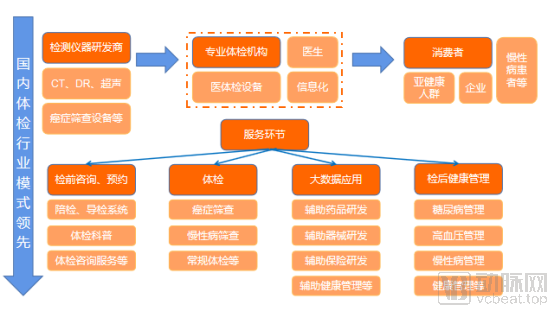
Upstream of the health checkup industry comprises developers of diagnostic instruments. Currently, new detection technologies are continuously emerging, with innovations such as imaging-based fractional flow reserve (FFR), magnetocardiography equipment, and screening and diagnostic models for diabetic retinopathy and glaucoma gradually being adopted in the health checkup sector, thereby enriching the range of testing methods.
The downstream consumers of the health checkup industry are end users. In China, clients of private health checkup institutions are primarily enterprises, with relatively few individual customers initiating checkups on their own. It is imperative for commercial health checkup services to expand toward the consumer (C-end) market; therefore, the commercial health checkup industry still has significant room for growth.
In China, the giants of the commercial health checkup industry have established extensive layouts, spanning from new checkup technologies to post-checkup health management, and from incubating innovative enterprises to assisting in product development. They have built a comprehensive health checkup ecosystem covering services such as checkups, diagnosis and treatment, insurance, and finance, positioning themselves at the forefront globally.
Leading Model of the Domestic Health Checkup Industry
An Overview of the Health Checkup Industry in China and the United States: The Process Can Be Divided into Pre-Checkup Consultation, the Checkup Itself, and Post-Checkup Health Management.
In the pre-examination consultation phase, while family physicians in the United States provide tailored services, there remains substantial unmet demand in China. Consequently, services such as examination accompaniment, guided examination systems, and health checkup consultations have significant room for growth. Furthermore, as the domestic health checkup coverage rate lags behind that of developed countries such as Germany, Japan, and the United States, there is considerable scope for improvement, thereby creating opportunities for the development of public education services related to health checkups.
In the physical examination sector, the competitive advantage of domestic commercial providers lies in their service quality. However, there is still a need to further refine examination packages to include items that better align with the needs of a broader user base. Currently, big data and artificial intelligence technologies are widely applied; the physical examination industry should leverage these technological advancements to offer personalized examination items. Additionally, as wearable technology gains momentum and home-based monitoring becomes increasingly prevalent, the industry can expand its service boundaries by extending services to include home testing.
In the post-examination health management phase, leveraging checkup data for health management ensures precision in user care. Kaiser Permanente in the United States has significantly reduced healthcare expenditures through post-examination health management, providing a successful model for China.
Currently, with the continuous increase in the number of people in a sub-health state in China and the deepening trend of population aging, the demand for daily health management is growing rapidly. Although only a small number of companies have currently laid out post-examination health management services, it is foreseeable that post-examination health management represents a huge market with significant opportunities. Yu Rong, Chairman of Meinian Onehealth, has publicly stated: “The current market size of health checkups has reached 200–300 billion yuan,”The post-examination health management market is projected to reach a scale of one trillion yuan in the future.”
Regarding post-examination health management, the current challenge lies in designing a business model that incentivizes physicians to engage in patient health management. In fact, health awareness among Chinese residents has risen rapidly, leading to a gradual increase in health-related consumer spending on pharmaceuticals, medical devices, dietary supplements, and gym memberships.Therefore,“Selling” HealthThe opportunity has also arrived.
It is also worth noting the application of health examination data. Non-public health examination institutions possess vast amounts of such data, which play a significant role in scientific research and in supporting the development of pharmaceuticals and medical devices. Meanwhile, health examination data can reflect the health status of residents, and large-scale datasets can facilitate the development of new insurance products. Furthermore, the extensive data held by health examination institutions can promote the advancement of technologies such as big data and artificial intelligence, playing an important role in the personalized customization of health examination packages and post-examination health management.
A comparison of health checkup practices between China and the United States reveals that China’s commercial health screening industry is poised for in-depth development.
Domestic Health Checkup Services
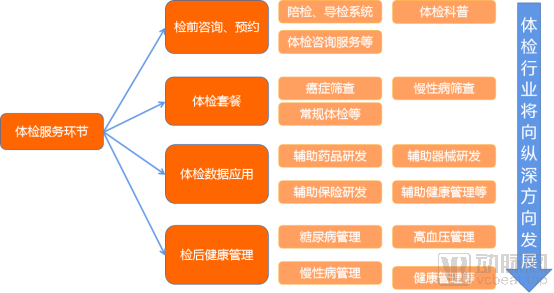
In light of this, we offer the following recommendations to practitioners in the health checkup industry and entrepreneurs aspiring to enter this sector:
(1) Prioritize pre-examination consultation services, scientifically design health checkup packages, maintain the industry’s reputation, expand the market, and share in the benefits.
(2) Emphasizing the interpretation of health checkup reports; high-quality service is one of the core competencies of non-public health checkup institutions.
(3) Strategically position in post-examination health management; the market size for “physical examination + health management” exceeds one trillion yuan, and early entry at this stage will secure a first-mover advantage.
(4) There is significant room for growth in the AI-based interpretation of medical imaging, and the development of artificial intelligence technologies offers substantial benefits to the health checkup industry.
(5) Expanding the boundaries of health examination services to extend into home testing will significantly increase the market size of the health examination industry.
(6) Conduct public education on medical checkups; with the deepening of population aging and the rise in residents' health awareness, the consumer market holds immense potential.