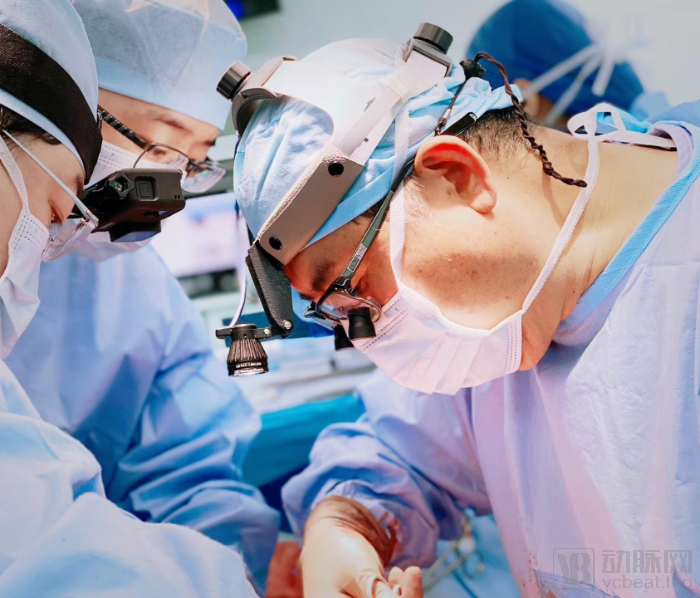
Sun Lizhong: A Modern Cardiothoracic Surgeon Must Do More Than Just Operate
The heart, once a forbidden zone inaccessible to the scalpel, meant certain death for those with cardiac damage. Over the past half-century, humanity’s efforts to challenge this taboo have never ceased; cardiac surgery has finally brought hope of rebirth to hearts on the verge of stopping.
With rapid economic development, particularly the improvement in living standards, evolving patient needs, and the emergence of minimally invasive interventional techniques, traditional cardiac surgery is undergoing a “transformation” amidst the tide of progress. Open-heart surgery is no longer the sole option for the clinical treatment of cardiac diseases.
“In the past, it was sufficient for cardiac surgeons to be proficient in open-heart surgery. Now, with social progress and technological advancements, cardiac surgeons must keep pace with the times by mastering not only surgical techniques but also the use of catheters, medical devices, and equipment, thereby fully embracing and applying new technologies,” stated Sun Lizhong.
What is the profile of a cardiac surgeon in the new era? How do cardiac surgeons address current challenges? What qualities are essential to becoming an outstanding cardiac surgeon in the new era? Recently, Professor Sun Lizhong, a leading figure in the field of cardiac surgery, gave an exclusive interview to VCBeat. Drawing on his own experiences, he shared his insights on how to shape the next generation of cardiac surgeons.
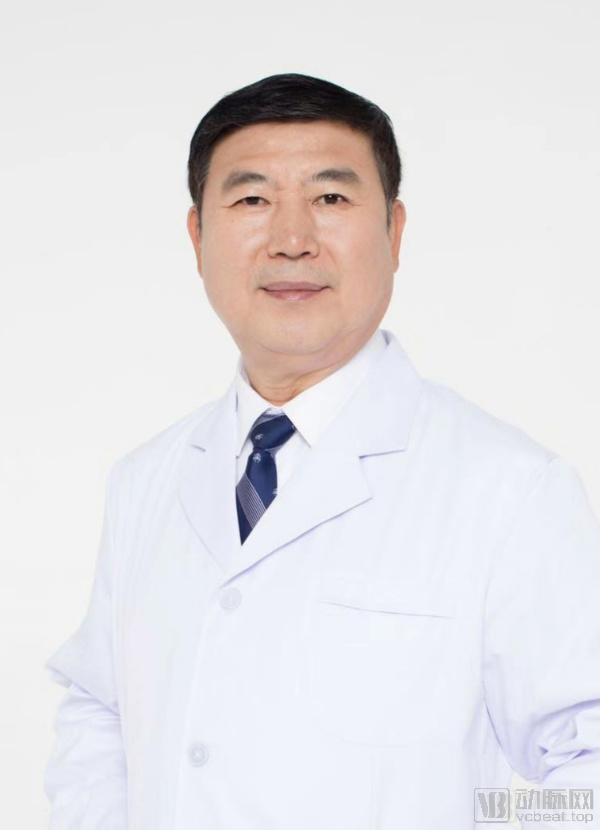
Sun Lizhong
Professor, Chief Physician, Doctoral Supervisor; President-Elect of the Cardiothoracic Surgery Branch of the Chinese Medical Association. With 37 years of clinical experience in cardiovascular surgery, he has independently performed over 10,000 cardiovascular surgical procedures, ranking him among the most prolific and versatile experts in this field in China. He pioneered the refined classification system for aortic dissection and the total aortic arch replacement combined with stented elephant trunk implantation (the “Sun’s Procedure”), which has significantly advanced the development of aortic surgery in China.
Recalling the Past
Cardiac Surgeons Must Possess the Perseverance to Forge Ahead Under Pressure
In the medical community, cardiac surgery is undoubtedly the most challenging and highest-risk specialty. For cardiac surgeons, the sense of achievement and the feeling of frustration are often separated by just a single operation.
Sun Lizhong introduced that the development of cardiac surgery in China was slow. Cardiopulmonary bypass was only introduced around the 1950s, and heart surgeries were rarely performed even in Beijing, the capital, or other major provincial cities. It was not until the 1970s and 1980s that these procedures gradually became widespread. At that time, entry into the field of cardiac surgery was reserved exclusively for surgeons who demonstrated exceptional clinical performance.
In 1983, Sun Lizhong graduated from medical school with outstanding academic performance and was subsequently assigned to the Fuwai Hospital of the Chinese Academy of Medical Sciences, then the largest specialized cardiovascular hospital in China, where he became a cardiac surgeon. Filled with passion and ambition for his work, Sun was driven by the noble ideal of saving lives and healing the wounded. However, his participation in his first aortic surgery that year dealt him a severe blow.
A young man in his twenties was admitted to Fuwai Hospital due to an aortic aneurysm. Given the severity of his condition, no physician at the hospital was willing to perform the surgery at that time. Later, when a renowned foreign expert visited Fuwai Hospital for academic lectures, the hospital invited him to serve as the lead surgeon. Sun Lizhong, then a resident physician, participated in the procedure. Unfortunately, the surgery failed.
This patient was around the same age as Sun Lizhong. During the hospitalization, Sun Lizhong, as the attending physician, provided continuous medical care. Extensive conversations and communication fostered a sincere “friendship” between doctor and patient. Gazing at the blood covering the floor of the operating room, an unprecedented sense of powerlessness welled up within Sun Lizhong. He told us that, for a moment, he even considered quitting his profession.
“But another voice inside me said, ‘If we could find better technologies and more effective treatments, perhaps we could save him and keep him alive…’” said Sun Lizhong.
"Letting go of sorrow and grounding himself in the present, he reaffirmed his beliefs and set new goals. 'Persevere, and strive to save more lives.'"
“Perseverance” is easier said than done. At Fuwai Hospital, Sun Lizhong spent nearly 24 hours a day moving between the wards and the operating room, studying tirelessly under his mentors without a moment’s relaxation. He deeply understood that only by firmly establishing a solid theoretical foundation and accumulating extensive clinical experience could one become a competent physician.
In cardiovascular surgery, operations for great vessel diseases impose higher demands on surgeons than cardiac surgeries.
From a junior resident physician to the leader of the aortic disease specialty, Sun Lizhong has achieved numerous breakthroughs in the field of cardiovascular surgery. In terms of scientific research, he has undertaken dozens of projects, including multiple grants from the National Natural Science Foundation of China, projects funded by the Ministry of Science and Technology of China, and key tackling projects during the “Tenth Five-Year Plan” period, earning several awards for clinical achievements.
In terms of clinical technology, multiple key techniques and devices for aortic surgery have been invented, significantly reducing surgical mortality rates. This has not only saved countless patients but also propelled China’s aortic treatment technologies onto the global stage.
In 1994, while pursuing advanced studies in Turkey, Sun Lizhong observed that local medical personnel employed right axillary artery cannulation for cerebral perfusion to protect the nervous system during aortic surgery. Impressed by the remarkable outcomes, he immediately introduced this technique to China upon his return and innovatively applied it in conjunction with cardiopulmonary bypass and selective cerebral perfusion. This application significantly reduced neurological complications associated with aortic surgery.
Furthermore, to address the critical issue of intraoperative hemorrhage in aortic surgery, Sun Lizhong and his team developed an autologous blood recovery and rapid reinfusion technique using a bleeding pump method. This innovation not only reduced allogeneic blood transfusion requirements by more than 30% but also preserved visceral perfusion.
There are many more improvements and innovations like these. These acclaimed achievements would be difficult to attain without the perseverance to press forward under heavy burdens.
“Only through continuous learning, constant breakthroughs, and sustained resilience can one become a truly outstanding cardiac surgeon,” said Sun Lizhong.
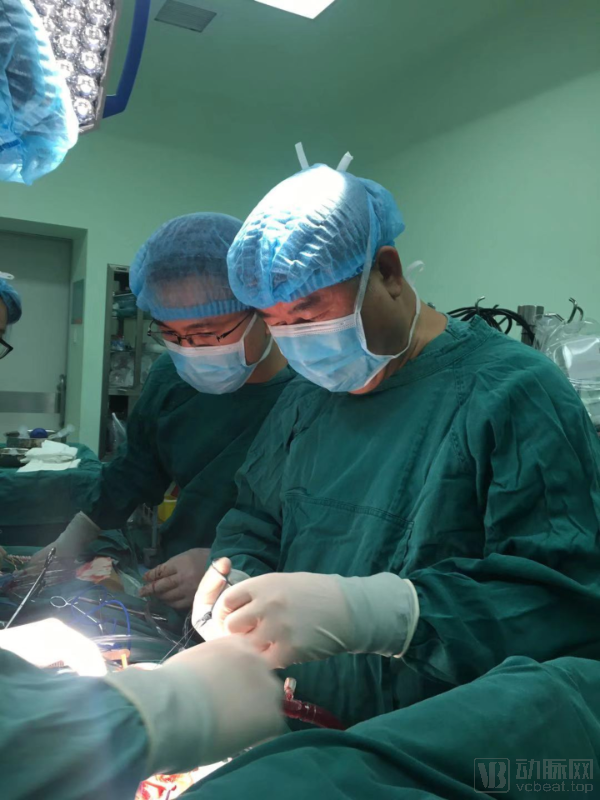
On the Present
Cardiac Surgeons Must Embrace New Technologies
The establishment and development of cardiac surgery have been arduous, requiring the devoted efforts of several generations. In the past, patients with aneurysms were difficult to treat; today, however, such procedures have become routine clinical operations. Beyond aneurysm repair, procedures such as coronary artery bypass grafting (CABG), valvuloplasty, valve replacement, and surgical repair of aortic dissection have also become standard practices.
The 2017 Report on Cardiovascular Diseases in China disclosed that there were 290 million patients with cardiovascular disease in the country. With the aging of the population, the number of individuals affected by cardiovascular diseases continues to rise. In recent years, interventional therapy techniques have developed rapidly, gaining popularity among patients due to their minimally invasive nature and favorable outcomes. Given their significant clinical value, interventional medicine is now recognized alongside surgery and internal medicine as one of the three pillar disciplines of clinical practice.
A wide variety of diseases can be treated with interventional therapy, encompassing nearly all major conditions affecting the body’s systems and organs. Its primary advantage lies in minimally invasive treatment for vascular disorders and solid tumors. Interventional techniques are categorized into vascular and non-vascular interventions. For instance, coronary angiography, thrombolysis, and stent placement for the treatment of angina pectoris and acute myocardial infarction are typical examples of vascular interventional techniques.
Interventional techniques have effectively freed surgeons’ hands. For patients, these procedures avoid major trauma associated with open abdominal or thoracic surgeries, making them psychologically more acceptable and increasing patients’ willingness to pay for interventional treatments. The development of interventional therapy has driven up demand for related medical devices, with varying levels of technological maturity across different subsectors. In the domestic market, cardiovascular interventional devices for coronary arteries and the aorta exhibit the highest level of maturity and command the largest market share for domestically produced products.
Amid the overarching trend toward interventional therapies, the blood-soaked history of traditional open-chest surgeries is gradually being consigned to the past.
“Cardiac surgeons who can only perform open-heart surgery are not meeting current demands,” pointed out Sun Lizhong. Technological innovations inevitably pose significant challenges to cardiac surgeons, who must proactively advance their skills to master both surgical techniques and catheter-based interventions, thereby fully embracing new technologies. As an increasing number of patients seek minimally invasive treatments, physicians must adapt to these patient needs and keep pace with the times.
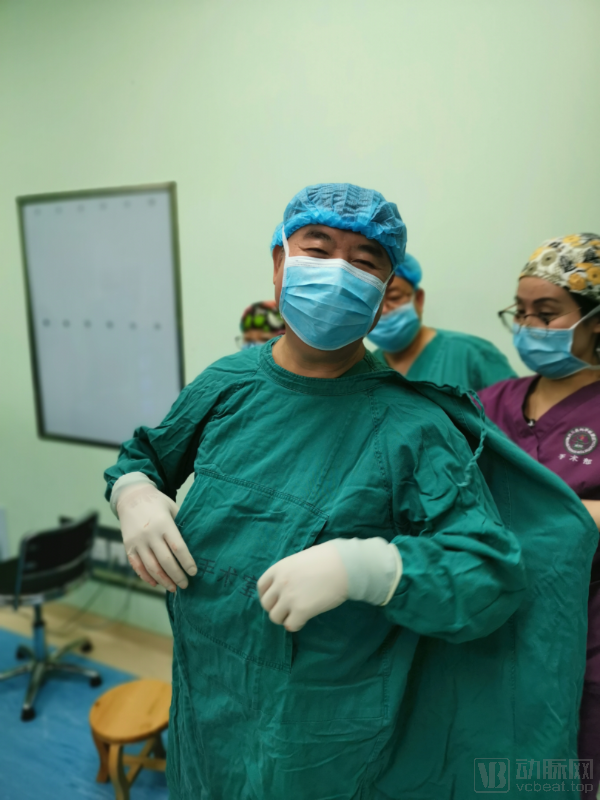
Xu Weilai
Cardiac Surgeons Must Possess a Spirit of Exploration That Is Never Satisfied with the Status Quo
The spirit of exploration, as embodied by Sun Lizhong, is best described as a passion for deep contemplation. Regardless of the complexity of the procedure, he constantly ponders how to refine his surgical techniques to minimize patients’ suffering from disease.
Extensive aortic disease, particularly involving the ascending aorta, aortic arch, and descending aorta, remains a significant challenge in cardiovascular surgery. Although the application of techniques such as deep hypothermic circulatory arrest and selective cerebral perfusion has substantially reduced mortality and complication rates associated with aortic arch replacement, one-stage replacement of the ascending aorta, aortic arch, and distal descending aorta is still associated with high mortality and numerous surgical complications.
In 1983, Borst first proposed the elephant trunk technique, which involves initial replacement of the ascending aorta and aortic arch with insertion of a free segment of prosthetic graft into the descending aorta. During the second-stage surgery on the thoracic descending aorta, the procedure can be completed distal to the left subclavian artery without the need for deep hypothermic circulatory arrest.
In 1988, Sun Lizhong introduced the elephant trunk procedure. During clinical practice, he found that the outcomes of this procedure were not particularly ideal for the surgical treatment of aortic dissection patients in China. After several years of research, in 2003, Sun Lizhong and his colleagues, based on the morphological characteristics of aortic diseases in the Chinese population, developed and applied a new technique for aortic arch replacement combined with stented elephant trunk implantation using a self-developed stent graft. This technique became known as the “Sun’s Procedure.”
Sun’s Procedure is indicated for the treatment of complex aortic dissection and extensive aortic pathology involving the aortic arch and the distal arch/descending aorta. It not only simplifies the surgical procedure but also demonstrates superior outcomes in reducing postoperative bleeding, increasing the rate of false lumen thrombosis in the distal aorta, and lowering the need for reoperation.
Over a decade has passed, and the Sun’s procedure is widely recognized as the standard surgical approach for treating complex aortic dissections and aneurysmal lesions involving the aortic arch and descending aorta. It also represents a significant milestone in the development of major vascular surgery in China. Currently, the technique has been adopted and promoted in more than one hundred hospitals across China, with tens of thousands of clinical cases successfully treated.
From an idea in 1998 to the debut of the Sun’s procedure in 2003, Li Zhong Sun’s spirit of exploration is admirable. It is precisely this exploratory spirit that has propelled China’s aortic surgery onto the global stage.
Sun Lizhong pointed out that in clinical practice, there remain many unknown and challenging issues, which serve as the starting point for physicians’ exploration and discovery. Medicine requires courage and perseverance in exploration; only in this way can we drive overall innovation and progress in the field.
Finally, Sun Lizhong offered several recommendations regarding the career development of cardiac surgeons. He noted that abroad, the training period for cardiovascular surgeons is longer than that for specialists in other fields. Generally, before becoming a cardiovascular surgeon, one must first practice general surgery and general thoracic surgery, establishing a robust foundation prior to specializing in cardiac surgery. In China, however, the learning curve for young physicians has lengthened due to diminishing practical opportunities.
For the younger generation of cardiac surgeons, Sun Lizhong advises that, while continuously building a solid foundation of theory and practice, they should undergo five to ten years of rigorous training under the guidance of experienced mentors, which will surely provide them with the opportunity to mature into competent cardiac surgeons.
When confronting these current challenges, it is essential to broaden one’s mindset and embrace change. For instance, with the emergence of new technologies, one must avoid adhering rigidly to established practices; instead, cultivate strong self-directed learning abilities and have the courage to experiment boldly.
“Currently, only 200,000 cardiac surgical procedures are performed annually, indicating that a large number of patients have not received effective treatment. It is hoped that this figure will reach 500,000 to 800,000 in the future, which would represent an ideal scenario.” Sun Lizhong pointed out that there is still a long road ahead for the development of cardiac surgery, requiring the continued efforts and succession of generations of young cardiac surgeons.