

Seven Innovative Medical IoT Application Scenarios Identified from Analysis of 312 Companies Filing IPO Prospectuses
With central government policy setting the tone and increased investment, “New Infrastructure” has surged in popularity as spring arrives. Among the seven key sectors of New Infrastructure, the Internet of Things (IoT) is an omnipresent force, deeply integrated into every module involved. The era of the Internet of Everything has arrived.
During the recent COVID-19 pandemic, Internet of Things (IoT) technology demonstrated its significant empowering role in the healthcare industry. It is evident that typical IoT applications, such as robots and smart hospital rooms, have been extensively deployed both domestically and internationally. With technological advancements and evolving market demands, the scope of IoT application scenarios is gradually expanding.
VCBeat compiled a list of 312 medical Internet of Things (IoT) companies from multiple public sources. Using its 2018 research report, “Special Report: In-Depth Analysis of 16 Major Application Scenarios for Medical IoT in 2018,” as the baseline, VCBeat identified seven innovative medical IoT application scenarios by comparing the IoT product applications offered by these companies. This article provides a detailed discussion of each scenario, including the drivers behind their emergence and corresponding solutions, supplemented by corporate case studies, with the aim of further promoting the practical implementation of IoT in the healthcare sector.
The Internet of Things (IoT) is the core of future smart healthcare. Based on a service-oriented architecture, the Medical Internet of Things is divided into a four-layer structure: the perception layer, the network layer, the platform layer, and the application layer.
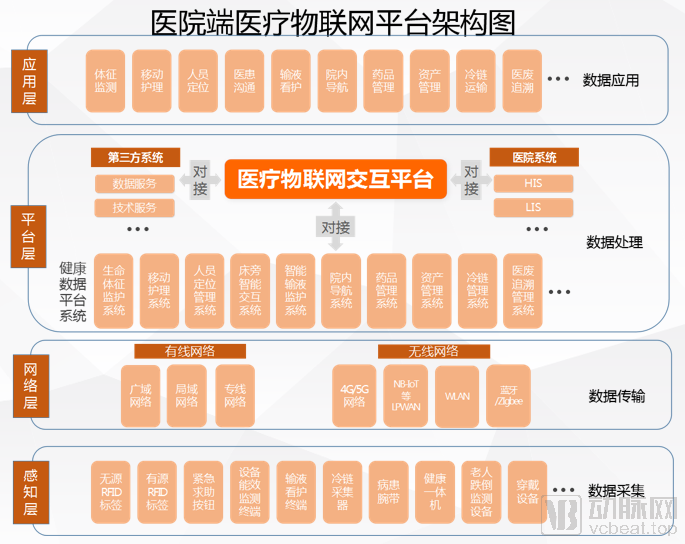
Perception Layer, also known as the Sensing Layer, is a fundamental characteristic of the Internet of Things (IoT). It consists of sensor hardware, including RFID and various smart sensors, along with corresponding data perception/acquisition protocols. Its function is to identify and collect device information and data.
The network layer consists of the Internet, Wi-Fi networks, RFID networks, 5G networks, Zigbee, LoRa, and NB-IoT. The function of the network layer is to enable connectivity among all objects and allow devices to transmit and share information with other devices within the network.
The platform layer plays a pivotal role in the IoT architecture, serving as a critical link between the underlying infrastructure and upper-layer applications. At its core, the platform layer relies on middleware technology, which must adhere to unified service standards. The hardware and software platforms of the middleware are reusable, thereby providing a low-cost foundation for the Internet of Things and enabling seamless integration of IoT services and applications.
The application layer serves as the interface between the Internet of Things (IoT) and users, representing the concentrated embodiment of IoT value.
The Medical Internet of Things (IoMT) integrates various networks and combines information and data collected and stored by sensing devices to form a vast network. This enables refined management of personnel and assets within hospitals, thereby achieving intelligent resource allocation, information sharing, and interconnectivity.
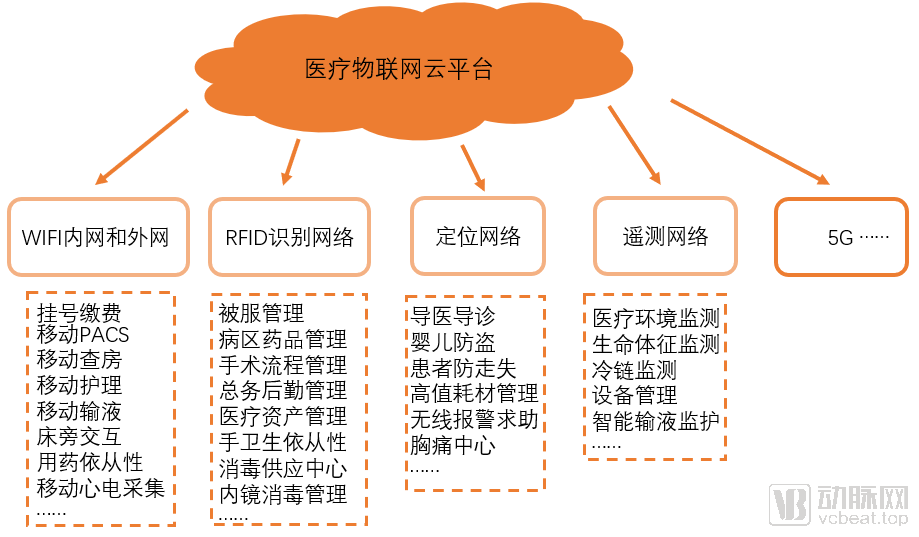
Currently, the application scenarios for the Internet of Medical Things (IoMT) have become highly diverse. Among the compiled list of products from 312 companies, application scenarios with a significant share include the management of high- and low-value consumables, diagnostic reagents and pharmaceuticals, medical waste, infant anti-theft systems, patient elopement prevention, and intelligent infusion management. These applications have already reached a mature stage of adoption in hospitals.
Among these, many application scenarios are developed based on the same technology. For instance, applications such as infant anti-theft systems, chest pain centers, and wireless emergency alarm systems all utilize RFID positioning technology, differing only in their target users and specific application contexts.
As the Internet of Things (IoT) becomes increasingly pervasive, the number of innovative projects based on IoT technology continues to grow. Many such initiatives explicitly identify IoT as the technological foundation of their products, while the target users and requirements for IoT-enabled solutions have become more diverse and refined.
Based on this, VCBeat has compiled seven innovative application scenarios: linen management, medical staff safety alarms, environmental monitoring, IoT-enabled rehabilitation robots, health management solutions, hand hygiene, and AGV logistics robots.
Among these 312 companies, 55 are involved in the seven innovative application scenarios.
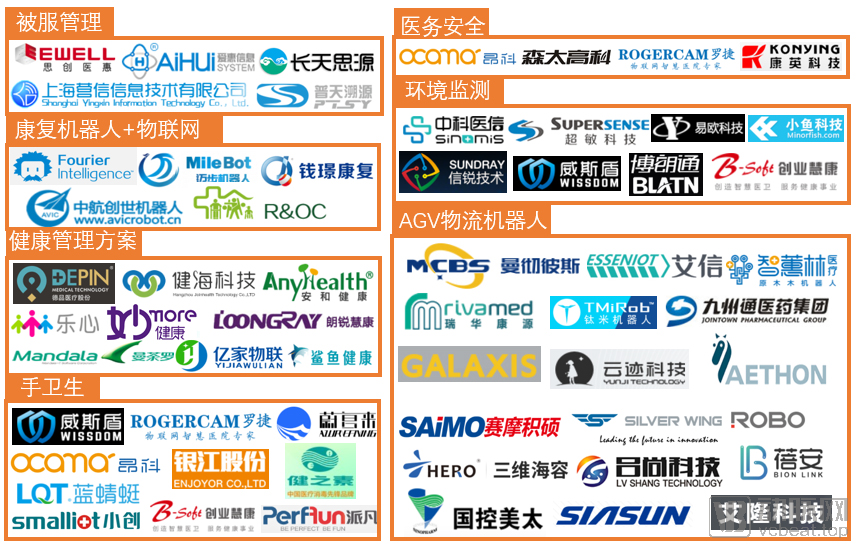
Enterprise Landscape of Emerging IoT Application Scenarios
Among these seven application scenarios, VCBeat has categorized them into two major groups based on their distinct characteristics: healthcare service demands aimed at improving the quality of medical services, and cost-control demands designed to enhance operational efficiency.
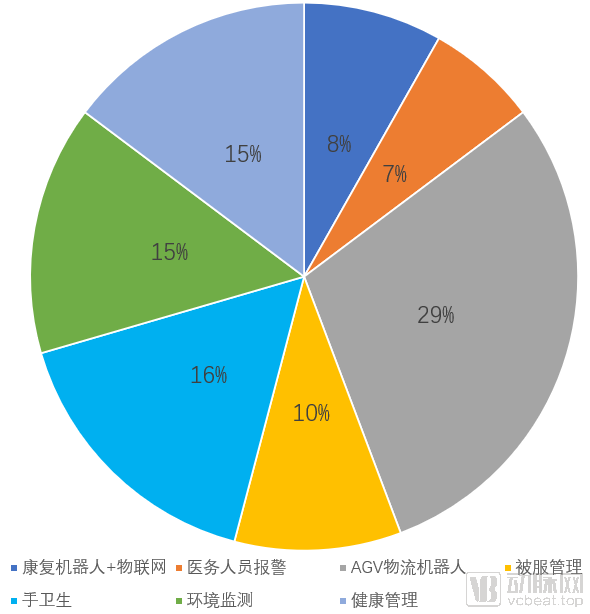
It is evident that linen management, environmental monitoring, and AGV logistics robots fall under cost control requirements, while rehabilitation robots integrated with the Internet of Things (IoT), medical staff alert systems, hand hygiene, and health management belong to medical service requirements. Among the seven innovative application scenarios, those addressing cost control needs account for 54%, slightly higher than those addressing medical service needs.
VCBeat’s analysis suggests that while asset management may not yield immediately visible cost-control results for hospitals in the short term, leveraging the Internet of Things (IoT) for asset management is an inevitable long-term trend. Furthermore, driven by factors such as health insurance cost containment, hospitals face heightened demands for cost control, thereby strengthening their impetus to adopt IoT-enabled lean hospital management.
For these seven innovative applications, VCBeat uses specific case studies to detail their real-world implementation.
Medical Staff Safety Alarm
Medical violence has become a global issue, prevalent in both developing and developed countries regardless of living standards or levels of civilization. In addition to elevating the legal protection against medical violence, it is essential to implement protective measures in practical healthcare settings.
In the hospital’s “Three-Defense System,” personnel defense serves as the foundation, physical defense as the safeguard, and technical defense as the core. The recurrent incidents of violence against medical staff are directly attributable, among other complex factors, to the relatively lagging security measures in hospitals. Therefore, optimizing the “technical defense” component within the hospital’s “Three-Defense System” has become an urgent issue to address in hospital security management.
The Internet of Things (IoT) also plays a role in safeguarding the safety of medical personnel. The Safe Medical Staff System launched by Anke Information is designed based on its medical wireless IoT platform and medical positioning network. The alarm system mainly consists of two parts: front-end one-touch alarm devices and a back-end alarm management platform. The two are connected via wireless network transmission.
When disputes arise between patients and medical staff, healthcare personnel can trigger a pre-alarm by pressing the button on their badge-style positioning tags. The system will send an alarm to the security department, provide the location information of the person raising the alarm, and track and update it in real time. The system can also link with the video surveillance system to view footage in real time. Upon receiving the alarm, security personnel will rush to the scene immediately to mediate and intervene, thereby preventing incidents of violence against medical staff.
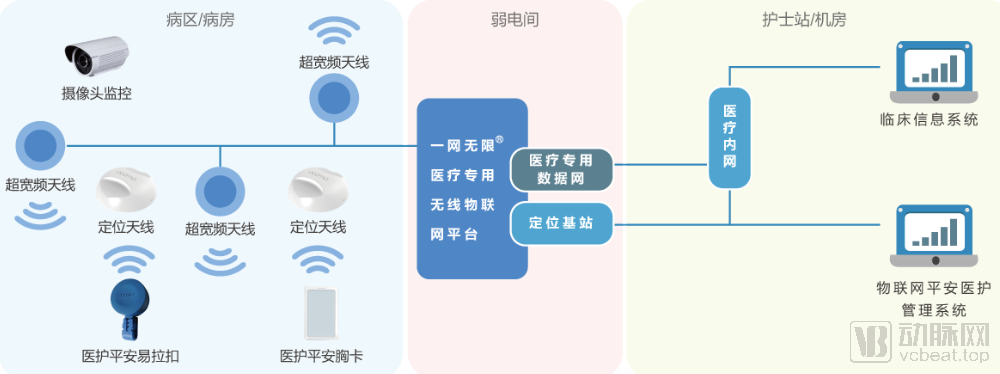
Anke Information Pingan Medical Staff System (Image from the official website)
Environmental Monitoring
Deploy various wireless sensors, including temperature tags, smoke detectors, water immersion sensors, door contact sensors, current sensors, and liquid temperature sensors, in hospital environments requiring monitoring to collect data. The data is then transmitted to the monitoring platform via wireless networks such as ZigBee, GSM, and Wi-Fi. If any monitored parameters are abnormal, the platform will promptly notify administrators for timely handling.
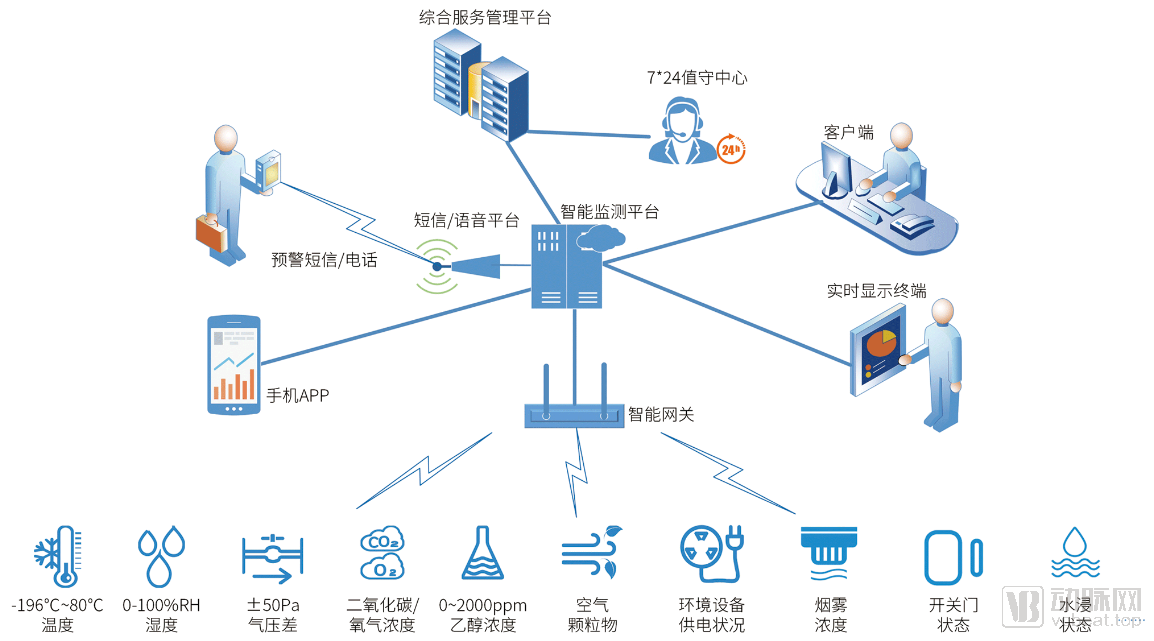
Weisidun Environmental Monitoring Management Platform (Image from the official website)
In line with the actual management needs of hospitals, WestShield has currently established an IoT-based integrated monitoring and management platform for three-tier temperature and humidity control and environmental conditions within hospital premises. This platform enables real-time, networked comprehensive monitoring of temperature and humidity in storage and transportation equipment and facilities for all pharmaceuticals (including cold-chain drugs and vaccines), as well as real-time monitoring of ambient temperature, humidity, power supply status, fire smoke detection status, oxygen concentration, carbon dioxide concentration, airborne particulate matter, concentrations of various total volatile organic compounds (TVOCs), and door open/close status across relevant equipment and work environments.
Health Management
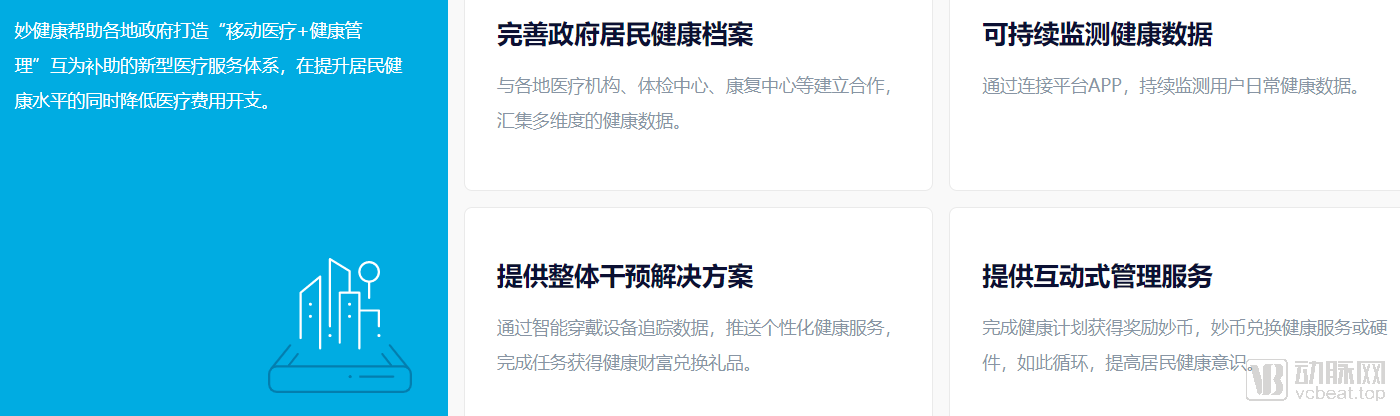
Miao Health’s Mobile Healthcare + Health Management Solution
In chronic disease management, timely access to vital sign information from high-risk populations or patients plays a significant role in prevention and control. With the advancement of Internet of Things (IoT) technology, remote and real-time collection of vital signs has become possible through wireless transmission technologies. Miao Health has built a big data platform for health behaviors called “Miao+,” which currently integrates over 300 types of wearable smart health hardware devices, including smart bracelets, blood pressure monitors, glucometers, body fat scales, and thermometers. Its open health data SDK interface provides health data integration services to qualified industry clients worldwide. Leveraging IoT-based health data entry points, it serves sectors such as insurance, enterprises, mobile phones, and government, covering more than 650 million users.
Miao Health has also partnered with Baidu. By opening its “Miao+” IoT health big data platform, Miao Health has further integrated SDK data interfaces with Xiaodu smart speakers, enabling one-click connectivity to over 300 intelligent health monitoring devices and making home-based health testing more convenient for users. Furthermore, the two parties will engage in complementary ecosystem collaboration. Based on users’ individual health status, an “AI Health Manager” or a team of professional physicians will provide remote consultations and online follow-ups for patients with chronic diseases, delivering personalized health management services and health protection products. This initiative aims to effectively improve service accessibility, support primary care family doctor services, and empower residents in chronic disease management.
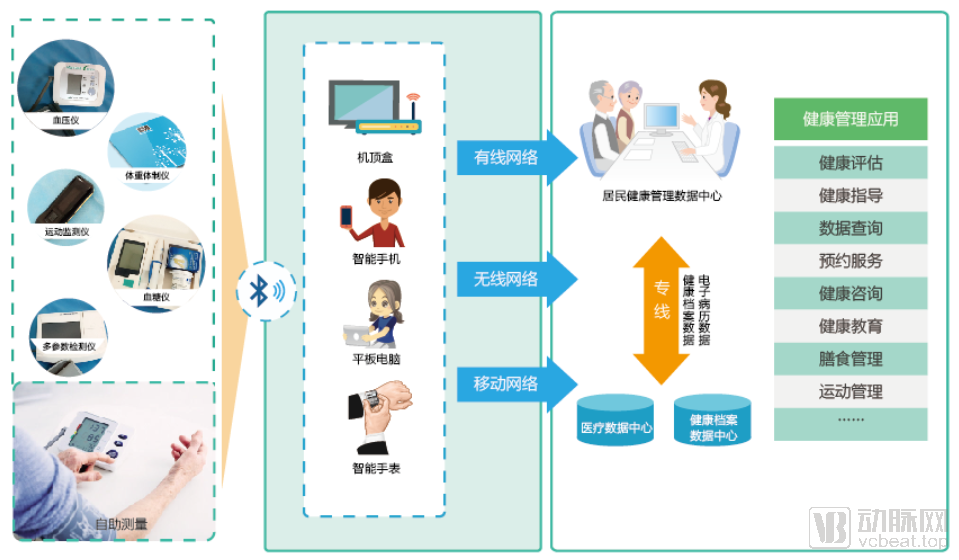
Mandala Tech’s IoT-Based Health Management Platform (Image from Official Website)
IoT-Based Interactive Resident Health Management Service Platform
RFID readers and wireless transmission modules are uniformly installed on vital signs sensors, such as blood pressure monitors and blood glucose meters. The RFID readers serve to identify users, and RFID information is uploaded synchronously with user detection data to facilitate data integration on backend servers. Users can monitor data trends via smartphones, computers, or smartwatches, while healthcare professionals provide further diagnostic and treatment recommendations for abnormal data through client-side applications.
In addition to RFID technology, NB-IoT network technology has also been applied in chronic disease management. In 2016, Huawei, Lifesense Medical, and China Unicom Guangdong jointly completed the service debugging of smart blood pressure monitors on China Unicom Guangdong’s live NB-IoT network. This milestone marked the emergence of smart healthcare devices based on NB-IoT technology, signifying that NB-IoT applications had broken through into the field of smart medical devices.
NB-IoT (Narrow Band Internet of Things) is a cellular-based narrowband IoT technology, representing an important technical branch in the Internet of Things (IoT) domain and one of the technologies within Low-Power Wide-Area Networks (LPWAN).
After each use, this smart blood pressure monitor automatically uploads the relevant measurement data to the Smart Health Cloud Platform via an NB-IoT wireless network for analysis and organization. It then generates real-time health charts and analytical reports, which are delivered to users through a mobile app or WeChat Official Account, enabling them to monitor their own and their family members’ health data and track health trends anytime, anywhere.
By leveraging the technical advantages of NB-IoT, such as low power consumption and deep coverage, the product’s energy efficiency is enhanced. This addresses the issue of poor signal coverage and difficult data upload associated with traditional GPRS-based wireless backhaul in certain areas, thereby further improving the customer experience.
Hand Hygiene
Traditional monitoring of hand hygiene compliance relies on manual spot checks or the deployment of observers, which is inefficient. With the development and rise of the Medical Internet of Things (MIoT), this situation, which requires strict procedural control, has been improved. IoT- and sensor-based systems have become the primary entry point for digital health enterprises in managing hand hygiene compliance.
IoT sensors can effectively replace human perception of the environment, more accurately and in real time identifying the hand hygiene status of medical personnel. Consequently, at every moment when hand hygiene procedures are required, these sensors not only issue alerts to remind healthcare workers but also automatically save records in the service backend via the connected communication network, serving as a basis for performance evaluation.
IoT Solution Process:
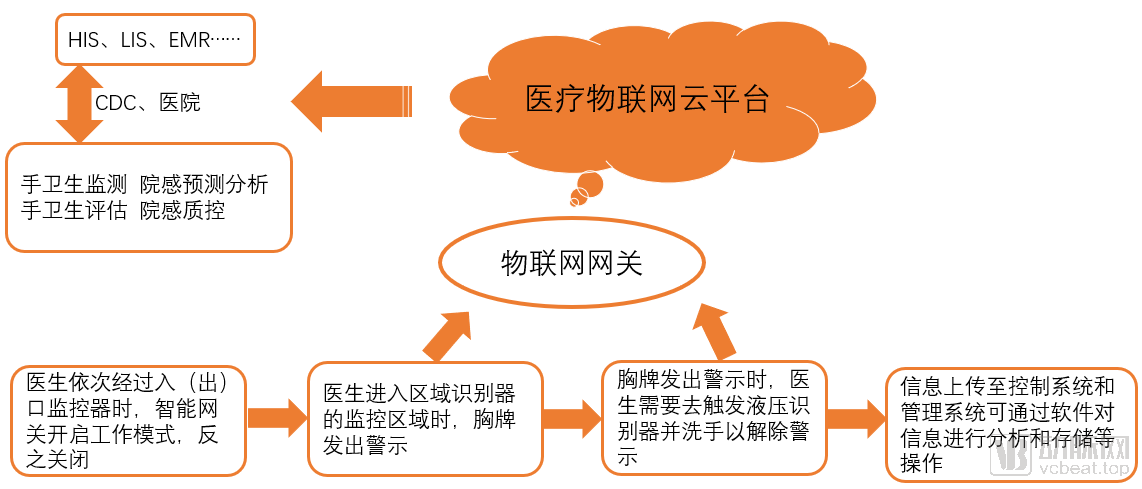
Paifan Technology's Hand Hygiene Solution consists of intelligent access points, zone identifiers, automatic dispenser sensors, ID badges, IoT gateways, and a medical IoT platform.
Smart ID badges equipped with RFID tags are linked to medical personnel, enabling identification at key locations. Area recognition devices can activate the badges within their monitoring range, facilitating access control, dwell time tracking, and proximity detection.
The automatic liquid dispenser with recognition functionality is primarily used for hand hygiene compliance monitoring. It employs infrared sensors to automatically dispense liquid and transmits a handwashing initiation signal to the smart ID badge via wireless communication. The IoT gateway receives various signals from the smart ID badge interface, processes them, and forwards the data to the medical IoT platform for analysis and record-keeping. The IoT platform is utilized for device status management, healthcare personnel management by department, and storage and analysis of hand hygiene data.
Linen Management
Traditional linen management requires dedicated personnel to manually count, record, and consolidate data into Excel. This process is not only labor-intensive but also poses significant management challenges and safety risks. During the unpacking, sorting, and counting of contaminated items in clinical departments, there is a high risk of secondary infection. Furthermore, the circulation, laundering, and handover processes are cumbersome, making it impossible to trace quality and accountability, which subsequently slows down inventory reconciliation.
RFID Hospital Linen Management is an intelligent management model that involves attaching RFID electronic tags to hospital staff uniforms (for doctors and nurses), patient gowns, quilts, and bed sheets (collectively referred to as “linens” in this text). By leveraging RFID desktop, handheld, and fixed readers/writers, the system automates various management processes, including linen registration, inventory counting, issuance, collection, status inquiry, tracking, and automatic sorting.
IoT Solution Implementation Process:
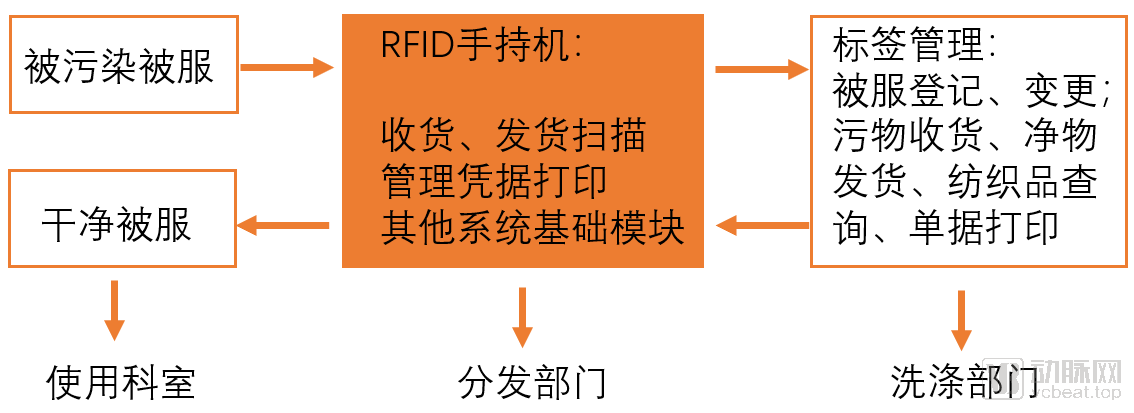
IoT-enabled electronic tags are attached to linens and linked to individual users. Patient gowns, quilts, and bed sheets, which are shared across departments, are delivered to each department by designated staff who identify the items via their IoT tags. During the collection phase, departmental staff place used linens into smart collection bins equipped with IoT readers for automatic identification. Once a preset quantity is reached, the system automatically notifies designated personnel for collection. Laundry facility staff then collect the soiled linens from each department, using IoT readers or handheld devices to count the items and complete the handover process.
Sichuan Yihui’s Intelligent Linen Management System utilizes RFID electronic tags, integrated with Sichuan Yihui’s IoT sensing framework, to implement digital management of patient linens, medical staff uniforms, and surgical textiles in hospitals. The system achieves automated handover and inventory counting of linens, as well as a closed-loop traceability system for laundry quality, enabling comprehensive, multi-dimensional management.
Sichuan Yihui’s washable tags also play a crucial role in the laundering process. In addition to quality assurances such as high-temperature resistance, rinse durability, pressure resistance, and fold resistance, Sichuan Yihui leverages RFID technology to assign a unique “ID code” to each washable tag. This ID code, integrated with the four-network-converged IoT platform and data acquisition hardware, enhances the reliability of fabric laundering processes, handover management, and event tracking, thereby making control procedures more systematic and intelligent.
Rehabilitation Robotics + IoT
The application value of the Internet of Things (IoT) and rehabilitation robots is reflected in the following: Patients undergo rehabilitation training with the assistance of robots, which utilize onboard sensors to monitor their condition in real time and deliver tailored rehabilitation exercises. Through IoT systems, physicians, patients, and family members can access real-time data on the patient’s physical status and training progress, thereby enabling remote diagnosis, treatment, and guidance.
VCBeat predicts that the integration of IoT technology will be the development direction for rehabilitation equipment products. The reasons are as follows:
First, the digitalization and IoT integration of medical devices can help rehabilitation therapists more accurately assess patients’ physical conditions and provide more precise rehabilitation plans.
Second, the application of Internet of Things (IoT) technology has also created new opportunities and therapeutic approaches for rehabilitation treatment. It can create a more engaging rehabilitation training environment, enhance patients’ enthusiasm and initiative in participating in training, and achieve quantitative rehabilitation assessment, visualized training, and intelligent management.
Third, an IoT-based rehabilitation information management system establishes a closed-loop cloud platform connecting homes, communities, and healthcare institutions to enable data sharing. This facilitates the improvement of two-way referral systems and stepwise technical guidance among tertiary hospitals, rehabilitation hospitals, and community institutions, thereby achieving integrated assessment, training, and monitoring.
Additionally, the Internet of Things (IoT) integration of rehabilitation equipment enables rapid warranty service and swift software updates. Furthermore, IoT connectivity allows for the tracking of product usage frequency, thereby facilitating the assessment of equipment suitability for specific departments and helping enterprises optimize equipment upgrades and iterations.
Maibu Robotics’ flagship product, the BEAR-H1 exoskeleton rehabilitation robot, integrates the Internet of Things (IoT) into its intelligent rehabilitation system.
By installing wireless quantitative sensors on the robot, an evaluation system is established to reflect the patient’s physical condition. During treatment, the wireless sensors collect data on the patient’s range of motion and force, uploading this information to an IoT platform. Simultaneously, the Maibu Robot collects clinical assessments provided by physicians. By comparing these two datasets to identify intrinsic correlations, the system further generates personalized rehabilitation plans for patients.
Through the Internet of Things (IoT) system, doctors, patients, and family members can monitor the patient’s physical condition and training progress in real time, enabling remote diagnosis, treatment, and guidance. This approach extends the duration of rehabilitation training, freeing it from constraints related to hospital space or bed availability, while also creating new revenue streams for hospitals. For patients, rehabilitation becomes more convenient, and the increased training duration leads to better recovery outcomes.
AGV Logistics Robots
Hospital logistics holds a strategic position in modern hospital management, encompassing the daily operations and management activities of nearly all hospital departments. Traditional logistics methods rely heavily on manual labor, resulting not only in high costs but also in chaotic personnel movements. This creates potential risks for cross-infection among staff and patients, as well as incidents of item contamination, damage, or loss. Consequently, logistics robots are emerging as a prominent solution.
Currently, there are four mainstream forms of automated logistics in hospitals: pneumatic tube systems, rail-guided cart systems, medium-sized box-type logistics systems, and AGV robots. Different types of technologies meet the hospital's needs for different materials and weights.
Generally, an AGV (Automated Guided Vehicle) robot system is a battery-powered, fully autonomous, unmanned automated material handling system that uses mobile robots as its carrier. It represents a new type of intelligent logistics solution that has emerged with the widespread adoption of Internet of Things (IoT) sensor technologies and information technologies, such as advanced positioning, obstacle avoidance, identity recognition, and automatic charging. By integrating robot-related modules with the hospital’s Hospital Information System (HIS), it effectively helps hospital distribution systems achieve informatization, digitalization, networking, integration, intelligence, and automation.
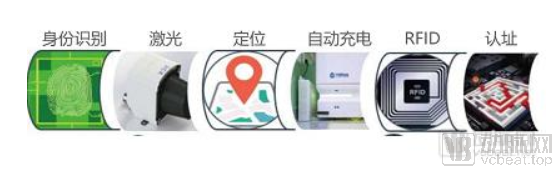
The steering, starting, stopping, and reversing mechanisms of the AGV robot are controlled by an onboard microcomputer-based intelligent system, which also features corresponding programmable input capabilities. Guided by laser navigation, the vehicle can automatically move forward, reverse, steer, and open doors according to pre-programmed instructions to reach designated delivery locations and return automatically, operating entirely without human intervention. The vehicle is also equipped with appropriate sensors that provide reference signals to the intelligent system, enabling it to issue corrective information for precise positioning.
AGV robots can automatically load items, navigate to target locations, and transport materials within the hospital premises. With minor modifications to the elevator control system, the robots use wireless signals to operate doors and switch floors, enabling autonomous multi-level navigation.
Based on current market applications, AGV robots are primarily utilized in the following six scenarios: Central Sterile Supply Department (CSSD), Intravenous Admixture Service (IVAS), Nurse Station, Inpatient Department, Operating Room, and Warehouse.
The advent of 5G has significantly accelerated the development of the Internet of Medical Things (IoMT).Communication technologies for the Medical Internet of Things (IoMT) include short-range wireless technologies such as Wi-Fi and Bluetooth, as well as wide area network (WAN) technologies like 2G/3G/4G cellular communications. High-bandwidth services primarily utilize 3G and 4G technologies.
Cellular, Wi-Fi, and Bluetooth enable cross-platform usage of the Internet of Things (IoT), while 5G serves as the connecting link. IoT devices have diverse functionalities and data requirements, all of which can be supported by 5G networks.
A report from the Haas School of Business at the University of California, Berkeley, states: “The most significant impact of 5G in the healthcare sector is ‘personalized medicine.’ The Internet of Things (IoT) can continuously collect patient-specific data, rapidly process, analyze, and return information, and recommend tailored treatment plans to patients, thereby empowering them with greater self-management capabilities.”
With the issuance of 5G licenses, 5G networks will better fulfill their role as “smart pipes,” facilitating data transmission among IoT devices and supporting applications such as high-definition video and real-time monitoring.
NB-IoT networks will help the Internet of Things overcome fragmentation and accelerate the informatization upgrade of the healthcare industry.NB-IoT cellular technology (Narrowband Cellular Internet of Things), as a globally unified mobile IoT standard, leverages cellular networks to build a wide-coverage, low-power, massive-connectivity, low-cost, and highly secure network. It is the optimal solution in the LPWA (Low-Power Wide-Area) domain, capable of meeting the diverse application scenarios of low-rate services.
According to 2019 data, China Telecom operates 310,000 NB-IoT base stations, making it the largest record holder globally. In May 2019, China Unicom’s scale also exceeded 300,000 base stations, achieving essentially nationwide coverage. At the 2019 Mobile Communication IoT Ecosystem Conference, China Mobile announced that it had built more than 200,000 NB-IoT base stations across China, covering 346 cities. Under China Mobile’s “Large Connection” strategy, the scale of its cellular IoT connections is projected to reach 500 million by 2020.
On May 7, 2020, the Ministry of Industry and Information Technology (MIIT) issued the “Notice on Deepening the Comprehensive Development of Mobile Internet of Things” (hereinafter referred to as the “Notice”). The overall objective is to promote the migration of 2G/3G IoT services to newer networks, and to establish a comprehensive mobile IoT ecosystem featuring coordinated development of NB-IoT (Narrowband Internet of Things), 4G, and 5G. By the end of 2020, NB-IoT networks were to achieve widespread coverage in the main urban areas of cities at or above the county level, with deep coverage in key areas; the number of mobile IoT connections was to reach 1.2 billion; and a batch of benchmark NB-IoT application projects and application scenarios with millions of NB-IoT connections were to be developed.
NB-IoT adopts designs such as ultra-narrowband, repeated transmission, and simplified network protocols to meet the connectivity requirements of the Internet of Things (IoT). With the support of relevant national policies, technologies like LPWAN have rapidly achieved industrialization. Coupled with the large-scale IoT network deployment by the three major telecom operators, the scaled promotion of NB-IoT may become a key breakthrough in the widespread adoption of IoT. NB-IoT networks will also be extensively applied in the field of medical IoT.
Sensors are the foundational components of various medical hardware.The Internet of Things (IoT) is an intelligent service system that connects objects, people, systems, and information resources via sensing devices—such as passive/active RFID tags, wristbands, all-in-one health kiosks, and wearable devices—in accordance with agreed-upon protocols. It enables information processing across both physical and virtual worlds and facilitates responsive actions. Currently, the most prevalent IoT applications are sensor-based monitoring solutions.
Sensors have evolved into intelligent sensors with information processing capabilities. The sensor family has expanded from physiological and biological data sensors, environmental data sensors, and physical data sensors (such as those for motion and pressure) to innovative sensors including biosensors, nanosensors, and flexible sensors.
The development of sensors has, on one hand, expanded the information acquisition capabilities of current information systems, enabling more effective perception of the physical world; on the other hand, by strengthening cloud computing and intelligent analysis of sensor data, it has enhanced decision-making capabilities based on information and enriched the application scenarios of the Internet of Things (IoT).
In the early stages of Internet of Things (IoT) development, IoT application scenarios primarily focused on the identification and localization of objects and humans, such as personnel management and vital signs monitoring. Subsequently, innovative applications aimed at enhancing the refined management of medical processes and improving the efficiency of medical workflows began to emerge, including linen management, supply chain management, and cold chain management. Currently, IoT technology is starting to play a role in applications such as early warning systems for medical staff and environmental monitoring within hospitals. It is believed that, with the support of policies and technological advancements, the landscape of future IoT innovation application scenarios will become richer and more diverse.