

Medical Knowledge Graph: The Core of Healthcare AI – Prospectus Submission
Medical artificial intelligence (medical AI) is a major application and industrial sector of AI. Current applications of medical AI include imaging AI (fundus, CT/MRI, dermatology), speech-to-electronic health record AI, auxiliary examination AI (limb movement), triage robots, pharmaceutical AI (personalized dosing, drug development), and telemedicine.
1I. The Core of Clinical Practice Is Physicians’ Clinical Reasoning
The general workflow of daily medical activities is shown in Figure 1. The physician first obtains the patient’s medical history and assesses the clinical condition, then performs a necessary physical examination. Subsequently, the physician orders appropriate diagnostic tests and laboratory investigations. The patient completes these tests and laboratories. The physician then interprets the test and laboratory results, makes clinical judgments and diagnoses, and determines the treatment plan or decides on further diagnostic evaluations.
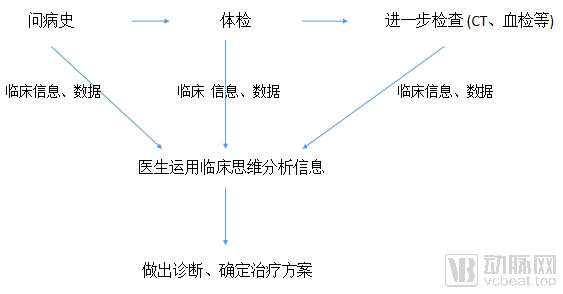
Figure 1 Schematic Diagram of the General Process of Daily Medical Activities
In this process, the physician’s understanding, interpretation, and judgment of clinical information (clinical reasoning) constitute the core of medical practice, serving as the driving force and central component of clinical work.
2II. Medical Artificial Intelligence Must Engage with the Core Components of Medical Activities
The primary role of medical artificial intelligence (medical AI) is to serve as a physician assistant in acquiring, interpreting, and assessing clinical information, thereby reducing physicians’ informational burden and workload while minimizing diagnostic errors. To achieve these objectives, medical AI must, and inevitably will, engage with the core component of clinical practice: physicians’ clinical reasoning.
3III. Current Issues in Medical AI
1. Issues with Imaging AI
Currently, medical AI is predominantly focused on clinical imaging AI. While imaging AI has undoubtedly reduced the workload of radiologists and improved efficiency, imaging findings play only an auxiliary role. Accurate diagnosis cannot be based solely on imaging results; instead, physicians must comprehensively interpret various aspects of the patient’s condition to make correct judgments. Throughout the overall healthcare process, the core element is the physician’s analytical and decision-making process (clinical reasoning), such as determining which tests are necessary, why these tests are indicated, and what the test results imply. Therefore, current imaging-based AI has not yet addressed the core aspects of medical practice.
2. Algorithmic Issues in Current Clinical Diagnostic Support Systems
Simulating physicians’ abilities to interpret, analyze, and assess clinical conditions should be a primary application and industrial direction for medical AI. Although current Clinical Decision Support Systems (CDSS) engage with the core element of the diagnostic process—namely, the physician’s reasoning—they rely predominantly on big data and Natural Language Processing (NLP) algorithms. This raises two critical questions: (1) Why are medical licenses granted to medical graduates rather than to graduates from mathematics or linguistics departments? (2) Did physicians lack diagnostic capabilities before the emergence of the big data concept (introduced in 2012) and NLP technology (developed in the early 1990s)? Clearly, the answer is no. Physicians’ clinical reasoning relies on medical knowledge, not on big data or NLP techniques. Long before the advent of big data, physicians had already been engaging in clinical reasoning for many years, accurately analyzing and diagnosing countless patients. The diagnostic process is neither an exercise in big-data statistical computation nor a meticulous linguistic analysis; rather, it is a comprehensive application of medical knowledge by the physician.Therefore, it is incorrect to use big data and NLP algorithms as the algorithms for CDSS.. The underlying reason is likely that most developers of clinical CDSS come from computer science backgrounds rather than medical ones, and thus lack a fundamental understanding of the clinical consultation process and its practical implications.
Another point that warrants emphasis is that medical judgment is an evidence-based, inquiry-driven process in which every step of reasoning must be supported by evidence, knowledge, and causal logic. In his seminal work The Big Data Era, Viktor Mayer-Schönberger, regarded as the father of big data theory, explicitly advocates “abandoning the pursuit of causality and replacing it with correlation,” a stance that runs counter to the evidence-based, causality-oriented logical reasoning required by evidence-based medicine.
Big data and NLP algorithms cannot explain the reasoning process from a medical perspective, resulting in an algorithmic black box., its clinical application will inevitably fail to meet the objective evidence-based requirements of clinical reasoning.
4IV. Knowledge Graphs Are the Foundation of Clinical Reasoning
The content and logical patterns of clinical information and data that physicians consider stem from specialized knowledge and cognitive frameworks developed through years of medical school education and clinical practice. This combination of specialized knowledge and cognitive patterns constitutes the physician’s knowledge graph. The scope of knowledge, volume of information, degree of currency, and professional logical interconnections among knowledge elements within this graph determine the physician’s level of expertise and competence, serving as the knowledge and logical foundation for clinical reasoning (Figure 2).
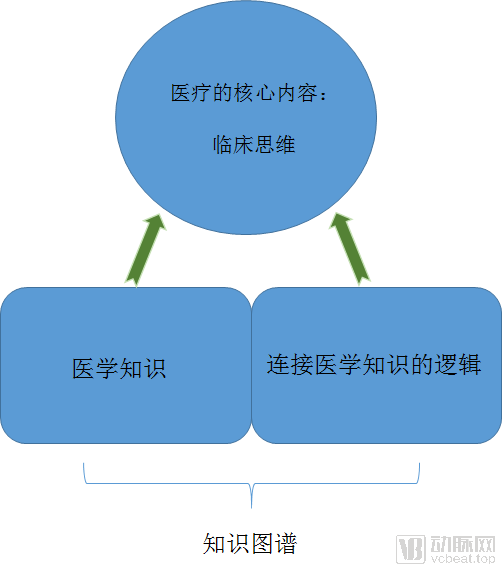
Figure 2. Schematic diagram of knowledge graphs as the foundation of clinical reasoning
5V. The Ideal Form of a Medical Knowledge Graph
As previously stated, a knowledge graph is a combination of physicians’ specialized knowledge and clinical reasoning patterns, encompassing knowledge content, volume, and the professional logical relationships among knowledge elements. The logical application of this knowledge enables the interpretation and assessment of clinical information to facilitate accurate judgments and decisions. Therefore, for medical knowledge graphs,What is needed is not a mere listing of superficial associations, but structured medical knowledge points (information and data) and their interconnections that align with the intrinsic logical mechanisms of medical science.Only on this basis can algorithms be clearly and reliably explained, thereby meeting the objective, evidence-based requirements essential to clinical medicine. The decisive role of knowledge graphs in algorithms is manifested in two aspects: (1) Knowledge graphs define how clinical condition information and data should be structured. Only structured information and data can meet the demands of large-scale computation; (2) Knowledge graphs define the logical relationships among clinical condition information and data, determining the flow and sequence of such information/data during artificial intelligence (AI) computation. By following these flows and sequences, programs simulate physicians’ cognitive processing and reasoning regarding information and data, thereby determining the level of intelligence achieved by AI.
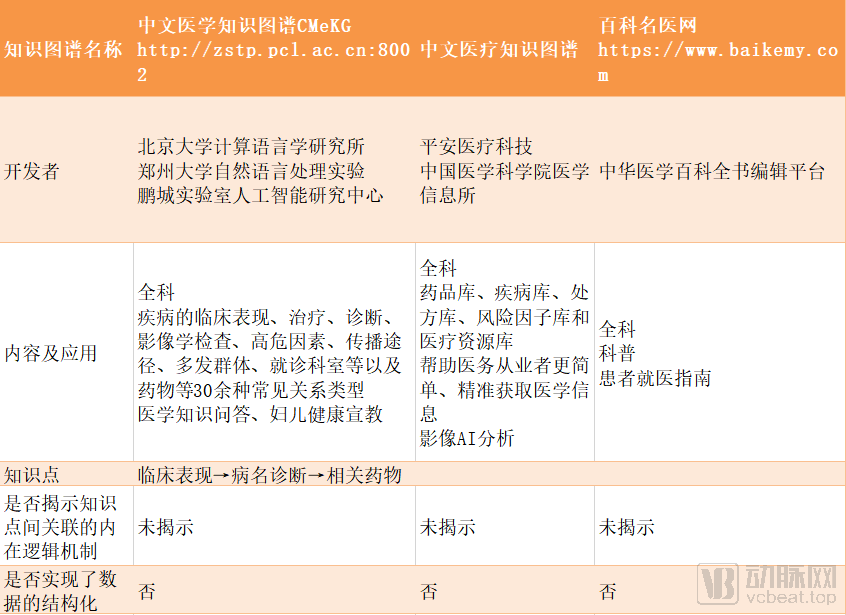
Several medical knowledge graphs have been developed to date; their contents and application examples are listed below (Table 1). TheirA common drawback is that, although knowledge points are presented, the underlying logical mechanisms connecting them are not thoroughly elucidated., that is, it fails to elucidate why the disease presents with such clinical manifestations, why specific diagnostic tests are required, and why particular medications are indicated. Consequently, the connections between knowledge points remain superficial rather than substantively logical. Algorithms based on this approach suffer from the “black box” problem and fail to meet the objective requirements of evidence-based medicine.
Furthermore,These knowledge graphs fail to structure the data and cannot meet the requirements for large-scale computation.。
6VI. Original Logic-Based Knowledge Graph
As early as June 2018, Dr. Zhu Yifan, the founder of this project, originally proposed the four key elements of clinical medicine AI logic-based knowledge graphs/algorithms:
(1) Reliability: The principles are derived from medical knowledge to address medical issues
(2) Accuracy: Conforms to the inherent objective logic of medical knowledge
(3) Interpretability: The reasoning process can be clearly explained to avoid the "algorithmic black box."
(4) Operability: Enables the structuring of clinical data/information to meet the requirements for large-scale computation.
Dr. Zhu Yifan originally developed a knowledge graph incorporating the aforementioned four elements, along with a corresponding comprehensive clinical diagnostic algorithm, and gained industry recognition by winning the “Best Innovation Award” at the “China 2018 AI+” Innovation and Entrepreneurship Competition hosted by the Chinese Association for Artificial Intelligence (Figure 3).

Figure 3. Original Clinical Integrated Diagnostic AI Algorithm Wins Best Creativity Award at the AI+ Competition
The proposition put forward by American medical scientists in the top academic journal Science in February 2019 that “medical AI must conform to medical standards” (Science. 2019 Feb 22;363(6429):810-812. doi: 10.1126/science.aaw0029) coincides with Dr. Zhu Yifan’s original four-element framework for logic-based knowledge graphs and algorithms in medical AI.
The “Seven Requirements for Trustworthy AI” issued by the European Commission in April 2019, and the “Governance Principles for New-Generation Artificial Intelligence: Developing Responsible Artificial Intelligence” released in June 2019 by the Special Committee on New-Generation AI Governance of China, both emphasize transparency, interpretability, reliability, and controllability of AI algorithms. These requirements align closely with the four core elements of medical AI knowledge graphs and algorithms originally proposed by Dr. Zhu Yifan.
7VII. Knowledge Graphs Are the Key to Unlocking the Medical AI Industry
Based on the above analysis, it is evident that medical knowledge graphs constitute the foundation of clinical reasoning, serve as the core of medical activities, represent the primary arena for medical AI, and act as the key to unlocking the medical AI market. Their concrete implementation takes the form of knowledge graphs for specific clinical specialties, such as cardiovascular disease knowledge graphs, pulmonary disease knowledge graphs, and critical care knowledge graphs, among others.Developing Disease-Specific Knowledge Graphs: The Key to Mastering the Medical AI Industry, only on this basis can its intelligent applications be further developed.
Author Information:
Dr. Yifan Zhu, Professor
Ph.D. from Heidelberg University, Germany; Postdoctoral Fellow at Queen Mary Hospital, The University of Hong Kong
Visiting Physician, Churchill Hospital, University of Oxford
Senior Visiting Scholar, Heidelberg University, Germany; Senior Visiting Scholar, North Carolina State University, USA
Henan University Introduced Talent, Chief Physician of Huaihe Hospital of Henan University
Director, Henan Provincial Engineering Laboratory for Translational Medicine of Infectious Diseases
Deputy Director of the Henan Provincial International Joint Laboratory for Cellular Medicine Engineering
Academic Leader in Minimally Invasive Oncology
Editor-in-Chief of *Fundamentals and Methods of Clinical Reasoning* (People's Medical Publishing House, 2018)
Co-editor of *Diagnosis, Treatment and Nursing of Clinical Hematologic Malignancies* (People's Medical Publishing House, 2018)
Awarded the Second Prize for Scientific and Technological Progress once (as the first contributor)
Applied for/authorized more than 10 national and international patents
Undertaking multiple national- and provincial-level scientific research projects
Published multiple SCI-indexed papers; serves on the editorial boards of several professional journals.