

Sailing Technology Files IPO Prospectus: Empowering Dental Labs with 3D Printing Digital Solutions
“As the population ages, over 90% of elderly people in China suffer from varying degrees of tooth loss. Due to a lack of oral health awareness, the rate of unreplaced missing teeth remains as high as 57%,” pointed out Zhang Fan, CEO of Chongqing Sailing Technology Co., Ltd. (hereinafter referred to as “Sailing Tech”). This severe dental health issue has given rise to a blue-ocean market for dentures (also known as “false teeth”) valued at hundreds of billions of yuan.
In dental prosthesis manufacturing facilities, producing an exquisite and comfortable denture—from taking dental impressions to casting, polishing, and setting—requires dozens of procedural steps. It typically takes several days for a master technician with at least five years of extensive experience to complete the process. The heavy reliance on manual craftsmanship has constrained the scalability of dental prosthesis manufacturers.
Zhang Fan pointed out that the integration of 3D dental printing technology will significantly facilitate efficient, large-scale production in denture processing plants.
Sailing Technology, established in 2018, is an AI-driven internet company with advanced capabilities in industrial equipment manufacturing. The company boasts comprehensive technical expertise and talent reserves in software engineering, materials engineering, mechanical engineering, and computer graphics. It has successfully completed the research, development, finalization, and mass production of metal laser 3D printing equipment specifically designed for dental prosthetics, achieving a generational advantage in the industry.
What Changes Will 3D Dental Printing Technology Bring to the Denture Supply Chain? How Efficient Can Production Become? Recently, VCBeat conducted an exclusive interview with Zhang Fan, CEO of SaiLing Technology, for insights on this topic.
“Transitioning from a career in the cultural sector to 3D printing, Zhang Fan conducted extensive trials during the early stages of his venture. ‘I experimented with everything from automotive molds and artificial joint replacements to dental applications,’ Zhang stated. ‘Ultimately, I found that the market prospects for 3D printing in dentistry were the most promising.’”
How Broad Is the Market Prospect for Dentures? He pointed out that, based on multi-source statistical data, the compound annual growth rate (CAGR) of the oral healthcare market over the past decade has reached 18%, with an annual market size of approximately RMB 200 billion. Within this, the prosthodontics market accounts for about 80% of the total share, representing an annual market size of roughly RMB 160 billion. The dental prosthetics manufacturing market is valued at approximately RMB 16 billion per year; the metal-based prosthetics manufacturing segment amounts to around RMB 11 billion annually; and the metal framework manufacturing market stands at about RMB 2.5 billion per year.
Zhang Fan pointed out that the choice of dental prosthetics factories as an entry point was primarily driven by the recognition of their inherent challenges in achieving scalability, which 3D printing can effectively address.
First, high labor costs account for 80% of denture production expenses; the introduction of metal 3D printing can reduce overall labor input by 20%. Second, the trial-and-error costs and risks associated with implementing new technologies are substantial. Traditional denture production involves a 36-hour cycle with approximately 35 assembly-line-like processes, where any incompatibility introduced by new technologies can disrupt subsequent steps. 3D printing effectively mitigates such issues.
Moreover, even the dental prosthetics manufacturers with the best current quality control still experience a return rate of 7%. Traditional production methods (involving approximately 30 steps) have up to 7 stages prone to human error; introducing 3D printing reduces these error-prone manual stages to just one, lowering the return rate to below 2%. From a digital operations perspective, dental prosthetics factories typically require one year for employee training and production trial-and-error, whereas 3D printing eliminates this need, significantly achieving cost reduction and efficiency improvement.
From project initiation in 2015 to the official establishment of the company in 2018, three years of exploration and solid preparation enabled Sailing Technology to achieve rapid growth after its inception.
Its independently developed Sailing-M150C metal 3D printer, dedicated to denture fabrication, achieves production efficiency more than twice the global industry average while ensuring manufacturing quality and precision. “Our ability to achieve high-efficiency production stems from deep optimization across multiple aspects, including the embedded system, laser scanning paths, and material yield,” pointed out Zhang Fan.
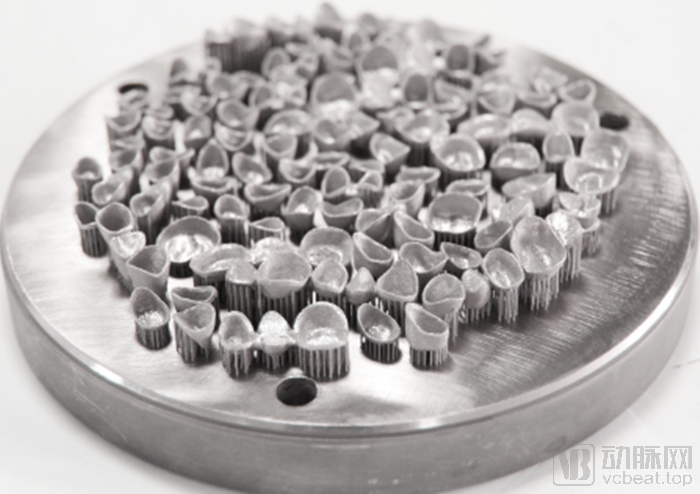
Leveraging the Sailing-M150C metal 3D printer dedicated to denture fabrication, Sailin Technology has established an autonomous, end-to-end metal 3D printing production system. The company has currently set up eight printing centers in cities including Shenzhen, Zhuhai, and Chongqing, with plans to open approximately two more this year.
High-quality printing equipment and a comprehensive production chain have laid the foundation for attracting foreign companies to collaborate.
In 2019, after conducting several months of inspections in China, Rhein Dental from Germany entered into a partnership with Sailin Technology, introducing Sailin’s independently developed metal 3D printing equipment and complete production lines for denture manufacturing in Germany.
Regarding the collaboration with Rhein Dental in Germany, Zhang Fan stated that one factor was crucial to its success: “one-day” same-day delivery.
Typically, “RMB 8 per unit, delivered within 8 hours” is the baseline for large-scale 3D-printed denture centers. However, Sailin Technology can achieve a price of RMB 7.5 per unit with same-city delivery in 7 hours. Its 3D printing efficiency is twice the industry average, while the cost per unit is 60% lower than the industry level.
“It can be said that currently, only Sailing in China is capable of achieving ‘one-day delivery’,” said Zhang Fan.
He pointed out that, leveraging its robust 3D printing capabilities and the advantage of same-day delivery, the company has currently partnered with approximately 120 dental laboratory facilities.
Zhang Fan introduced that the first phase of Sailling Technology’s development was to integrate the industry chain to create industry reliance, and the second phase was to build and operate a big data platform for dental medical services.
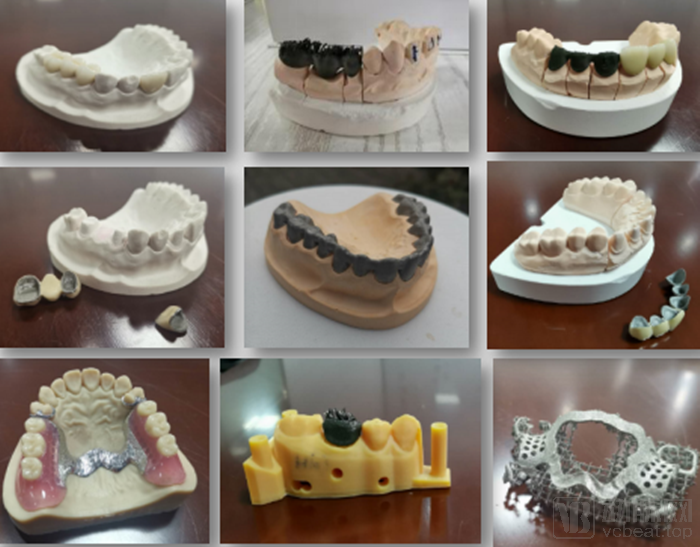
In building and operating the big data platform for dental healthcare, Sailin Technology will upgrade and expand its original offline order data collection and authentication system, enabling dentists to place orders with dental laboratories through the system, thereby integrating dentist data, patient data, and clinical treatment data into the big data platform.
The construction goal of the Big Data Platform for Oral Healthcare is to achieve coverage of over 90% of outpatient clinics (dentists) across China, while extending data applications into the field of oral diagnosis and treatment, striving to reach a coverage rate of more than 50% in the digital denture industry through platform-enabled production.
“Regarding big data operations, we have already scaled up our foundational data volume with comprehensive categorization, and are currently providing teaching and research services to multiple scientific research institutions. In the future, we will continue to deepen our big data operations while striving to achieve over 40% market coverage in the 3D-printed denture sector,” pointed out Zhang Fan.