

Acon Info Secures 5G-Enabled IoT Platform for Five Smart Healthcare Services at The First Affiliated Hospital of USTC

Ocamar
Developer of Medical Dedicated Wireless Network and Medical Internet of Things Technology Research and Application
Among the seven major domains of new infrastructure, the Internet of Things (IoT) is an omnipresent force, with its technology deeply integrated into every module involved in “new infrastructure.” In the healthcare sector, technologies such as IoT have reshaped the supply and demand dynamics of medical and health services from both business and operational perspectives. As the core of the medical service system, hospitals are undergoing a transformation driven by the development of “smart hospitals.”
“By placing various electronic tags, sensors, and network connections on diverse hospital equipment, or by having individuals wear wearable devices, we leverage technologies such as the Internet of Things (IoT) and cloud computing to objectively, quantitatively, in real time, and dynamically collect data—including patients’ vital signs and the operational status of medical device consumables—without any perceptible impact on hospital staff or patients. The relevant data is then transmitted via wired or wireless networks to duty rooms or command centers, effectively addressing the drawbacks of conventional data collection methods, such as poor real-time performance and disruption of patients’ rest,” said Pan Qiuen, Project Leader of the Ocamar IoT Platform.
Ocamar is a company specializing in medical-grade wireless networks and medical Internet of Things (IoT) applications. As of July 2020, Ocamar’s “One Network Unlimited”® medical professional wireless IoT platform and its applications had been deployed in more than 500 large hospitals across China. Notably, the First Affiliated Hospital of USTC, as the first smart hospital in Anhui Province, has leveraged Ocamar’s “One Network Unlimited” medical-grade wireless IoT platform solution to achieve intelligent sensing and processing of patients, healthcare staff, medical equipment, supplies, and other assets.
The First Affiliated Hospital of USTC, established in 1898, is a large provincial-level Grade A tertiary general hospital. It is recognized as one of the Top 100 Hospitals in China, integrating medical care, teaching, scientific research, disease prevention, healthcare, rehabilitation, and emergency services. The hospital currently comprises the Main Campus, the South Campus (Anhui Provincial Cardiovascular and Cerebrovascular Hospital), the West Campus (Anhui Provincial Cancer Hospital), the Infectious Disease Hospital (Hefei Municipal Infectious Disease Hospital), and the Minimally Invasive Medicine Center. Additionally, the First Affiliated Hospital of USTC is constructing a Geriatric Rehabilitation Center and the Beicheng Hospital.
According to reports, the hospital’s total outpatient volume reached 4.27 million in 2018, and surged to 4.91 million from January to November 2019. In 2019, the First Affiliated Hospital of USTC recorded an average daily outpatient volume of 12,000 visits on weekdays, with a single-day peak reaching 15,000 visits.
On the one hand, the throngs of patients are a testament to the hospital’s clinical excellence; on the other hand, the overwhelming demand for medical services poses a series of management challenges. With the deepening of China’s new healthcare reforms and the advent of a new wave of information technology revolution, the First Affiliated Hospital of USTC is actively seeking new breakthroughs.
Since the end of 2019, the construction of the IoT-enabled smart hospital at the First Affiliated Hospital of USTC has achieved remarkable results. The hospital’s ability to rapidly advance its initiatives in a short period is closely tied to its strategic advantage of maintaining an open mindset and embracing innovation. As the first hospital in Anhui Province to implement electronic medical records, and the first in the province to adopt the all-in-one medical service card and electronic health cards, the First Affiliated Hospital of USTC has remained unwavering in its spirit of exploring new technologies and applications.
Patients, medical staff, and hospital administrators are the three key stakeholders served by the “Smart Hospital” initiative at the First Affiliated Hospital of USTC. Building upon the digitalization of ward management, the hospital has centered its efforts on the entire inpatient care journey. By addressing the distinct needs of medical personnel, patients, and equipment, and leveraging Ocamar’s next-generation technologies such as the Internet of Things (IoT) and cloud computing, the hospital has achieved intelligent transformation in both clinical care and ward management.
Robust IoT Infrastructure
Currently, domestic medical IoT applications are dominated by proprietary RFID protocols, which lack interoperability even among devices using the same protocol. This constitutes a major challenge in the construction of hospital IoT infrastructure. When a hospital adopts IoT products from different manufacturers, it must establish separate networks for each, necessitating the extensive installation of IoT access points (APs), gateways, and RFID readers/writers. The deployment of multiple services results in fragmented IoT networks, power supply systems, and management platforms, leading to severe issues with redundant infrastructure and a sharp increase in both management costs and complexity.
At the outset of its IoT network construction, The First Affiliated Hospital of USTC gave comprehensive consideration to the platform’s security, stability, scalability, and maintainability. To address these concerns, Ocamar alleviated the hospital’s apprehensions through its independently developed OneNet Unlimited Medical Professional Wireless IoT Platform.
Ocamar’s self-developed IoT platform is primarily built upon its foundational IoT network platform, IoT data engine, IoT data integration platform, and comprehensive IoT operations and maintenance platform.
Its underlying network platform is equipped with a 400–6000 MHz ultra-wideband antenna system, compatible with various IoT protocols. It integrates multiple wireless networks—including 5G, IoT sensor networks, IoT positioning networks, Zigbee, Wi-Fi, and medical telemetry networks—to provide coverage for IoT data across diverse standards and frequency bands. The integrated platform supports different types of interfaces and is compatible with most mainstream third-party vendor systems in China.
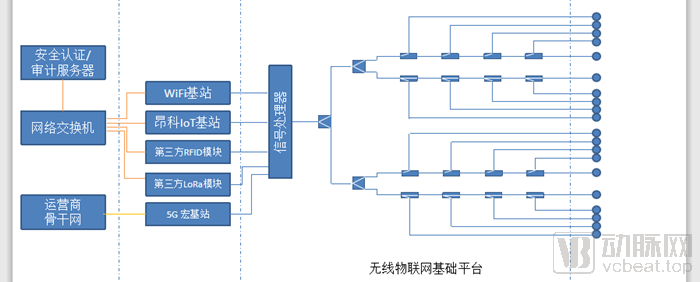
Ocamar Wireless IoT Infrastructure Platform
To address the issue of data silos within hospitals, Ocamar’s Wireless IoT Data Platform provides unified basic data dictionary management and an IoT data distribution module for infusion monitoring, temperature monitoring, and environmental monitoring. The platform performs data cleaning, standardization, and structuring for IoT operations, achieves interoperability with hospital business systems such as HIS and LIS, and supports external data queries or real-time data push notifications as needed.
Furthermore, Ocamar leverages its wireless IoT operations and maintenance platform to provide real-time monitoring of the operational status of multiple IoT application systems and hardware devices across three dimensions: service recipients, service departments, and system equipment. It also enables centralized monitoring of the performance of medical IoT sensor tags, thereby delivering a visualized O&M solution for hospitals.
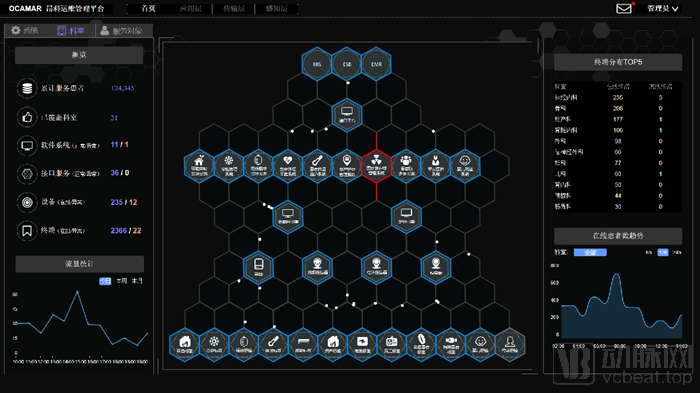
Ocamar Wireless IoT Operations and Maintenance Platform
Five Major Smart Healthcare Services
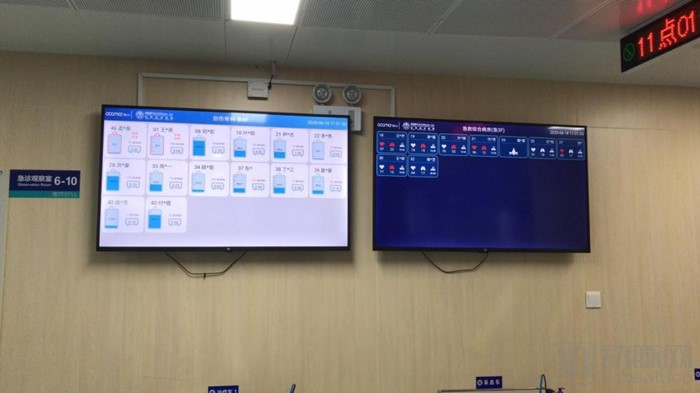
Infusion Monitoring and Vital Signs Monitor Display Screen
In terms of application scenarios, the First Affiliated Hospital of USTC has established five major smart medical services: smart support services centered on Ping An Medical and Healthcare; smart logistics services focused on wireless cold chain and environmental monitoring; smart nursing services featuring vital signs monitoring systems and wireless temperature monitoring; smart patient services comprising chest pain center patient positioning, patient anti-wandering, wireless infusion monitoring, in-hospital navigation, and perioperative management; and smart management services consisting of infant anti-theft, asset location management, and medical waste management.
Wireless Infusion Monitoring System: Without disrupting the infusion process, it provides real-time, precise monitoring of infusion rate, remaining volume, and completion alerts. It automatically calibrates zero-offset errors and addresses issues such as bottle oscillation and interrupted drip flow, enabling nurses to achieve closed-loop infusion management spanning from physician order entry and medication preparation to administration. Wireless vital signs monitoring mattresses placed under hospital beds or sensors worn by patients can trigger alarms for data threshold exceedances or abnormal conditions, including pressure ulcers, body movement/turning, and bed exit events. These devices also enable dynamic, real-time, continuous acquisition of vital signs data, such as heart rate, respiratory rate, and body temperature.
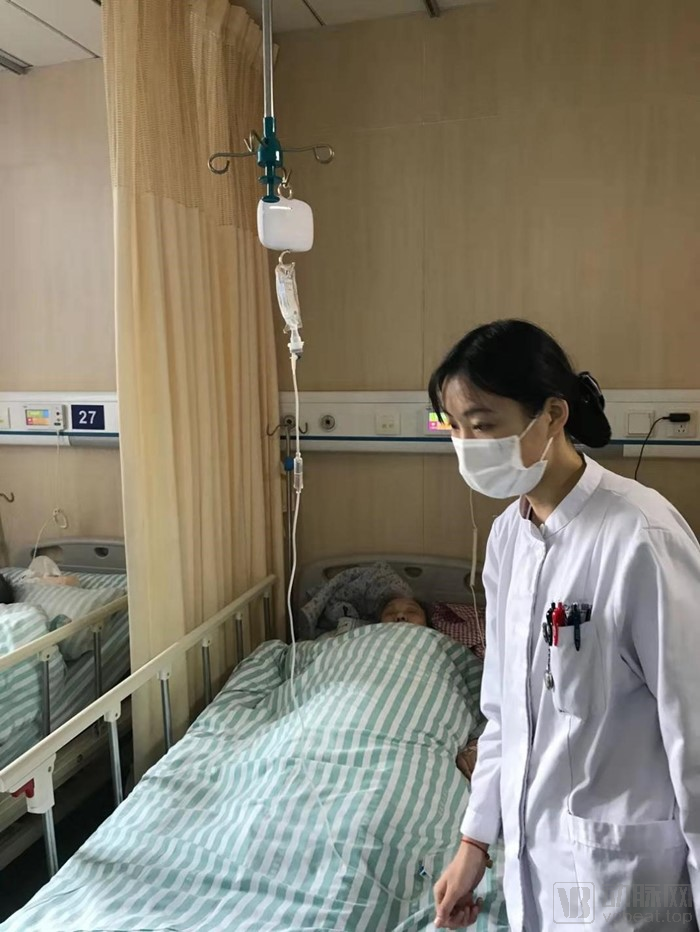
Hospital Infusion Monitoring System
The Chest Pain Center leverages Internet of Things (IoT) technology to establish an integrated acute chest pain treatment system spanning pre-hospital, in-hospital, and post-discharge phases, thereby minimizing emergency response times and providing comprehensive disease management from diagnosis and rapid treatment to follow-up care.
Given the stringent low-temperature requirements for special pharmaceuticals, blood, and laboratory specimens within the hospital, Ocamar’s wireless cold chain management system has been adopted. Sensors are placed in medication/specimen storage rooms or refrigerators to monitor temperature and humidity data. This system is widely applied in key monitoring areas such as the hospital pharmacy warehouse, clinical laboratory, biochemistry room, blood bank, and contaminated zones.
In the field of medical personnel protection, Internet of Things (IoT) technology has also been effectively applied.
Regarding the occupational safety of medical personnel, pre-alerts are enabled by equipping staff with badge-style positioning tags. In emergencies, healthcare workers can trigger an instant alarm with a single button press on the tag, ensuring that security personnel arrive at the scene immediately. For infant anti-theft protection, hospitals employ advanced RFID technology based on the YiWangWuXian® medical-grade wireless IoT platform, which provides seamless signal coverage across ward areas. By installing audio-visual alarm devices at exits and entrances, the system enables proactive early warning, addressing the lag in incident response and effectively preventing issues such as infant abduction or accidental mix-ups.
The demand for smart hospitals among patients and medical staff is self-evident, and hospital administrators also have a strong need for the intelligent transformation of their institutions.
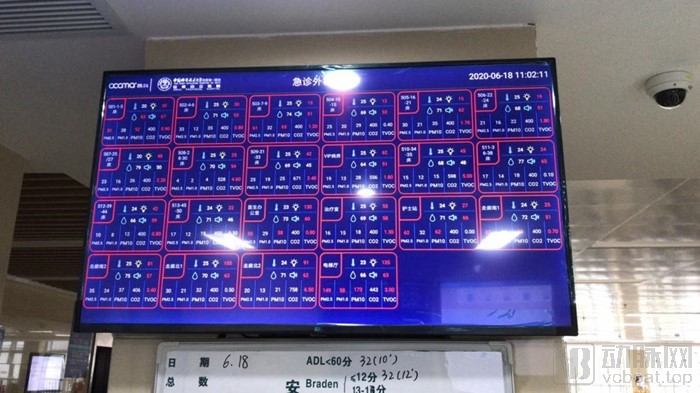
Hospital Environmental Monitoring and Management System Monitor Screen
The First Affiliated Hospital of USTC has implemented an environmental monitoring and management system by installing wireless environmental monitors in relevant departments. These devices monitor data such as temperature, humidity, light intensity, noise levels, PM2.5, PM1.0, PM10, TVOC, and CO₂ in real time. Through the Yiwang Wuxian Medical Professional IoT Platform, the data is transmitted to wireless environmental monitoring software for real-time analysis. The system triggers alerts for environmental anomalies and automatically activates air conditioning or ventilation systems to mitigate issues.
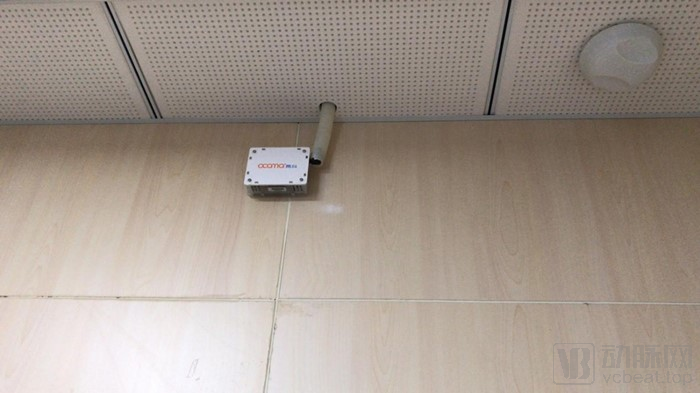
Hospital Environmental Monitoring and Management System
To manage large volumes of medical waste, hospitals leverage the Yiwang Wuxian Medical Dedicated Wireless IoT Platform. By attaching positioning tags to each batch of medical waste, the system collects real-time location data and integrates it with backend data acquisition engines and management software. This enables the display and recording of basic information and location data for medical waste, thereby achieving in-hospital transport tracking and facilitating the inquiry and regulatory oversight of the disposal cycle for various types of medical waste.
In response to the frequent movement and borrowing of nearly 1,000 medical devices within the hospital, such as patient monitors, ventilators, and mobile carts, the hospital has implemented asset location management. This facilitates equipment tracking, inventory checks, and statistical analysis of usage duration, frequency, and movement trajectories for administrators.
In January 2019, the First Affiliated Hospital of USTC and China Telecom Anhui Branch jointly established China’s first “Smart Hospital 5G Joint Laboratory.” By leveraging their respective advantageous resources to achieve resource aggregation and complementary strengths, both parties plan to jointly explore the application of 5G technology in streamlining medical processes and optimizing management models. Through technological innovation in the healthcare sector, they aim to further improve patients’ medical experience, enhance diagnostic and treatment efficiency, and optimize management models, thereby making medical services more accessible and responsive to the public.
It is worth noting that in May, China Telecom connected its 5G network to Ocamar’s OneNet Infinite® Medical-Grade Wireless IoT Platform at the Emergency Center of the First Affiliated Hospital of USTC for the first time. By leveraging the passive nature of the OneNet Infinite IoT platform, there was no need to construct a separate new digital indoor distribution system, thereby avoiding the high construction and operational costs typically associated with 5G networks and saving significantly on both initial capital expenditure and ongoing operational expenses. Furthermore, thanks to the seamless indoor coverage provided by the OneNet Infinite® Medical-Grade Wireless IoT Platform, all 5G signal blind spots and dead zones within the hospital were eliminated.
The construction of smart hospitals is, in fact, a massive systems engineering endeavor that cannot be accomplished overnight. Pan Qiuen stated that the technical capabilities of Ocamar’s OneNet Infinite® Medical-Grade Wireless IoT Platform have reached maturity. Ocamar will continue to intensify its efforts in medical IoT applications, with a plan to expand the variety of IoT applications to more than 30 within five years, thereby striving to advance the development of medical wireless networks and the construction of IoT-enabled smart hospitals.