

How Are 250 Million Minds Being Treated? 20 Mental Health Startups Secure $2 Billion in Funding
“The world in the midst of the pandemic is suffering from a triple crisis: a healthcare crisis (the epidemic itself), an economic crisis, and a mental health crisis (which should not be underestimated).”
In March this year, contemporary thinker Slavoj Žižek discussed this viewpoint in a media interview. He reminded us of the fact that in an era swept along by progress and development, the real conditions of human existence deserve attention, and people’s mental health issues cannot be underestimated, particularly during periods marked by pandemic-related isolation, economic downturns, and global social instability.
According to data from the U.S. National Institute of Mental Health and the National Alliance on Mental Illness, approximately 20% of adults experience mental or psychiatric disorders of varying severity, with about 5% reaching severe levels. Among all affected individuals, fewer than 45% seek treatment each year through methods such as psychological counseling, medication, or hospitalization.Even among adolescents, a group typically considered to face lower social stress, 17% exhibited psychological or mental health issues, and similarly, only about 50% opted for treatment.
These data suggest that anyone we encounter in our daily lives—you, me, or others—may potentially be experiencing mental health issues. How is the healthcare industry addressing this challenge? What kinds of companies are developing which products, business models, or therapies? And where are policy, capital, and market demand steering entrepreneurs in the mental health sector?
This year, the disruption to social life caused by the pandemic has brought unprecedented attention to mental health issues.
On January 27, the National Health Commission issued the “Guiding Principles for Emergency Psychological Crisis Intervention in the Epidemic of Novel Coronavirus Infection,” incorporating psychological crisis intervention into the overall deployment of epidemic prevention and control. It required localities to arrange work and develop work schedules based on the scope and number of target populations, as well as the number of personnel available for psychological crisis intervention. On February 2, the Joint Prevention and Control Mechanism of the State Council in Response to the Novel Coronavirus Infection Epidemic issued the “Notice on Establishing Psychological Assistance Hotlines for Epidemic Response,” requiring all regions to establish dedicated psychological assistance hotlines for epidemic response in addition to their existing psychological support hotlines.
Beyond the fight against the epidemic, China has long prioritized the development of mental health services. In 2004, the Ministry of Health issued the Guiding Opinions on Further Strengthening Mental Health Work, which established the principles of “prevention first, combining prevention and treatment, targeted intervention, broad coverage, and law-based management” for mental health work.
By 2012, China had enacted its first Mental Health Law. The policy stipulated that medical expenses for patients with mental disorders would be covered by medical insurance in accordance with national social insurance regulations, with priority assistance provided by civil affairs departments for those still facing financial difficulties. Furthermore, the policy encouraged and supported non-governmental entities in establishing medical institutions engaged in the diagnosis and treatment of mental disorders, as well as in providing mental health services.

(Key Policy Documents Issued in the Field of Mental Health in Recent Years)
In October 2016, mental health issues were also incorporated into the “Outline of the Healthy China 2030 Plan,” which includes provisions such as “strengthening interventions for common mental disorders and psychological and behavioral problems, including depression and anxiety disorders, and enhancing early detection and timely intervention for psychological issues among key populations.”
In November 2018, the “Work Plan for Pilot Programs on the Construction of a National Social Psychological Service System” was issued. The policy outlined 17 key tasks, such as establishing grassroots psychological service platforms, improving the psychological service network within the education system, and developing social psychological service institutions.
Reviewing this policy trajectory, we can see that mental health in China is transitioning from macro-level emphasis and guidance to the concrete implementation of mental health services and platforms. In terms of policy implications, the mental health industry has entered a new phase, with an urgent need for platform-based companies that can provide effective solutions.
Mental health issues are undeniably a major problem in China. In May 2018, the National Health Commission released the following data at a meeting:As of the end of 2017, among China’s population of 1.39008 billion, there were 243.264 million individuals with mental disorders, resulting in an overall prevalence rate as high as 17.5%; the number of patients with severe mental disorders exceeded 16 million, with a prevalence rate surpassing 1%, and this figure continues to rise year by year.
In the face of this severe challenge, existing mental health services are grossly inadequate, creating an urgent need for the industry to adopt new models, technologies, and concepts.
Promising sectors inevitably attract early adopters and innovators; thus, platforms such as Haoxinqing and YiXinli have emerged, with various players embarking on their exploratory ventures. Behind them, capital has also begun to flow in, providing strategic support.
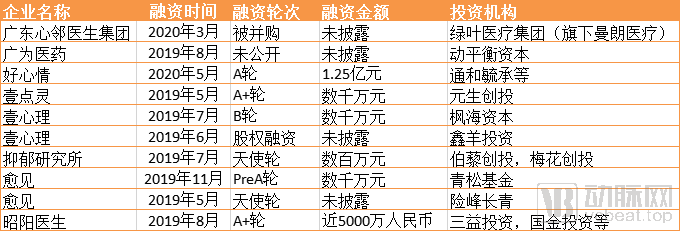
(Partial Financing Events in the Mental Health Sector, 2019–2020)
Over the past year or so, there have been 10 financing events in China’s mental health sector, with more than RMB 200 million in capital invested.
Compared with China, the scale of financing in the mental health sector abroad is significantly larger, with 10 companies receiving approximately RMB 1.8 billion in investment.
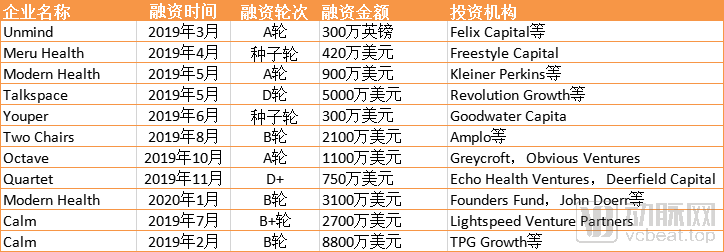
(Selected Financing Events in the International Mental Health Sector in 2019)
What explorations have these capital-favored companies launched in the industry? What solutions do they offer to treat people’s psychological issues?
In medicine, determining whether an individual’s psychological issues constitute common psychological problems or mental disorders primarily relies on three criteria: the presence of hallucinations (such as auditory or visual hallucinations) or delusions; impaired self-awareness, including the ability or willingness to accept psychological or psychiatric treatment; and disordered affect and cognition, specifically whether perception, emotion, and volition are aligned, and whether social functioning is severely impaired as a result.
“Yes” indicates a psychiatric disorder, while “No” indicates a common psychological issue.
Starting from this distinction,Currently, innovative enterprises in China’s mental health sector can be broadly categorized into two types: the wellness service model targeting common psychological issues, represented by companies such as YiXinLi, YuJian, and the Depression Research Institute; and the medical service model addressing psychiatric symptoms, represented by platforms such as HaoXinqing and Zhaoyang Doctor.
Traditional psychological counseling agencies are primarily studio-based, with counselors and clients engaging in offline one-on-one sessions billed on an hourly basis. With the rise of mobile internet, artificial intelligence, and other technologies, the mental health sector has undergone technological advancement, shifting from offline to online services; digital transformation has become the primary pathway for innovation in the industry.
Players adopting the health service model have moved offline psychological counseling online, designing health service products delivered via video, voice, and text. Players following the medical service model have brought psychiatric specialties from traditional public hospitals online. Their business models resemble those of typical internet healthcare companies such as Chunyu Yisheng and WeDoctor, but they focus specifically on the mental health sector, cultivating expertise within this vertical niche.
In different modes, the two types of players are each following their own paths.
Health Service Model: Focusing on Psychological Counseling and Psychoeducation, with Content as the Core Product
Around the inaugural year of mobile healthcare (2014), dozens of apps emerged in the mental health sector. Their functional modules primarily included physician search and consultation, online counseling, psychological assessments, social networking, employee assistance programs (EAPs), psychological courses (paid or free), and psychology education, with a core business focus on psychological counseling.
Based on publicly disclosed funding rounds and user numbers, YiXinLi and YuJian are currently leading the industry.
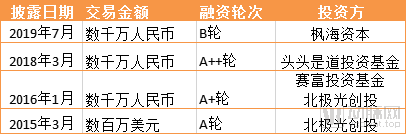
(Financing Status of Yi Xinli)
Founded in 2011, Yi Xinli secured millions of dollars in financing from the early-stage investment firm Northern Light Venture Capital in 2015, and further raised tens of millions of RMB in equity financing last year. Yi Xinli provides mental health services including psychological counseling, psychological assessments, and mental health education. Its “Yi Xinli” brand has established a presence on more than 10 content platforms, such as WeChat Official Accounts, Toutiao, and Zhihu.
According to the brand manual data provided by YiXinLi, the platform has amassed 3 million paying users and 8 million followers across its WeChat Official Account matrix. Its three core business segments are paid courses, original psychological assessments, and psychological counseling. Among YiXinLi’s user base, the primary user persona tags are “urban young women,” “well-educated,” and “focused on self-growth.”
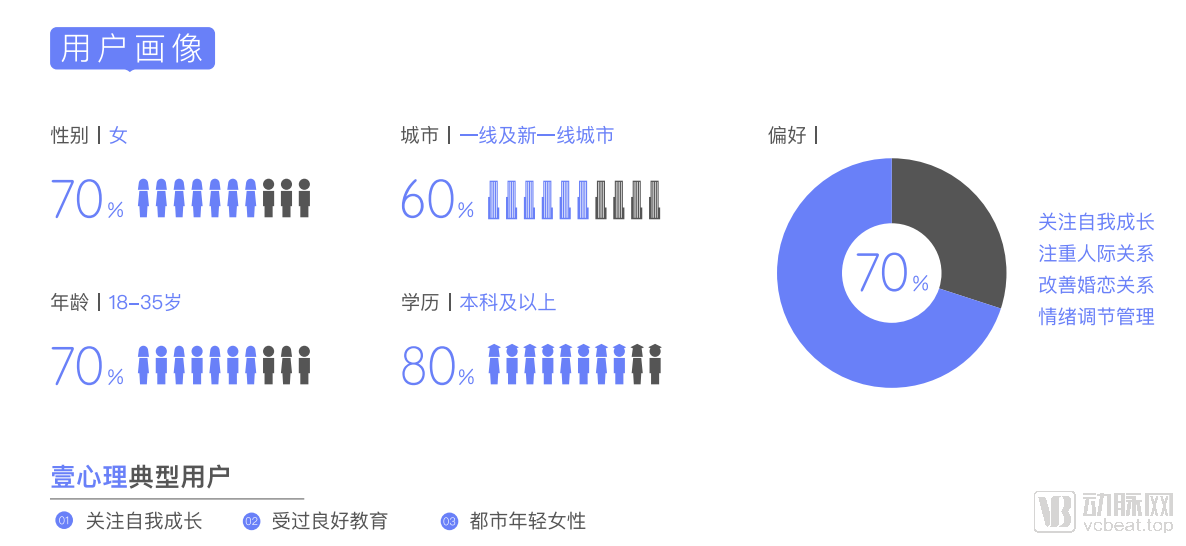
(Data source: Provided by YiXinLi)
Another leading enterprise in the mental health service model is YuJian. YuJian’s three core business areas are psychological assessment, psychological counseling, and psychoeducation. In 2019, YuJian also secured consecutive rounds of financing amounting to tens of millions of yuan.
Mental Health Service Model: A More Vertical Approach to Internet Healthcare
In May 2020, the news that Haixinqing completed a RMB 125 million Series A financing round attracted significant attention within the industry. People couldn’t help but ask: Has mental health become, or is it becoming, a lucrative sector?
Founded in 2016, Haixinqing focuses on the central nervous system (CNS) field. By leveraging an intelligent diagnosis and treatment system along with an internet hospital service framework, it provides smart rehabilitation management and online medical services to patients with psychiatric and psychological disorders. Within less than a year of its establishment, Haixinqing secured RMB 50 million in angel-round funding led by Nhwa Pharmaceutical, gaining access to all medical resources associated with Nhwa Pharmaceutical.
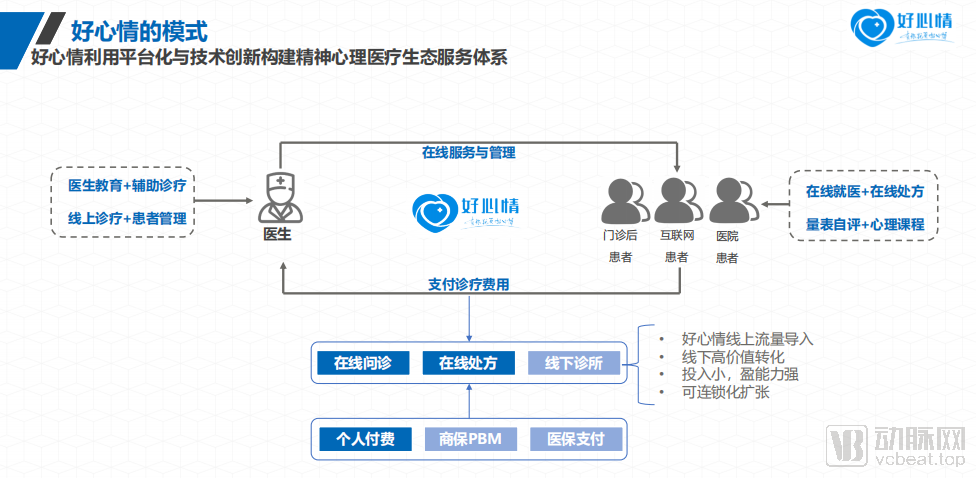
(Data source: Haoxinqing)
The Haixinqing Platform primarily offers services such as continuing medical education for physicians, online communication, patient services, and patient management platforms, leveraging data algorithms to precisely match users with mental health needs with appropriate physicians.As of now, the Haoxinqing Internet Hospital platform has registered over 29,000 psychiatrists and neurologists, accounting for approximately 70% of the total number of physicians in this field. The platform boasts more than 3 million registered users, with an average monthly active user base exceeding 100,000.
Within the mental health service delivery model, another enterprise is Zhaoyang Doctor. Initially established as an online auxiliary diagnosis and treatment platform, it primarily provides health consultations and facilitates doctor-patient communication. Through Zhaoyang Doctor, patients engage in one-on-one, multi-channel communications with specialist physicians at hospitals, thereby creating a secure, private, time-saving, and efficient healthcare experience for individuals with psychiatric disorders.
Unlike internet healthcare platforms that focus primarily on lightweight consultations, Zhaoyang Doctor is essentially an application designed for physicians. Doctors join the platform to manage their patients. Zhaoyang Doctor provides physicians with features such as appointment scheduling, professional standardized pre-consultation questionnaires, and post-consultation follow-up systems, while also matching them with qualified psychologists for collaborative treatment.
In August 2019, Zhaoyang Doctor secured nearly RMB 50 million in Series A+ financing. As of April 2020, the Zhaoyang Doctor platform had onboarded nearly 10,000 licensed psychiatrists, primarily from public specialized hospitals across China.
The above are the two primary models of mental health services in China. In addition to specialized vertical players in the mental health sector, most major internet healthcare platforms have incorporated mental health modules into their offerings. Platforms such as Chunyu Doctor, Haodf Online, and Miaoshou Doctor enable users to access psychological counseling and medical consultations. As this article focuses on analysis within the vertical domain, these platforms will not be discussed in detail.
From an investment and financing perspective, venture capital activity in the overseas mental health sector is significantly more vibrant, with Calm having grown into a unicorn. Are there any successful models worth referencing?
In May 2020, the foreign media outlet The Verge reported that Facebook agreed to pay $52 million to settle with employees from its content moderation team. The reason was startling: reviewing posts had caused them to suffer from psychological trauma, as confirmed by court evaluation. Part of the original report stated: “Facebook acknowledges that content moderation causes significant harm to employees, marking a landmark admission. Facebook agreed to pay $52 million to current and former moderators to compensate them for mental health issues arising from their work.”
Compared to the “stigma” surrounding mental health issues in China, Western societies tend to be relatively more open-minded. Calm, which entered the mental wellness market in 2012, offers a flagship software application focused on users’ psychological well-being. Through a subscription model, the app provides original audio content ranging from 3 to 25 minutes in length, leveraging features such as guided meditation, sleep aids, light music, and scenario-based simulations to help users alleviate mental health concerns including anxiety, excessive stress, and insomnia.
After securing four consecutive rounds of financing in 2019, Calm’s current valuation has entered the unicorn ranks.According to 2019 data, Calm was the most downloaded sleep aid app on the App Store, with over 50 million downloads and an average of 75,000 new users added daily. Newly registered users can enjoy a 7-day free trial, after which the platform charges an annual fee of $59.99. For those opting for a lifetime subscription, the cost is just $299.99. The number of paying subscribers has exceeded 2 million. Subscription fees constitute Calm’s primary revenue stream.
The company’s CEO revealed in an interview that Calm achieved annual revenue of $150 million in 2019, doubling its 2018 figure.
“Sleep stories now account for a significant proportion of the content module in the app, and the time users spend on the application has increased substantially,” said Alexia Marchetti, PR Director at Calm. Many startups are attempting to manufacture user demand. However, they have failed to recognize that“Sleep onset problems are so prevalent, and market demand is so high, that a large number of users are now purchasing our paid content instead of buying sleeping pills.”
In addition to user subscriptions and content payments, Calm is also exploring other business ventures, including psychotherapy, meditation retreats, and the sale of wellness products (such as breathable clothing and yoga mats).
Perhaps the most profound discourse on mental health issues is to be found in *Madness and Civilization*, published in the 1960s. In this book, the thinker Michel Foucault recounts many intriguing narratives, such as the banishment of madness during the Renaissance and its subsequent confinement within the order of reason in the modern era.
In an era that has witnessed tremendous progress in medicine, culture, and the economy, civilization may have afforded every individual a choice in how they approach psychological issues:
We can let our minds wander, or find a home within the culture industry.