

The Logic Behind AI-Powered Drug Discovery: Revolutionizing Pharmaceutical R&D Efficiency
Author: Dr. Li Shuai, United Capital Investment Group
Dr. Li Shuai has nearly four years of venture capital experience in the healthcare sector and eight years of research experience in molecular tumor biology and biopharmaceuticals. Prior to entering the venture capital field, Dr. Li completed his postdoctoral training at the State Key Laboratory of Natural and Biomimetic Drugs at Peking University, where he also served as an Assistant Researcher supervising doctoral students. During this period, Dr. Li made numerous pioneering original contributions to the research and development of biopharmaceuticals, including gene therapies. During his doctoral studies at the School of Basic Medical Sciences, Peking University, he focused on the molecular mechanisms of cancer and translational medicine, publishing multiple research papers in top-tier scientific journals.
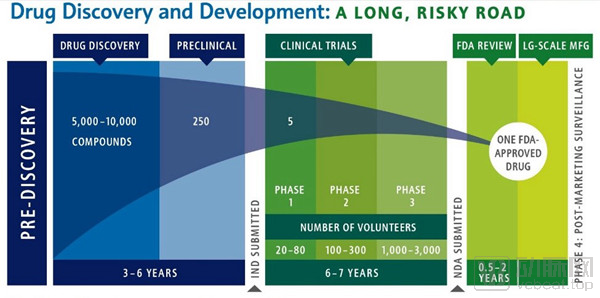
The lengthy development cycles, low success rates, and high R&D costs of new drugs have long been a persistent challenge for pharmaceutical companies. The latest data show that it takes an average of approximately 14 years and $2.6 billion to successfully bring a new drug to market. The rapid advancements in artificial intelligence (AI) are transforming many industries, and the pharmaceutical sector is likewise poised to benefit from AI-driven technological dividends to address industry pain points and enhance drug development efficiency. Consequently, more than 200 startups focused on AI-enabled drug discovery have emerged worldwide.
What Is AI-Enabled Drug Development?
New drug development is a complex, time-consuming, and high-risk endeavor, primarily comprising four stages: drug discovery, preclinical research, clinical research, and regulatory approval and market launch. The drug discovery stage mainly involves disease selection, target identification, and compound synthesis. The preclinical research stage focuses on compound screening, crystal form prediction, and compound validation, encompassing structure-activity relationship (SAR) analysis, stability testing, safety assessment, and ADMET (Absorption, Distribution, Metabolism, Excretion, and Toxicity) analysis. The clinical research stage centers on patient recruitment, clinical trials, and drug repurposing, involving dosing regimens, efficacy testing, patient observation and record-keeping, as well as optimization and improvement. The regulatory approval and market launch stage entails the review and approval of new drugs by government regulatory authorities, serving as the final gateway for new drugs to enter the market.
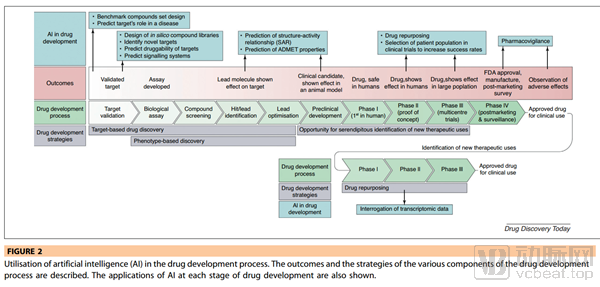
Overview of the AI-Enabled Drug Development Process Flowchart
Artificial intelligence (AI) refers to a suite of technologies that endow computers with the capabilities of perception, learning, reasoning, and decision support, thereby enabling them to solve problems in ways similar to humans. By leveraging AI’s advantages in natural language processing, image recognition, deep learning, and cognitive computing, it is possible to assist pharmaceutical experts in enhancing efficiency across all stages of new drug research and development.
In simple terms, AI primarily helps humans uncover latent relationships that are difficult to detect and leverages algorithms to enhance computational capabilities. Equipped with natural language processing, image recognition, machine learning, and deep learning capabilities, AI not only identifies explicit relationships more rapidly but also uncovers implicit associations that may elude pharmaceutical experts, thereby constructing deep-level connections among drugs, diseases, and genes. In terms of computation, AI’s powerful cognitive computing abilities enable virtual screening of candidate compounds, facilitating the faster identification of highly active compounds in preparation for subsequent clinical trials.
AI is primarily applied in new drug development across multiple scenarios, including target discovery, compound synthesis, compound screening, property prediction, crystal form prediction, patient recruitment, optimization of clinical trial design, and drug repurposing. According to the report “AI FOR DRUG DISCOVERY, BIOMARKER DEVELOPMENT AND ADVANCED R&D LANDSCAPE OVERVIEW 2019 / Q1” by DEEP KNOWLEDGE ANALYTICS’ “PHARMA DIVISION,” which analyzed 150 AI-driven pharmaceutical startups worldwide, the largest number of companies focus on leveraging AI for drug design, followed by data collection and analysis.
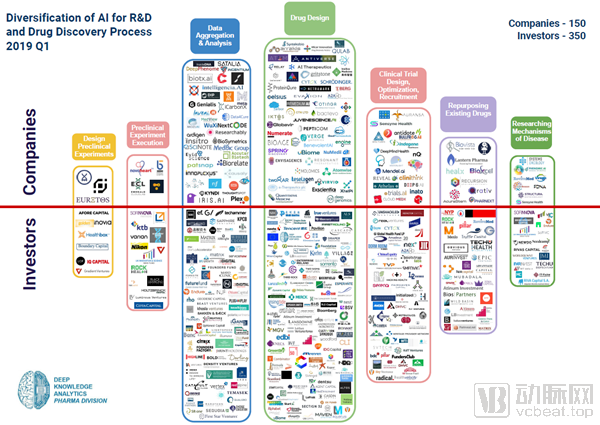
Overview of AI-Empowered Drug Discovery Companies
The Logic Behind the Flourishing of AI-Empowered Drug Discovery
New drug development faces challenges such as long R&D cycles, low success rates, and high costs. Improving cost-effectiveness has become a key priority for pharmaceutical companies, with AI emerging as a powerful breakthrough point. As a result, hundreds of startups have been founded in the AI-driven drug discovery sector in recent years.
From the perspective of global pharmaceutical market sales, the figure exceeded $1.2 trillion in 2017 and is projected to reach $1.475 trillion by 2021, with a compound annual growth rate (CAGR) of 4.9% from 2012 to 2021. During the same period, sales in China’s pharmaceutical market are expected to grow from $77 billion in 2012 to $178 billion in 2021, achieving a CAGR of 9.8%, which is twice that of the global pharmaceutical market. This indicates that while the global pharmaceutical market is experiencing steady growth, China’s pharmaceutical market is expanding at a faster pace, demonstrating greater development potential.
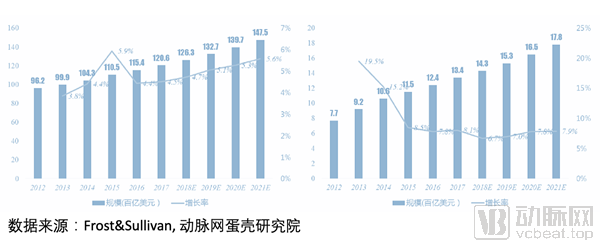
2012–2021: Changes in Pharmaceutical Market Sales Volume Globally and in China
Although the pharmaceutical market is growing steadily, drug R&D costs are rising. EvaluatePharma’s 2019 report indicated that global pharmaceutical companies’ R&D expenditures reached $179 billion in 2018 and are projected to reach $213 billion by 2024, representing a compound annual growth rate (CAGR) of approximately 3% and accounting for about 20% of sales revenue. The increasingly high R&D costs constitute a significant expense for pharmaceutical companies.
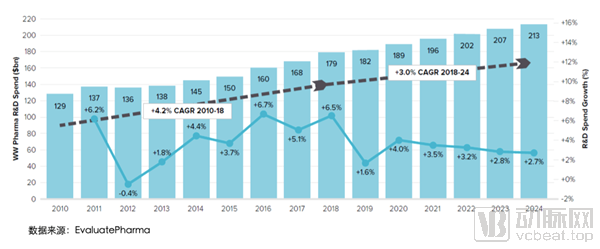
Total Global Drug R&D Costs, 2010–2014
In China’s specific context, the government has undertaken vigorous healthcare system reforms since 2015, aiming to reduce health insurance expenditures and address the difficulties and high costs associated with accessing medical care. China’s healthcare sector is undergoing a transition from ensuring basic needs to enhancing the accessibility of high-quality medical services and pharmaceuticals—shifting its focus from merely addressing availability to tackling issues of quality and cost.
In the pharmaceutical sector, on March 5, 2016, the General Office of the State Council issued the “Opinions on Carrying out Quality and Efficacy Consistency Evaluation for Generic Drugs” (Guo Ban Fa [2016] No. 8), marking the comprehensive launch of China’s work on quality and efficacy consistency evaluation for generic drugs.
Historically, generic drugs in China had their own characteristics, with many differing significantly in quality from originator drugs. The "patent cliff" phenomenon observed for originator drugs in other markets did not occur in China, leading to persistently high drug prices. The implementation of the Generic Drug Consistency Evaluation Policy was aimed at addressing drug quality issues, ensuring that the efficacy of generics is consistent with that of originator drugs. In 2018, the centralized volume-based procurement (VBP) policy was introduced to address drug pricing issues. On December 6 of the same year, the winning bid prices for drugs in the "4+7" VBP pilot program dropped significantly, with an average reduction of 52%. This substantial price cut severely limited the profit margins for generic drugs, compelling pharmaceutical companies to invest in the research and development of innovative drugs to secure their continued survival and growth.
However, innovative drugs require substantial capital and time. Taking into account the risk of R&D failure, new data estimates that bringing an innovative drug to market successfully requires $2.6 billion and a development cycle of approximately 14 years—representing a 145% increase compared with 2003. Such enormous costs are prohibitive for most pharmaceutical companies, making it imperative for them to find effective ways to reduce drug development expenses. Consequently, AI-enabled pharmaceutical innovation has attracted significant attention and emerged as one of the hottest topics in 2019.
AI-Empowered Drug R&D Timeline
From a scientific perspective, humans possess over 20,000 protein-coding genes, of which 10%–15% are associated with diseases. However, fewer than 700 of these are viable targets for small-molecule drugs. The low-hanging fruit has already been exhausted; the remaining targets are either highly challenging or considered “undruggable,” requiring substantially greater time and financial investment to achieve success. With the easy targets gone, identifying incremental opportunities and improving efficiency have become central themes in current new drug R&D. The future winners in the pharmaceutical industry will be those companies capable of rapidly accessing deeply hidden or obscure targets, or alternatively, transforming non-target elements (such as leaves and branches) into viable therapeutic opportunities (i.e., creating incremental value).
Amid the rapid advancement of information technology, AI is emerging as a potentially powerful breakthrough in the pharmaceutical industry. Applications include leveraging AI’s robust discovery capabilities to identify novel drug targets, facilitate drug repurposing, and explore the treasure trove of the microbiome, among others. Although many questions and skepticism remain, this represents an inevitable future direction that must be embraced.
Limiting Factors in the Development of AI-Driven Drug Discovery
AI-Empowered Drug Discovery is an interdisciplinary field where information technology empowers traditional industries. It requires both AI specialists and experts in drug R&D, and both parties must be able to understand each other’s professional terminology and thought processes to ensure effective collaboration.
Such teams are difficult to build and require prolonged periods of coordination and integration. The corresponding talent pool must align with different business models. Given the lengthy development cycle and numerous stages involved in innovative drug development, high-quality professionals need to be familiar with the entire process. A deficiency in any single stage may slow down the overall progress, leaving companies with no choice but to pursue breakthroughs at specific points by adopting the CRO (Contract Research Organization) business model.
AI training models require high-quality data, yet most data in the new drug development field resides within pharmaceutical companies, with publicly available data being relatively limited. Therefore, acquiring high-quality data is a critical challenge that AI-driven drug discovery startups must address. Startups capable of collaborating with multinational pharmaceutical companies will possess significant competitive advantage in the market.
China had limited experience in the development of innovative drugs in the past. However, in recent years, multiple policies have been implemented to encourage their development, leading to a thriving landscape. Although pharmaceutical companies in China do not yet match multinational corporations in terms of data volume, they are rapidly accumulating such resources. Additionally, Chinese CROs (such as WuXi AppTec) have grown rapidly and possess substantial datasets, particularly in preclinical R&D. Basic scientific research in China has advanced by leaps and bounds, with the country now ranking first globally in the number of scientific publications, underpinned by massive data accumulation. For AI-driven drug discovery startups, active collaboration with academia and industry leaders is essential, as access to high-quality data is fundamental to their establishment and success.
The drug development cycle is lengthy, and to date, no AI-driven pharmaceutical company has announced the successful market launch of a drug developed using AI technologies. Moreover, the value of AI in new drug development is difficult to quantify and evaluate. While preparing for long-term efforts, it is also a viable strategy to undertake certain CRO (Contract Research Organization) services to supplement the company’s cash flow. However, careful consideration must be given to how to effectively manage the business models of both CRO services and proprietary drug development.
Conducting in-house drug development positions a company as a competitor to pharmaceutical firms, whereas the CRO model involves providing services to these firms. As these two business models may present certain conflicts of interest, it is essential to carefully delineate the specific processes, stages, and proportional allocation involved in each. From a commercial value perspective, drug development offers a larger market size and higher returns compared to CRO services, but it also poses greater challenges to the company and demands higher-caliber talent.
Artificial Narrow Intelligence (ANI) refers to AI programs that excel in only a single domain. For instance, Google's AlphaGo is a typical example of ANI. Its characteristic is that while it is highly proficient at playing Go, it cannot play Ludo with you.
Artificial General Intelligence (AGI) refers to AI programs capable of achieving human-level intelligence. Unlike narrow AI, AGI can address problems across various domains like humans do, rather than being limited to tasks such as playing Go or writing financial reports. Furthermore, it possesses capabilities such as self-learning and understanding complex concepts.
It is precisely for this reason that the development of strong artificial intelligence (AI) programs is far more challenging than that of weak AI. Drug development involves numerous stages; although AI is already being applied in some of these stages, strong AI is required to integrate all aspects and better empower the pharmaceutical industry.
Current Status of AI Drug Discovery Companies in China
The United Group is optimistic about the development potential of AI in drug discovery and has already invested in several “AI + Drug Discovery” companies that are entering the pharmaceutical sector from different angles:
Building an AI Technology Platform to Enhance the Efficiency of Drug Screening and Drug Design—Yingfei Zhiyao: Developing AI technologies that truly empower every stage of the drug discovery process for pharmaceutical R&D;
Leveraging AI for Novel Mechanisms of Action——Panorama: Leveraging deep learning to analyze massive RNA omics data for the development of small-molecule or macromolecular drugs targeting the RNA splicing process;
New Targets and Combinations——Enginebio: Whole-genome functional network analysis to identify novel targets and combinations;
A New Resource Hub——Deepbiome leverages AI to analyze and mine massive microbiome datasets, bypassing the microbiome therapeutics stage to directly identify the underlying small-molecule drugs.
Last year, Wuxi Capital Group also received the awards for "Top 10 Investment Firms in Digital Healthcare" from VCBeat and "Top 5 Investment Firms in AI Drug Development in China."
Panorama MedicinePanorama is a venture capital-backed startup founded by a multidisciplinary team of world-leading computational and experimental RNA biologists. Leveraging proprietary genomic big data analytics and deep learning technologies, Panorama accelerates the drug discovery process, with the aim of efficiently developing therapeutics for diseases caused by aberrant RNA splicing.
InfiniPharmA startup driven by artificial intelligence and focused on innovative drug development. Infinitus Pharma fully leverages and continuously advances cutting-edge AI-driven drug discovery technologies in new drug R&D, building its proprietary “AI + New Drug R&D” platform—Zhiyao Brain™. With successful development experience across multiple candidate drugs and an industry-leading success rate, Infinitus Pharma has shortened the development cycle for innovative candidates from 3–6 years to 6 months–2 years. The company is committed to the efficient, large-scale development of independently innovated drug candidates, while also providing advanced technical services and intellectual property solutions to pharmaceutical enterprises engaged in new drug R&D.
DeepBiomeFounded by a team from the Harvard/Broad Institute, this AI-driven drug discovery company focuses on exploring the highly promising and cutting-edge field of the human microbiome—a largely untapped treasure trove of drug lead compounds. DeepBiome aims to leverage state-of-the-art artificial intelligence (AI) technologies to revolutionize the currently high-cost, inefficient drug discovery process.
EnginebioFounded by Tim Lu, a scientist at the world-leading MIT Broad Institute, this company leverages artificial intelligence for drug discovery. Under the leadership of experts in computational science, synthetic biology, and drug discovery, the company integrates high-throughput, massively parallel biological experiments with high-performance computing to decipher biomedical networks and enhance the drug development process, thereby generating novel therapeutics.
References:
Mak, K.K., Pichika, M.R. Artificial intelligence in drug development: present status and future prospects, Drug Discov. Today (2018), https://doi.org/ 10.1016/j.drudis.2018.11.014
FOR DRUG DISCOVERY, BIOMARKER DEVELOPMENT AND ADVANCED R&D LANDSCAPE OVERVIEW 2019 / Q3,https://www.ai-pharma.dka.global/AI-for-DD-2019-Q3
Report on the Current Status and Trends of the AI-Driven New Drug R&D Market, VCBeat Research Institute
World Preview 2019, Outlook to 2024, EvaluatePharma