

Mirror: The $500M Interactive Fitness Mirror Disrupting Home Workouts Amid Pandemic

Mirror
Fitness System Developer
Due to the impact of the pandemic, gyms worldwide have not yet fully resumed operations, prompting many in the fitness industry to pioneer self-rescue strategies. For instance, some have generated revenue by renting fitness equipment to consumers, while others have launched live-streamed online classes, transforming fitness instructors into livestream hosts. This trend underscores the heightened importance of home workouts during the pandemic over the past few months, with sales of home fitness products from brands such as Mirror, Peloton, and Hydrow continuing to grow.
Mirror is an interactive fitness company founded in 2016 by Brynn Putnam (née Jinnett) and headquartered in New York. The company is dedicated to creating an internet-based fitness platform that differs from traditional gyms, enabling users to achieve more efficient workouts at home.
On June 29, technical athletic apparel company Lululemon announced it would acquire the connected fitness company Mirror for $500 million. To date, Mirror has raised $72 million, and its revenue this year is projected to exceed $100 million. The company has not disclosed its exact customer count, but CEO Brynn Putnam told The New York Times that it has a customer base in the tens of thousands. In April, Putnam also stated to Modern Retail that “Mirror’s sales have more than tripled since the onset of the coronavirus pandemic.”
Fitness Expert Brynn Jinnett Putnam’s Entrepreneurial Journey
Mirror’s founder and CEO, Brynn Jinnett Putnam, graduated from Harvard University with a bachelor’s degree in Russian literature and culture. For over a decade, Brynn has been recognized as a pioneer in the fitness industry.
Her career began as a professional ballet dancer with the New York City Ballet, while also working at some of New York City’s top gyms and boutique fitness studios. In 2010, Brynn drew on fitness insights from elite trainers and physiologists across China to found Refine Method, an acclaimed fitness studio named “Best New Workout” by New York Magazine.

Mirror Founder:Brynn Jinnett Putnam
Mirror: A New Indoor Fitness Platform Offering Interactive Experiences for Users
At the 2018 “TechCrunch Disrupt” conference, Mirror unveiled its flagship product, also named “Mirror,” to the world.
This is an intriguing product that upends Peloton’s philosophy by bypassing traditional fitness equipment and introducing a full-body mirror designed to motivate users and enhance their at-home workout experience.
Mirror is creating a brand-new category of indoor fitness. Founder and CEO Brynn Putnam stated, “It is a complete home gym with a sleek appearance and innovative design. It features advanced hardware, responsive software, and high-quality content. Users can transform any room into a gym.”
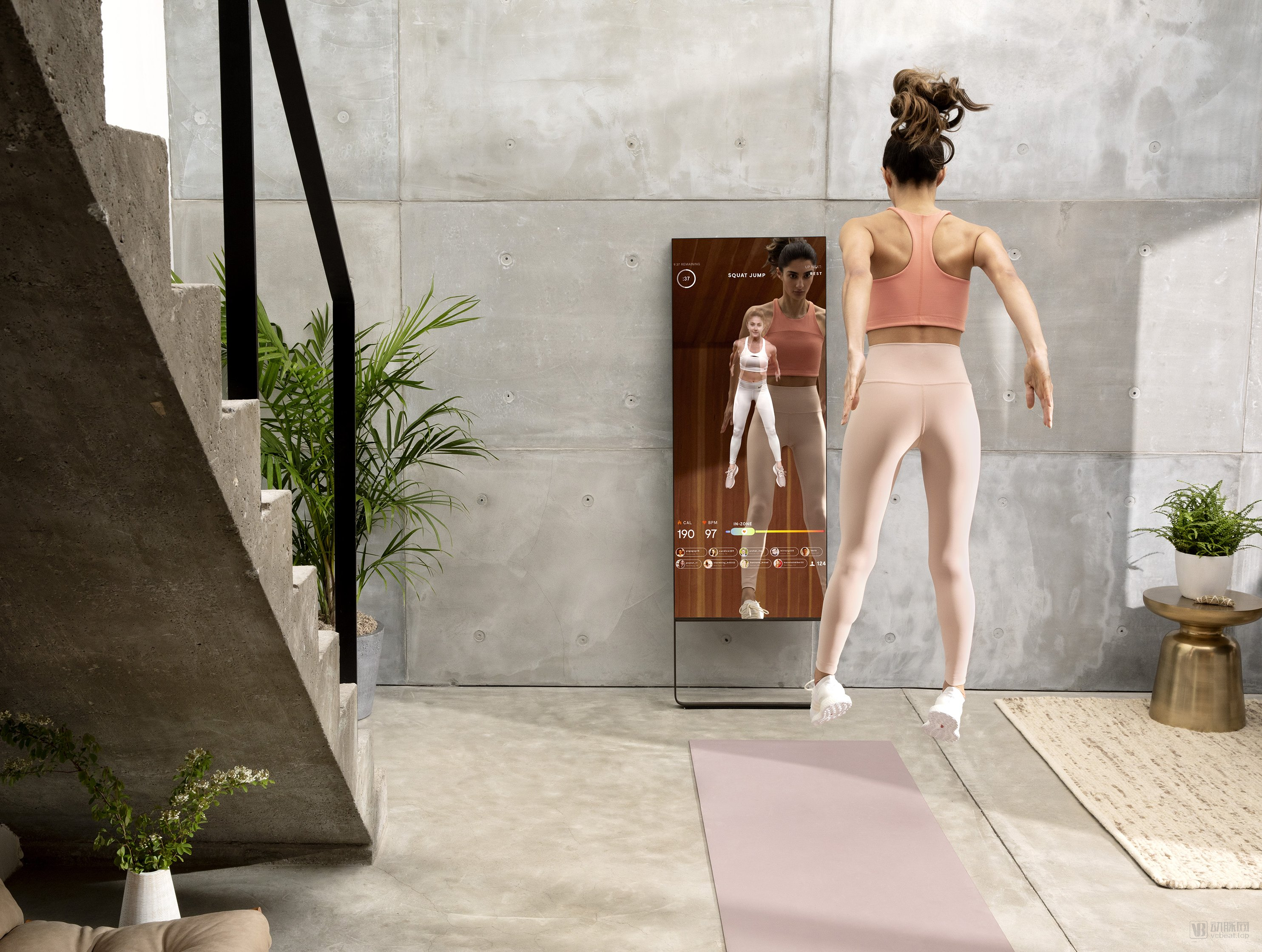
Mirror Fitness Equipment
This device is a standalone fitness system, with modules comprising a mirror and an LCD screen. The height of the mirror can be tailored to the user’s stature. A single Mirror account can support up to five users, each of whom can customize their profile based on physical condition, height, weight, and other metrics. Users can view both the instructor and their own workout movements in the mirror simultaneously. Currently, this device is sold exclusively in the United States.
The system will tailor personalized experiences for users based on their individual goals, preferences, and biometric data extracted from connected devices such as heart rate monitors or Apple Watches, offering a variety of class types including aerobic exercise, strength training, and yoga.
In addition, coaches can provide data feedback based on the user’s workout performance, with these data displayed to the user in real time on the Mirror.
Mirror’s hardware integrates an LCD camera, a one-way mirror, a microphone, and speakers to provide users with a two-way interactive experience. Similar to Peloton, its classes are filmed in studios in New York City, and users can access them via live streaming or on-demand through the app on their smart devices.
In the early stages of its product launch, Mirror will offer more than 50 classes, including cardio, strength training, yoga, Pilates, and boxing. Instructors can provide one-on-one professional guidance through the mirror, creating an immersive workout atmosphere for users.
When users open the Mirror application, they are taken directly to the list of recommended classes. A single tap on the mirror’s screen displays detailed information about the selected class, including the instructor’s demonstration video, class name, instructor name, difficulty level (rated 1 to 4), duration, and class description.
Currently, Mirror is priced at $1,495. In addition, users are required to pay a monthly subscription fee of $39 to access various live and on-demand classes. Users can browse class content and customize settings within the Mirror app, and enhance their workouts using the included Bluetooth heart rate monitor and fitness accessories.
From its simple, user-friendly app to its clever dual-purpose design and extensive service offerings, Mirror holds strong appeal. For those seeking home workout plans, it makes perfect sense: it offers a more immersive experience than YouTube and greater versatility than Peloton’s cycling-specific classes.
Collaborate with fitness professionals to create premium courses
Mirror launched its product in September 2018, expanded across China, and opened a physical store in New York City. Recently, Mirror announced a strategic partnership with fitness pioneer Tracy Anderson to continue delivering world-class content to users worldwide. In 2019, lululemon made an initial investment in Mirror, which also included collaboration on course content; lululemon’s global ambassadors introduced meditation classes to the Mirror platform.
At the press conference, Brynn stated, “Mirror is the first company to bring the collective benefits of high-quality fitness studios into the home. It has launched a sleek hardware device that also serves as room décor. We have invested significant time and budget in developing high-quality fitness classes and recruiting top-tier instructors from around the world to create a personalized experience, enabling anyone to enjoy the benefits of fitness anytime, anywhere.”
Kevin Thau, a partner at Spark Capital, which invested in Mirror’s Series B round, described Mirror as “the rebirth of home fitness.” He believes there is a significant market opportunity for “high-quality internet-based fitness products,” and that Mirror stands out by connecting users with professional coaches who provide real-time feedback, thereby delivering expert workout guidance and enhancing fitness outcomes.
This acquisition will expand the content partnership and new user base between the two brands.
At present, the COVID-19 pandemic remains severe overseas. Even as gyms reopen, many people may remain cautious about returning to potentially high-risk enclosed spaces. In this context, home fitness solutions have become particularly important, driving product sales for emerging tech companies such as Mirror, Peloton, and Hydrow. Sales of home fitness equipment continue to surge, making connected fitness a hot area for venture capital investment.
VCBeat has learned that on June 29, 2020, Lululemon acquired the home fitness startup Mirror for $500 million. Mirror will operate as an independent subsidiary within Lululemon, with Ms. Brynn continuing to serve as its Chief Executive Officer. Lululemon’s acquisition of Mirror is justified not only from a brand perspective but also from a purely data-driven standpoint.
According to SimilarWeb data, downloads of the Mirror app have been surging at a monthly rate of 1,000% since January, reaching an astonishing 3,000% growth rate in March. Since late April, traffic to the Mirror website has maintained a 100% growth rate.

SimilarWeb - Mirror App Download Data
Analysis of the Domestic Fitness Market
In the traditional fitness industry, the dominant model has been large-scale gyms that charge members annual fees. The sector remains largely conventional and is in urgent need of new technologies and innovative concepts. Consequently, with the rapid development of the internet, home fitness equipment manufacturers and fitness app developers are poised to become the new growth directions for the fitness industry.
Currently, China’s fitness market is in a phase of robust growth, with the following factors accelerating the continuous upgrading of the fitness industry.
Policy-Level Support: In 2014, the State Council issued Document No. 46, “Several Opinions on Accelerating the Development of the Sports Industry and Promoting Sports Consumption,” explicitly elevating national fitness to a national strategy. The document set a target to achieve “500 million people participating in sports and a sports industry output value of RMB 5 trillion” by 2025, striving to make the sports industry an important force driving sustained economic and social development.
Consumption Upgrade in the Fitness Industry: Data from Wacai’s “2018 Fitness Expenditure Report,” a personal finance app, shows that driven by economic factors such as rising per capita disposable income and increased consumption levels, annual per capita fitness expenditure grew from RMB 1,077 in 2015 to RMB 1,502 in 2017.
The Rise in National Health Awareness: Since the beginning of this year, the national economy has continued to grow steadily, with rising household incomes and consumption levels. The pursuit of a higher-quality lifestyle has become a prevailing trend. According to the resident health survey included in the 2019 National Health Insight Report, health knowledge is the area of greatest concern among residents, with 65% focusing on physical exercise and exercise-related health. This reflects, to some extent, the continuous enhancement of public health awareness.
The Internet's Collision: The evolution of internet technology has accelerated the development of the fitness industry. Many fitness enterprises leverage internet technologies to focus on delivering one-stop health services driven by technology and service, bridging the gap in workout motivation and experience between home fitness equipment and gyms, thereby building an intelligent ecosystem service platform for fitness venues, industry practitioners, and sports enthusiasts.