

Shukun Launches 'Digital Brain' at World AI Conference Amid IPO Filing: Can It Become the Next Industry Breakout?

SHUKUN
Provider of Intelligent Products and Innovative Solutions
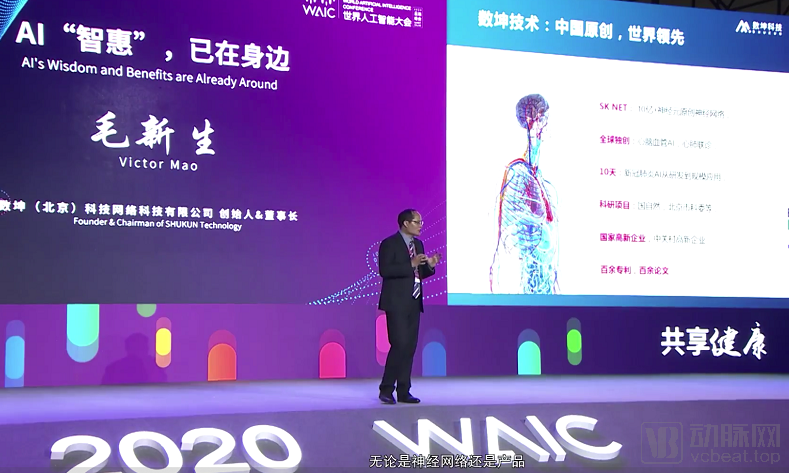
“Leveraging technology to join the fight against the epidemic, empowering healthcare, and unleashing the power of technology” was the call made by Mao Xinsheng, Chairman of SHUKUN, at the 2020 World Artificial Intelligence Conference. As a leading enterprise in China’s medical AI industry, SHUKUN has been consistently offering its insights and launching corresponding products to drive industrial development.
Following its recent RMB 200 million financing round in June, SHUKUN’s next major move has drawn significant attention from the industry. From launching an AI-assisted diagnostic system for coronary heart disease to one for lung CT scans, SHUKUN has once again responded to expectations with its products.
On July 3, SHUKUN held an online seminar on new technologies. During the event, the company unveiled its upcoming new products for the first time and invited six top experts from leading hospitals in the fields of cardiology, neurology, and radiology—including Professor Liu Shiyuan from Shanghai Changzheng Hospital, Professor Lv Bin from Fuwai Hospital, Professor Xu Lei from Anzhen Hospital, Professor Lu Jie from Xuanwu Hospital, Professor Jin Zhengyu from Peking Union Medical College Hospital, and Associate Professor Chen Yu—to jointly discuss the value of “AI + Medical Imaging” in real-world clinical applications.
In the field of medical imaging AI, SHUKUN is one of the few companies with distinct characteristics and established competitive advantages. Its coronary artery AI solutions have already been deployed at top-tier cardiovascular and cerebrovascular disease treatment centers, including Beijing Anzhen Hospital, Xuanwu Hospital, Peking Union Medical College Hospital, and Fuwai Hospital. Among the top 30 cardiovascular hospitals ranked by Fudan University,26 hospitals have adopted SHUKUN AI., becoming a blockbuster hit in the industry. As Mao Xinsheng, Chairman of SHUKUN, stated at the 2020 World Artificial Intelligence Conference, “SHUKUN is harnessing the power of technology to enable machines to perform doctors’ highly repetitive tasks with high quality and efficiency.”
What new developments has SHUKUN announced in the field of AI-based medical imaging for cardiovascular and cerebrovascular diseases? This exchange session offers a glimpse into these advancements.
According to data from the Global Burden of Disease (GBD) study, China’s lifetime risk of stroke is 39.9%, ranking first globally. Data from the Statistical Summary of China’s Health and Family Planning Development in 2019 also indicate that in 2018, cerebrovascular diseases accounted for more than 20% of all deaths among Chinese residents, with approximately 1.94 million people dying from stroke throughout the year.
The golden therapeutic time window for stroke is short. The American Stroke Association advocates that the door-to-thrombolysis time should be completed within 60 minutes, with all imaging scans and assessments finished within 20 minutes. As imaging assessment serves as a critical basis for guiding surgical interventions, expediting medical imaging evaluation is key to beating the clock in stroke care.
(Image excerpt from the exchange meeting)
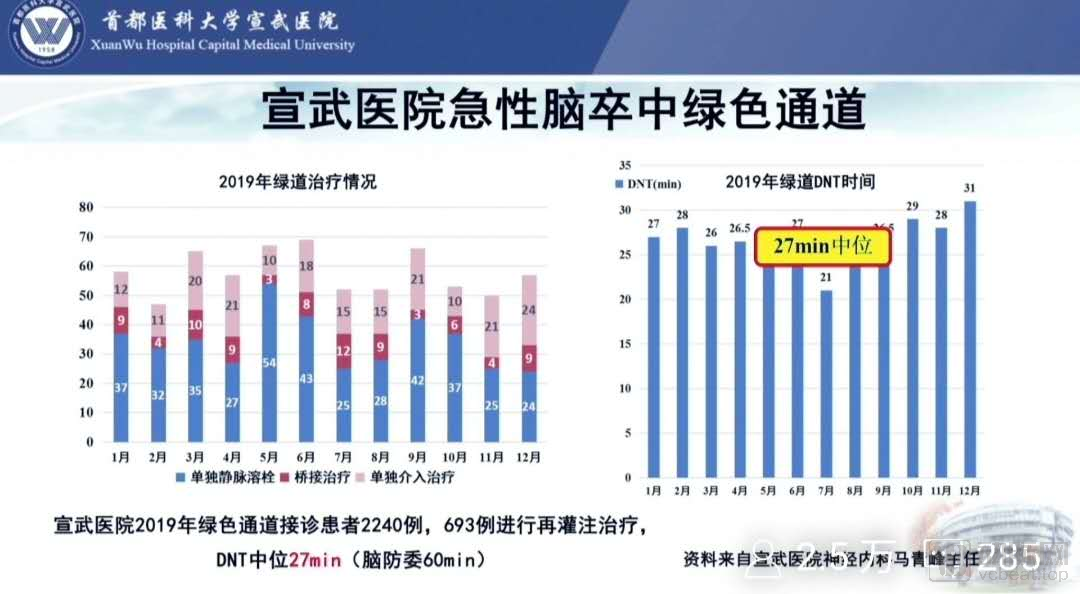
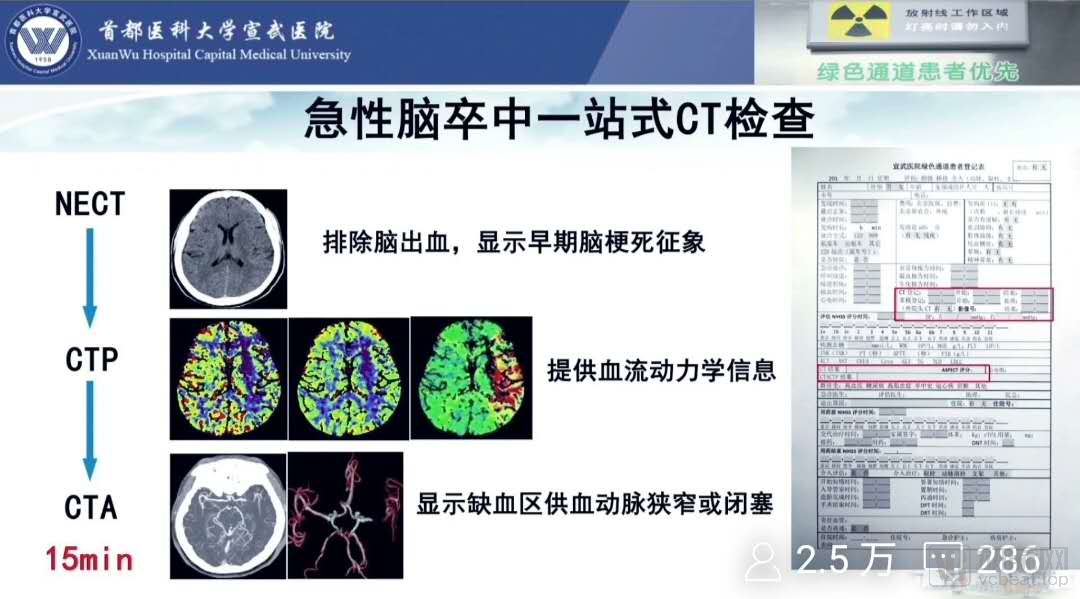
According to the data shared by Professor Lu Jie at the exchange meeting, the average time for the stroke green channel at Xuanwu Hospital in 2019 was only 27 minutes. This included the time from non-contrast CT scanning for intracerebral hemorrhage to CT perfusion imaging, which visualizes the infarct core and the surrounding ischemic penumbra, followed by further CTA examination to assess the status of the culprit vessel.The entire process takes no more than 15 minutes.。
(Image excerpt from the exchange meeting)
Professor Lu Jie introduced that Xuanwu Hospital utilizes SHUKUN’s CerebralDoc head and neck auxiliary diagnosis system. This one-stop CT examination solution enables post-processing and auxiliary diagnosis of head and neck CTA images, helping physicians rapidly process CT angiography data. It includes automatic detection of vascular abnormalities and high-risk lesions, such as stenosis, plaques, and aneurysms, thereby supporting diagnostic assessment and significantly improving the hospital’s diagnostic efficiency.
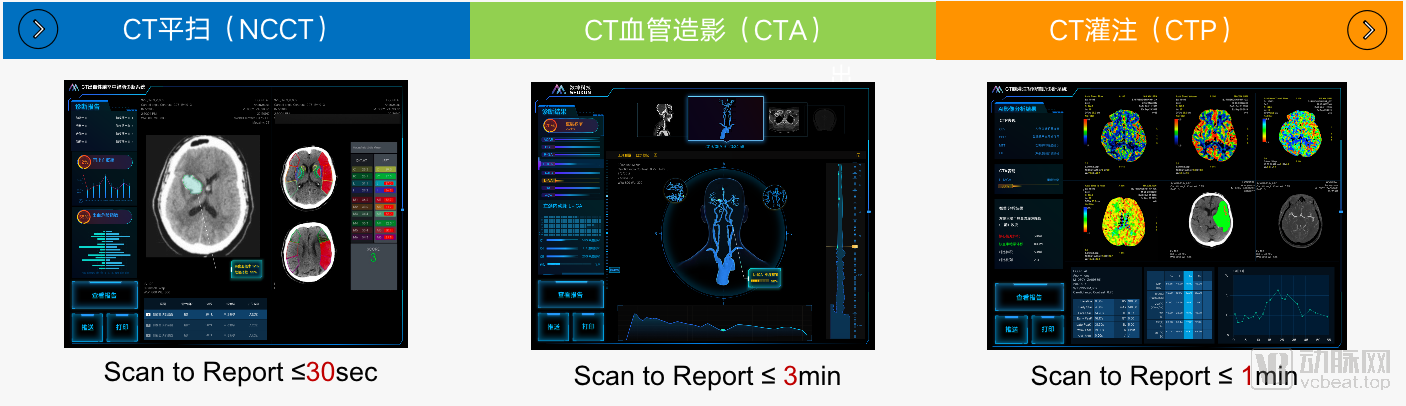
Currently, AI-based medical imaging products for stroke are predominantly represented by solutions from international companies such as Rapid and MIStar, which offer comprehensive imaging assessment and analysis across non-contrast CT (NCCT), CT perfusion (CTP), and CT angiography (CTA). These products primarily focus on functions such as hemorrhage volume measurement, classification, and prognostic analysis. However, this landscape has been disrupted by SHUKUN, a leader in China’s AI healthcare sector. In addition to its CerebralDoc auxiliary diagnostic system for head and neck conditions, SHUKUN has pioneered the launch of the “Digital Brain” series of AI-assisted platforms in China.
(Image provided by SHUKUN)
“Digital Brain” is a comprehensive cranial imaging solution centered on intelligent stroke care, encompassing an AI-assisted diagnostic system for head and neck CTA, an AI-based analysis system for CT cerebral perfusion, an AI-assisted diagnostic system for intracranial hemorrhage, intelligent aneurysm assessment, and an AI-powered clinical decision support system for stroke.
Professor Chen Yu from Peking Union Medical College Hospital shared the one-stop multimodal CT intelligent assessment system at the exchange meeting: “InWith the assistance of a one-stop multimodal CT intelligent assessment system, we can control the entire imaging examination process for stroke within 20 minutes, offeringPrecise Localization、Precise Quantification、Automatic Results、Smart Follow-upcharacteristics.”
CareStroke Intelligent Stroke Auxiliary Diagnosis System leverages AI technology to facilitate the intelligent upgrade of stroke imaging units, covering the entire multimodal imaging workflow including non-contrast CT, CTP, and CTA, and meeting the guideline requirement of less than 20 minutes from door-to-report. Addressing the pain points in multimodal stroke imaging assessment—post-processing efficiency, diagnostic accuracy, and quantitative multi-parameter evaluation—the system achieves fully automated and comprehensive coverage of stroke imaging, enabling comprehensive intelligence in stroke diagnosis and treatment through intelligent terminals.
CTPDoc automatically generates all cerebral perfusion parameter images, and automatically calculates and outputs key imaging metrics required for clinical practice, such as infarct core volume, ischemic penumbra volume, and mismatch ratio. StrokeDoc can identify, localize, and measure hemorrhage on non-contrast CT scans, and automatically assess midline shift of brain tissue.
Professor Jin Zhengyu, Director of the Department of Radiology at Peking Union Medical College Hospital and Chairman of the Chinese Society of Radiology, stated that through the joint efforts of researchers and based on an in-depth exploration of clinical needs, SHUKUN has developed AI products targeting cardiovascular and cerebrovascular diseases, which can bring significant benefits to clinical practice.
“Parrots have a habit of ‘wasting food,’ even discarding 80% of what they eat.” Professor Xu Lei, Director of the Department of Radiology at Beijing Anzhen Hospital, Capital Medical University, made this analogy during the conference. “Most of the imaging data from cardiac CT scans is also wasted. Our reports typically present only information on plaques and the degree of stenosis, leaving much other information unexplored. However, with AI assistance, this data can be repurposed to assess cardiovascular risk.”
In the field of cardiovascular AI, SHUKUN is an indispensable player. Its coronary CTA artificial intelligence product has been applied in clinical settings, assisting physicians with tasks such as image post-processing, precise quantification, and report generation, and has already been implemented in200+ Grade A Tertiary Hospitals Across China。
In the field of cardiovascular disease, how to achieve breakthroughs is a challenge facing SHUKUN. Judging from this press conference, they have shifted their focus forward—to prediction of cardiac risk events.
Director Xu Lei shares:
Different calcium scores represent varying levels of risk in patients with cardiovascular disease. During chest CT scans, AI can correct and mitigate motion artifacts, thereby enabling automated quantification of the patient’s calcium score.
Likewise,Pericoronary Fat Attenuation Index (FAI)increased levels of,Luminal Attenuation Gradient (TAG)Changes are also reference indicators for arterial lesions, automatically quantified through AIFAIandTAGparameters, outputting structured reports to physicians, thereby enabling precise risk prediction for patients.
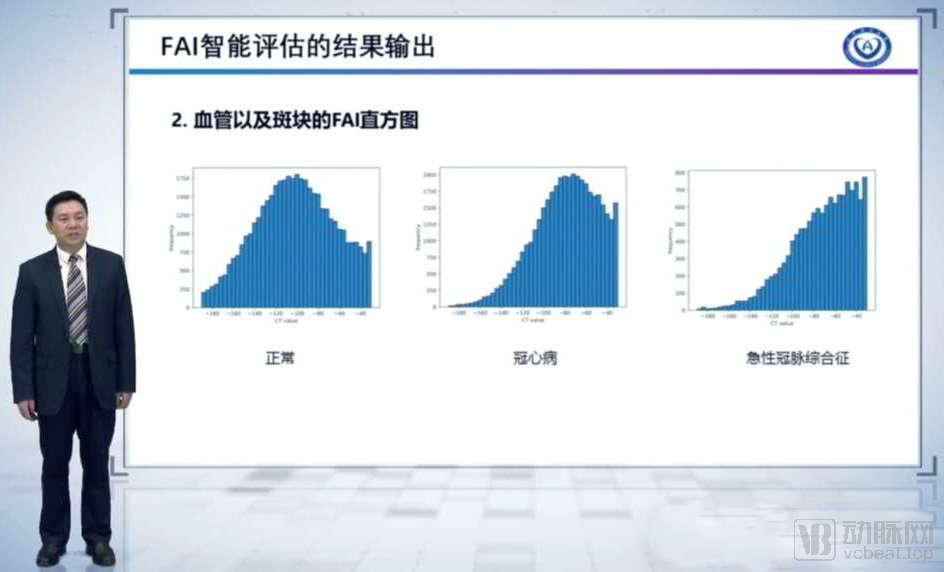
(Image excerpted from the exchange meeting)
Furthermore,Fractional Flow Reserve (FFR)It serves as the gold standard for guiding the treatment of ischemic coronary heart disease. By leveraging AI algorithms to precisely extract and model the coronary artery tree, obtaining fractional flow reserve (FFR) values at all locations within each branch, and then visualizing these complex data quantitatively through CT-FFR color-coded maps, clinicians can rapidly and accurately determine patients' risk stratification.
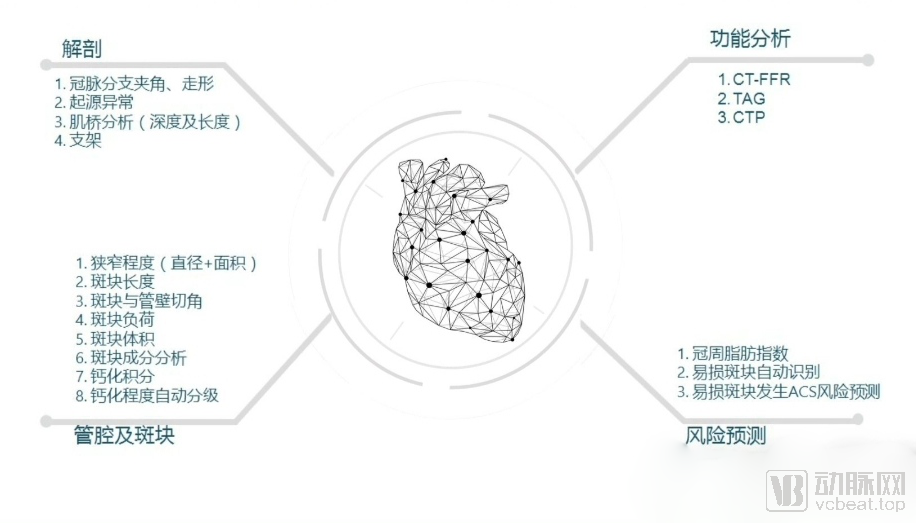
(Image excerpted from the exchange meeting)
Leveraging the significant value AI brings to clinical practice, SHUKUN has integrated data and products to introduce the concept of the “Digital Heart.” The Digital Heart is an intelligent platform centered on cardiac diseases that assists physicians in automatically evaluating cardiac and vascular morphology and function, quantifying parameters such as calcium scores and fat content, and generating structured reports for risk prediction.
SHUKUN’s “Digital Heart” intelligent platform already encompasses multiple AI-assisted systems, including the CT-based fractional flow reserve (CT-FFR) measurement system, an intelligent auxiliary diagnostic system for aortic diseases, and an intelligent calcium scoring system. By leveraging AI to extract additional clinically valuable data on coronary artery disease (CAD), the platform helps physicians obtain data ranging from coronary anatomical structures to lumen and plaque characteristics, performs functional analysis of these data, and predicts patients’ disease risk.
Professor Liu Shiyuan, Director of the Department of Diagnostic and Interventional Radiology and Nuclear Medicine at Shanghai Changzheng Hospital and President-Elect of the Chinese Society of Radiology under the Chinese Medical Association, raised the question: As an AI healthcare company, how can we develop products that are well-received by both physicians and patients?
1. Products must originate from, collaborate with, and serve clinical practice. Only products developed in close partnership with physicians can truly meet the needs of clinical scenarios. For instance, products that generate structured reports based on specific disease locations.2. Innovation is essential. AI enterprises should lead the forefront of medical innovation. This includes foundational innovations, such as advancements in algorithms and system architecture; clinical-level innovations, such as expanding into new disease categories, using a point-to-surface approach for gradual expansion; and innovations in service models.3. Companies must have their own distinctive features and flagship products. These flagship products should be significantly ahead of competitors, driving the research and development of other offerings. I am pleased to see that SHUKUN has achieved all three of these goals. For example, SHUKUN’s AI-assisted diagnostic product for coronary arteries has addressed clinicians’ challenges and improved work efficiency. Subsequently, SHUKUN launched vascular products for the head and neck, as well as products for pneumonia, gradually expanding its portfolio.
“Healthcare upgrading is a demand of this social era, and meeting that demand requires intelligence,” said Mao Xinsheng, Chairman of SHUKUN.
With societal development, an increasing number of township hospitals are purchasing CT scanners, reflecting the growing demand for medical services. Against this backdrop, it has become a pressing need of our times to leverage AI software to empower these grassroots medical devices, unlock and fully utilize the potential of medical hardware, and thereby maximize the benefits for hospitals.
Over the past few years, SHUKUN’s products have been successfully deployed in hundreds of hospitals. Its high-efficiency medical imaging diagnostic solutions support more than 200 CT examinations per day at these institutions. This has delivered a differentiated patient experience: after completing the scan within minutes, patients have ample time to visit subsequent departments, enabling “same-day” issuance of examination reports. This improvement enhances the overall healthcare experience and increases patient retention.
Behind AI empowerment lies the demand for robust products and high-barrier technologies. SHUKUN’s strategic footprint has expanded from “Digital Brain” and “Digital Heart” to “Digital Chest” and the broader healthcare landscape, forming a comprehensive medical AI solution that covers every link in the diagnosis and treatment workflow. This enables hospitals to focus on patient-centric care, delivering more precise and personalized treatments.
“Medical imaging is merely the starting point for AI in healthcare; we aim to drive AI toward more comprehensive exploration across the broader medical field,” summarized Mao Xinsheng.