

LPs Continue to Increase Commitments: How Winning Health Capital Strategically Positions Itself in the Healthcare Sector

Hygeia Capital
Healthcare Investment Company
In July 2020, Hygeia Capital’s third fund completed its filing with the Asset Management Association of China (AMAC), while simultaneously initiating the industrial and commercial registration for its fourth fund, marking the imminent start of the second three-year investment cycle focused on innovative healthcare and pharmaceuticals. Mr. Wang Kai, Managing Partner of Hygeia Capital, told VCBeat: “We are deeply grateful to the investors in this fund and every employee at Hygeia Capital for overcoming numerous challenges during the pandemic to complete the fund raising and filing registration. This fully demonstrates the LPs’ trust and confidence in Hygeia Capital.” Hygeia Capital boasts a professional team with expertise in pharmacy, chemistry, clinical medicine, and investment banking. Its keen ability to identify high-quality projects, combined with comprehensive post-investment resource integration and service capabilities, has remained the core focus of Hygeia Capital. Among the 13 companies invested in over the past three years, many have emerged as leaders in their respective niche sectors.
When asked about the origin of Hygeia Capital’s name, Mr. Wang Kai told VCBeat that “Huai” is derived from the phrase “cherishing distant aspirations while gathering those nearby,” and “Ge” comes from the idiom “investigating things to extend knowledge.” In simple terms, this means uniting friends and partners from afar and those close at hand to pursue medical and pharmaceutical investment to the highest standard. In 2016, Mr. Wang Kai spent a year conducting research, engaging in extensive study and discussions with professional fund investors, entrepreneurs, listed companies, and investment banks in the healthcare and pharmaceutical sectors. By understanding the pain points and challenges faced by various stakeholders, he gradually shaped the investment framework and positioning for Hygeia Capital. Guided by the philosophy of symbiosis, mutual benefit, and shared development, he recruited a team and raised Hygeia Capital’s first fund—Hygeia Gongxin—in 2017.
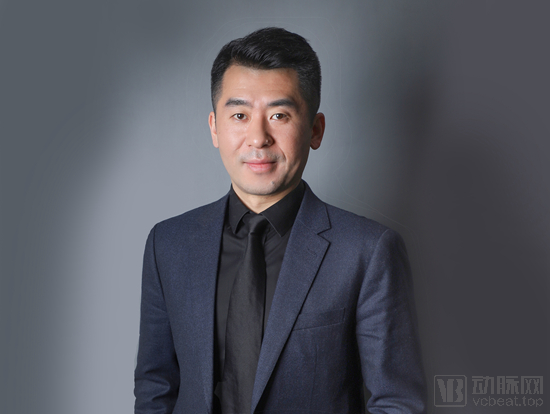
Mr. Wang Kai, Founder and Managing Partner of Hygeia Capital. Image source: Provided by the interviewee.
How to Foster a Collaborative Ecosystem and Seize the Opportunities of This Era?
First, let us examine the limited partner (LP) composition of Hygeia Capital. Taking Hygeia Gongxin as an example, its LPs include A-share listed companies, founders in the healthcare and pharmaceutical industries, direct investment arms of securities firms, trust companies, and investors with access to healthcare and pharmaceutical marketing resources. Over the past three years, Hygeia Capital has provided pre-IPO guidance and assisted in selecting IPO intermediaries for four portfolio companies (one of which has already completed its IPO, while the other three have either submitted or are preparing to submit IPO application materials to the China Securities Regulatory Commission); facilitated the merger and acquisition of one portfolio company by an A-share listed company; promoted and completed the issuance of China’s first collective fund trust plan for the medical supply chain, using the proceeds for the asset securitization of accounts receivable from hospitals affiliated with portfolio companies; assisted three portfolio companies in optimizing and adjusting their R&D pipelines through in-depth market research; and integrated marketing resources to establish post-approval market layout systems for two portfolio companies. These achievements and the strong collaborative relationships established with portfolio companies are closely tied to the LP ecosystem built by Hygeia Capital.
Second, an examination of Hygeia Capital’s team reveals that its founder and managing partner, Mr. Wang Kai, has over 20 years of experience in investment banking and investing. He has successfully facilitated the IPOs or M&A exits of numerous small and medium-sized enterprises (SMEs). He possesses a clear understanding of the steps required to transform startups into niche-market unicorns, the external resources needed, and how to build product and market barriers. Dr. Du Jiangbo, Partner and Head of Pharmaceutical Investments, graduated from the Shanghai Institute of Materia Medica, Chinese Academy of Sciences. He participated in the preclinical research and clinical development of three national Class 1.1 innovative drugs in the fields of oncology and autoimmune diseases. Dr. Yang Kun, Head of Medical Device Investments, graduated from the Technical Institute of Physics and Chemistry, Chinese Academy of Sciences, and brings over ten years of combined experience in medical device R&D and venture capital. Mr. Fang Shengshi, Partner and Head of Investment Banking, graduated from Lixin University of Accounting and is a Certified Public Accountant, lawyer, and Certified Tax Agent, with many years of audit experience for companies undergoing initial public offerings (IPOs). Dr. Cheng Zhengjie, Head of Clinical Medicine, graduated from the Huashan Class of Clinical Medicine at Fudan University and formerly served as a physician at Huashan Hospital. After nearly three years of collaboration, the team has developed a strong synergy, enabling them to rapidly decompose tasks and provide multidisciplinary professional assessments upon initial contact with potential investment targets.
Third, Hygeia Capital’s first fund in 2017 was launched right at the dawn of this promising era. On October 8, 2017, with the implementation of the “Opinions on Deepening the Reform of the Review and Approval System to Encourage Innovation in Drugs and Medical Devices,” jointly issued by the General Office of the CPC Central Committee and the General Office of the State Council, China’s healthcare and pharmaceutical investment entered a “golden decade.” An increasing number of Chinese scientists returned home to start businesses, gradually filling the gaps in the healthcare and pharmaceutical innovation supply chain. The era of pure imitation has gradually passed, making it possible to shift from “fast follow” to “first-in-class” innovation. Meanwhile, the continuous optimization of the regulatory environment for the approval of domestic medical devices and innovative drugs, coupled with rising per capita income, has driven sustained upgrades in healthcare demand. This surge in substantial incremental demand has already yielded numerous remarkable commercial achievements within just the past few years.
Mr. Wang Kai believes that in such a macro environment, it is crucial to maintain the right investment rhythm by combining projects at different stages of development to enhance the fund’s overall returns, and by integrating projects across various segments of the industry chain to mutually foster growth.
Mr. Wang Kai told VCBeat that, from an asset management perspective, limited partners (LPs) focus on only one core metric: the absolute return of each individual fund. In contrast, general partners (GPs) prioritize two core elements: the absolute return of each fund and sustainable investment management capabilities. Therefore, two issues must be clearly addressed in advance. First, the portfolio allocation strategy—specifically, what strategy should be adopted for investment portfolios during the early, mid, and late stages of each fund to better enhance its absolute returns. Second, the optimal entry point (“sweet spot”) for investment—determining the best timing window for investing in different sub-sectors from a risk-return perspective.
For Hygeia Capital, regarding the first question above, there is a clear definition for each fund internally. For each fund, an internal allocation strategy is established after its inception, covering portfolio companies targeted for exit via IPO, M&A, or secondary sale in subsequent financing rounds, with respect to their respective sectors, investment proportions, and number of projects.
Regarding the second question above, Hygeia Capital’s investment strategy has also been continuously optimized. In summary, there are two key aspects: From 2017 to 2020, in the fields of medical devices and medical/pharmaceutical outsourcing services, Hygeia Capital showed a preference for late-stage investments, with a relatively clear pre-investment IPO timeline in place. Examples include Kangdelai Medical Device in the interventional sector, Cofoe Medical Technology in the home medical device sector, and BestMed CRO in the clinical research organization (CRO) sector for drug development. In the fields of innovative drugs and biological products, Hygeia Capital favored early- to mid-stage investments, significantly increasing its stakes in portfolio companies whose R&D progress met or exceeded expectations. Notable examples include Weilizhibo in the field of tumor immunotherapy drugs, and Zhongyi Anke in the areas of influenza vaccines and COVID-19 vaccines.
From 2020 to 2023, Hygeia Capital will appropriately adjust the aforementioned strategy. In the fields of medical devices and healthcare/medical outsourcing services, the investment horizon will shift toward the early-to-mid stages. With the increasing degree of category innovation in medical devices—particularly interventional devices—and the growing prevalence of surgical procedures and volumes, Hygeia Capital’s ecosystem will be better positioned to assist early-stage innovative enterprises in achieving faster and more robust growth. In the realms of innovative drugs and biologics, Hygeia Capital will extend its investment horizon to the mid-to-late stages. Leveraging the professional expertise of its team and surrounding partners, Hygeia Capital is better equipped to identify high-quality enterprises and help innovative companies at various stages chart the optimal path for synergistic industrial and capital development.
In recent years, multinational healthcare corporations have increasingly adopted an innovative model of participating in China’s biopharmaceutical investments through their affiliated investment arms. Eli Lilly Asia Ventures, long active in China’s investment community, has continued to ramp up its commitments, while Sanofi and Boehringer Ingelheim have also launched similar industrial investment initiatives this year. In fact, among global biopharmaceutical venture capital firms, well-known multinational healthcare companies such as Johnson & Johnson, Pfizer, Bristol Myers Squibb (BMS), Novartis, and Bayer have long extended their investment reach to early-stage projects. Hygeia Capital’s third and fourth funds have likewise embraced this industry-focused investment strategy.
Mr. Wang Kai told VCBeat that in-depth research capabilities will determine superior investment performance in the future. Today, we observe that certain core products, already thoroughly explored by investors, have gained significant recognition from the capital market, enabling many companies engaged in these product categories to achieve substantial valuations. Taking products in the interventional implantable medical device sector as an example, this includes valve product lines in the intracardiac implantation field, and thrombectomy stents, aspiration catheters, and flow diverter stents for treating ischemic or hemorrhagic conditions in the neurointerventional field.
In certain sectors, we have already observed a rather crowded competitive landscape. Should we adopt a different perspective to conduct in-depth research and uncover innovative products that may not yet be widely adopted but clearly address market demands? This requires a global outlook, closely tracking clinical developments of new products worldwide, while aligning with China’s specific needs to identify suitable target companies. Interventional procedures are gradually expanding across five key areas: cardiology, neurology, peripheral vascular, oncology, and endoluminal applications. There remain numerous application scenarios and product types worthy of exploration. With dedicated effort, promising returns are achievable. For instance, Hygeia Capital has recently been tracking product directions in the interventional space, such as intravascular imaging systems and intravascular shockwave balloons.
“Cherishing lofty aspirations while staying grounded, investigating things to acquire knowledge.” Mr. Wang Kai told VCBeat that in three years, Hygeia Capital aims to invest in ten companies with a combined market capitalization exceeding RMB 100 billion, and he and his team will remain steadfast on this journey.