

Sontra Medical: A Cross-Disciplinary Innovation Bridging Dentistry and Otolaryngology to Address Hearing Loss
Sound, though invisible and intangible, is closely intertwined with our daily lives. Imagine a world without sound: one where music cannot be heard, auditory information is inaccessible, communication becomes challenging, and directional orientation through acoustic cues is impossible."In fact, many people live in a world without sound."
In 2019, the World Health Organization (WHO) released data indicating that approximately 466 million people worldwide suffer from disabling hearing loss, including 34 million children, and about one-third of individuals aged 65 and older experience disabling hearing loss. It is estimated that by 2050, more than 900 million people globally will have disabling hearing loss, and 1.1 billion young people (aged 12 to 35 years) will be at risk of hearing loss. The WHO estimates that hearing loss incurs an annual global cost of $750 billion.
In China, the number of people with hearing disabilities is substantial, accounting for 34.2% of the total disabled population. According to statistics released by the China Disabled Persons’ Federation (CDPF), there are currently approximately 85 million people with disabilities in China, among whom those with hearing and speech disabilities constitute the largest group, numbering nearly 30 million. Of these, approximately 137,000 are children aged 0–6 years with hearing disabilities, and 20,000–30,000 new cases of childhood hearing impairment occur annually.
In the face of hearing loss, current interventions are available to prevent, identify, and manage the condition, including assistive devices such as hearing aids and cochlear implants. It should be noted that the numerous hearing aid products on the market are primarily designed for patients with bilateral deafness, while there are fewer products tailored to individuals with unilateral deafness.
On June 19, Sonitus Medical announced its bone-conduction hearing system“PinYin®"OfficiallyIn the city, this product can be used for adult patients with unilateral sensorineural hearing loss or conductive hearing loss, filling the gap in the professional market for unilateral deafness products.
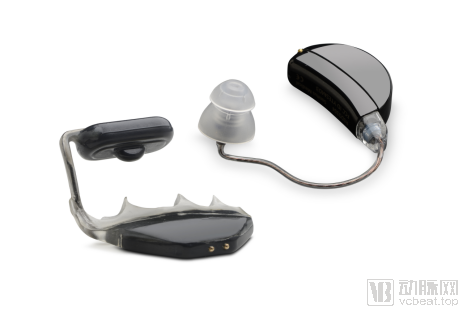
(PinYin®Bone Conduction Hearing System (Image provided by the company)
Sonitus Medical was established in 2016 as an innovative enterprise dedicated to the research and development, manufacturing, and sales of bone conduction hearing devices. Headquartered in the Shanghai International Medical Zone, the company has previously secured tens of millions of yuan in investment. Currently, Sonitus Medical is undertaking a new round of financing.
Pu Qiangling, CEO of Sonitus Medical, has long been engaged in the medical field and has participated in high-end medical device projects involving minimally invasive interventions, cancer treatment, and surgical robots. He believes that while there are sufficient professionals currently working in life-saving sectors, there is a shortage of practitioners dedicated to improving people’s quality of life. Therefore, Pu Qiangling is determined to strive for enhancing quality of life, with a focus on the hearing healthcare industry.
The hearing healthcare industry is closely tied to people’s quality of life and holds significant growth potential in the future. For example, while age-related hearing loss was often overlooked or tolerated in the past, rising expectations for quality of life have led more individuals to pursue healthy and fulfilling lifestyles, making them willing to pay for interventions that restore normal hearing function.
The hearing aid industry in China is still in its early stages of development, whereas it is a mature sector abroad. Pu Qiangling stated, “The penetration rate of hearing aid usage among individuals with hearing impairment is only 4.3% in China, compared to 30.2% in the United States. Among hearing aid users, the bilateral fitting rate stands at merely 20% in China, versus 72% in the United States. Nevertheless, we believe that with China’s economic growth, advancements in medical technology, and rising public demand for health, the hearing care industry in China will exhibit a trend of steady growth.”
Sonitus Medical's Dental Bone Conduction Hearing System “PinYin®”, the technology originates from Sonitus Medical, a company based in Silicon Valley, USA. Initially, dental experts, including the former CTO of Invisalign, discovered through discussions with otolaryngologists that teeth serve as an optimal pathway for conducting sound wave vibrations. The sparks generated by this “cross-disciplinary” exchange brought a glimmer of hope for providing non-invasive, preferred solutions to individuals with hearing impairment. However, at that time, technologies related to dentistry, chips, batteries, and materials were not yet mature, making it difficult to achieve dental bone conduction of sound waves.
Research into bone-conduction technology has not halted due to technical limitations. In 2010, the newly developed bone-conduction hearing aid topped the list of Top 10 Medical Innovations released by the Cleveland Clinic, a leading hospital in the United States, and was hailed as “an innovation with clinical significance and commercial value that benefits a broad patient population.”
After a decade of dedicated research, Sonitus Medical successfully completed clinical validation of its dental bone conduction technology. However, high production costs in the United States hindered the product’s commercialization. During a visit to Silicon Valley, Pu Qiangling came into contact with the dental bone conduction system and, after thorough analysis, resolved to acquire all related technologies and patents. Given China’s significant advantages in supply chain, production costs, and market size, Pu Qiangling plans to carry out commercial production of the product in China.
As of now, Sonitus Medical's “PinYin®“The dental bone conduction system holds independent intellectual property rights and 128 invention patents, covering 22 major countries and regions including China, the United States, Japan, and the European Union. Meanwhile,”PinYin®The dental bone conduction system has obtained U.S. FDA clearance and China NMPA Class II medical device registration. Pu Qiangling stated, “This is currently the only dental bone conduction hearing system approved for market launch globally, filling the product gap in China’s single-sided deafness market.”
Humans primarily perceive sound through two pathways: air conduction and bone conduction. Generally, individuals do not need to rely on bone conduction to perceive sound; however, when pathological changes in the external and middle ear impede the transmission of sound waves, bone conduction can be utilized to compensate for hearing loss.PinYin®The bone-conduction dental system was developed based on this principle.
Specifically, the behind-the-ear device receives sound signals and transmits them to the intraoral device via NFMI technology. The intraoral device converts these sound signals into vibrations. Since the teeth are connected to the skull, when the actuator in the intraoral device vibrates the teeth, the skull also vibrates. This bypasses the damaged outer and middle ear, directly inducing cochlear vibration through skull conduction, and then transmits the signals to the brain via the auditory nerve.
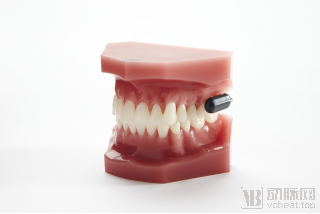
(Sound waves are conducted through the alveolar bone; image provided by the company)
Notably, the alveolar bone that conducts sound is connected to the skull. The maxillary teeth and the alveolar bone itself are part of the skull, tightly interlocked without intervening soft tissues or joints. Consequently, bone conduction through this pathway incurs no signal loss, allowing high-quality vibrational signals to be transmitted to the cochlea via the skull without attenuation, thereby preserving sound quality and subtle acoustic information.
Therefore,PinYin®The Tooth-Bone Conduction System is a non-surgical, wearable hearing device that leverages natural tooth bone to non-invasively achieve clinical hearing outcomes comparable to those of surgically implanted bone-conduction solutions, while avoiding the limitations of sound attenuation associated with transcutaneous transmission in headband- or eyeglass-style bone-conduction hearing aids. Meanwhile,PinYin®Bone conduction hearing systems are highly aesthetic and suitable for patients with various types of hearing loss, including unilateral deafness, conductive hearing loss, and mixed hearing loss.
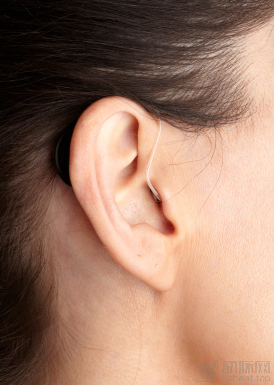
(Pinyin®High Aesthetic Appeal of Bone-Conduction Dental Products; Image Provided by the Company)
Just two weeks after its market launch, Sonitus Medical has adopted an aggressive high-end strategy, first entering the top-tier hospital market and earning strong recognition. In the next phase, Sonitus Medical will gradually expand into lower-tier markets, penetrating from top-tier hospitals to primary care institutions and community healthcare facilities. Pu Qiangling stated, “Sonitus Medical is a leader in the domestic clinical bone-conduction field; therefore, our market entry must reflect the stature of a leader. We will drive the development of China’s hearing industry, leveraging a global brand made in China and proprietary technology to change the long-standing lack of acceptable solutions in the single-sided deafness market.”
To date, Sonitus Medical’s products have been adopted by numerous top-tier ENT hospitals, including the Eye and ENT Hospital of Fudan University, Xinhua Hospital Affiliated to Shanghai Jiao Tong University School of Medicine, Shanghai Ninth People’s Hospital Affiliated to Shanghai Jiao Tong University School of Medicine, the First Affiliated Hospital of Zhengzhou University, and West China Hospital. Meanwhile, Sonitus Medical has partnered with multiple chain hearing aid dispensing organizations to promote its products. Pu Qiangling stated: “PinYin®"The bone-conduction dental system has gained recognition from experts, physicians, and patients since its introduction into hospitals. This has also filled us with confidence—confidence in our commercial success."
Regarding future plans, Sonitus Medical intends to first commercialize its existing products while gradually launching those under development. Pu Qiangling concluded by stating, “We aspire to become the ‘Huawei’ of the hearing industry, driving the sector’s overall development and benefiting more patients.”