

AstraZeneca Unveils Ten AI-in-Healthcare Application Scenarios at World Artificial Intelligence Conference
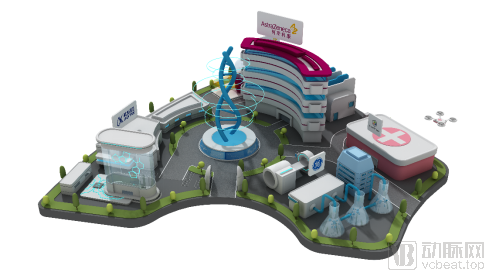
July 10, 2020, Shanghai, China— Recently, the 2020 World Artificial Intelligence Conference Cloud Summit was grandly opened online. AstraZeneca, a global leading biopharmaceutical company, participated for the first time with 14 innovative integrated diagnosis and treatment whole-disease management solutions from its China Health IoT Innovation Center, through“A“I Jiayuan” CloudExhibition, in 3DDynamic demonstrations allow global internet users to tangibly experience the boundless potential of high-tech innovations, such as artificial intelligence, in medical scenarios.
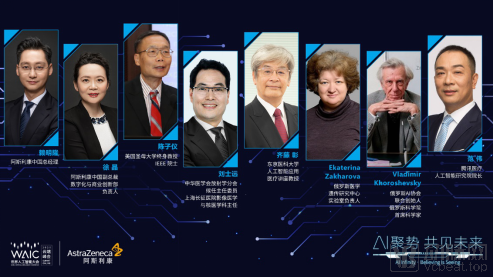
During the conference, AstraZeneca also held“Harnessing the Power of AI to Envision the Future Together—AstraZeneca AI Healthcare Industry Forum” facilitated cutting-edge cross-border, cross-disciplinary, and cross-industry exchanges with renowned experts, scholars, and industry leaders from China and abroad in the fields of artificial intelligence and healthcare. The forum aimed to further enhance the efficiency of medical services and drive the transformation and upgrading of the healthcare industry through the deep integration of artificial intelligence and the healthcare sector. At the event, AstraZeneca unveiled its top ten “AI + Healthcare” application scenarios for the first time and called for partners, focusing on the entire disease management process. By empowering industrial ecosystem innovation with artificial intelligence, the initiative seeks to benefit a broader patient population in China and around the world.。
On the opening day, Pascal Soriot, Global Chief Executive Officer of AstraZeneca, delivered a keynote address on the trends of AI-empowered development in the healthcare industry from a global perspective. Soriot stated:“Globally, healthcare systems are facing severe challenges amid the trend of population aging and patients’ evolving health needs, a situation further exacerbated by the COVID-19 pandemic. In this context, artificial intelligence (AI) has not only demonstrated its capacity to address these challenges but also unleashed tremendous potential to transform society, the economy, and industries. However, this is merely the beginning of the integration of AI with human activities. I believe that the most exciting medical applications of AI are likely to emerge in China, where an innovative market environment, strong support from governments at all levels, and the open mindset of the Chinese people will collectively foster the flourishing of AI across various sectors.”
InAt the “AI Converges for Momentum, Envisioning the Future Together – AstraZeneca AI Healthcare Industry Forum,” AstraZeneca focused on major disease areas in China, including respiratory, oncology, cardiovascular, renal, metabolic, and digestive disorders. The company unveiled ten new “AI + Healthcare” application scenarios and launched an online call for partners. These ten newly released scenarios cover critical stages such as disease prediction, screening and early diagnosis, diagnostic testing, and patient management. They aim to empower the entire clinical pathway—including screening, diagnosis, treatment, and patient follow-up—by leveraging advanced technologies such as computer vision, predictive algorithms, and natural language understanding.
AIThe application of AI in early disease screening and diagnosis will significantly improve physicians’ work efficiency and diagnostic accuracy, while also enhancing diagnostic efficiency in primary care hospitals and regions with limited medical resources. AstraZeneca has unveiled multiple application scenarios for AI-assisted image interpretation technologies, primarily targeting the screening and diagnosis of lung cancer, breast cancer, prostate cancer, and gastrointestinal diseases. These initiatives focus on early screening and early diagnosis to improve lesion detection rates and reduce misdiagnoses and missed diagnoses. Additionally, AstraZeneca aims to collaborate with partners to explore the use of AI technology in CT-based screening for chronic obstructive pulmonary disease (COPD) and to leverage AI-driven predictive analytics to forecast the risk of acute exacerbations of COPD.
With economic development and the accelerating pace of life, the incidence of chronic diseases in China continues to rise, posing challenges for the vast patient population and long-term disease management.AIBig data has also spurred new management methods and approaches. AstraZeneca also unveiled multiple application scenarios for comprehensive chronic disease management, such as a robot system for patients with chronic kidney disease built upon disease knowledge graphs and powered by natural language understanding technologies, and an intelligent voice-call follow-up system for community physicians that facilitates follow-up management of individuals with the “three highs” (hypertension, hyperglycemia, and hyperlipidemia) in community hospitals. These scenarios will not only provide more convenient services for patients with chronic diseases but also effectively enhance the personalization and accessibility of treatment regimens, thereby offering stronger support and safeguards for the treatment and management of chronic diseases in China.
At the sub-forum, AstraZeneca also invited renowned experts, scholars, physicians, and entrepreneurs from both China and abroad to engage in in-depth discussions on the practical applications of artificial intelligence (AI) in the most prominent healthcare scenarios. During the forum, experts stated that the widespread adoption of AI in the future will break through spatial constraints, expand the boundaries of medical services, significantly enhance innovation efficiency, help optimize the allocation of medical resources, promote the standardization of medical services, and improve access to high-quality medical resources, thereby holding significant importance for the advancement of human healthcare. Meanwhile, participating experts pointed out that active integration of industry, research, and finance, along with broader cross-sector collaboration, is an essential path for AI to benefit human health.
In response, Lai Minglong, General Manager of AstraZeneca China, stated:“Gaps between patient needs and medical resources still exist, thisis the driving force behind the development of AI in healthcare, and it is also the driving force behind AstraZeneca’s active efforts to build an ecosystem for medical innovation. The future applications of artificial intelligence in the healthcare sector are extensive, with enormous market potential. We look forward to more partners joining us to jointly drive progress.“The widespread implementation of AI in the healthcare sector enables ‘AI + Healthcare’ to truly serve patients and helps accelerate the realization of the ‘Healthy China’ initiative.”
In the face of growing demand from Chinese patients,AstraZeneca atIn 2017, we joined hands with partners to establish the China Health IoT Innovation Center, leveraging artificial intelligence, the Internet of Things, big data, and 5Gand other cutting-edge technologies to create integrated diagnostic and therapeutic solutions for comprehensive disease management. At this conference, AstraZeneca, through“Cloud Exhibition” provides a centralized showcase of these achievements. Among the 14 integrated diagnosis and treatment solutions that have been implemented to date, artificial intelligence has been practically applied in some of them, leveraging technologies such as AI-based medical imaging, data acquisition, and natural language processing for cancer screening, disease diagnosis, intelligent follow-up, and health education.and other aspects to enhance patient benefits.
Wang Lei, Executive Vice President of AstraZeneca and President of International Business and China, announced at the conference,will further deepen AstraZeneca's innovation footprint in China, establishing medicalAI Open Innovation Lab, aimed at incubating more AI-empowered medical practices. The lab will focus on the major disease areas affecting Chinese patients, collaborate with AI partners to build an artificial intelligence ecosystem, uncover latent demands in the healthcare industry, and develop innovative AI applications.
Meanwhile, Wang Lei stated that AstraZeneca’s innovation strategy will be deployed across China, with a commitment to building an open innovative healthcare ecosystem. AstraZeneca will establish regional specialty innovation centers in multiple cities, including Beijing, Shanghai, Guangzhou, Hangzhou, and Chengdu, and expand the Life Science Innovation Park model. By continuously collaborating with high-quality innovative enterprises in the fields of pharmaceuticals, diagnostics, medical devices, and digital health on a global scale, the company aims to develop more innovative healthcare solutions to benefit a broader patient population.。
About AstraZeneca China
SelfSince its entry into China in 1993, AstraZeneca has adhered to a science-first approach and prioritized innovation to meet the country’s growing health needs, striving to realize its ambitious vision of “pioneering innovation, benefiting patients, and becoming China’s most trusted healthcare partner.” Headquartered in Shanghai, AstraZeneca has established regional headquarters in Beijing, Guangzhou, Wuxi, Hangzhou, and Chengdu, and employs more than 18,000 people across China. The company has invested in manufacturing bases in Wuxi and Taizhou, Jiangsu Province, and established its China logistics center in Wuxi. In China, AstraZeneca focuses primarily on therapeutic areas with the most urgent patient needs, including respiratory, cardiovascular, metabolic, oncology, gastrointestinal, and renal diseases. In 2017, the China Health IoT Innovation Center was launched in Wuxi to explore innovative Internet of Things (IoT)-enabled integrated solutions for whole-disease-course management. In the same year, AstraZeneca formed a joint venture with SDIC Innovations to establish Dizal (Jiangsu) Pharmaceutical Co., Ltd., accelerating local new drug research and development. In 2019, AstraZeneca announced a collaboration with Wuxi to co-establish the Wuxi International Life Science Innovation Park, pooling global expertise to benefit Chinese patients. That same year, AstraZeneca announced the establishment of a Global R&D Center and an AI Innovation Center in Shanghai, and jointly launched a global healthcare industry fund with CICC Capital.