

Chinese GI AI Assistant System ENDOANGEL Debuts at World Artificial Intelligence Conference, Deployed in Over 100 Hospitals Nationwide and Files IPO Prospectus
2020On July 10, the World Artificial Intelligence Health Summit grandly opened in Shanghai. The summit invited more than 70 industry experts, including Academician Li Lanjuan and Professor Zhang Wenhong, to focus on three major themes: public health, biopharmaceuticals, and medical services. They discussed the application of artificial intelligence during the epidemic, as well as its future development and implementation.
In the post-pandemic era, exploring the practical implementation of AI holds dual significance. We have tangibly recognized the value of AI in healthcare across scenarios such as public health epidemic prevention, drug screening, and assisted diagnosis. As AI gains increasing recognition, the integration of AI and healthcare continues to expand the boundaries of possibility. However, as AI continuously extends its frontiers, it is also entering a phase of commercialization. Consequently, the evaluation criteria for AI-driven healthcare products have evolved from a singular focus on scientific research prowess to a multidimensional assessment encompassing implementation capabilities, degree of differentiation, and global competitiveness.
When examining the applications of AI in healthcare from multiple dimensions, certain niche segments have enabled some companies to stand out precisely because their high entry barriers have deterred most competitors. The relative obscurity of these areas signifies a high degree of differentiation in application scenarios, while the initially high thresholds have established formidable competitive moats.
Among the many application scenarios of AI in healthcare, the AI-assisted system for the gastrointestinal tract is a less-explored field. However, at the 2020 World Artificial Intelligence Health Cloud Summit, VCBeat (WeChat ID: vcbeat) witnessed a digestive endoscopy artificial intelligence assistance system from Wuhan ENDOANGEL Medical Technology Co., Ltd./Shanghai Zhenling Medical Technology Co., Ltd. (hereinafter referred to as ENDOANGEL): ENDOANGEL®.
At the World Artificial Intelligence Health Cloud Summit, ENDOANGEL not only made an appearance in the keynote speech at the AI + Medical Services Forum but was also showcased in the construction of AI medical scenarios in Shanghai. Meanwhile, it was selected as one of the TOP 30 projects for the SAIL (Super AI Leader) Award at the 2020 World Artificial Intelligence Conference and successfully received a recommended nomination from the UNIDO ITPO Network Global Call of the United Nations Industrial Development Organization. It also became one of the first batch of companies selected for the WIITS (Industrial Technology Innovation and International Cooperation Initiative) platform.
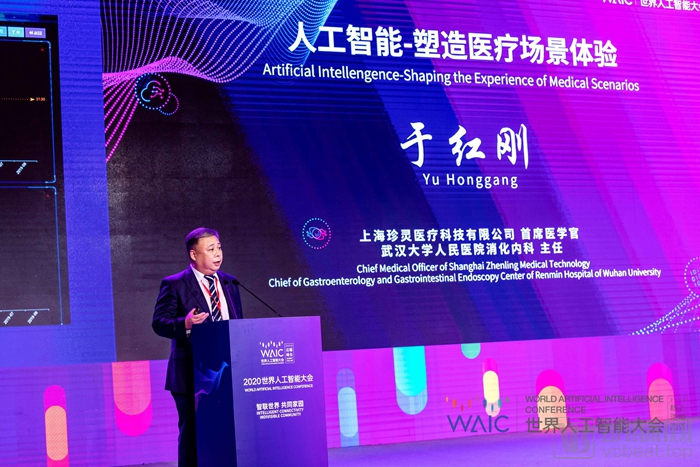
Professor Yu Honggang, Chief Medical Officer of Shanghai Zhenling Medical Technology Co., Ltd., Delivers a Speech at the World Artificial Intelligence Conference
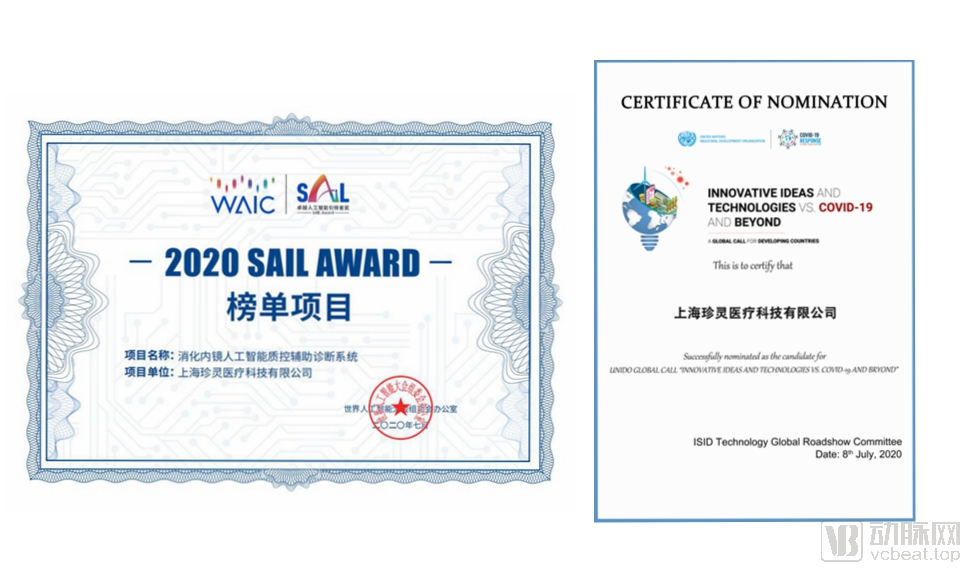
SAIL Award Top 30 List & UNIDO ITPO Global Call Award Certificate
ENDOANGEL is the first artificial intelligence system for quality control and diagnostic assistance in digestive endoscopy, both domestically and internationally. It is primarily used for monitoring and processing images of the digestive tract during digestive endoscopic procedures. The system provides real-time monitoring of video imagery from digestive endoscopies, standardizes physicians' endoscopic operations, and offers real-time assistance by highlighting suspicious lesions. This helps reduce missed diagnoses and misdiagnoses, improves early cancer detection rates, and supports the early discovery, diagnosis, and treatment of tumors in the digestive system.
The ENDOANGEL research project was launched in May 2017. Although it started relatively late, over the past three years, ENDOANGEL has adopted a strategy of incremental progress and rapid iteration to successfully navigate the critical milestones required for AI-driven healthcare solutions. These achievements include publications in top-tier journals such as GUT, The Lancet Gastroenterology & Hepatology, and GIE; the conduct of clinical trials at multiple hospitals across China; and the acquisition of two Class II medical device registration certificates. Currently, ENDOANGEL’s application for a Class III medical device certificate has entered the clinical trial phase. If all proceeds smoothly, the company is poised to commence commercial operations within six months.
Why was the gastrointestinal tract chosen as the application scenario? What breakthroughs has ENDOANGEL achieved in its AI-assisted gastrointestinal system? VCBeat conducted an exclusive interview with Dr. Hu Shan, General Manager of ENDOANGEL.
The EndoAngel team chose the character “Chu” from the ancient name for the Hubei region as its company name because EndoAngel’s origins are closely tied to Wuhan, Hubei. The development of the Endoscopic AI Assistant leverages Wuhan University’s research strengths and the data advantages of Renmin Hospital of Wuhan University.
Through a powerful multi-party collaboration, ENDOANGEL has developed the EndoAngel system, which assists gastroenterologists in real-time, rapid lesion detection during digestive endoscopy. The system provides blind spot monitoring for gastroscopy, automatic recognition of early gastric cancer, colonoscopy speed monitoring, and identification of polyps and adenomas.
Although the compound annual growth rate (CAGR) of hospital discharges for digestive system tumors in China reached 15% from 2012 to 2017, and the volume of gastrointestinal endoscopic diagnoses and treatments in China was projected to be no less than 60 million cases in 2018, coupled with a substantial shortage of gastroenterologists and endoscopy technicians, artificial intelligence (AI) for gastrointestinal endoscopy was not initially the preferred area for the implementation of “AI + Healthcare.”
Why Was the Gastrointestinal Tract Not the Initial Priority for AI Implementation? Dr. Hu Shan Believes It Is Due to Both a Lack of Clinical Insights and High Technical Barriers. The Pioneers Who First Attempted AI in Healthcare Were Almost All Engineers with Technical Backgrounds, and Their Understanding of Clinical Practice Evolved Gradually. Furthermore, Real-Time Digestive Endoscopy Places Higher Demands on Data Acquisition and Algorithms.
ENDOANGEL has taken a different path from most AI-assisted diagnostic companies. Its gastrointestinal endoscopy AI was initiated and led by gastroenterologists from the outset, emerging as an AI-assisted system driven by clinical needs. Therefore, ENDOANGEL initially focused on gastrointestinal diseases in response to these clinical demands.
In 2017, Professor Yu Honggang, Director of the Department of Gastroenterology at Renmin Hospital of Wuhan University, joined forces with Dr. Hu Shan’s AI R&D team at Wuhan University to develop an AI-assisted product aimed at addressing critical clinical challenges. Targeting issues such as high miss rates and difficulties in early cancer detection during digestive endoscopy, this innovation seeks to enhance the quality of endoscopic examinations and reduce physicians’ workload.
Guided by clinical needs, ENDOANGEL’s R&D team broke down the requirements into two steps: quality control first, followed by assisted diagnosis.
Why Prioritize Quality Control? Because digestive endoscopy differs from other imaging modalities. During routine endoscopic examinations, each physician independently observes the gastrointestinal tract, leading to variations in operational proficiency. Due to the heavy workload of endoscopists, there is a risk of incomplete coverage of examination sites. Therefore, the primary objective of AI-assisted systems is to help physicians ensure comprehensive, blind-spot-free examinations.
To address this issue, the ENDOANGEL team has developed two major systems: Gastroscopy Blind Spot Monitoring and Colonoscopy Withdrawal Speed Monitoring. The Gastroscopy Blind Spot Monitoring System tracks coverage across 26 anatomical regions observed during digestive endoscopy, thereby assisting physicians in performing endoscopic examinations, evaluating procedural quality in real time, and preventing missed diagnoses. The Colonoscopy Withdrawal Speed Monitoring System ensures uniform and controlled withdrawal speed with a clear field of view while guaranteeing adequate observation of the intestinal lumen, thus enhancing the overall quality of colonoscopy.
“To truly address these issues from a clinical perspective, our team has made many innovative attempts. The monitoring of blind spots across 26 anatomical sites during upper gastrointestinal endoscopy was first proposed globally by Professor Yu Honggang.”
Quality control products leverage artificial intelligence to establish standardized digestive endoscopy procedures, enabling blind spot monitoring and speed monitoring. By addressing quality control issues, these products lay a solid foundation for the application of AI-assisted diagnostic systems in the gastrointestinal tract. The AI-assisted diagnostic system can provide real-time alerts for suspicious lesions, helping physicians detect more early-stage gastrointestinal cancers.
Dr. Hu Shan stated that ENDOANGEL continues to make breakthroughs, having currently launched research initiatives on predicting the differentiation grade and boundaries of early-stage cancers, computer-aided diagnosis of esophageal varices, real-time assessment of bowel cleanliness, and applications in biliary and pancreatic endoscopic ultrasound (EUS) and endoscopic retrograde cholangiopancreatography (ERCP).
In the final stage of endoscopy reporting, ENDOANGEL can capture and store typical images from various anatomical sites, automatically generate illustrated endoscopy reports, and produce image data and reports with greater completeness than those prepared by physicians.
The entire R&D process took ENDOANGEL three years, during which it completed more than 400 product iterations. The main challenges encountered throughout these hundreds of iterations were data standardization, real-time diagnosis, and reducing false positives.
First, in terms of data acquisition, digestive endoscopy differs from static imaging equipment, presenting greater challenges for both data collection and storage. Thanks to the in-depth involvement of our medical team, the training data for ENDOANGEL was annotated by a team of more than 20 specialist physicians.
“So we have a highly precise standard database. Meanwhile, ENDOANGEL is also refining and expanding the database through multi-center clinical trials.”
Although data acquisition is challenging, it can be addressed at the physician end. According to Dr. Hu Shan, the most significant technical barrier in the R&D phase is reducing false-positive rates while improving accuracy. With digestive endoscopy processing more than 10 frames per second, minimizing false positives presents a considerable challenge. Therefore, ENDOANGEL employs attention mechanisms, smoothing mechanisms, and specialized algorithms to control false positives and enhance the user experience for physicians.
Born from clinical needs, ENDOANGEL understands that clinicians have long established fixed workflows due to years of high-intensity work. Therefore, meticulous attention to detail is essential in technological research and development. After multiple iterations, Dr. Hu Shan proudly told VCBeat,ENDOANGEL can fully achieve improved diagnostic accuracy for physicians without altering their clinical workflow.
Currently, the ENDOANGEL team has established research collaborations and conducted clinical trials at over 100 hospitals across China, including top-tier institutions such as Renmin Hospital of Wuhan University, Tongji Hospital, Union Hospital, Xiangya Hospital, Peking University Cancer Hospital, and Nanjing Drum Tower Hospital.
Among these hospitals, ENDOANGEL has achieved remarkable results, effectively increasing the detection rate of early gastrointestinal cancers. At Renmin Hospital of Wuhan University, the use of EndoAngel increased the detection rate of early gastric cancer from 22.8% in 2017 to 34.5% in 2018 and 40% in 2019.
Dr. Hu Shan stated, “The current increase in early cancer detection rates across various hospitals is based on pathology-verified statistics, representing authentic and reliable data. At Jilin City People’s Hospital, the use of ENDOANGEL for three months starting in July 2019 resulted in the detection of 25 additional cases of early-stage cancer compared to the same period.”
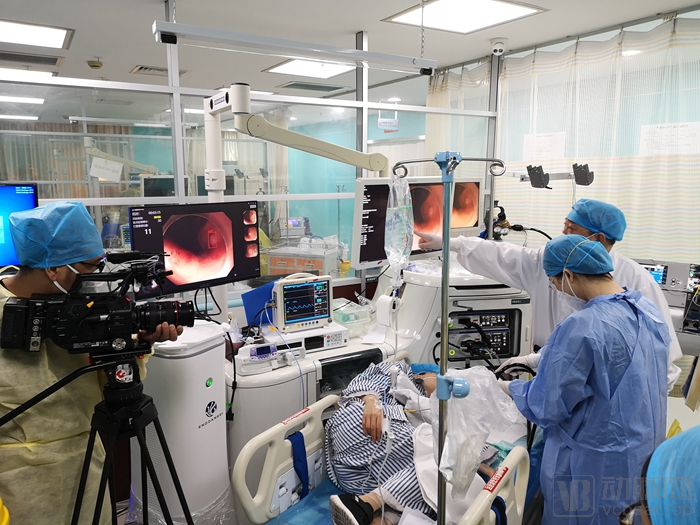
ENDOANGEL Clinical Application Scenarios
For patients, early-stage gastric cancer requires only endoscopic submucosal dissection (ESD), eliminating the need for surgical intervention. Compared with the substantial costs of surgical treatment, which can easily reach hundreds of thousands of yuan, endoscopic procedures cost approximately 30,000 yuan. This approach saves patients nearly hundreds of thousands of yuan in medical expenses while significantly improving their five-year survival rates and quality of life.
In addition to its practical applications in hospitals across China, ENDOANGEL has also been making frequent appearances on the international stage. On April 7, 2020, the “China-US-Italy AI Online Forum,” themed “AI (Love) in Wuhan, ENDOANGEL on the Move,” was successfully held, attracting 37,000 online participants. During the forum, Professor Yu Honggang from Renmin Hospital of Wuhan University presented the latest advancements of EndoAngel in gastrointestinal research.
On June 6, 2020, the “2nd Wuhan International Conference on Artificial Intelligence in Digestive Endoscopy (2020 WIAIC) and the Annual Meeting of the Big Data Collaboration Group of the Digestive Endoscopy Branch of the Chinese Medical Association” was held online, attracting 220,000 viewers. During the conference, ENDOANGEL showcased its core capabilities—real-time automatic identification of early gastric cancer and automated delineation of lesion boundaries—through themed lectures and live surgical demonstrations. ENDOANGEL presented its functionalities and features to clinicians worldwide.
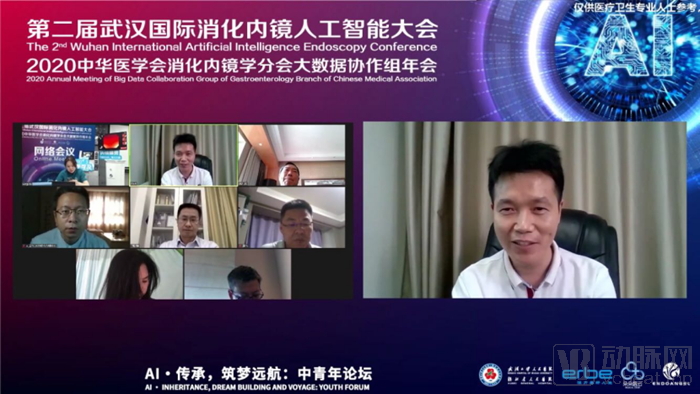
Dr. Hu Shan, General Manager of ENDOANGEL, Delivers Address at the Young and Middle-Aged Scholars Forum of the 2nd Wuhan International Conference on Artificial Intelligence in Digestive Endoscopy
Dr. Hu Shan attributes EndoAngel’s recognition by both the academic and clinical communities in digestive endoscopy within just three years to its clinically oriented product development, which has enabled it to become a truly implementable AI+healthcare product.
Dr. Hu Shan candidly stated, “Because our approach is rooted in clinical practice, our efficiency in both identifying and addressing needs through medical-engineering collaboration is significantly higher than that of initiatives driven solely by engineers. Our excellent engineering and clinical teams work in close synergy, thereby accelerating the product development process.”
Rapidly growing ENDOANGEL has also gained recognition from the industry. Currently, ENDOANGEL’s AI-assisted quality control products have obtained two Class II medical device approval certificates. Its application for a Class III registration certificate has entered the clinical trial phase.
“These two registration certificates hold extraordinary significance for us. Previously, as a research product, our findings were published in a series of top-tier international journals, which only garnered recognition through peer review. The registration certificates signify that our product has received approval from regulatory authorities.”
For a company based in Wuhan, the registration certificate obtained after the pandemic marked ENDOANGEL’s first ray of hope after enduring dark times.
“Securing two registration certificates is one of our milestones and a key pillar for our future growth. Our R&D center is based in Wuhan. During the pandemic, we endured extremely challenging times; however, our R&D team not only maintained momentum but also actively contributed to the fight against the epidemic by developing CT Angel—an AI-assisted software designed for COVID-19 diagnosis. As Wuhan rebounds from the pandemic, our team has rapidly advanced new product R&D strategies, forged partnerships, and accelerated commercial implementation. We are confident that the company will enter a phase of rapid growth over the next six months,” said Dr. Hu Shan enthusiastically.