

SS Innovations China Files IPO Prospectus: Delivering Affordable, Modular, and Intelligent Surgical Robotics Globally

SS Innovations
Surgical Robot Developer
“I once encountered a heart disease patient who required robotic surgery. Even though I offered to perform the procedure free of charge, she still chose to forgo treatment due to the unaffordability of other associated costs…” Dr. Sudhir, founder of SS Innovations China Co. Ltd, told VCBeat that this very experience solidified his resolve to develop an affordable surgical robot accessible to the general public.
Dr. Sudhir gave up his positions as a robotic cardiac surgeon in the United States and an assistant professor at the University of Chicago, bringing all his savings to China to conduct research and development on surgical robots. Dr. Sudhir told VCBeat,He aims to help more people, and China not only has a pressing need for such technology but has also secured financial backing from investors.。
Looking back at the history of surgical robots, the da Vinci series can be considered a pioneer in this field. The da Vinci surgical robot was introduced in 2000, monopolizing related patents for 20 years and nearly dominating the market.The advent of the da Vinci Surgical System has addressed common limitations of traditional surgery, such as poor precision, prolonged operative times, and the lack of a three-dimensional visual field. However, the prohibitive cost of acquiring the equipment has prevented many healthcare systems in developing countries and underdeveloped regions from widely adopting this technology.In China, the purchase price of this system reaches as high as RMB 20 million.The high price has become the biggest obstacle to the widespread application of this series of surgical robots in the medical field.
Guided by the philosophy of smarter systems, more user-friendly operations, and more controllable costs, SS Innovations China is dedicated to developing a new generation of surgical treatment robots. With more affordable acquisition costs, these robots are better suited to the markets and conditions of developing countries.
Currently,SS Innovations’ surgical robot has been developed to its third generation and is currently undergoing cadaveric trials in India.Dr. Sudhir, founder of Hangzhou Shuchuang, told VCBeat that the third-generation surgical robot is expected to commence clinical trials in India within the next two months, thereby advancing the process of conducting multi-center clinical trials globally.
This surgical robot is priced at $600,000, approximately one-third the price of the da Vinci Surgical System.In addition to its price advantage,The Shuchuang surgical robot system features a modular design that allows for disassembly and assembly, enabling physicians to position the robotic arms around the patient according to therapeutic needs and achieve precise treatment through independent programming of each arm.The flexible adjustment and combination of robotic arms, along with the continuously updated modular components during research and development, have expanded the application of SS Innovations’ surgical robots—initially focused on cardiac surgery—to fields such as urology, general surgery, thoracic surgery, gynecology, and head and neck surgery.
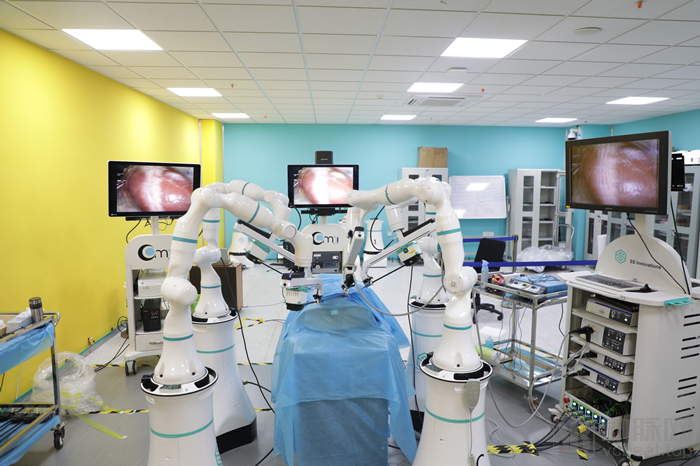
Schematic Diagram of Shuchuang Surgical Robot Operation
In terms of operational application, Hangzhou Shuchuang has implemented ergonomically optimized design improvements for its surgical robot system.. During the use of traditional surgical robots, surgeons are required to maintain a forward-leaning posture while viewing endoscopic images on an 8-inch screen, which can easily cause physical discomfort and lead to errors during surgery.ShuChuang Surgical Robot provides a panoramic open system, offering doctors a more humanized operation mode. It not only allows doctors to see their hands and feet but also enables them to lean back against the surgical chair during the procedure, eliminating the need to maintain a forward-leaning posture.。
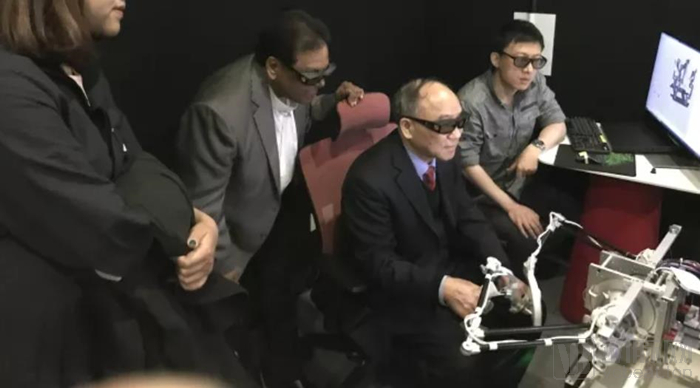
Academician Zheng Shusen Tests the First-Generation SS Innovations Surgical Robot
Thanks to operating system enhancements, the monitor has been upgraded to an open large-screen display (approximately 26 inches).A 26-inch screen not only delivers high-resolution visuals and larger images, but also enables higher magnification and precision—capabilities that the da Vinci surgical robot system cannot achieve.。
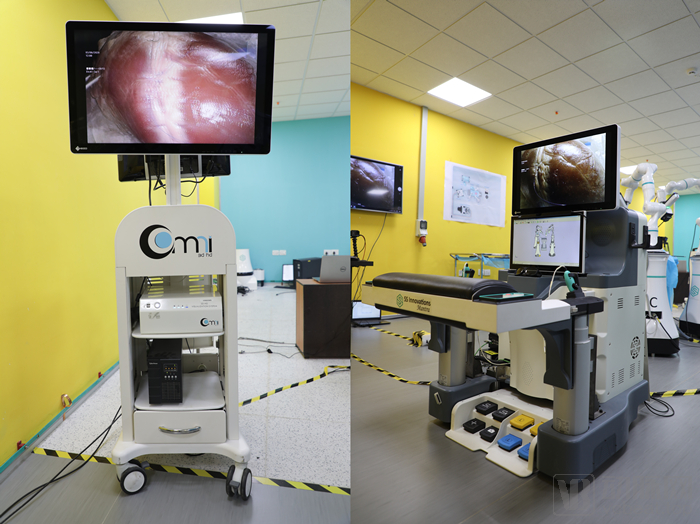
Schematic Diagram of Shuchuang Surgical Robot Imaging
The monitor presents endoscopic images to the lead surgeon in a panoramic view, enabling the surgical team to share the same three-dimensional field of vision as the lead surgeon, thereby making the surgical procedure more efficient and safe.. Meanwhile,This design also facilitates trainees’ learning of surgical procedures. Based on this, SS Innovations China Co. Ltd has established a corresponding training model to enhance the efficiency of learning surgical robotics by integrating video cards into the system to provide recording and playback capabilities, thereby enabling remote communication, guidance, and learning among physicians.。
ShuChuang surgical robots also feature an intelligent safety system that monitors for collisions using a magnetic sensor-based eye tracker to prevent such incidents.。
“In fact, another difference between our robot and the da Vinci system is that SS Innovations’ surgical robot can be remotely operated via computer assistance.“Dr. Sudhir told VCBeat, ‘Because the da Vinci system has yet to alter the core technologies developed in the late 1990s, it has consistently failed to achieve technological breakthroughs.’”
With the advent of 5G and fiber-optic networks, SS Innovations’ surgical robot system is developing technologies to provide real-time, on-demand remote guidance to surgeons during procedures.This remote technology enables more people to engage in discussions and expand their learning scope regarding surgical procedures, significantly reducing the learning costs for medical staff in operating robotic systems and performing surgeries. On another front, Hangzhou Shuchuang plans to establish Omni Studio, a surgical team primarily focused on remote guidance.
In the future, with further technological advancements, physicians will be able to perform remote surgeries via the Shuchuang surgical robot platform, breaking through geographical and temporal constraints to enable the sharing of medical expertise and ensure that medical advancements truly benefit a broader population.
SS Innovations China holds 142 patents and continues to file new applications, establishing a professional barrier in surgical robot R&D and thereby achieving further innovative breakthroughs in this field.
Dr. Sudhir, staying true to his original aspiration of making this technology accessible to a broader population, chose toEstablish a parent company in China, where lower production costs, higher productivity, and supportive medical technology policies provide a fertile ground for surgical robot R&D, to reduce the price of surgical robots and ensure project implementation.Meanwhile,Hangzhou Shuchuang links its industrial chain globally, establishing a medical technology research, manufacturing, and assembly company in India, and an equipment R&D innovation company in the United States, thereby providing greater possibilities for the development of Shuchuang surgical robots.。
NeedleTo achieve the goal of “benefiting a broader population,” SS Innovations China has not only optimized its production layout to reduce R&D and manufacturing expenditures, thereby lowering product prices, but also introduced an installment payment plan. This initiative enables buyers with limited funds to access the equipment while alleviating the burden of full upfront payment.。
The support of the company's team underpins corporate development.Dr. Sudhir Srivastava, founder of Hangzhou Shuchuang, is one of the most prominent global experts in robotic cardiac surgery, with over 45 years of cumulative clinical experience and extensive research and practical expertise in internationally leading robotic cardiac surgical techniques.Dr. Sudhir has performed over 1,400 da Vinci robotic cardiothoracic surgeries to date. He has worked at the PLA General Hospital (301) in Beijing and Ruijin Hospital in Shanghai, and has carried out medical programs in Chicago, Atlanta, and India. Dr. Sudhir is also an active member of the Society of Thoracic Surgeons, the International Society for Minimally Invasive Cardiothoracic Surgery (ISMICS), and the Society of Robotic Revascularization.

Founder and CEO of SS Innovations
Image source: official website
Dr. Sudhir’s experience training hundreds of teams worldwide, coupled with his tenure as a faculty member at the University of Chicago, has driven him to incorporate more young interns into the company and provide meaningful instructional support to all learners seeking to master minimally invasive techniques.
Meanwhile,The Hangzhou Shuchuang team is composed of professionals from multiple countries, including China, the United States, India, and New Zealand, with 15 to 30 years of experience in cardiac surgery.For example, Dr. Valluvan Jeevanandam, a specialist in high-risk cardiac surgery and board member of SS Innovations China Co. Ltd., specializes in the surgical treatment of heart failure. Dr. Valluvan Jeevanandam has performed more than 1,000 heart transplants, artificial heart implantations, and other cardiac surgeries. He is a recognized leader in the field of advanced heart failure and pioneered the development of long-term intra-aortic balloon pump support devices.

Dr. Valluvan Jeevanandam
Image source: official website
Hangzhou Shuchuang Surgical Robot Co., Ltd. was established in Hangzhou in 2016 with a $5 million investment. In May 2017, the company secured a $1.5 million Series A financing round from Daotong Investment. In October 2017, it raised $5 million in a Series A+ round led by Shanghai New Silk Road Financial Holdings, with participation from Yueyin Medical Fund. In October 2018, the company completed its Series B financing, led by Taiheng Investment, with participation from Heda Investment and Leiyu Capital. In December 2019, it secured a Series B+ round led by Sinopharm Zhongjin Medical Industry Fund, with participation from Zheshang Venture Capital and New Silk Road Financial Holdings.
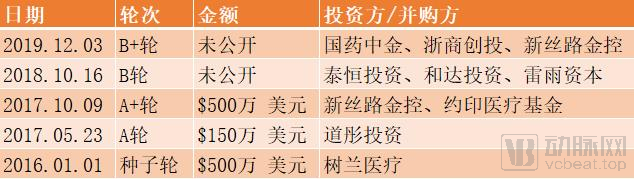
SS Innovations China’s Historical Fundraising Journey
Next, SS Innovations China will raise $100 million to make final preparations for its initial public offering.
“I believe the blue ocean era of the surgical robot market has arrived,” said Dr. Sudhir.
As shown in the research report by China Business Industry Research Institute,As an emerging industry, surgical robotics is poised to enter a golden age, driven by factors such as national policy support, an aging population, and the imbalance between supply and demand in medical services.。
The financing success of SS Innovations China Co. Ltd, along with the penetration of its products in the Asia-Pacific region driven by their inherent advantages, also demonstrates the significant market opportunities for its surgical robot systems.
Hangzhou Shuchuang adopts a direct sales plus distribution business model for product sales. Currently, Hangzhou Shuchuang has established partnerships with hospitals in India and China, and has received 85 letters of intent from Indian hospitals. Hangzhou Shuchuang will select ten hospitals worldwide to conduct global multi-center clinical trials, accelerating product commercialization.。
Meanwhile, driven by breakthroughs and the integrated development of information technologies such as mobile internet, big data, cloud computing, the Internet of Things (IoT), and artificial intelligence, the digital economy is rapidly expanding. As a representative sector of “hard tech,” the robotics industry will leverage the technological dividends of the digital economy to accelerate its development.
Based on DaoTong Capital’s observations of the surgical robotics industry, VCBeat has compiled the following key insights:
1. The development of the medical robotics industry is an inevitable trend. Against the backdrop of global population aging and a severe future shortage of healthcare professionals, intelligent medical robots will become the most critical solution to address the imbalance between supply and demand. Over the past four years, China’s medical robotics market has grown more than tenfold.
2. The medical robotics market is the second-largest robotics market globally, with the surgical robotics segment accounting for the largest share within it. Surgical robots represent the next generation of surgical procedures; driven by technological advancements, they enable a shorter learning curve for surgeons and more standardized surgical outcomes, while also minimizing patient trauma and reducing postoperative recovery time.
3. The “surgical robot systems + consumables + services” model can form a self-sustaining commercial loop, with consumables accounting for more than 50% of the surgical robot market share.
4. From a technical perspective: Surgical robots have entered the natural orifice stage, including vascular intervention and bronchoscopic surgical robots, with future expansion potential to the urethra, anus, and other areas; from a product form perspective: miniaturization and specialization are the development trends for surgical robots.
5. For surgical robotics companies, developing the equipment is merely the first step in a long journey. From supporting consumables, regulatory compliance and patents, to training and the accumulation of clinical case studies, a successful robotics company must continuously build an ecosystem around its devices.
Currently, domestically produced surgical robots have clearly emerged as a major industry focus. With the expiration of the 20-year patent on the da Vinci Surgical System, Chinese-made surgical robots are poised to achieve rapid advancement and overtake competitors.