

IHS Smart Touch Secures Several Million RMB in Angel Funding, Gastrointestinal Endoscopy Training Robot Set for Commercial Launch
VCBeat has learned that Shenzhen IHS Computer System Co., Ltd. (IHS) (hereinafter referred to as “IHS Zhichu”) recently secured an angel round of financing amounting to several million yuan. The investors were Yuanzhen Value Investment and Hongtai Intelligent Manufacturing, with the funds designated for product research and development and market expansion.
IHS SmartTouch is a robotics technology company specializing in robotic tactile technology and its application development. Established in September 2017, the company operates dual centers in Shenzhen, China, and Vancouver, Canada. It boasts a technical team composed of top-tier experts from China and Canada and has been incubated at SFU VentureLabs, Canada’s national-level incubator.
“The incidence of gastrointestinal diseases is extremely high, while traditional training models for digestive endoscopy are inefficient and time-consuming, creating an urgent need for industry iteration and upgrading,” said Tang Zhouming, founder of IHS Zhichu.
Since its establishment three years ago, the company’s core product, the gastrointestinal endoscopic surgery training robot, has secured multiple invention patents and software copyrights in both the United States and China. Tang Zhouming, founder of IHS Zhichu, stated that the company’s gastrointestinal endoscopic surgery training robot, which integrates robotic haptic technology, virtual reality, cloud computing, and artificial intelligence, is scheduled for commercial launch this September. To date, the company has established collaborations with more than ten renowned Grade-A tertiary hospitals, medical universities, and medical schools both domestically and internationally.
What is the current state of development for surgical simulation training equipment in China? What are the features of this product from IHS Zhichu, and what market pain points does it address? Recently, VCBeat interviewed Tang Zhouming, founder of IHS Zhichu, for insights on these topics.
According to data released by the Ministry of Health in 2015, there are 120 million patients with digestive diseases in China, with nearly 30 million cases requiring gastrointestinal endoscopy annually, while the country has only about 30,000 certified gastrointestinal endoscopists.
“There is a significant market gap, with the demand for clinical endoscopists specializing in digestive endoscopy estimated at several hundred thousand,” pointed out Tang Zhouming.
Amid the substantial demand for talent, the traditional training model for endoscopic surgery requires innovation. Tang Zhouming noted that conventional endoscopic surgical training is generally characterized by long durations, small scales, and low efficiency. Typically, one instructor supervises 2–5 trainees over a six-month period, with the training process encompassing multiple stages such as lectures, clinical observation, and hands-on instruction. In contrast to traditional surgical training, virtual simulation-based training for digestive endoscopic surgery can significantly reduce costs and enhance training efficiency.
Unlike traditional endoscopic surgical training, virtual simulation training for digestive endoscopy leverages robotic haptics, VR, and AI technologies to create a highly realistic environment that closely mimics clinical endoscopic procedures, thereby providing trainees with an immersive learning experience.
Within a training cycle comparable to traditional methods, a greater number of cases can be trained, thereby more effectively enhancing surgical knowledge and skills, depending on the number of available devices. Typically, a training center equipped with 10 units can accommodate over 100 students, largely eliminating the need for instructors. Furthermore, virtual simulation-based surgical training leverages artificial intelligence technology to comprehensively monitor and analyze data on various training key points and procedural steps.
“Virtual simulation-based surgical training has significantly expanded the scale of training, reduced costs, and greatly improved efficiency. It is suitable for medical schools and hospitals to conduct surgical training,” introduced Tang Zhouming.
Tang Zhouming holds a Master’s degree in Robotics and Control Engineering from Simon Fraser University in Canada, with a research focus on medical robotics and robotic haptic systems. He has five years of experience as a Senior System-on-Chip (SoC) Architecture Verification Engineer. As early as 2007, he engaged in research related to medical robots and haptic simulation systems. In 2010, he completed the design of a minimally invasive surgical simulation system featuring a 7-degree-of-freedom (DOF) manipulator arm, for which he was granted a U.S. patent. He has published five international papers on the development of medical simulation systems in IEEE journals and conferences.
“From the day I graduated, I had an urge to start a business. After nearly seven years of technical accumulation, and having fully recognized that the development of surgical simulation training equipment in China lags behind while presenting significant opportunities, I returned from Canada to found Shenzhen Zhichu,” Tang Zhouming told VCBeat, recounting his entrepreneurial journey.
He introduced that surgical training robots in China started late, and currently, only laparoscopic surgical training robots are available on the market. Surgical training robots for the field of digestive endoscopy remain a blank stage, and IHS Zhichu is expected to fill this market gap.
During the interview with Tang Zhouming, the 2020 World Artificial Intelligence Conference (WAIC) was kicking off. At the WAIC held on July 10, IHS Zhichu was selected as one of the Top 10 Outstanding AI+Healthcare Projects in the conference’s pitch competition. Standing out from hundreds of contenders was made possible by its robust technological and product capabilities.
“Our core competitiveness lies in two areas: our team and our products,” shared Tang Zhouming. In terms of its technical team, IHS ZhiChu boasts several senior members with over a decade of industry experience in both Canada and China, covering fields such as robotics, medicine, mechanical design, computer hardware and software, and artificial intelligence. Its advisory team includes Professor Jiang Bo, Director of the Digestive Center at Beijing Tsinghua Changgung Hospital; Professor Gong Wei, Director of the Department of Gastroenterology at Shenzhen Hospital of Southern Medical University; and Dr. Shahram Payandeh, a renowned international expert in the field of medical robotics.
Tang Zhouming introduced that, driven by an unrelenting commitment to technological innovation, IHS SmartTouch’s core product—the IHS Digestive Endoscopic Surgical Training Robot—has undergone three major iterations since the company’s establishment. “Behind these continuous updates is our dedication to integrating cutting-edge technologies in robotics, haptics, and artificial intelligence, thereby providing users with the most realistic visual, haptic, and auditory experience of surgical procedures,” said Tang Zhouming.
IHS Digestive Endoscopic Surgery Training Robot is an all-in-one surgical virtual simulation system based on computer virtual reality technology, robotic haptic technology, and artificial intelligence technology. The product consists of the IHS Digestive Endoscopic Surgery Simulation Terminal, the IHS Expert System, and a Cloud Service Platform.
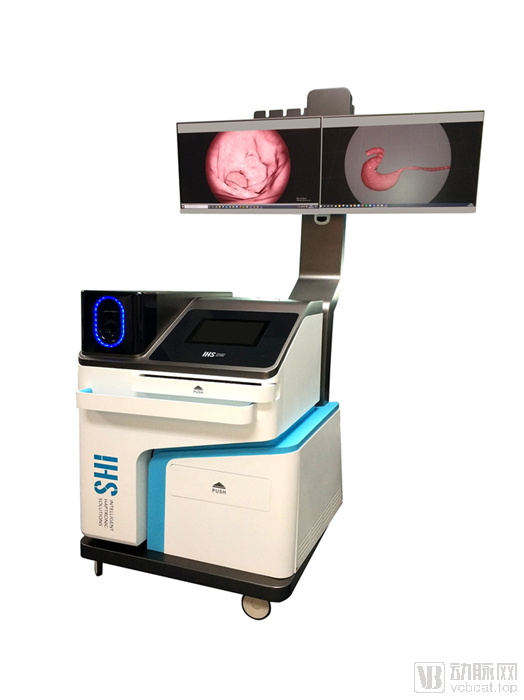
Physical Prototype of the IHS Digestive Endoscopic Surgical Training Robot
Leveraging cloud service platforms, top-secret data and algorithms—including medical pathology, imaging data, and intelligent analysis engines for surgical training—are stored in the cloud. When users insert the haptic handle into the instrument, they receive real-time force feedback, making the tactile sensation of contacting the gastrointestinal wall and lesions of the VR virtual patient closely resemble reality. Upon contact with the internal walls and lesions, the images undergo corresponding deformation, accompanied by appropriate sound effects.
“When medical students’ technical skills are rusty, it is inappropriate to perform endoscopy directly on real patients. Our virtual simulation system for surgical training can come in handy,” said Tang Zhouming.
He introduced that the endoscopic operation handle electromechanical system and the endoscopic human-machine interaction electromechanical system used in the IHS digestive endoscopy surgical training robot are independently developed. In addition to its excellent surgical operation capabilities, this product integrates teaching, scoring, and evaluation functions, enabling real-time human-machine interaction.
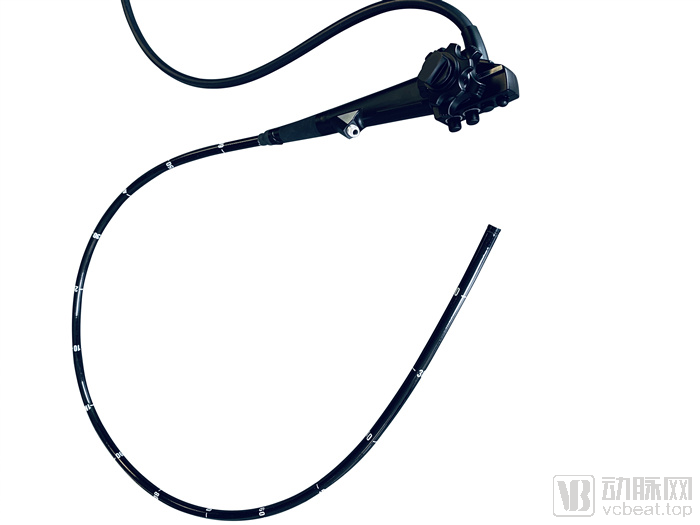
IHS Endoscopic Simulation Handle: Physical Product Image
Leveraging its superior product experience, IHS ZhiChu has already partnered with more than ten renowned Grade 3A hospitals in China and is scheduled to commence commercial operations this September.
Tang Zhouming told VCBeat that the current market size for virtual simulation-based surgical training in China has reached hundreds of billions of yuan, indicating broad market prospects. Moving forward, IHS Zhichu will continue to deepen its expertise in the field of digestive endoscopy while expanding its R&D efforts into other areas such as bronchoscopy and laparoscopy, thereby enriching its product pipeline.
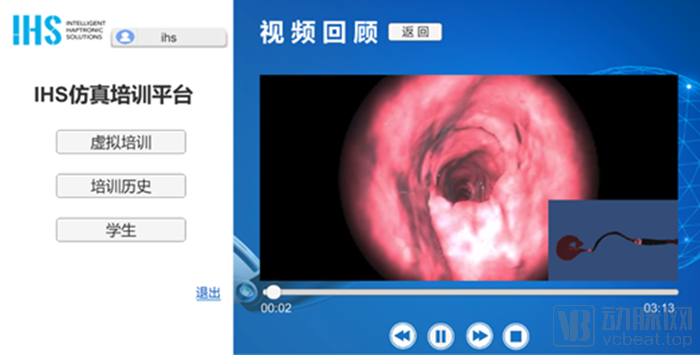
IHS Expert System Cloud Platform
Furthermore, the company will launch its Pre-A financing round this year, aiming to raise RMB 12 million. The funds will be allocated toward mass production of core products, research and development of new products, team expansion, and the expansion of marketing and sales channels.
“We hope that in the future, IHS ZhiChu will become a benchmark enterprise in the field of virtual simulation surgical training.” At the end of the exclusive interview, Tang Zhouming said.
About Yuanzhen Value Investment
Yuanzhen Value Investment was formally established in 2016, focusing on the discovery and investment of high-quality start-ups. Adhering to the core investment philosophy of “people-first,” Yuanzhen seeks out and nurtures China’s future outstanding entrepreneurs, helping them grow and realize value across personal, corporate, and societal dimensions. Yuanzhen Value Investment is committed to developing quantitative prediction models for projects, continuously exploring and practicing their application in the venture capital field, with the aim of establishing a standardized system for value investment in China.
About Hongtai Intelligent Manufacturing
Hongtai Intelligent Manufacturing was established in 2015. With the mission of advancing the national development strategy of “Made in China 2025,” it positions itself as a globally leading industrial service platform for intelligent manufacturing. The company has developed three core business segments—Hongtai Intelligent Manufacturing Factory, Hongtai Intelligent Manufacturing Community, and Hongtai Intelligent Manufacturing Fund—to build a comprehensive industrial service system that covers entire processes, all key factors, and the full lifecycle. It is dedicated to cultivating new types of intelligent terminals, promoting the transformation and upgrading of traditional manufacturing, and enhancing the international competitiveness of Chinese manufacturing. Its investment scope encompasses artificial intelligence, intelligent manufacturing, smart hardware, the Internet of Things (IoT), sensor technologies, and more.