

WinX Capital's Zou Guowen: Bridging Medical Innovators and Investors with Professionalism

WinX Capital
Investment Institutions in the Greater Health Field
Entrepreneurship is a journey with an uncertain fate.
Public data shows that approximately 1 million businesses fail in China each year, averaging two closures per minute. Among the more than 40 million small and medium-sized enterprises (SMEs) in China, fewer than 7% survive for more than five years, and fewer than 2% last longer than ten years.
To help every high-quality startup idea and team go further, a large amount of capital has flowed into the venture capital stage, using the power of capital to boost the growth of innovative enterprises. In such a market environment, a large number of FA (financial advisor) agencies have also begun to emerge.
FA is a “new type of investment bank,” whose core role is to provide third-party professional services for corporate financing and mergers and acquisitions. Financial advisors play a pivotal role in the course of enterprise development: for entrepreneurs, FAs can significantly enhance fundraising efficiency and help effectively refine their business models; for investors, FAs provide access to more high-quality projects and serve as an additional pair of eyes for gaining market insights.
In the field of medical innovation, how do financial advisors (FAs) evaluate healthcare investments? How do they coordinate between investment firms and startups? What role do they play in corporate growth? To address these questions, VCBeat (WeChat ID: vcbeat) conducted an exclusive interview with Dr. Zou Guowen, founder of WinX Capital, a premier FA firm specializing in the healthcare and life sciences sector.
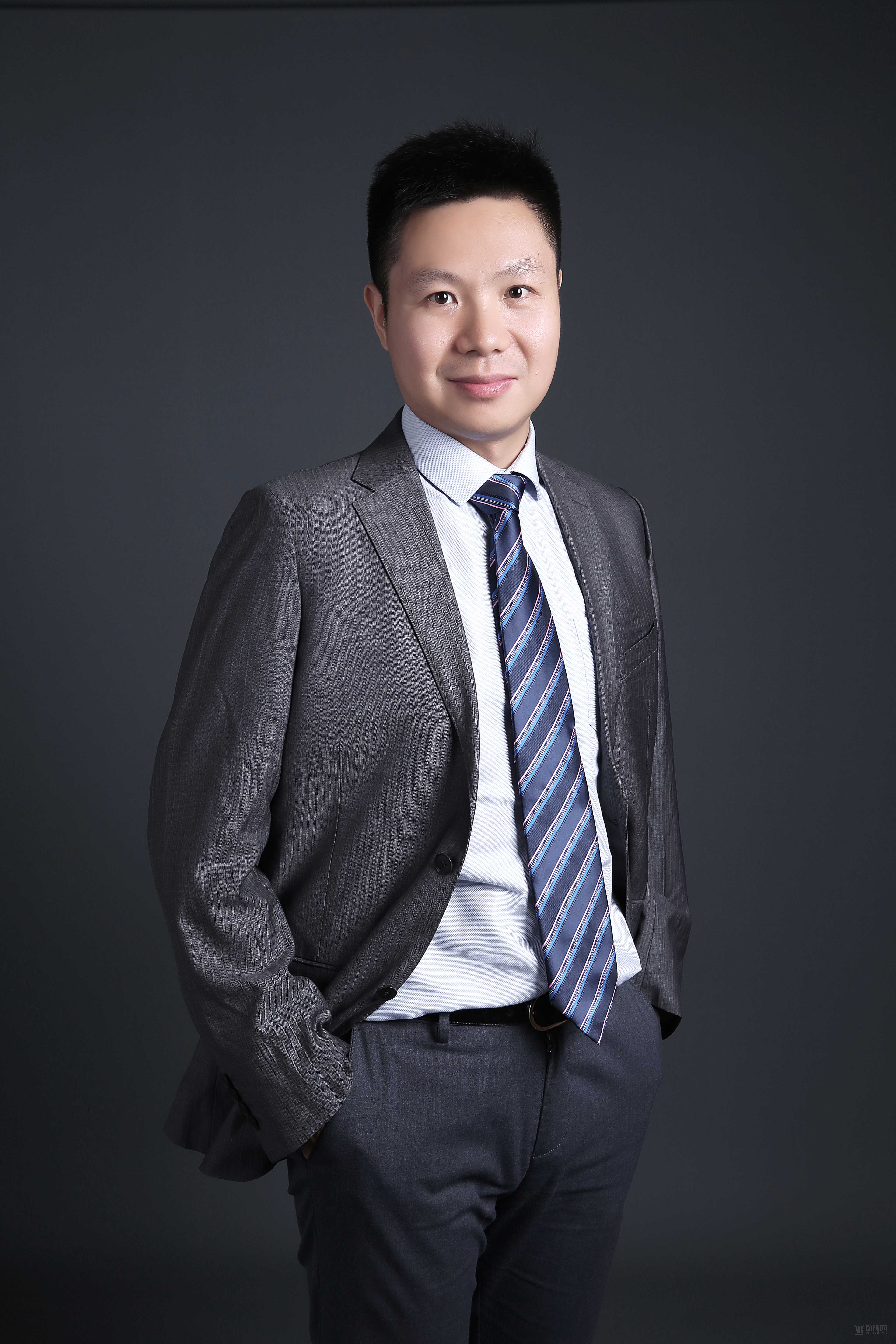
Dr. Zou Guowen, Founder of WinX Capital
Before founding WinX Capital, Dr. Zou Guowen had cultivated extensive expertise in the healthcare and venture capital sectors. From his tenure at Bayer Healthcare in Germany and Pfizer in the United States to leading investment and M&A initiatives in the broader health sector at Sanpower Group, each experience reinforced Dr. Zou’s conviction in the promise of medical technology: amidst the surge of emerging technologies, the landscape of the broader health industry is being fundamentally reshaped.
“Innovative healthcare enterprises are our primary focus,” Dr. Zou Guowen told VCBeat, noting that while innovation drives rapid industry advancement, it also entails high risks. “Every innovative company is walking a tightrope; at this stage, they require support and companionship from various stakeholders. Whether through government policy guidance, innovation incubators, or venture capital funds, these entities provide multidimensional support for the development of innovative enterprises. WinX Capital aims to assist them from the perspective of financial advisory services.”
Startup financing is a skill characterized by high learning costs and low frequency of use. Therefore, professional financial advisors must not only possess deep financial expertise but also have a thorough understanding and practical experience in the venture capital market. The founding team of WinX Capital includes five PhDs in Global Finance from the PBC School of Finance at Tsinghua University. Its frontline team members boast an average of over 10 years of experience in management, investment, and mergers and acquisitions (M&A). The founding team has cumulatively facilitated investment and M&A transactions exceeding RMB 30 billion, covering more than 3,000 active investment institutions and industrial groups. Leveraging extensive industry experience in the healthcare sector and the venture capital market, WinX Capital is well-versed in all stages of fund operations—fundraising, investing, managing, and exiting—as well as the mindset of investors. Additionally, the firm serves a substantial client base of enterprises in the health industry.
In Dr. Zou Guowen’s view, as a financial advisor (FA), professionalism is a core competency that WinX Capital highly values. This is primarily reflected in the comprehensiveness of knowledge. Specifically, when confronted with challenges, one must be aware of various solutions, such as understanding the healthcare sector, types of transaction structures, and the application of diverse financial instruments. “We are particularly concerned about ‘blind spots,’ meaning that certain details are entirely overlooked during execution, which significantly diminishes the quality of service provided to enterprises. Some of our projects involve extensive use of financial instruments; for instance, a single M&A deal may utilize convertible bonds, mezzanine financing, equity financing, bridge loans, and M&A loans. This places high demands on the comprehensiveness of our knowledge.”
The second aspect involves adopting a higher-level perspective in one’s thinking. When operating from this elevated vantage point, one can grasp the core essence amidst myriad complex and chaotic issues, thereby handling tasks with greater ease and even achieving what is known as “dimensionality reduction attack.” “This is a lesson I learned from my experience in the National Olympiad in Informatics. By our first year of high school, we had already completed the entire high school curriculum and even foundational university courses, making problem-solving exceptionally easy.”
The third aspect lies in continuous review and summarization. “Whether it involves projects handled by other financial advisors or other market deals, we consistently study classic cases,” stated Dr. Zou Guowen. The company boasts over 100 consultants, and the team conducts weekly training sessions, analyzing high-quality case studies from both the healthcare sector and other industries. For instance, regarding Ninebot’s listing on the STAR Market, WinX Capital invited the Investment Banking Division of Guotai Junan Securities to conduct an internal sharing session. “Other examples include our in-depth analysis of the ‘Three Kingdoms of Health Checkups’ (Ciming Health Checkup, iKang Healthcare Group, and Meinian Onehealth), Junshi Biosciences’ capital journey through the ‘NEEQ + H-share + STAR Market’ route, and Hillhouse Capital’s investment strategies.”
As a connector between enterprises and capital, WinX Capital is dedicated to helping companies formulate appropriate financing strategies and identify suitable resources, while assisting investment institutions in allocating capital rationally.
For corporate clients, WinX Capital typically works backward from the IPO to estimate the total capital required throughout the entire journey, determining the funding needs for each stage and structuring financing rounds to minimize equity dilution. “We refer to this as the ‘food in the bowl, cooking in the pot, and crops in the field’ strategy. This means that a company should maintain a certain level of cash reserves (food in the bowl); have potential investors already engaged while continuing to communicate with new ones to secure backup options (cooking in the pot); and plan for future growth (crops in the field). This approach ensures that emergencies do not disrupt the company’s development.”
For fund managers, WinX Capital begins by discussing investment strategies with the fund’s key partners. For instance, venture capital (VC) funds typically allocate 70–80% of their capital to early-stage investments, while the remaining 20–30% is directed toward growth-stage or later-stage opportunities. “When a fund’s investment period is nearing its end, we advise them to focus on later-stage projects. Conversely, if a VC fund has just been established, we may recommend early-stage deals. If a fund is about to launch a new fundraising round, we might suggest exiting some existing portfolio companies to improve their DPI (Distributed to Paid-In Capital),” said Dr. Zou Guowen. This approach not only facilitates financing for portfolio companies by introducing new investors but also enables earlier shareholders, whose funds are approaching the end of their investment cycles, to achieve exits, thereby creating a win-win outcome.
Take a high-quality medical device project served by WinX Capital as an example. Due to the pandemic this year, the company’s revenue was significantly impacted. The investment firm advised the company to lay off employees to reduce costs; otherwise, it would need to consider producing and selling protective supplies to improve cash flow. However, the founder, who highly values loyalty and personal relationships, was reluctant to proceed with layoffs. The continuous decline in revenue coupled with ongoing expenditures caused significant anxiety and pressure for both the founder and the investment firm, leading to conflicts between the two parties.
Guided by the founders’ reluctance to lay off staff and under pressure from cash flow constraints, WinX Capital’s approach is to help the company “increase revenue and reduce costs.” On the cost-cutting front, executive salaries are not reduced; however, only living allowances are issued initially, with the balance to be paid once the new round of financing is completed. For rank-and-file employees, base salaries are paid as usual, while bonuses are deferred. On the revenue-generation side, WinX Capital assists the company in accelerating the collection of accounts receivable from former agents, deeply aligning distributors’ interests with those of the company, and simultaneously helping the company launch a new round of financing.
Following a series of strategic initiatives, WinX Capital not only facilitated the introduction of new investors and secured low-interest, unsecured bank debt financing for the company, but also helped convert its distributors into shareholders, thereby achieving a high degree of interest alignment. Additionally, WinX Capital assisted the company in implementing an equity option incentive plan and recruited a senior executive to oversee marketing. As a result, the company’s cash flow improved, employee motivation increased, and shareholders expressed strong satisfaction.
The development of WinX Capital in recent years is, in essence, a story of growth amid the rising market recognition of specialized boutique financial advisors (FAs) and the rapid emergence of innovative healthcare enterprises.
“We aim to accompany enterprises from their seed stage to becoming towering trees, which is why many of our projects involve helping them secure round after round of financing.” In the view of Dr. Zou Guowen, going further on the path of innovation requires sufficient perseverance and patience, whether for financial advisors (FAs) or for startup companies.
“Our team adheres to the ‘PHD’ principle: P stands for Professional (professional competence), H for Hungry (Stay Hungry, Stay Foolish), and D for Determined (committed to delivering on our mission). Only in this way can we earn our clients’ genuine trust.” Accordingly, WinX Capital strictly prohibits employees from accepting private payments from clients, engaging in outside work, or deceiving investors or clients.
Regarding the future growth potential of healthcare innovation enterprises, Dr. Zou Guowen believes that two key factors must be considered. First, the founding team should possess a broad vision and a strong desire for success. Second, from a project perspective, the chosen track should be promising—characterized by a large market size (“big water, big fish”)—and the enterprise should aim to become a market leader. “We assess the development potential of the enterprise’s track over the next 5–10 years, evaluating both the total addressable market and the height of entry barriers. Even if the market size of a particular track is relatively small, I believe that companies can still achieve substantial profits if they benefit from high barriers to entry.”
In his advice to healthcare startups, Dr. Zou Guowen highlighted four key points to note.
First, closely monitor cash flow, the upstream and downstream segments of the industry chain, and competitors. “One company, whose downstream clients are health checkup institutions, was severely impacted by the COVID-19 pandemic this year. The significant disruption to these institutions led to a sharp decline in sales, with revenue plummeting by 80%.” Therefore, safeguarding cash flow stability and continuously observing dynamics across the supply chain are crucial for enabling timely corporate adjustments.
Second, repair the roof when it’s sunny—plan ahead. Companies should proactively engage with investment institutions and even pursue financing while their cash flow is healthy, while also gaining a solid understanding of equity financing, debt financing, and other innovative financing models. “This not only helps maintain ongoing dialogue with capital providers but also offers insight into their perspectives on your project, enabling the company to quickly identify the optimal solution when facing cash flow challenges.”
Third, when selecting a financial advisor (FA), it is advisable not to prioritize low-cost options, as low prices often correlate with subpar quality. Fueled by the booming venture capital and private equity environment several years ago, countless FA firms were established, leading to market chaos: rapid growth and high enthusiasm resulted in intermediation and marketing-oriented practices overshadowing the core consulting and advisory services that FAs should provide. For companies, engaging a low-quality FA can lead to prolonged fundraising processes or even complete failure to secure funding. This is particularly critical because fundraising typically occurs when companies are in urgent need of capital.
Fourth, one should regularly pay respects to the “bodhisattvas” so that help will be available when it matters most. In addition to maintaining frequent communication with customers, company founders must also cultivate strong relationships with investors and shareholders. “Some founders are only acquainted with the business leads at firms that have invested in their company, while remaining unfamiliar with the partners at those investment institutions. This is not conducive to the company’s development. If founders need to focus their time on technology, product development, and other areas during the early stages, they may consider hiring a dedicated person to handle liaison with investment institutions.”
In recent years, the surge in bandwagon and VC-driven startups has led to an increase in the total number of ventures but a decline in their quality, resulting in an increasingly challenging industry ecosystem. However, Dr. Zou Guowen believes that compared to the frenzy of projects emerging during the capital boom, the gradually rationalizing venture capital market may better highlight the value of a high-quality financial advisor (FA). “WinX Capital has always adhered to professionalism, focusing vertically on the healthcare and wellness sector, while continuously delving into the core needs of both enterprises and investors. This is where the greatest opportunity lies.”