

Huami Partners with Dr. Zhong Nanshan's Team to Launch Post-COVID-19 Patient Management Initiative
Since the outbreak of the COVID-19 pandemic, both public health and socioeconomic development have been significantly impacted. As the epidemic in China has gradually come under control, how to effectively conduct post-discharge follow-up and rehabilitation management for COVID-19 patients has become an urgent challenge.
On July 15, in response to the requirements of relevant national authorities, the Wrist-worn Smart Wearable Joint Laboratory—co-established by Huami Technology (NYSE: HMI) and Academician Zhong Nanshan’s team from the First Affiliated Hospital of Guangzhou Medical University/Guangzhou Institute of Respiratory Health/National Clinical Research Center for Respiratory Diseases, together with the Guangdong Nanshan Medical Innovation Research Institute—was officially unveiled and launched at the First Affiliated Hospital of Guangzhou Medical University.
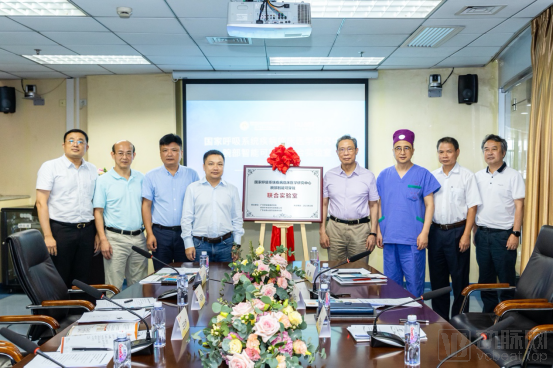
The three parties had previously signed a formal framework cooperation agreement. Leveraging Huami Technology’s expertise in wrist-worn wearable technology and artificial intelligence algorithms, and utilizing the National Clinical Research Center for Respiratory Diseases’ big data platform for respiratory health, the joint laboratory will collaboratively carry out the “Post-Discharge Follow-up and Rehabilitation Management for COVID-19 Patients” project. This initiative will provide comprehensive management of exercise, sleep, heart rate, and rehabilitation prognosis for patients who voluntarily participate. In addition, special projects will be established to conduct joint research and development on predictive modeling and early warning systems for epidemic diseases.
“Patients often describe their symptoms based on subjective feelings, but Huami’s smart wearable devices can provide corresponding reference data through monitoring,” stated Academician Zhong Nanshan. He pointed out that neglecting early warning signs is a serious issue in respiratory diseases. During the COVID-19 pandemic, many doctors experienced sudden deterioration of their condition, including a significant number of asymptomatic cases. The early collection of substantial effective data and timely intervention would play a crucial role in improving patient outcomes. Furthermore, post-discharge follow-up and rehabilitation for COVID-19 patients remain formidable tasks. In this regard, Huami’s research and exploration in related products are highly valuable. It is hoped that, through this collaboration, deeper advancements in respiratory health will be achieved by leveraging big data and artificial intelligence technologies.
Huang Wang, Founder, Chairman, and CEO of Huami Technology, stated that the company aims to leverage its accumulated expertise in smart wearable technology, health big data, and artificial intelligence algorithms. By adopting a collaborative model involving medical institutions, research and development units, and enterprises (“medical-research-enterprise” collaboration), Huami seeks to jointly advance applied research and the translation of achievements for smart wearable products in respiratory health management, thereby contributing to medical research and clinical diagnosis and treatment in the field of respiratory health.

It is understood that, at the current stage, the joint laboratory will leverage intelligent wearable devices to conduct follow-up projects tracking the recovery of COVID-19 patients. In accordance with the work guidelines issued by the National Health Commission, the laboratory will collaborate to ensure effective post-discharge follow-up, rehabilitation, and health management for recovered COVID-19 patients, thereby achieving whole-process management and better promoting patient recovery.
In the medium to long term, the joint laboratory will conduct collaborative research on predicting epidemics of respiratory diseases, early warning systems, management of chronic respiratory diseases, clinical research on obstructive sleep apnea-hypopnea syndrome (OSAHS), and large-scale screening. In the future, it will further explore the translation of industry-academia-research achievements, such as developing wearable-based respiratory therapy devices, intelligent sensing and recognition equipment, and smart home health monitoring devices for the elderly and individuals with chronic conditions.
Guangzhou Institute of Respiratory Health was established in 1979. Under the leadership of its pioneering figure, Academician Zhong Nanshan, it has strategically positioned itself to address major national needs in respiratory diseases and target the frontiers of clinical and basic research in the field internationally. The institute has established national-level scientific research platforms, including the National Clinical Research Center for Respiratory Diseases, the State Key Laboratory of Respiratory Disease, and the National Clinical Drug Trial Institution (Respiratory Specialty). It is committed to becoming a nationally leading and world-class center for the clinical diagnosis and treatment of complex and critical respiratory diseases, a center for clinical and basic research on the prevention and control of respiratory diseases, a center for teaching and talent development in respiratory disease prevention and control, and a center for the translation of research achievements in respiratory disease prevention and control into industrial applications.
Huami Technology, founded in 2013, is a cloud-based health service provider with globally leading smart wearable technology. Its cumulative shipments of smart devices have exceeded 100 million units, and it possesses vast amounts of sports and health data along with extensive experience in big data analytics. Guided by its mission of “Connecting Health with Technology,” the company has consistently focused on research at the forefront of technological health innovations. Since the outbreak of the COVID-19 pandemic, Huami Technology has not only donated supplies and funds totaling RMB 11.5 million but also actively leveraged its technological and innovative strengths to provide targeted support in the fight against the epidemic. It launched the “Mi Move Health Assistant” mini-program, which offers a self-assessment tool for COVID-19 symptoms, helping the public identify risks and take preventive measures early, while providing users with specific response strategies and recommendations.