

Dingchi Bio: Two Core Technological Advantages Addressing R&D and Manufacturing Pain Points in the Veterinary Vaccine Industry
China, with approximately 7% of the world’s freshwater resources, 8% of its arable land, and 12% of its grasslands, sustains 50% of the global pig population, 10% of cattle, 20% of sheep, 30% of chickens, and 80% of freshwater aquatic organisms. The livestock stocking density is approximately 30 large animal units per square kilometer, which is 2.4 times the global average. Meanwhile, the scale and intensification of animal husbandry continue to increase.
Meanwhile, China has long faced a severe situation of animal epidemics due to the wide variety of animal diseases, complex pathogens, high stocking densities, and large-scale production. According to statistics, direct economic losses caused by livestock and poultry diseases amount to RMB 50 billion per year, while losses resulting from reduced production performance due to these diseases are 5–10 times higher than the direct losses.
Given the significant losses caused by infectious diseases and the substantial cost-effectiveness of vaccines, large-scale vaccination has become a widely adopted disease control model in the livestock industry. Meanwhile, for animal vaccine manufacturers, intensive farming practices and repeated outbreaks of animal epidemics under continuous immunization pressure have, to some extent, accelerated viral mutation. This necessitates the ongoing development of vaccines targeting new subtypes to achieve improved immunogenicity and efficacy.
Beijing Dingchi Biotechnology Co., Ltd. (hereinafter referred to as “vbiosci”) has established a comprehensive research platform for novel vaccine processes, an antibody drug research platform, and a pilot-scale expression platform, leveraging the extensive R&D experience accumulated by its technical team over many years. Additionally, the company has forged collaborative partnerships with numerous enterprises and research institutions across China.
Dingchi Biologics’ independently developed, domestically pioneering “third-generation” fully suspended culture technology and its leading gene-engineered vaccine technology have addressed key pain points in the veterinary vaccine industry, including the low efficiency and high costs of traditional roller bottle culture, significant safety risks associated with inactivated viral vaccines, and difficulties in quality control.
Dr. Ma Ningning, Founder and Chief Scientist of vbiosci, has devoted over two decades to the fields of vaccines and antibodies. He previously held positions at Merck & Co. and Pfizer, two leading innovators in pharmaceutical R&D, and was among the youngest recipients of Pfizer’s Achievement Award.
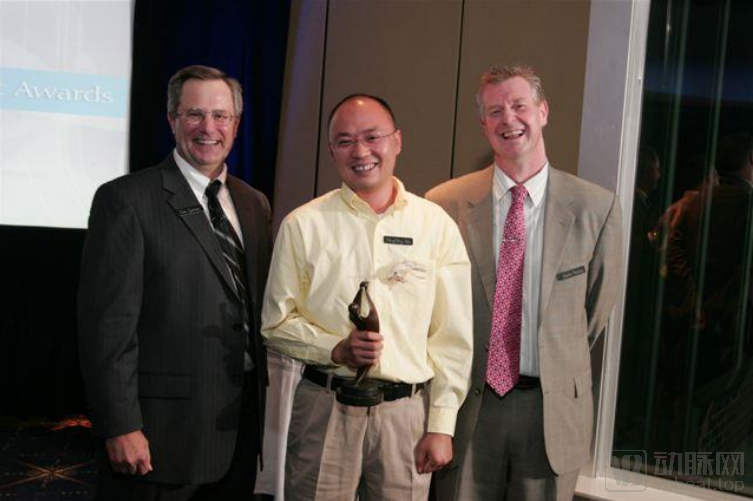
Dr. Ma Ningning, Founder of vbiosci
Dr. Ma Ningning told VCBeat, “Human and veterinary biological products are fundamentally similar in nature; therefore, veterinary biologicals constitute a part of the R&D and production portfolios of many overseas pharmaceutical companies. The largest international animal health enterprises are the animal health divisions or subsidiaries of major pharmaceutical firms such as Pfizer, Boehringer Ingelheim, Merck & Co., and Eli Lilly. In China, however, veterinary biologicals represent a relatively independent sector, leading to certain gaps between domestic and international products in terms of quality and R&D cycles. This disparity creates significant room for development.”
After returning to China in 2009, Dr. Ma Ningning continued his research and development of human vaccines and antibodies while also exploring opportunities for veterinary vaccine R&D. Another partner at vbiosci is Dr. Zheng Jie, a senior veterinarian who previously served as R&D Director at several veterinary vaccine companies, including Huadu Shihua. He is also an expert member of the expert pools of Beijing Municipality, the Ministry of Science and Technology, and Shandong Province, possessing in-depth and comprehensive knowledge of veterinary biological products and the domestic market landscape.
Since its establishment in 2016, vbiosci has been operating for four years and has secured more than 20 patents. In 2019, vbiosci obtained clinical trial approval for its Newcastle Disease and Avian Influenza bivalent vaccine, with plans to apply for new veterinary drug registration in 2021. This marks vbiosci’s first clinical trial approval, representing its initial success in translating technology into a product for clinical research.
Dr. Zheng Jie explained that there are two major challenges in the development of animal vaccines: first, the need for adherent cell growth significantly limits production efficiency; second, the use of fetal bovine serum (FBS) in cell culture media not only increases costs but also causes strong adverse immune reactions in animals after injection due to the high protein content in the serum.
Currently, the first- and second-generation virus amplification systems commonly used in domestic animal vaccine development have failed to completely resolve these two challenging issues.
The first-generation amplification system employs roller bottle culture, enabling cells to adhere and grow on the inner surface of the bottles. This system is difficult to automate, resulting in production processes that are predominantly manual and artisanal in nature.
The second-generation system employs microcarriers as a substrate for cell attachment, enabling cell proliferation within bioreactors. Although this approach increases the surface area available for cell attachment per unit volume of culture medium, thereby scaling up production, it still necessitates the use of high-concentration serum. Consequently, this results in high production costs and limited controllability over product quality.
vbiosci’s domestically pioneered “third-generation” fully suspended production technology, independently developed over three years, comprises three components: screening and engineering of suspension cells, development and manufacturing of specialized culture media, and scale-up of the associated production process.
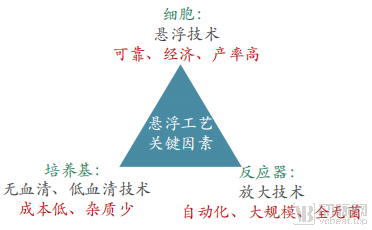
Suspension culture technology enables cells to grow dispersed in the culture medium rather than adhering to surfaces, significantly enhancing production efficiency while offering a uniform culture environment that is simple and controllable. Low-serum or serum-free culture conditions not only reduce production costs but also mitigate risks associated with serum use, such as allergic reactions and challenges in maintaining product consistency.
Currently, vbiosci's fully suspended culture technology has been licensed to more than 10 veterinary vaccine enterprises in China for the research and development and production of new veterinary vaccines.
Another major technological advantage of vbiosci is the development of genetically engineered vaccines, with its core technologies including subunit vaccine technology and virus-like particle (VLP) technology.
Subunit vaccines often rely on single-target activation of the immune system. In contrast, virus-like particles (VLPs) mimic the structural composition of viral nucleocapsid proteins, stimulating B cells through multiple targets and thereby eliciting a stronger immune response. vbiosci’s VLP assembly technology employs scaffold-assisted or intracellularly induced self-assembly methods to obtain intact VLP structures.
By utilizing VPL to simulate viral structures, gene-engineered vaccines eliminate the risks of viral shedding or reversion to virulence associated with traditional attenuated or inactivated virus vaccines. Therefore, safety represents the most significant advantage of vbiosci’s gene-engineered vaccine R&D technology.
Furthermore, compared with lower-level protein expression systems such as Escherichia coli and yeast, vbiosci employs the eukaryotic CHO cell line and the baculovirus-insect cell expression system for antigen production. These systems more closely mimic the native expression state of higher organisms, enabling superior glycosylation modifications and proper antigen structural folding. Compared with monoclonal antibodies, subunit vaccines elicit a stronger immune response and exhibit enhanced antigen recognition capability.
When discussing the future development trends of the vaccine industry, Dr. Zheng stated firmly, “I believe it is specialization! There must be high-quality products introduced to the market to meet the demands of China’s livestock farming industry, which means that veterinary vaccine enterprises need to continuously strengthen their R&D capabilities. vbiosci already has certain technological advantages; therefore, our next goal is to complete the construction of our production base and sales team.”
Dr. Ma disclosed to VCBeat that vbiosci completed its angel and Pre-A financing rounds in 2016 and 2019, respectively, and is currently undergoing Series A financing. In addition to the novel influenza bivalent vaccine for which it has already obtained clinical trial approval, vbiosci expects to submit clinical trial applications for four vaccine candidates this year, and five more in 2021.
In 2014, the output value of veterinary vaccines in China already surpassed that of human vaccines. Within the veterinary vaccine sector, poultry and swine vaccines accounted for 76.7% of total domestic sales. In 2021, vbiosci’s 10 clinical pipeline candidates were positioned to cover most of the top seven major products for these two primary species, with the corresponding product sales reaching RMB 10 billion in 2021.
In addition, vbiosci plans to build a vaccine production base covering 50 mu in Zhuji City, Zhejiang Province, with the first phase including six production lines. Construction is scheduled to officially commence this July. The facility is expected to begin production after completing acceptance of the animal housing units and static GMP inspection by the end of 2021, and to start sales of vaccine products following the final completion of dynamic GMP inspection in July 2022.