

Exclusive Interview with Mou Jian of Sipai Pharmacy: Specialty Pharmacies Should Extend Pharma Companies' Professional Services

Medbanks
Medical Health Management Platform
As of July 19, 2020, SiPharm Pharmacy had been in formal operation for three full years. At the outset of its operations, Mou Jian, the head of SiPharm Pharmacy, pointed out that for DTP (Direct-to-Patient) pharmacies, beyond the capability to provide new and specialized drugs and the coverage of retail and logistics distribution networks, professional service capabilities must be regarded as the core of the core, with comprehensive strategic arrangements centered around this focus.
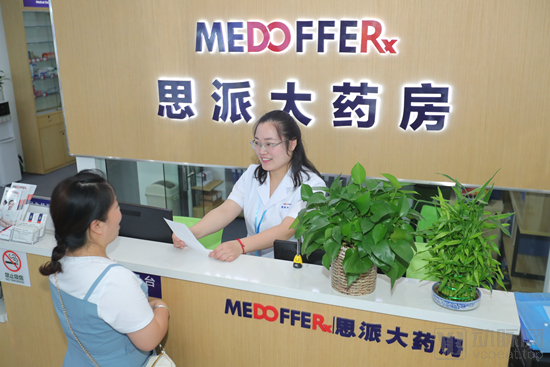
Interior of Medbanks Pharmacy. Image source: Provided by the interviewee
According to Mou Jian’s vision, Medbanks Pharmacy should, on the one hand, emphasize standardization by implementing uniform services in every detail, ensuring efficient execution and nationwide replication to maintain brand consistency. On the other hand, it should focus on service delivery by providing doctors with continuous patient follow-up, ensuring the supply of new and specialty drugs along with pharmaceutical care services for patients, and offering market feedback to pharmaceutical companies, thereby establishing its core competitiveness.
Over the past three years, as a wave of policies—including the separation of prescribing from dispensing, the “two-invoice system,” the “4+7” centralized procurement pilot, zero markups on pharmaceuticals, the elimination of drug-sales-to-revenue ratios, and prohibitions on hospitals restricting outflow of prescriptions—were intensively introduced, the DTP (Direct-to-Patient) pharmacy model, which directly links pharmaceutical companies with patients, has gained significant momentum. Its market size has grown from over RMB 10 billion to nearly RMB 100 billion. At the three-year milestone of its operation, what has Mou Jian and his team at Sifang Pharmacy achieved? What insights have they gained? Recently, VCBeat conducted an exclusive interview with him.
In July 2017, the first Sipei Pharmacy opened in Kunming, initially offering only one new specialty drug for sale.
Prior to this, Mou Jian and his team conducted over two years of market research and operational planning. At its inception, Medbanks Pharmacy strictly adhered to regulations governing pharmacy operations and pharmaceutical quality management, established comprehensive operational standards, and collaborated with KPMG to develop professional service standards for specialty drug pharmacies, encompassing store operation standards, pharmaceutical care service standards, and patient management standards.
At that time, large pharmaceutical distributors, listed private pharmacy chains, and pharmaceutical e-commerce platforms had already begun to establish their presence in the DTP (Direct-to-Patient) pharmacy sector. Leveraging their integrated wholesale and retail sales advantages, brand recognition and geographic benefits from chain operations, or robust logistics infrastructure, these players rapidly built nationwide DTP pharmacy networks.
As a latecomer, Medbanks Pharmacy entered the market by focusing on professional service capabilities and continuously surpassing expectations. Its operational capabilities have successively met the standards set by industry associations for retail pharmacies dispensing medications for special diseases, as well as the standards of pharmaceutical companies and charitable foundations.
Medbanks Group, the parent company of Medbanks Pharmacy, is a medical and healthcare service platform focused on patients with special diseases, which naturally imbues it with a strong healthcare service DNA. Based on this, Medbanks Pharmacy has gradually developed distinctive features that set it apart from other DTP (Direct-to-Patient) pharmacies in its subsequent operations.
For example, Medbanks Pharmacy has established an independent medical department to design patient follow-up protocols for the introduction of its specialty drug products, thereby transcending traditional perceptions of professional pharmaceutical services provided by pharmacies. Furthermore, Medbanks Pharmacy assigns nearly three licensed pharmacists per store on average to implement whole-course patient management, setting a new industry benchmark. In addition, Medbanks Academy has developed a Level IV training system specifically for pharmacists practicing at Medbanks Pharmacy and launched an internal certification program for Pharmaceutical Care Technicians (PCT). The patient management team also regularly transmits patient follow-up reports to specialists, collaborating with them to enhance the quality of patient care.
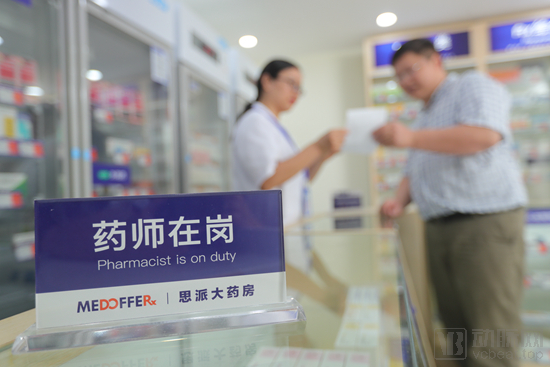
Interior of Medbanks Pharmacy. Image source: Provided by the interviewee
In its third year of operations, Medbanks Pharmacy has partnered with over 150 pharmaceutical companies to supply more than 260 specialty drug products. By delivering standardized services and leveraging a professional patient management system, it has earned the trust and support of upstream pharmaceutical partners. Meanwhile, Medbanks Pharmacy collaborates with charitable foundations across China; for instance, in partnership with the Primary Health Care Foundation, it jointly launched the “Key to Life” volunteer service program, enabling patients to better access charity assistance-related services.
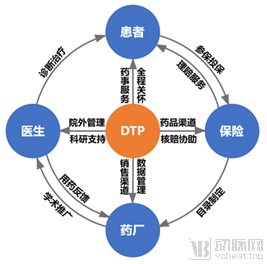
Medbanks Pharmacy as a Physical Hub
Mou Jian told VCBeat that professional pharmacies should serve as an extension of pharmaceutical companies’ specialized services. Medbanks Pharmacy is not only a retail pharmacy specializing in specialty drugs, but also a pivotal hub connecting doctors, patients, pharmaceutical companies, and insurers externally, while internally serving as a localized physical site for multi-business operations, including real-world studies, SMO (Site Management Organization) services, innovative payment solutions, and internet hospital services.
Unlike traditional retail pharmacies, Direct-to-Patient (DTP) pharmacies are not merely simple channel endpoints; they serve as platform-based entities connecting pharmaceutical manufacturers, hospitals, and patients. They emphasize meeting the needs of pharmaceutical companies (for commercial channel management and drug supply), hospitals (for accommodating prescription outflows and assuming medication management responsibilities), and patients (for convenient access to medications along with professional medication guidance services). Against the backdrop of prescription outflows, the accelerated entry of new global specialty drugs into the domestic market, expedited approval of innovative drugs, and centralized drug procurement, DTP pharmacies face significant opportunities for development.
Long before the establishment of Medbanks Pharmacy, industry analysts had pointed out that with the separation of prescribing and dispensing, DTP (Direct-to-Patient) pharmacies would absorb a significant volume of prescriptions flowing out of hospitals. Leveraging their professional advantages, DTP pharmacies primarily specialize in novel and specialty drugs for oncology, hepatitis C, and autoimmune diseases. They focus on special chronic conditions and emphasize building long-term patient loyalty through specialized services. Based on the domestic prescription drug market, which is valued in the trillions, the ultimate market size for DTP pharmacies could exceed hundreds of billions.
In fact, with the advancement of drug review and approval system reforms (such as the consistency evaluation of therapeutic efficacy, the priority review system, and the reform of clinical trial filing), innovative drugs have risen rapidly, providing DTP pharmacies with broader development opportunities.
In terms of payment innovation, the diversification of medical insurance models—such as the rapid development of critical illness insurance and commercial health insurance—has increased patients’ ability to pay for innovative specialty drugs. Meanwhile, the advancement of internet healthcare policies has created opportunities for the growth of DTP (Direct-to-Patient) pharmacies.
Mou Jian pointed out that over the past three years, DTP pharmacies with diverse backgrounds have rapidly expanded and developed amid the reshaping of drug distribution at the terminal level and the broader trend of retail outlets absorbing prescriptions flowing out from hospitals. A large number of specialty drug pharmacies, entering the market with a focus on professional services and highlighting their advantages in innovative payment models and service offerings, have emerged as a powerful new force. “Here, we witness significant changes and progress in the industry: more companies are entering the market, more advantages are being integrated, and more innovations are taking place.”
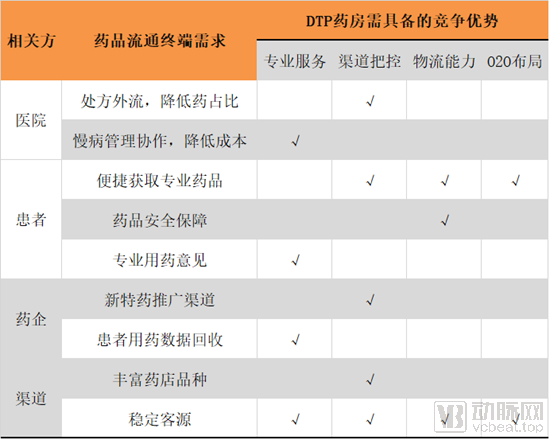
DTP Pharmacy Capability Dimensions (Data Source: Ministry of Human Resources and Social Security, Ping An Securities)
However, the aforementioned industry analysts also believe that whether the DTP model can truly stand out depends on its ability to genuinely address pain points in key areas such as professional services, channel control, logistics capabilities, and future O2O layout.
“China’s DTP pharmacies will undergo phased development. Compared with the developmental stages of specialty pharmacies in developed countries, China’s sector is still in a relatively early stage. How to gain market share by returning to professional services is a common goal for every DTP pharmacy,” emphasized Mou Jian. “What we need to jointly focus on is that, under the benefits of prescription outflow, DTP pharmacies are undertaking an increasing volume of prescriptions and patient services. While winning market share, if professional services are neglected, this will become the biggest bottleneck to industry progress.”
During the first three years of operation, Medbanks Pharmacy has consistently structured its strategy around five dimensions of accessibility: medication accessibility, service accessibility, payment accessibility, data accessibility, and patient education accessibility. Looking ahead, Medbanks Pharmacy will continue to align closely with policy developments and comprehensively advance its qualifications in distribution channels, medical insurance reimbursement, and professional certifications.
“As the market share of commercial medical insurance in China continues to grow, covering an increasingly large population, Medbanks Pharmacy places greater emphasis on continuously building a service hub that connects patients, physicians, pharmaceutical companies, and insurers, while also cultivating and supplying more professional talent to the DTP (Direct-to-Patient) industry.” Facing unknown challenges, Mou Jian, with his extensive practical experience, appears resolute.