

Thoven Builds China's First AI-Powered Digital Therapeutic Platform Targeting the Brain Health Market Gap
In his memoir, An Alzheimer’s Patient’s Memoir, Greg O’Brien writes, “There is an eraser in my mind. Does losing one’s memory mean losing one’s soul?” While Alzheimer’s disease does not strip patients of their soul, it leads to progressive cognitive decline, memory impairment, and changes in personality and behavior, ultimately leaving them stranded on an “alien planet” marked by aphasia and agnosia. The soul remains alive, yet accompanied only by loneliness.
According to a report released by Alzheimer’s Disease International, the global number of people living with Alzheimer’s disease was approximately 46 million in 2015. The number of patients is projected to rise to 75 million by 2030 and 131.5 million by 2050. Among them,China has the highest number of patients, with approximately 15 million recorded cases of Alzheimer's disease.. Meanwhile,In China, the consultation rate for patients with mild symptoms is only 14%, while that for patients with severe dementia is merely 34%. Among Chinese patients with Alzheimer’s disease, 49% of cases are mistaken for natural aging, only 21% receive standardized diagnoses, and 19.6% undergo pharmacological treatment.
NeedleIn response to the long latency period and slow progression of Alzheimer’s disease, the Shanghai Tehuofen team has proposed a three-dimensional prevention and control strategy encompassing screening, prevention, and treatment. Building on this framework, they have developed related digital therapeutics to enable early intervention in Alzheimer’s disease and delay its onset and progression.
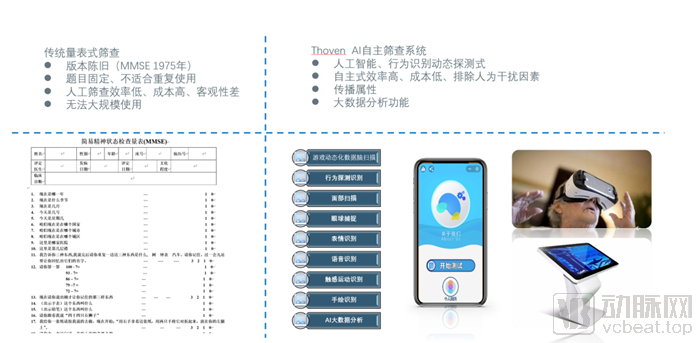
Tehuofen AI Intelligent Screening System
Shanghai Tehuofen Intelligent Technology Co., Ltd. (Thoven), established in 2020, is a specialized digital therapeutics developer dedicated to improving brain health. The company has completed its seed funding round at a valuation of RMB 25 million and is currently planning a new round of financing.
Due to the extreme complexity of the human brain’s mechanisms, the pathogenesis of Alzheimer’s disease remains unclear; consequently, the development of chemical drugs has progressed slowly, and the therapeutic efficacy of existing pharmacological treatments is extremely limited.
In 2018, the United States released a report titled “NEW Alzheimer’s Association Report Reveals Sharp Increases in Alzheimer’s Prevalence, Deaths and Cost of Care,” which showed thatDiagnosing Alzheimer’s disease at the early stage of mild cognitive impairment and implementing effective cognitive training can delay disease progression and reduce costs, underscoring the importance of early intervention for Alzheimer’s disease.。
Does the identification of effective preventive measures mean that the therapeutic challenges of Alzheimer’s disease have been resolved? The answer is no.Traditional medical screening scales suffer from low efficiency, low accuracy, and a lack of cross-sectional and longitudinal comparisons.. Specifically, screening methods based on traditional medical scales struggle to conduct large-scale disease screening within a short timeframe, resulting in low efficiency. The manual-dominated approach is prone to low accuracy in screening outcomes due to subjective judgments based on individual experience and errors in time estimation. Meanwhile, paper-based scale screening presents challenges in collecting patient data.China currently faces severe medical data silos, with information not yet effectively integrated, making in-depth cross-sectional and longitudinal comparison of patient data a major challenge.
During the Tehuofen team's survey of most regions in China, it was found thatCurrently, there is still a high rate of missed diagnoses for Alzheimer's disease.. Du Yijie and Peng Jianhong, the founders of Tehuofen, believe thatThe high rate of missed diagnoses is primarily due to the public’s low awareness of Alzheimer’s disease and the subtle nature of its early symptoms.。
In response to the aforementioned issues,Shanghai Tehuofen Intelligent Technology Co., Ltd. has integrated artificial intelligence, big data analytics, and vital sign acquisition and recognition systems to co-develop a game-based AI screening digital therapeutic system with experts in brain science and medicine. This system evaluates multiple cognitive dimensions, including memory, attention, calculation ability, and orientation. By leveraging AI and big data analytics, it establishes dynamic assessment scales to enhance the efficiency of Alzheimer’s disease screening and improve the precision of data and result analysis. The incorporation of positioning systems introduces a new “geospatial” dimension to scientific research on Alzheimer’s disease. Furthermore, by importing multi-dimensional vital sign data through open peripheral interfaces, the system breaks the limitations of traditional closed screening frameworks. Additionally, through deep self-learning capabilities of its AI engine, the system enables intelligent disease diagnosis.。
Leveraging the internet-based sharing and dissemination capabilities of AI screening systems, the reach of the Alzheimer’s AI self-screening system has been effectively expanded. This makes it possible to rapidly collect screening data from hundreds of millions of users, thereby addressing data interoperability challenges while providing robust quantitative scientific evidence for further research on psychosocial and cognitive intervention techniques for middle-aged and elderly populations, as well as for the prevention of common psychological disorders.。
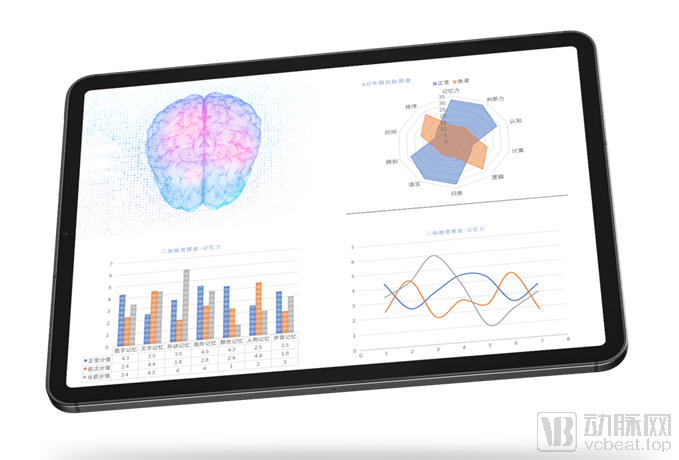
Schematic Diagram of the Tehuofen Data Analysis System
Can video game-based screening and treatment models truly achieve the prevention and control of brain diseases? Many may question this. In fact, a 10-year longitudinal study conducted by the University of South Florida, which tracked and analyzed 2,832 participants, “ACTIVE” was found in,Scientific cognitive games (cognitive speed training, memory training, and comprehension training) can significantly reduce the risk of individual cognitive decline or dementia by up to 50%.。
Brain science-based cognitive games leverage AI-driven adaptive algorithms to integrate auditory, visual, physical, and immersive stimuli into the brain’s neurofeedback loops. These targeted stimuli trigger robust biochemical reactions in the brain, promoting the growth of dendrites and axons in neurons within specific regions such as the prefrontal cortex and hippocampus, thereby forming new neural networks through enhanced neuronal connectivity.
In June this year, the FDA granted its first approval for EndeavorRx, a video game-based digital therapeutic for treating pediatric attention-deficit/hyperactivity disorder (ADHD), marking a milestone in the advancement of the digital therapeutics sector. As of February 2020, total disclosed financing in the global digital health field had reached approximately $1.081 billion.
Tehuofen expects to conduct clinical trials for its first AI screening system product by the end of this year, while simultaneously launching dynamic assessment scales via soft-launch channels such as WeChat mini-programs, H5 web pages, and mobile apps, thereby enabling users to perform self-screening and data analysis online.Meanwhile,The first digital therapeutic for Alzheimer’s disease is scheduled for launch in 2021. This digital therapeutic repairs and reconstructs neurons in the corresponding functional brain regions through functional training across dozens of brain dimensions.. Following rigorous clinical trials and regulatory approval for market launch, this digital therapeutic will provide a novel and effective treatment option for Alzheimer’s patients in China.
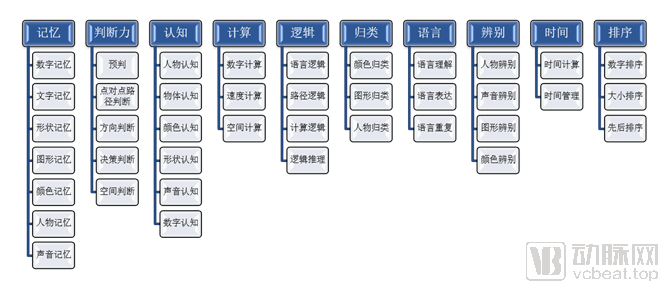
Tehuofen AD (Alzheimer's) Digital Therapeutic Functional Dimensions
Du Yijie has worked in the internet and financial investment sectors and founded a recruitment website, but neuroscience has always been his enduring passion. Peng Jianhong has successively served as the first product manager for 360’s antivirus products, founder of Leleda Company, product partner at “Village Secretary,” a product under Chunyu Doctor (an internet healthcare company), and creative lead for key game partnership teams at Tencent Interactive Entertainment, where he spearheaded multiple internet product initiatives.
“The so-called long goodbye is a torment for patients and their families.”
Du Yijie and Peng Jianhong met after enduring a long farewell to their family members. This prolonged farewell madeThey are determined to venture into the field of brain science to seek more effective treatments for Alzheimer’s disease and other neurological disorders.. AndPast experience in the internet industry has also laid the foundation for Tehuofen’s AI screening digital therapeutic system and its “Internet + Medicine” model.。
Peng Jianhong and Du Yijie told VCBeat that the desire to solve the treatment challenges of Alzheimer’s disease became a major pillar supporting the establishment of the Tehuofen team.
Driven by a shared vision to find solutions for Alzheimer’s disease, the Tehuofen team has expanded from its initial two members to nearly 20. Meanwhile,Tehuofen has established a “4+1” interdisciplinary research team, namely “Healthcare, Brain Science, AI, Big Data” + “Gaming.”。In the medical and neurology sectors, Tehuofen conducts product research and development under the leadership of a renowned team of neurological experts in China. In the AI big data and technology R&D sector, former technical project leaders from Baidu, 360 Antivirus, Kingstar Winning Health, eBan Intelligence, and Industrial and Commercial Bank of China’s software development division have joined Tehuofen to develop an AI-based digital therapeutics screening system.。
Tehuofen plans to establish close clinical and research collaborations with leading domestic medical institutions, including the Shanghai Mental Health Center, Peking University Sixth Hospital, and West China Hospital of Sichuan University, as well as internationally renowned research institutions such as the Neuroscape Laboratory for Games and Neuroscience at the University of California, the Massachusetts Institute of Technology (MIT), and the Shanghai Institute of Brain Science under the Chinese Academy of Sciences., selected medical and brain science experts will join the Tehuofen Brain Science Advisory Team to provide systematic support for the later-stage research and development of Tehuofen’s AI screening tools and digital therapeutics. Meanwhile,The head of the prescription drug market in China for a globally renowned pharmaceutical company and the core team of a well-known domestic game development company will join Tehuofen’s medical marketing team and digital therapeutics development team, respectively.。
“When I received the interview call from VCBeat,” said Du Yijie, “Peng Jianhong had been working in the laboratory all night and was woken up by me after just one hour of sleep to participate in the interview.”
In the founding letter of the Tehuofen team, Du Yijie wrote, “The exploration of human brain diseases we embark on today is like the white dove released by Noah. The complexity of the human brain is akin to a vast ocean; we are tasked with the grave responsibility of finding a new continent for the survival of humanity amidst this boundless sea. To the outside world, this may seem like a foolish endeavor, but I believe we have already discerned the direction toward that continent.”
The continuous rise in the number of patients with brain disorders, coupled with the challenges in developing traditional chemical drugs for these conditions, has shifted attention toward the promising new field of digital therapeutics. In addition to ongoing research into digital therapeutics for Alzheimer’s disease, the team at Shanghai Tehuofen Intelligent Technology Co., Ltd. will further explore and develop digital prescription drugs for other neurological and psychiatric conditions, including anxiety, depression, and autism.。