

Mianyang Central Hospital, a Leading Public Tertiary Hospital in Northwest Sichuan, Pioneers a Hospital-Enterprise Collaborative Model for Internet Hospitals
On the morning of July 7, the outpatient hall of Mianyang Central Hospital in Sichuan Province presented a scene of bustling activity typical of a public Grade A tertiary hospital. Patients hurried about, and queues had already formed at the medication dispensing windows. In contrast to the heavy foot traffic in other areas, the registration and payment counters were sparsely populated.
In the center of the lobby, several educational display stands were set up. One of them featured a QR code for the hospital’s internet hospital platform. Patients occasionally approached to inquire about how to use it, with staff members on hand to provide assistance.
In fact, this busy yet orderly scene is directly related to the operation of the hospital’s internet hospital. Patients can register, pay fees, and check test reports through the internet hospital, eliminating the need to crowd at service windows. Of course, these are only the most basic functions of the internet hospital. In addition, patients can also consult for follow-up visits and purchase medications online, enjoying one-stop services both online and offline, within and outside the hospital, across multiple departments including obstetrics and gynecology, pediatrics, and others.
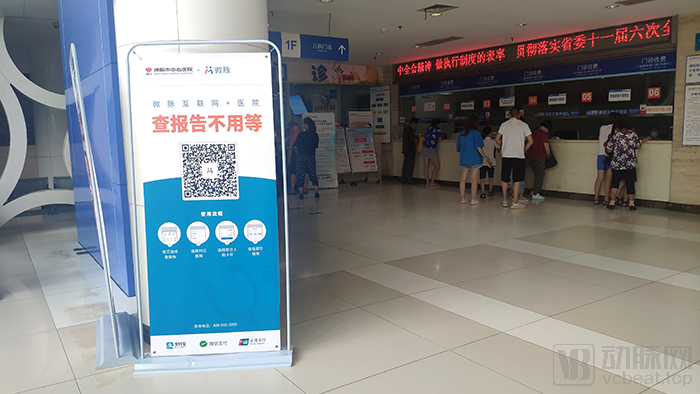
Billing Windows in the Outpatient Hall of Mianyang Central Hospital
Since the onset of the pandemic this year, policy incentives have accelerated the development and operation of internet hospitals by public hospitals across China. Although public hospitals possess abundant medical resources, they lack expertise in internet-based operations and the necessary personnel to manage them. How can these shortcomings be addressed to ensure that internet hospitals truly facilitate patient care, enhance hospital efficiency, and boost the morale of healthcare professionals? The Mianyang Central Hospital has explored a collaborative model of joint construction and operation with enterprises, offering valuable insights for the industry.
As early as six years ago, Mianyang Central Hospital began its exploration of internet-based healthcare. In 2014, the hospital launched a WeChat-based mobile medical service platform, offering features such as mobile payment, intelligent triage, specialist information inquiry, appointment registration, visit reminders, and waiting status tracking.
Prior to the issuance of national policies on internet-based healthcare and internet hospitals, Mianyang Central Hospital launched its internet hospital in June 2017, offering online consultations, e-prescribing, and home medication delivery services.
According to statistics from VCBeat’s Eggshell Research Institute, 62 internet hospitals were established nationwide in China in 2017, among which only slightly more than 10 were public hospitals. Furthermore, few public hospitals had launched internet hospitals prior to 2017. Therefore, Mianyang Central Hospital’s initiation of its digital transformation ranks among the earlier efforts by public hospitals across China.
“Hospitals are relatively sensitive to major trends and never reject new developments,” said Du Xiaobo, Vice President of Mianyang Central Hospital, with the precondition that such innovations must benefit patients. In hindsight, the hospital’s earlier prediction of these trends proved correct.
Following the introduction of new policies, Mianyang Central Hospital was approved for an Internet hospital license at the end of 2019, becoming one of the first in Sichuan Province and the first in Mianyang City.
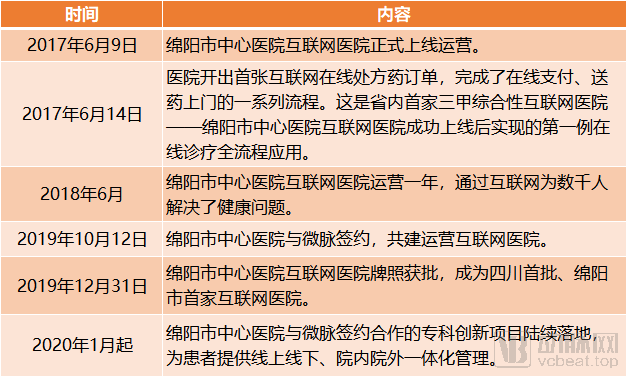
Key Milestones in the Development of Mianyang Central Hospital’s Internet Hospital. Data sources: the hospital’s official WeChat account, partner enterprises, etc. Graphic by VCBeat.
Benefiting from its accumulated expertise in digital initiatives such as internet hospital services and healthcare informatization, Mianyang Central Hospital was awarded the title of “Four-Star Digital Hospital” by Sichuan Province in 2018, with only three hospitals in the province passing the assessment.
Mianyang Central Hospital, founded in 1939, currently has 47 specialized disciplines. Among them, the Department of Clinical Laboratory is a Class A key discipline of Sichuan Province; the Departments of Anesthesiology, Neurology, and Oncology are Class B key disciplines of Sichuan Province. The hospital also hosts multiple Class A key specialties of Sichuan Province and key municipal-level specialties of Mianyang City. In 2018, it ranked 39th nationwide in the “China Prefecture-Level City Hospital Competitiveness Ranking” by Ai Li Bi (CPHI).
As the regional medical center for northwestern Sichuan, Mianyang Central Hospital extends its medical services across northwestern Sichuan and neighboring provinces such as Gansu and Shaanxi, serving a population of over ten million. Meanwhile, as a municipal-level hospital, it plays a pivotal role in linking and fostering coordinated development between tertiary public hospitals under national or provincial administration and county-level hospitals.
However, through years of operating its internet hospital, Mianyang Central Hospital has found that functions such as appointment registration, payment, and online follow-up visits are merely basic features, representing a simple shift of offline processes to an online platform. If hospitals limit themselves to providing these services, they will fail to fully unleash the potential of medical resources.
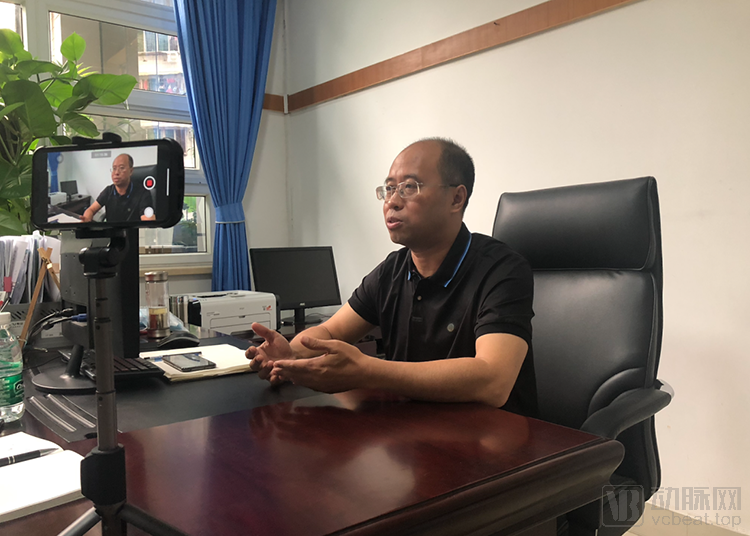
Vice President of Mianyang Central Hospital, Du Xiaobo, Accepts Interview
Du Xiaobo believes that internet hospitals should also optimize their functions and reengineer their processes based on people’s pursuit of health and a better life.
How to leverage online follow-up consultations and online medical advice as entry points, integrate resources from offline to online and from within to outside the hospital, and provide patients with whole-disease-course and full-lifecycle services has become a key strategic focus for Mianyang Central Hospital.
Mianyang Central Hospital has a staff of more than 3,300, with 2,200 open beds, an annual outpatient volume of over 2.4 million visits, and an annual inpatient volume of more than 100,000 admissions. Like most public Grade A tertiary hospitals across China, the hospital’s current workforce is stretched thin in meeting existing diagnostic and treatment demands, leaving no surplus personnel to upgrade its internet hospital services.
Therefore, leveraging the capabilities of a professional third-party internet operations and service system became the preferred option for Mianyang Central Hospital. After a series of evaluations, in October 2019, Mianyang Central Hospital signed an agreement with Weimai to launch a collaborative partnership for the joint development and operation of its internet hospital.
At present, the construction and operation of internet hospitals are divided into three models: first, led by physical hospitals, where physical hospitals commission medical informatics companies for construction and assume operational responsibility after delivery; second, enterprises apply for internet hospital licenses in reliance on physical hospitals, with enterprises leading both construction and operations; third, joint construction and cooperation between physical hospitals and enterprises, where enterprises provide not only information technology services but also participate jointly with hospitals in operations.
The advantage of the third model lies in its ability to fully integrate the medical resources of hospitals while leveraging the flexibility of corporate operational mechanisms and superior operational capabilities.
The hospital-enterprise collaboration model between Mianyang Central Hospital and Weimai primarily embodies the principles of hospital-led coordination and enterprise-driven resource integration with localized operations.
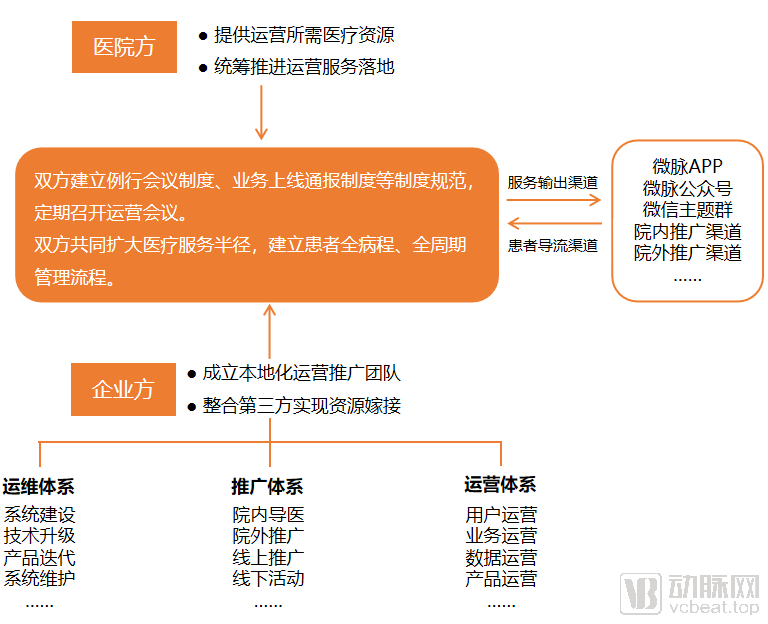
Mianyang Central Hospital and Weimai’s Collaboration Model, Graphic by VCBeat
Specifically, the hospital provides the medical resources required for operations and coordinates the implementation of operational services. The enterprise leverages the advantages of its third-party platform in traffic management, data operations, and service optimization to achieve resource integration, traffic allocation, and user promotion. Meanwhile, a localized service team is established to promote the internet hospital both within and outside the facility, helping users address practical issues encountered during the medical consultation process and fostering the adoption of online healthcare habits.
Within the scope of cooperation, online appointment registration, payment, report inquiry, and text-and-image as well as video-based follow-up consultations constitute the basic services. The innovative service for refined management of the full disease course based on the “Internet Plus” model (hereinafter referred to as “Specialized Innovative Services”) is built upon these basic services. Centered on patients or users, it integrates online and offline resources both within and outside the hospital to provide extended services, and represents the core component jointly operated by Mianyang Central Hospital and the enterprise.
On January 3, 2020, the first batch of specialized innovative services developed through the partnership was officially launched, namely the One-Stop Maternity Service, Abortion Care Service, and One-Stop Pediatric Care Service. Among these, the prenatal management service provides comprehensive care throughout pregnancy via a dedicated physician team on an internet-based platform, thereby reducing the frequency of hospital visits and waiting times for pregnant women. Similarly, pediatric healthcare services offer professional consultation and guidance on the growth, development, and healthy upbringing of newborns and children through the online platform, helping to prevent cross-infection among newborns. The Abortion Care Service focuses on post-operative follow-up by dedicated physicians; it alleviates patients’ psychological burden through online consultations, reduces the incidence of post-abortion complications, and provides guidance for patients planning future pregnancies after an abortion.
To date, six major specialized innovative services have been launched, with three additional services comprising home-based nursing care, health management, and weight loss management.
The specialized innovative services offered by Mianyang Central Hospital are designed around specific patient needs, integrating medical staff from multiple departments within the hospital and third-party institutions outside the hospital to serve patients collaboratively. These services encompass both online consultation and education, as well as offline accompaniment and guidance; they include in-hospital examinations as well as out-of-hospital nursing care. While the channels and settings for healthcare provider services have undergone certain changes, the core content remains unchanged. The services received by patients are no longer single, random encounters, but rather continuous, cyclical, and personalized.
Full-Cycle Management Model for One-Stop Maternity Services
Pan Changqing is the Deputy Director of the Department of Obstetrics and Gynecology at Mianyang Central Hospital. A busy schedule is his norm: he wakes up at 7:00 a.m., hands over duties at 8:00 a.m., and then proceeds with ward rounds, surgeries, medical record documentation, order entry, and patient consultations. On days with fewer surgeries, he performs one or two procedures; on the busiest days, he conducts up to ten. In addition, his managerial responsibilities are difficult to quantify. After work, he continues to engage in professional duties and scientific research.
During the process of hospitals going online, Pan Changqing gradually began to “go online” himself, answering patients’ questions via WeChat, QQ, and other platforms. Pan Changqing found that although doctors had carved out time from their busy schedules to provide answers, such one-on-one responses could only address a limited range of issues.
“For example, a patient with abdominal pain may need to visit several departments and consult multiple doctors before the issue is fully resolved,” said Pan Changqing. Doctors lack the bandwidth to optimize service workflows and enhance overall satisfaction. By leveraging third-party internet platforms to establish a team-based consultation model—enabling users to independently select and bind healthcare teams via an app, and to access online reviews and solutions for complex cases—such service gaps can be effectively addressed.
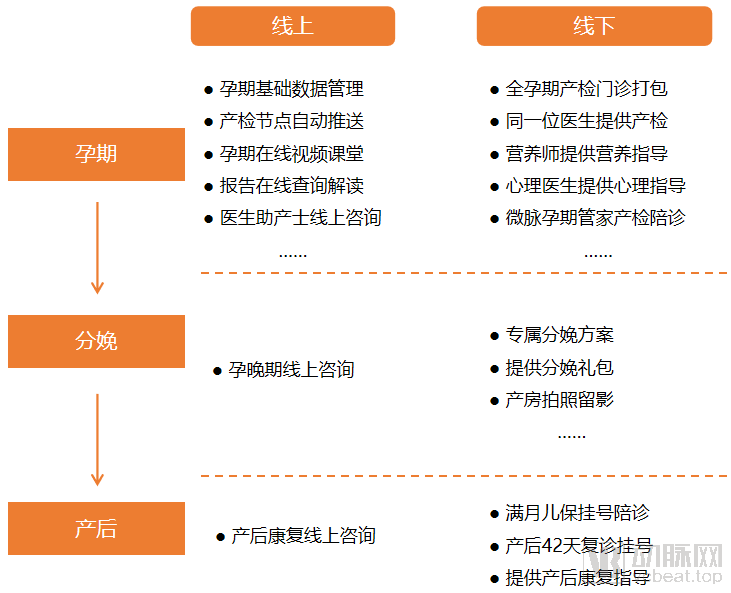
One-Stop Maternity Service Project Co-Designed by Mianyang Central Hospital and Weimai, Chart by VCBeat
Taking the one-stop maternity service program involving obstetrics and gynecology as an example, this patient-centered initiative offers a comprehensive suite of services spanning from prenatal check-ups to delivery and postpartum health management. Currently, while Pan Changqing continues to provide online consultations as before, the experience for expectant and new mothers has transformed: it is no longer limited to addressing isolated issues but instead delivers a continuous, full-cycle care experience.
“If patients receive high-quality medical care but have a poor process experience, or if the process experience is excellent but the medical expertise is lacking, they will still be dissatisfied. Only by improving both aspects can we earn higher patient satisfaction,” said Pan Changqing. He added that the next step is to integrate postpartum services—such as doula-assisted childbirth, postpartum confinement care, and pelvic floor rehabilitation—into a more comprehensive, full-cycle management model.
Internet Hospitals Alleviate Patients' Urgent Needs During the Pandemic
Following the outbreak of the epidemic this year, internet hospitals across various regions rapidly mobilized to alleviate pressure on offline medical resources. Mianyang Central Hospital was no exception; it launched dedicated hotlines for free COVID-19 consultations, general health inquiries, and psychological counseling via its internet healthcare platform. During the epidemic period, the hospital provided over 7,000 consultations related to COVID-19 prevention and control as well as psychological intervention services.
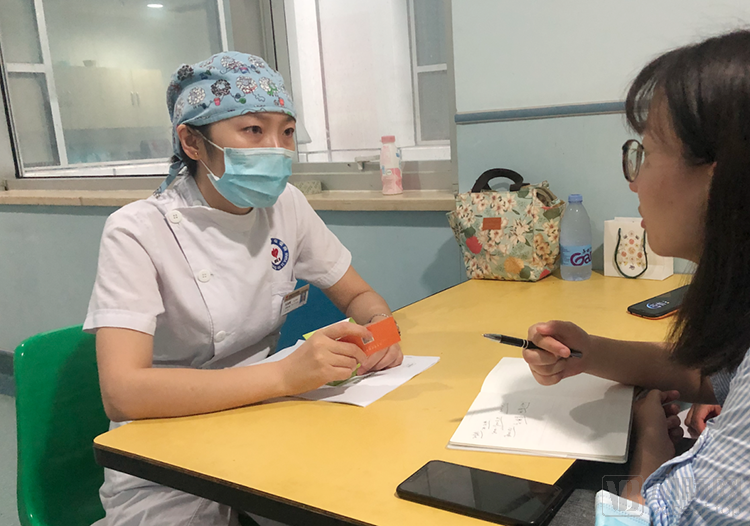
Guo Fudie, Supervisor Nurse in the Department of Orthopedics at Mianyang Central Hospital, Accepts Interview
Guo Fudie is a senior nurse in orthopedics. Since the launch of the home nursing service in January this year, she has been handling online consultations and home care orders. On January 9, a patient with a pelvic fracture, who had difficulty moving after being discharged from the hospital, booked a home nursing service with her. Based on the patient’s condition, Guo Fudie prepared two sets of nursing supplies and visited the patient to provide wound care.
Soon after, the pandemic erupted. As the patient’s wound had not yet healed, they scheduled another home nursing visit. Upon receiving the order, the hospital discussed the case and requested that the patient provide a statement confirming no contact with COVID-19 patients. After ensuring adequate protective measures were in place, the hospital approved Guo Fudie’s home visit. Although home nursing services were not routine during the pandemic, they provided timely relief for the patient. Under normal circumstances, those requiring home nursing are mostly patients with limited mobility or those residing in buildings without elevators.
The Pediatric Medical Center is one of the departments with the highest outpatient volume at Mianyang Central Hospital, with an average daily outpatient volume of approximately 800–900 visits. During the peak period in November last year, the single-day outpatient volume exceeded 1,000 visits.
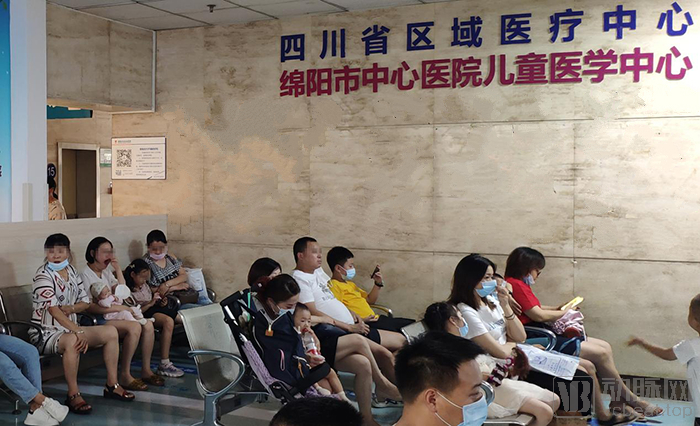
Mianyang Central Hospital Children's Medical Center
“Some non-disease-related issues do not necessarily require hospital visits; alternatively, online follow-ups can be conducted after in-person consultations.” Zhao Xiaoyan, Head Nurse of the Outpatient Department at the Children’s Medical Center, stated that within the hospital’s one-stop Child Care Service, physicians provide online consultations while nurse practitioners conduct online follow-ups. They offer advice on the most frequent concerns raised by new parents, such as infant feeding, diarrhea, and sleep issues, thereby diverting patients from offline visits and reducing the risk of cross-infection in healthcare settings.
Zhao Xiaoyan is also a National Level-II Psychological Counselor and Psychotherapist, providing online psychological counseling services. “Some time ago, a child with ADHD from Guangyuan visited the hospital for treatment. After returning home, the parents consulted me multiple times online. I can guide parents on how to identify their child’s symptoms, determine whether a hospital visit is necessary, and implement home-based management strategies for the child. Additionally, since the parents themselves often experience anxiety, I also provide emotional support to alleviate their distress. All of this eliminates the need for patients and their families to make repeated trips back and forth to the hospital.”
Through the internet hospital services of Mianyang Central Hospital, which are centered on specialty innovation, we have identified value in at least the following areas:
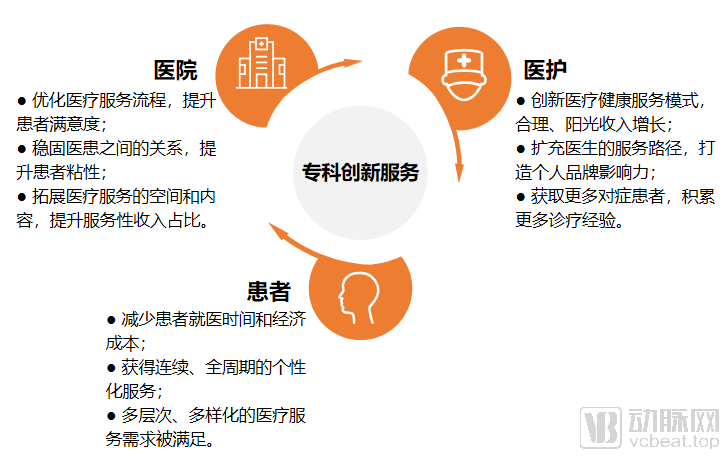
The Value of Specialized Innovative Services to All Stakeholders | Graphic by VCBeat
For hospitals, medical resources have become more abundant, the scope of services has expanded, and service processes have been optimized. A patient-centered model, marking a transition from disease treatment to health management, is beginning to take shape, leading to a significant increase in patient satisfaction and loyalty.
For healthcare professionals, meeting the diverse needs of patients allows their labor value to be reflected through more channels, thereby fostering greater motivation and improving service attitudes.
For patients, shorter wait times for medical care, fewer trips, and lower costs lead to higher satisfaction.
The three form a virtuous cycle.
Since the launch of its internet hospital, Mianyang Central Hospital has had 142 physicians from 21 departments and 11 nursing specialists providing online services. The cumulative number of online consultations has exceeded 20,000, with more than 10,000 prescriptions issued and 3,882 medication deliveries completed. Since the introduction of specialized innovative services this year, nearly 2,000 patients have been served.
However, due to the unique institutional structure and limited staffing of public hospitals, establishing internet hospitals is no easy task. In particular, collaborating with enterprises to operate internet hospitals requires overcoming numerous challenges.
First, how should public hospitals manage their relationships with enterprises?
Secondly, healthcare professionals are already extremely busy with offline duties; how can their motivation be effectively mobilized? According to the policies of the National Healthcare Security Administration, internet-based follow-up consultations are reimbursed at the rate for general practitioners, regardless of the providing physician’s seniority. This regulation is not favorable to either hospitals or physicians.
Finally, everyone talks about embracing the Internet, pursuing innovation, and driving change—but what exactly constitutes innovation?
How Did Mianyang Central Hospital Overcome These Challenges? Du Xiaobo Detailed the Hospital’s Perspectives and Practices.
“First, hospitals and enterprises should not be viewed as competitors; the entry of enterprises into hospitals does not mean diverting patients away.” Du Xiaobo believes that hospitals and enterprises have a complementary relationship, with internet companies, in particular, providing valuable supplements to hospitals in terms of operations and human resources.
“Public hospitals must uphold their public-welfare nature and generate social benefits, whereas enterprises pursue profits and generate economic benefits, which is entirely justifiable,” said Du Xiaobo. He emphasized the need to find a balance between the two: within the service process, hospitals should maintain clinical care as their fundamental boundary, while enterprises, after integrating multi-party resources, can meet patients’ multi-level needs through diversified services, thereby generating revenue.
Regarding the motivation of healthcare professionals in driving business initiatives, Du Xiaobo believes that it ultimately boils down to two aspects: psychological incentives and material incentives. He cited an example from the promotion of weight management services, where the hospital established a Department of General Practice, with Dr. Wang Yurong, formerly an associate chief physician in the Endocrinology Department, appointed as the department head. “You are the founder and a leading expert in this initiative, and your team is a pioneer across the entire Mianyang region. This constitutes psychological incentive.”
Regarding material incentives, the hospital separates offline and online services by time: medical staff provide offline services during working hours and online services during their spare time, with the majority of income from online services allocated to them. “This ensures that healthcare professionals receive additional, transparent income for providing online services, reflecting their professional expertise and labor value, thereby motivating them to participate.”
"Innovation, in Du Xiaobo’s view, is primarily about shifting mindsets and going with the flow."
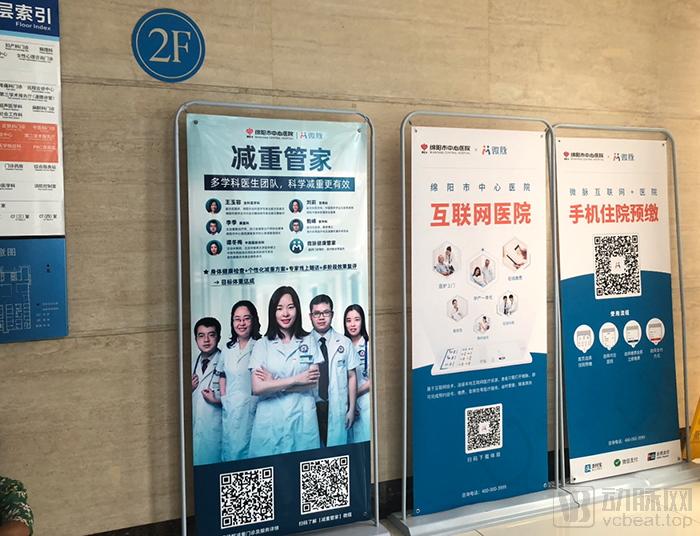
Promotional display stands for the Internet Hospital’s services are placed on every floor of the hospital.
Taking weight management services as another example, Du Xiaobo stated that this service was not originally part of the plan. However, due to home quarantine during the pandemic, there was a significant surge in demand for weight management once restrictions were lifted. “Hospitals had never offered such services before. Under traditional perceptions, physicians are responsible for treating diseases, whereas most individuals seeking weight loss are not ill. In reality, weight management clinics provide patients with rational weight control, serving as primary prevention for conditions such as diabetes and cardiovascular diseases.”
As a partner of Mianyang Central Hospital, Weimai plays a pivotal role in identifying innovative opportunities and swiftly collaborating with the hospital to implement them. The incubation and launch of a series of innovative services, including weight management programs, exemplify the fruitful collaboration between the hospital and Weimai. To date, Weimai has partnered with hundreds of hospitals across China, extending its services to more than 160 cities.
Weimai’s product offerings cover mainstream sectors such as online diagnosis and treatment, online pharmaceutical services, and online nursing care. Its partner hospitals are predominantly public Grade 3A institutions. Previously, Weimai had already collaborated with Zhejiang Hospital, Jinhua Central Hospital (Group), Taizhou Enze Medical Center (Group), Beijing Aerospace General Hospital, and Jining No. 1 People’s Hospital to operate internet hospitals.
“Internet hospitals must pursue differentiation—offering what others do not, and excelling where others merely participate—rather than limiting themselves to online consultations and prescription delivery,” said Du Xiaobo. He outlined the hospital’s future plan to gradually extend specialized innovative services to other departments, thereby achieving true full-lifecycle patient management. “Of course, there is no fixed timeline for this. Collaboration with enterprises involves a prolonged period of adjustment; we are still in this phase, continuously resolving existing issues while new ones emerge. As long as both parties seek balance, solutions can always be found.”
Du Xiaobo candidly stated that while the hospital is not resistant to new developments, it avoids rash advancement. Instead, it prioritizes steady and solid progress to ensure safety before gradually expanding the scope of implementation.
Du Xiaobo believes that as new healthcare reform measures, such as tiered diagnosis and treatment and Diagnosis-Related Groups (DRG), are gradually implemented, public hospitals will face tests from multiple fronts. In the future joint operation of internet hospitals by hospitals and enterprises, how to reasonably cover a series of processes before, during, and after consultation, while improving efficiency and reducing costs, is an area that requires continuous exploration.
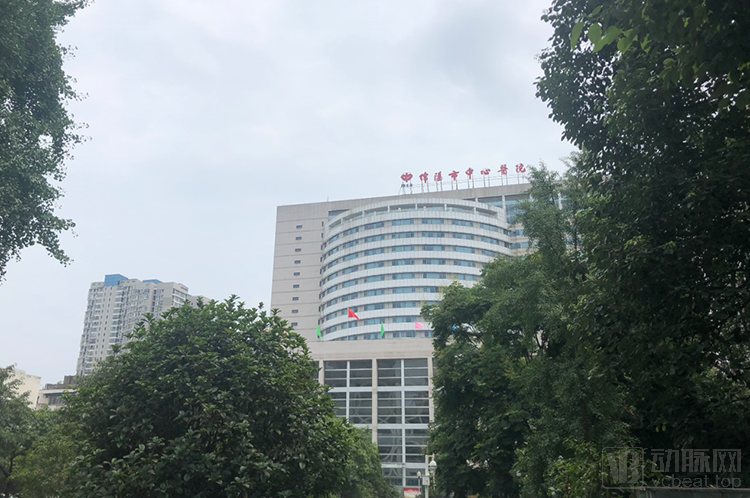
Mianyang Central Hospital Outpatient Building
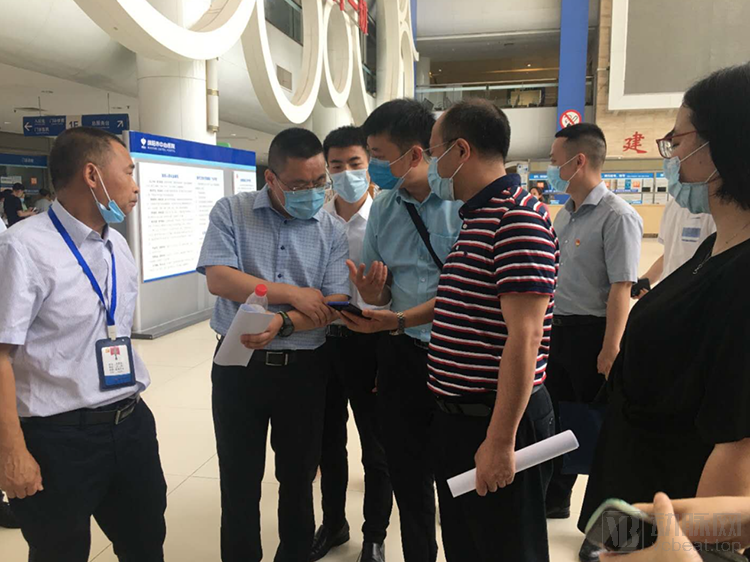
Sichuan Provincial Health Commission and Mianyang Municipal Health Commission Inspect Mianyang Central Hospital’s Innovative Internet-Based Medical Service Model, Which Has Been Recognized for Its Demonstrative Role in Innovation Across Sichuan Province
On July 14, the National Development and Reform Commission (NDRC), the Cyberspace Administration of China (CAC), the National Health Commission (NHC), and nine other departments jointly issued a document encouraging the active development of internet-based healthcare to create a new ecosystem for health-related consumption. Since the beginning of this year, the internet healthcare sector has seen intensive policy releases. According to incomplete statistics, nearly 40 policies supporting internet healthcare have been issued to date by national agencies such as the NHC and the National Healthcare Security Administration (NHSA), as well as local authorities.
While policy incentives are undoubtedly important, true insight comes from practice. To sustain industry innovation, more practical initiatives like those undertaken by Mianyang Central Hospital are needed—initiatives that start with basic services, reorganize service elements, and redesign service processes.
Note: In the innovative models mentioned in this article, recipients of hospital services are not exclusively patients; they may also include healthy individuals (such as pregnant and postpartum women, and the majority of those seeking weight loss). Therefore, we use the term “patients” when referring to medical care contexts and “users” when referring to health management contexts.