

Poseida Therapeutics Raises $220 Million in Half a Month with Next-Gen Gene-Edited CAR-T Therapies

Poseida Therapeutics
Biological New Drug Developer
Recently, VCBeat learned thatBiotechnology company Poseida Therapeutics raised $204.8 million (approximately RMB 1.43 billion) in its IPO.On July 7, on the eve of its IPO, Poseida Therapeutics announced the specific terms of its initial public offering, planning to issue 10 million shares in the price range of $14–$16, with an aim to raise $150 million. The company’s stock price rose on its listing day.The initial public offering was priced at the top of the expected range, opening at $16 per share on July 12.The funds raised in this offering clearly exceeded Poseida Therapeutics’ expectations.
In fact, Poseida filed an IPO application in early 2019, planning to list on the Nasdaq and raise $115 million. However, a few months later, it secured a $142 million Series C financing round led by Novartis, after which it withdrew its listing application. In late June this year, news emerged that Poseida had completed a $110 million (approximately RMB 770 million) Series D financing round.In just half a month, Poseida has secured $314.8 million (approximately RMB 2.2 billion)!
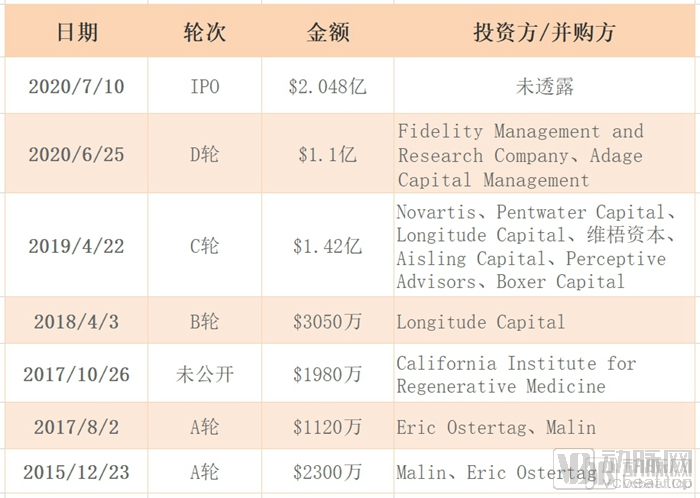
Poseida Therapeutics Historical Financing Overview
It can be observed that,Poseida Therapeutics has been highly active in the investment and financing market in recent years.So, what exactly is it researching that has prompted major investment firms to repeatedly open their purses, enabling it to secure hundreds of millions in financing within just a few years? Let’s delve into the details.
Founder: Excelling in Both Scientific Research and Management
Poseida Therapeutics is a clinical-stage biotechnology company founded in 2014, headquartered in San Diego, California, and spun out from Transposagen Biopharmaceuticals. Poseida Therapeutics aims to leverage cutting-edge non-viral gene engineering technologies to tackle various intractable diseases and solve complex medical challenges. Currently, the company is independently developing autologous and allogeneic CAR-T (chimeric antigen receptor T-cell) candidate products for the treatment of hematologic malignancies, solid tumors, and certain rare genetic disorders.
Eric Ostertag, Founder and Chief Executive Officer of Poseida Therapeutics, also served as Co-Founder and Chief Executive Officer of the biotechnology company Vindico NanoBioTechnology.Vindico is dedicated to the discovery, development, and commercialization of human therapeutics based on nanoparticle technology.
Ostertag spent his undergraduate years at the University of Wisconsin–Madison, where he earned a bachelor’s degree in genetics.Later,He conducted in-depth research in the field of genetics and earned a Ph.D. in Molecular Biology from the University of Pennsylvania.

Eric Ostertag, Founder & CEO of Poseida Therapeutics
Ostertag has over 12 years of executive management experience in the business sector.During his tenure as CEO of Transposagen, he published nearly twenty peer-reviewed articles and commentaries in the field of gene editing, earning scientific and clinical awards from the American Society of Human Genetics and the American Society for Apheresis.
With such a pioneer at the helm, it is only natural that the PiggyBac DNA modification system (a gene editing system) has firmly secured its position as the leading technology platform.
Non-Viral Vectors Make Poseida’s CAR-T Therapy Safer and More Efficient
Poseida Therapeutics’ core technology platforms are divided into the piggyBac DNA modification system, CAS-CLOVER gene editing, and gene delivery systems.Each technical platform encompasses specific gene manipulation tools and systems, which are briefly introduced below.
piggyBac DNA Modification System [Core Technology]
Currently, most CAR-T therapy products are manufactured using virus-based methods, which carry certain toxicities and pose safety risks to patients—a key point of controversy surrounding CAR-T therapies. Moreover, virus-based CAR-T therapies have limited capacity for delivering genetic information.
Poseida’s non-viral piggyBac platform does not use viral vectors to create CAR-T therapy products; instead, it leverages gene-editing technology to deliver CAR molecule genes into T cells. The most significant advantage of this approach is its ability to generate CAR-T products enriched with highly active T stem central memory (TSCM) cells. This “version” of CAR-T therapy can elicit more durable and potent responses while exhibiting lower toxicity. Furthermore, this method significantly reduces manufacturing costs and shortens production timelines.
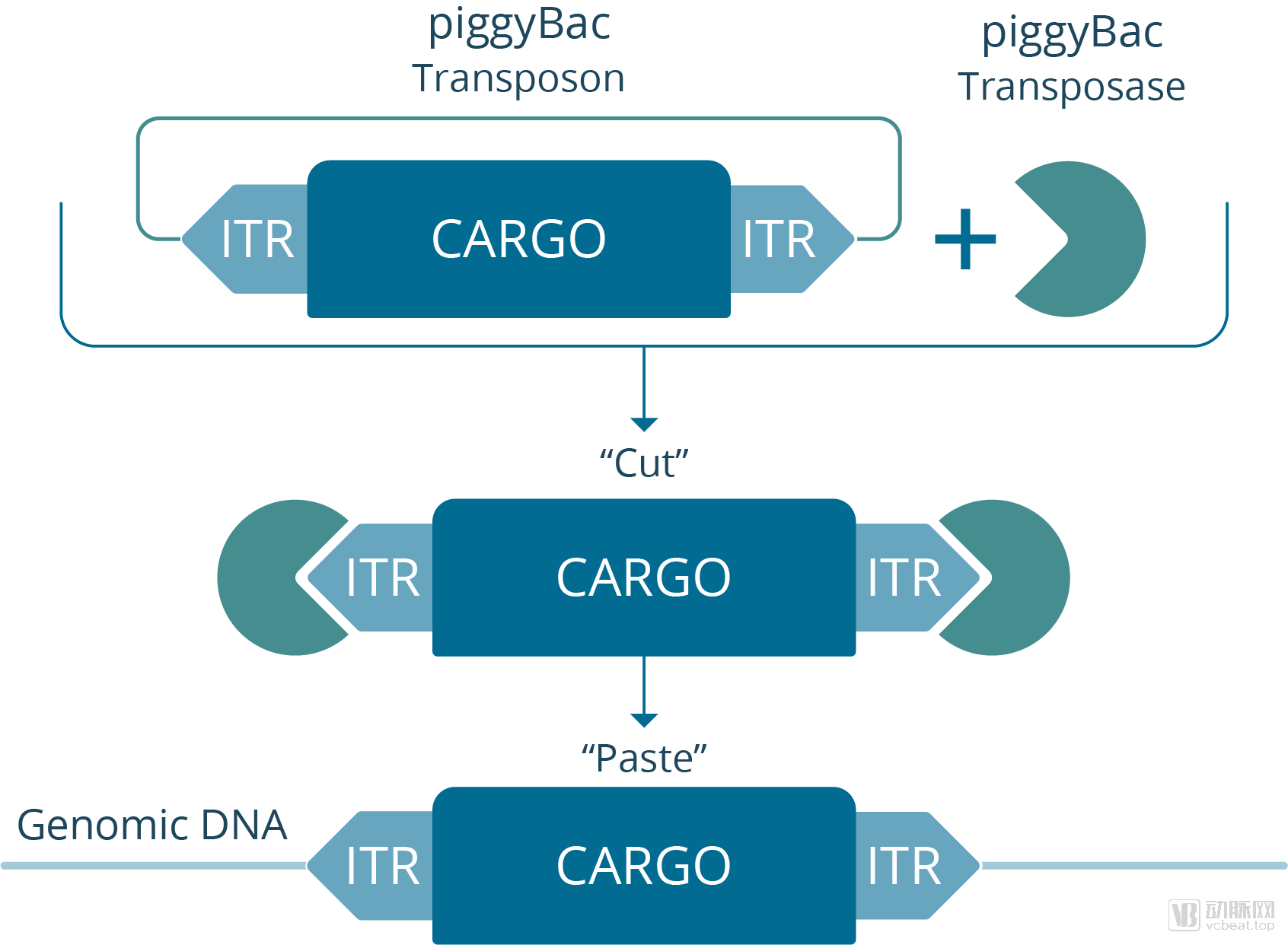
Mechanism of Action of the piggyBac Technology Platform
As is well known, T cells play a central role in immune responses. CAR-T therapy aims to kill cancer cells by genetically engineering and modifying T cells. However, just as children must grow into adults to achieve their full potential, naive T cells undergo multiple stages of growth, development, and maturation before becoming cytotoxic T cells (i.e., effector T cells) capable of attacking foreign pathogens and cancer cells. Naturally, artificially engineered “T cells” cannot match “native” T cells in many aspects.
This means that although “T cells” can be engineered and modified to effectively kill cancer cells, their short lifespan—lasting only a few weeks—is the primary reason why patients still experience relapse after receiving CAR-T therapy. Currently, no suitable initial dose has been identified that can eliminate all cancer cells in the body upon first administration without causing harm to the patient.
To address this issue, Poseida Therapeutics researched and adopted the non-viral piggyBac® DNA modification system to design and develop a differentiated CAR-T product.
This product is primarily composed of the earliest T cells, known as stem cell memory T cells (TSCM cells).TSCM cells possess functions such as longevity and self-differentiation in response to the human internal environment, enabling them to reconstitute T-cell subsets (including TEFF cells). In clinical trials, they have been demonstrated to survive for several years after engraftment in humans, thereby addressing the limitation of short lifespan associated with conventional engineered T cells.
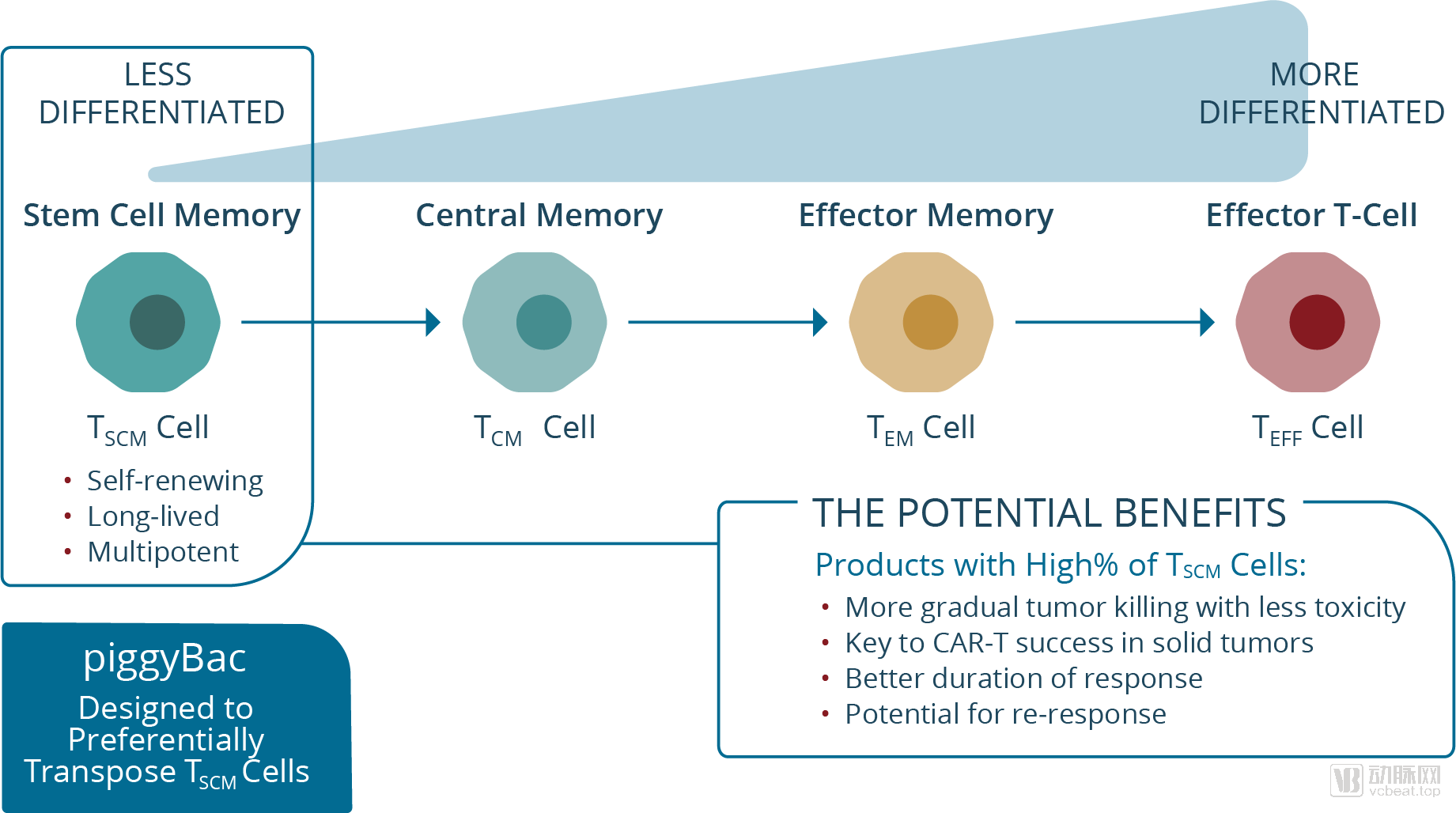
Differentiation Process of TSCM Cells
Compared with existing CAR-T therapies, the highly active TSCM cells designed by Poseida will progressively “encircle” and “sweep away” a broader range of cancer cells, induce fewer inflammatory cytokine responses, and improve the tolerability of CAR-T candidates.
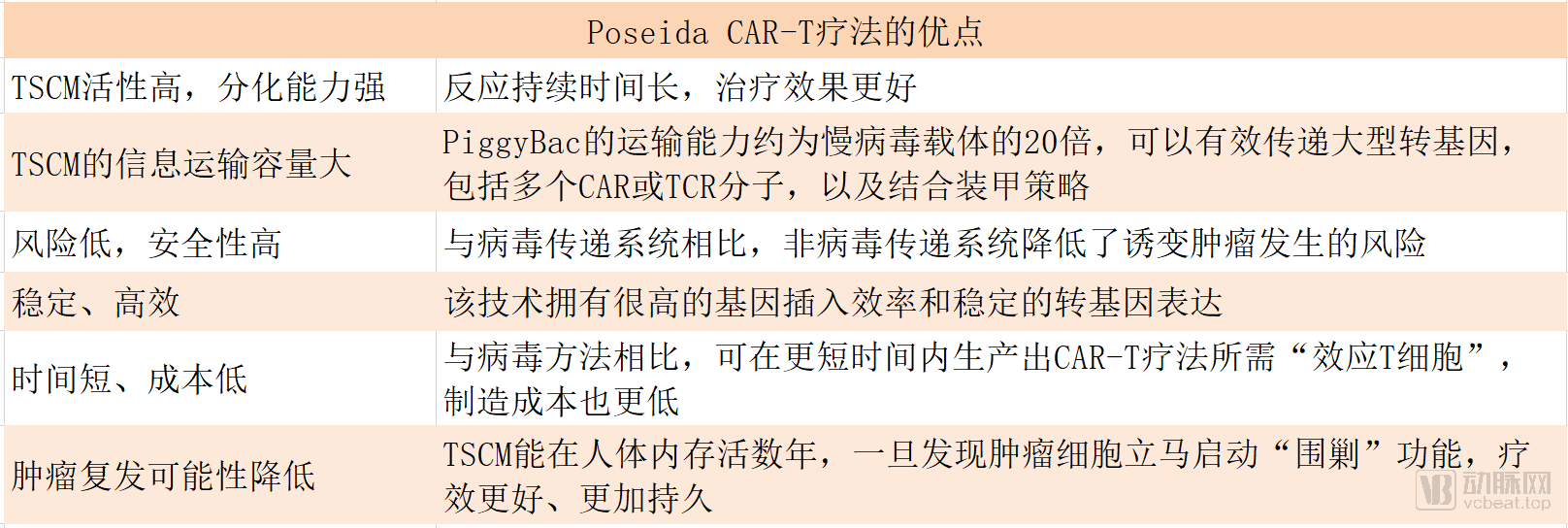
Advantages of Poseida CAR-T Therapy Compared with Conventional CAR-T Therapy
CAS-CLOVER Gene Editing
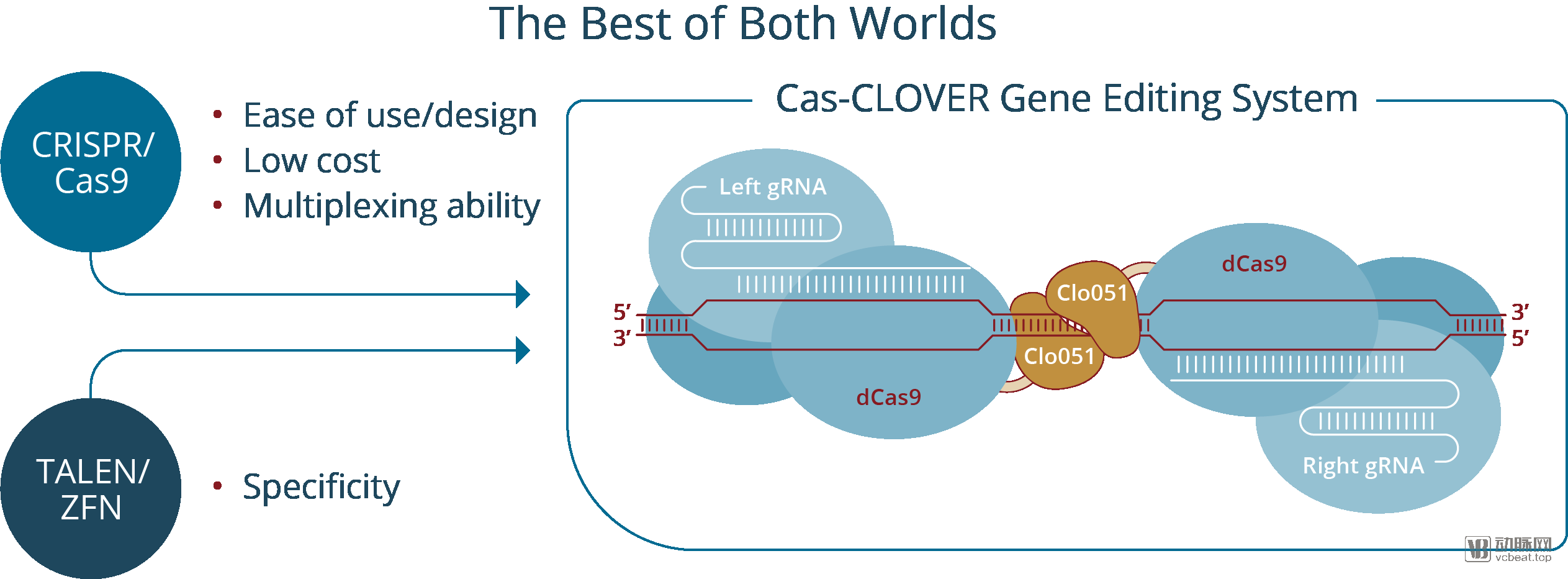
Poseida’s Cas-CLOVER gene-editing technology combines the advantages of first-generation CRISPR (ease of design, low cost, and versatility) with the specificity of homodimeric nuclease systems (such as TALENs). Cas-CLOVER is easy to handle and use, demonstrates low to no off-target activity in preclinical studies, enables efficient gene editing in quiescent T cells, and offers significant tolerability advantages.
Importantly, Poseida’s CAR-T cell therapy enables the preservation of a complete TSCM product composition in allogeneic candidates, holding significant research promise. Poseida’s proprietary gene-editing platforms, Cas-CLOVER and TAL-CLOVER, can also be applied to in vivo gene therapy.
Gene Delivery System
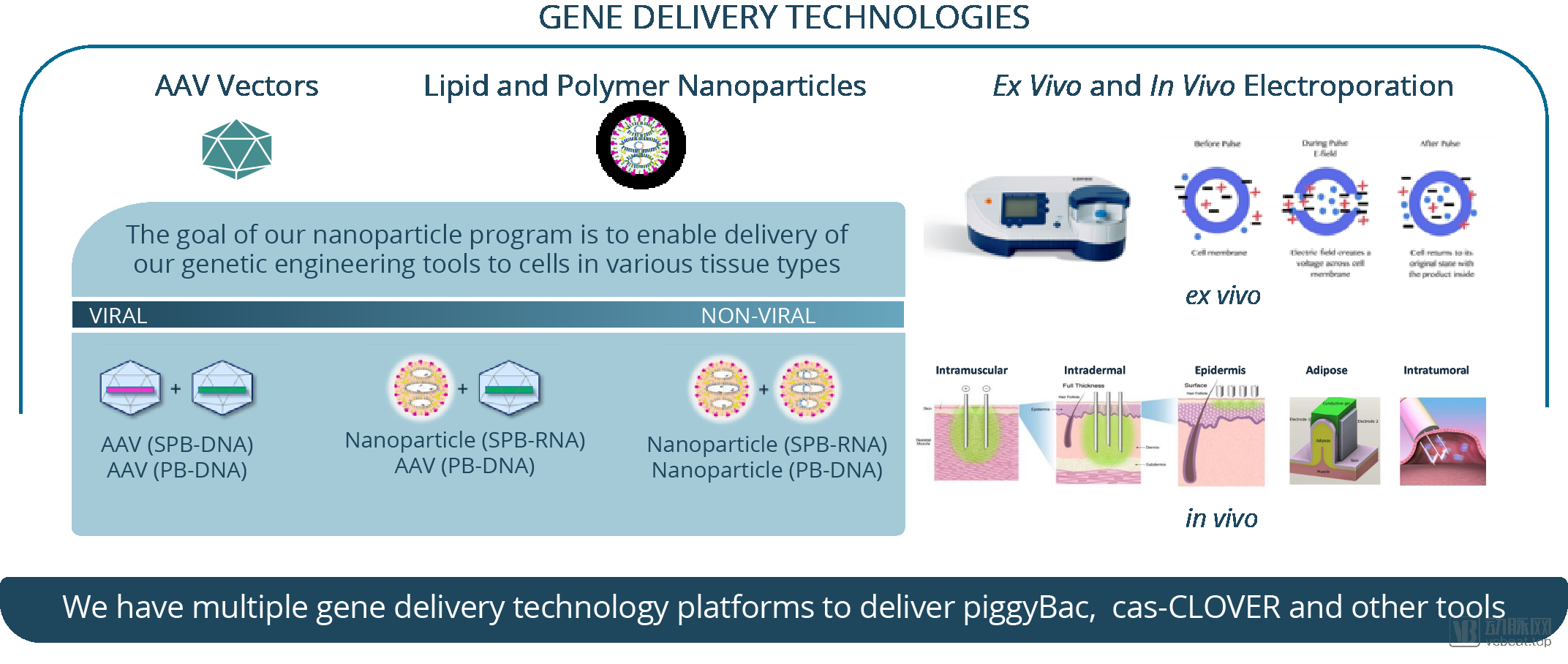
Gene Delivery System
Poseida possesses a diverse portfolio of gene delivery technology platforms, including its nanoparticle program, enabling the targeted delivery of its therapeutic products to various tissues. The development of these gene delivery systems has also expanded the company’s preclinical research and development capabilities in gene therapy. This lays the foundation for Poseida to engineer superior T cells and design faster, more effective, and safer gene therapies to combat solid tumors.
State-of-the-Art Gene Editing Lays the Foundation: Next-Generation CAR-T Therapies Begin to Shine
Supported by technology platforms such as the piggyBac DNA modification system and CAS-CLOVER gene editing, Poseida has developed a pipeline of investigational products that includes both autologous and allogeneic programs.
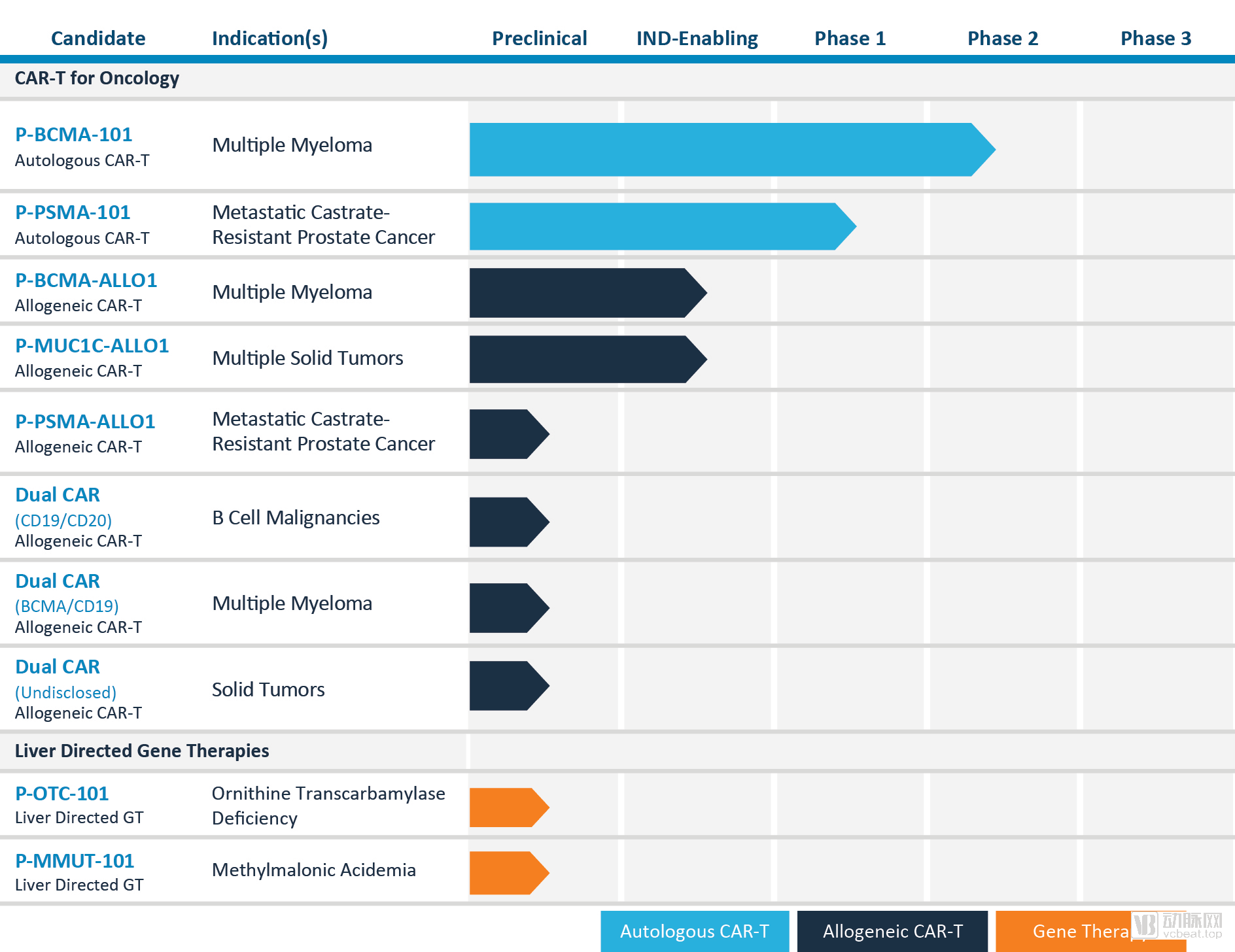
Poseida Therapeutics’ Pipeline of Investigational Projects
Poseida’s autologous CAR-T product candidates are developed using the piggyBac DNA modification system, which genetically edits patients’ own cells to achieve therapeutic effects. The autologous pipeline primarily includes candidate products such as P-BCMA-101 and P-PSMA-101.
P-BCMA-101
Poseida’s lead candidate, P-BCMA-101, is an autologous CAR-T therapy targeting B-cell maturation antigen (BCMA) for the treatment of relapsed/refractory multiple myeloma. The company is currently enrolling patients with relapsed/refractory multiple myeloma in a Phase 2 trial.
P-PSMA-101
P-PSMA-101 is Poseida’s first autologous CAR-T cell therapy candidate targeting prostate-specific membrane antigen (PSMA) for solid tumors, currently under development for the treatment of patients with metastatic castration-resistant prostate cancer (mCRPC). In preclinical studies, P-PSMA-101 demonstrated complete elimination of tumor cells to undetectable levels in 100% of animal models, with only a single recurrence observed at lower doses.
Poseida’s allogeneic CAR-T product candidates are developed using cells derived from healthy donors as starting materials and are engineered with piggyBac and Cas-CLOVER gene-editing technologies to reduce or eliminate alloreactivity. These candidates can be cryopreserved for off-the-shelf use in the future. The allogeneic pipeline primarily includes product candidates such as P-BCMA-ALLO1, P-MUC1C-ALLO1, and P-PSMA-ALLO1.
P-BCMA-ALLO1
P-BCMA-ALLO1 is Poseida’s first allogeneic CAR-T product candidate targeting BCMA, developed for the treatment of patients with relapsed/refractory multiple myeloma. Poseida has designed P-BCMA-ALLO1 to be fully allogeneic, with alloreactivity eliminated or reduced through gene editing.
P-MUC1C-ALLO1
P-MUC1C-ALLO1 is Poseida’s allogeneic CAR-T product candidate for the treatment of various solid tumors and is currently in preclinical development. P-MUC1C-ALLO1 has the potential to treat a variety of epithelial-derived solid tumors, such as breast cancer, colorectal cancer, lung cancer, ovarian cancer, pancreatic cancer, and renal cell carcinoma. Additionally, this product has undergone gene editing to eliminate or reduce alloreactivity.
Final Thoughts
Poseida Therapeutics is leveraging gene-editing technology and non-viral vector-based next-generation CAR-T therapies to tackle hematologic malignancies, solid tumors, and certain rare genetic disorders. Although final outcomes have yet to be fully realized, the prospects are highly promising. Innovations in the medical technology sector continue to refresh and disrupt our current understanding.
Before humanity further indulges its fantasy of “immortality,” medicine must first confront the demons currently threatening the normal human life journey, with cancer at the forefront. Will Poseida’s novel CAR-T therapy emerge as the decisive breakthrough in humanity’s ultimate victory over cancer? Or will it prove to be merely a marginal attempt on the long and arduous road to conquering this disease? Let us place our hopes and double our attention, waiting to see what unfolds.