

China Gold Irradiation Files for ChiNext IPO, with Medical Sterilization Accounting for Over 50% of Revenue Amid a Billion-Dollar Market Opportunity
On July 20, 2020, China Gold Irradiation Co., Ltd. (hereinafter referred to as “China Gold Irradiation”) applied to the Shenzhen Stock Exchange for an initial public offering on the ChiNext board, proposing to issue no more than 66.0005 million shares, accounting for over 25% of the total share capital after the issuance. The proceeds from this offering are primarily intended to fund the company’s cobalt-60 source procurement project and the construction of an electron accelerator sterilization center, as well as to supplement its working capital.
Zhongjin Irradiation is a specialized sterilization service provider that offers irradiation sterilization services for healthcare products, food, pharmaceuticals, packaging materials, and other products, as well as irradiation modification services for polymer materials. It is one of the seven major business segments under China National Gold Group, a central state-owned enterprise.
It is reported that irradiation sterilization services constitute the company’s primary source of revenue and profit. In addition to irradiation sterilization, Zhongjin Irradiation is simultaneously developing multiple technical approaches and has established a Sterile Supply Center dedicated to providing disinfection and sterilization services for medical devices, instruments, nursing kits, and surgical packs to healthcare institutions.
According to the financial data in the prospectus, Zhongjin Irradiation’s net profit for the past two years has just exceeded RMB 50 million, meeting the Shenzhen Stock Exchange’s ChiNext listing requirements for issuers, and its listing has been approved.
Founded on irradiation technology, the company generates over RMB 100 million in annual revenue from medical sterilization and disinfection, accounting for half of its business.
As one of the earliest enterprises in China to industrialize irradiation technology, Zhongjin Irradiation has gradually become a leading player in the country’s irradiation technology services sector after nine years of development. The company operates 11 large-scale irradiation facilities across China, with a total cobalt-60 source activity of 23.37 million curies, making it the specialized irradiation sterilization enterprise with the highest cobalt-60 source activity, the most comprehensive network layout, and the widest coverage in the country.
Cobalt Source Activity refers to the radioactive activity of a cobalt source, i.e., its “effective concentration.” It denotes the number of decays per unit time of radionuclides in a specific energy state, representing the intensity of radioactivity.
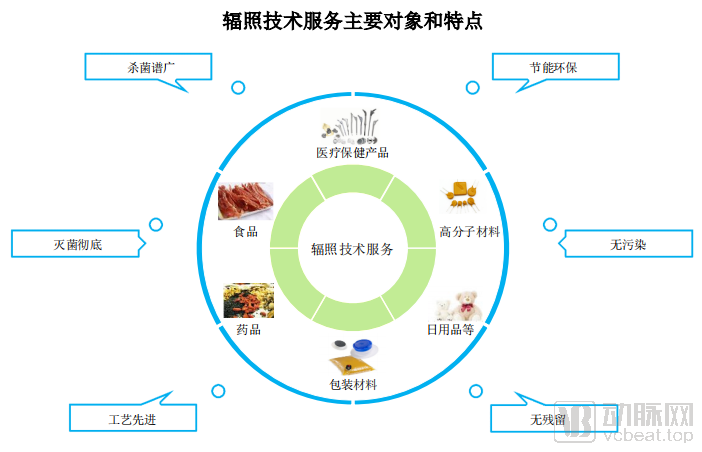
Irradiation technology primarily leverages the physical, chemical, or biological effects resulting from the interaction of gamma rays generated by the radioactive isotope Cobalt-60, electron beams produced by accelerators, or X-rays with matter. These effects influence the physiological activity of microorganisms, improve material properties, or induce degradation, polymerization, and cross-linking modifications, thereby achieving predetermined goals and outcomes. This technology enables the sterilization or modification of various product types, including healthcare products, food and pharmaceuticals, and packaging materials.
According to the prospectus disclosed by the company, in its irradiation services business from 2017 to 2019, China Gold Irradiation provided medical-related disinfection and sterilization services (Including irradiation sterilization of medical health products, pharmaceutical disinfection, and other disinfection and sterilization processes.) accounting for more than 50% of the company's total revenue, with annual total revenue consistently exceeding RMB 100 million: revenue from medical-related disinfection and sterilization surpassed RMB 110 million in 2017, exceeded RMB 130 million in 2018, and reached over RMB 140 million in 2019, demonstrating a year-on-year increase in medical-related disinfection and sterilization revenue.
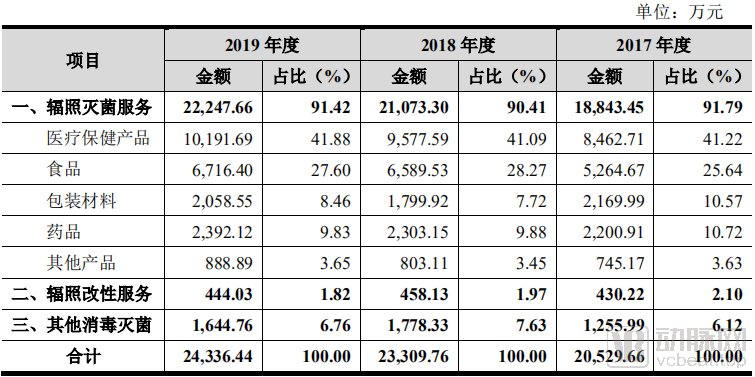
Revenue from Core Business Services
Among them,Healthcare ProductsIrradiation sterilization accounts for the largest share of the company’s revenue, consistently exceeding 40% annually. Healthcare sterilization primarily involves the disinfection of products such as hemodialyzers, medical sutures, medical dressings, alcohol prep pads, artificial bone and joint implants, and eye drop bottles.
Gamma rays used in irradiation sterilization possess strong penetrating power, enabling thorough sterilization without contamination or residue while leaving the packaging of healthcare products intact. This method supports continuous and batch processing, eliminates the risk of secondary contamination associated with repackaging, and ensures that irradiated healthcare products remain sterile for extended periods when kept sealed.
In addition to the sterilization of healthcare products, irradiation sterilization in thePharmaceuticalsIn terms of sterilization, it can effectively eliminate insect eggs attached to medicinal materials and control the levels of microorganisms such as molds, while preserving the pharmacological properties. This approach effectively addresses the challenges associated with certain traditional Chinese medicine (TCM) proprietary medicines, raw material powders, and formulations that are sensitive to high temperatures and contain volatile components, thereby playing a significant role in the TCM proprietary medicine and herbal material industry chain.
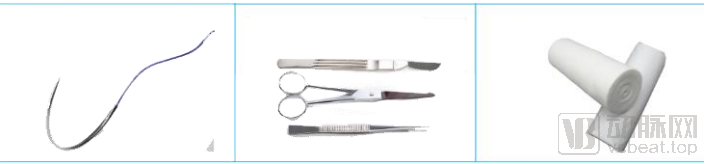
It is worth mentioning that Zhongjin Irradiation has also specially establishedCentral Sterile Supply Department (CSSD), providing medical institutions with sterilization and disinfection services using high-temperature steam and other methods for reusable diagnostic and therapeutic instruments, devices, nursing kits, and surgical packs used in hospitals, clinics, and other healthcare facilities. The annual revenue from this segment has consistently exceeded RMB 10 million.
It is reported that Zhongjin Irradiation has established stable cooperative relationships with well-known enterprises such as Johnson & Johnson, Asahi Kasei, Toray Medical, Viant, Corning, China Pet Foods, Goglio, and Scholle IPN, accumulating a client base that includes more than 30 Fortune Global 500 companies.
A Multi-Billion-Dollar Irradiation Sterilization Medical Market with Only 15% Share Holds Huge Future Growth Potential
Irradiation sterilization technology is a crucial component of irradiation technology services. It originated in 1943 from research conducted by the Massachusetts Institute of Technology (MIT) for the U.S. military on “the effect of radiation on hamburger processing,” and has since evolved over more than 70 years. Irradiation technologies are primarily categorized into three types: gamma-ray irradiation, electron beam irradiation, and X-ray irradiation.
Irradiation sterilization technologies, represented by gamma-ray irradiation, offer the following advantages over other industrial disinfection and sterilization methods: ① broad-spectrum efficacy and wide applicability; ② thorough sterilization without the need to remove packaging; ③ no residues and no secondary pollution; ④ low-carbon, environmentally friendly, and energy-efficient; ⑤ advanced processing technology with low quality control risks.
According to the research and analysis by CICC Irradiation, within ChinaThe market size for medical devices, food products, and proprietary Chinese medicines suitable for irradiation sterilization is approximately RMB 148.061 billion.; based on industry experience, revenue from irradiation technology services accounts for approximately 2% to 5% of the value of various products, yielding an estimated potential market size of RMB 5.338 billion for irradiation sterilization services.
According to statistics from the International Irradiation Association (IIA) and the China Isotope and Radiation Association, in 2016, the global market for industrial sterilization of healthcare products totaled $4.69 billion, with irradiation sterilization accounting for approximately 45%, ethylene oxide sterilization for approximately 50%, and other sterilization methods for 5%; whereasIrradiation Sterilization Accounts for Less Than 15% of China’s Industrial Sterilization Market for Healthcare Products, far below the global average of 5%, most healthcare products manufactured in China still rely on the lower-cost method of chemical sterilization.
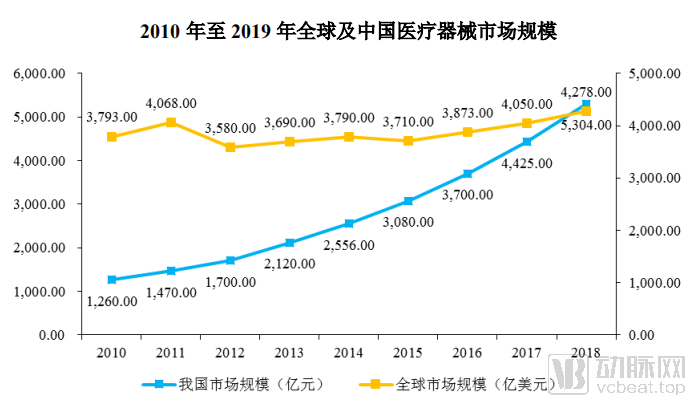
According to statistics from the European Commission on Medical Devices and Wind Info, the global medical device market size grew from USD 379.3 billion in 2010 to USD 427.8 billion in 2019, maintaining a stable level. According to data from the China Pharmaceutical Material Association, China’s medical device market size expanded from RMB 126 billion in 2010 to RMB 530.4 billion in 2018, with a compound annual growth rate (CAGR) of 19.68%, significantly higher than the global CAGR during the same period. The industry scale has ranked second worldwide.
With the continuous expansion of China’s healthcare product market, coupled with rising living standards and progressively stricter national hygiene standards for the healthcare product industry, the sterilization market for healthcare products in China is poised for accelerated growth. This trend will drive a gradual shift from chemical sterilization to irradiation sterilization, which offers superior safety and environmental friendliness. Meanwhile, under the backdrop of globalization, China’s exports of medical devices, medical dressings, and related products are expected to maintain steady growth. Driven by both domestic and export demand, irradiation sterilization is set to gain significant momentum and expand its market presence.