

China's First Independently Developed Cardiovascular OCT System Officially Launched, Empowering Precision PCI Therapy

Vivolight
Developer of Biomedical Optical Imaging Systems
VCBeat has learned that on July 18, coinciding with the online holding of the “2020 Conference on Cardiac Imaging and Cardiac Intervention” (CICI 2020), the “Cardiovascular OCT System,” independently developed over eight years by the team at Shenzhen Vivolight Medical Device & Technology Co., Ltd. (hereinafter referred to as “Vivolight”), was officially launched globally at the conference. As a high-performance domestically produced cardiovascular OCT system, it is poised to break the long-standing monopoly held by foreign products in this category.
Attendees at the press conference included Professor Ge Junbo, an academician of the Chinese Academy of Sciences and a leading figure in the field of cardiovascular medicine; Professor Chen Yundai, Dean of the Graduate School of the Chinese PLA General Hospital and Director of the Department of Cardiovascular Medicine; Dr. Zhou Yujie, Executive Vice President of Beijing Anzhen Hospital, Capital Medical University; Professor Qian Juying, Vice President of Zhongshan Hospital, Fudan University; and Dr. Zhu Rui, Chairman of Vivolight.
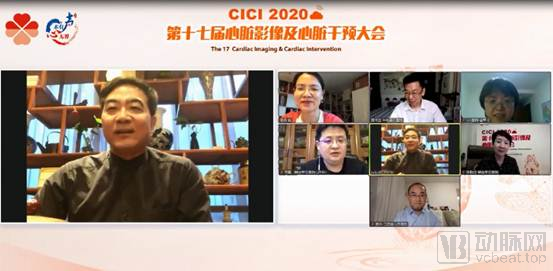
Live Broadcast Image of the CICI 2020 Vivolight OCT Launch Event
Compared with the most advanced OCT systems globally, Vivolight’s newly released OCT system delivers superior imaging performance: it provides clearer images, features a catheter with a smaller outer diameter and a shorter tip-to-imaging-window distance, thereby enhancing deliverability and safety. It also boasts world-exclusive functionalities, including quantitative analysis of bifurcation lesions, automated assessment of bioresorbable scaffolds, and one-click image sharing. The Chinese-language user interface is concise and user-friendly, adhering to the “Seven-Step OCT Procedure” and aligning with the operational mindset of Chinese physicians. Its intelligent software analysis system improves real-time image analysis efficiency, shortening both the learning curve for physicians and the time required for intraoperative analysis.
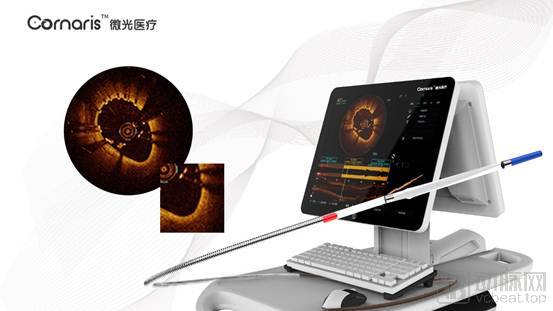
Vivolight Cardiovascular OCT System
In the opening remarks at the launch event for Vivolight’s OCT system, Professor Ge Junbo, a leading scholar in China’s cardiology field and an academician of the Chinese Academy of Sciences, pointed out that over the past two decades, the volume of percutaneous coronary intervention (PCI) procedures in China has surged, exceeding one million cases in 2019. He emphasized the urgent need for precision medicine, noting that intravascular imaging technologies can provide accurate assessments for PCI procedures, thereby ensuring patients receive the most effective treatment. Professor Chen Yundai has consistently championed the concept of precision medicine for the past 16 years, and the CICI Conference has become a bellwether for academic exchanges on intravascular imaging therapies and technologies within China’s cardiovascular community. Dr. Zhu Rui, a member of the inaugural cohort of the CCI program, has led his R&D team in independently developing a high-quality cardiovascular OCT system, which will undoubtedly play a pivotal role in advancing the research and development of interventional cardiology in China.
Professor Chen Yundai, a leading scholar in the field of cardiology in China and Dean of the Graduate School of Chinese PLA General Hospital as well as Director of the Department of Cardiovascular Medicine, shared with us the development journey and clinical research data of Vivolight’s cardiovascular OCT system, providing attendees with a clear understanding of how this “premium product” came into being.
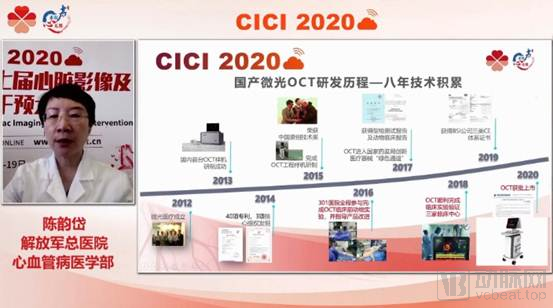
Professor Chen Yundai Shares the R&D Journey of Vivolight’s Cardiovascular OCT
The Vivolight Cardiovascular OCT System is an incubated and key-supported project of the Xi’an Institute of Optics and Precision Mechanics, Chinese Academy of Sciences. Dr. Zhu Rui, Dr. Li Jianan, and Dr. Cao Yihui, the leading R&D figures at Vivolight Medical, are internationally recognized leaders in the development of OCT systems and intelligent analysis of medical imaging, respectively. As China’s first national high-tech enterprise dedicated to intravascular interventional imaging, the team successfully developed the first cardiovascular 3D-OCT system in 2013. After seven years of engineering optimization and clinical registration, the product was officially launched in July 2020. During this period, the company filed 49 invention patents and received the “Annual Original Technology Award” from the China Economic Forum.
Vivolight’s robust advisory team comprises Professor Chen Yundai, Dean of the Graduate School and Director of the Department of Cardiovascular Medicine at the Chinese PLA General Hospital; Professor Dr. Gary Tearney from Harvard Medical School in the United States, the inventor of cardiovascular OCT who continues to lead global advancements in endoscopic OCT technology; and Professor Dr. van Soest from the Erasmus University Medical Center in Rotterdam, the Netherlands, a member of the International Working Group for Intravascular OCT Standardization and Validation, who currently leads the development and clinical research of multimodal systems based on catheter-based imaging technologies. Under the careful guidance of this advisory team, the Vivolight team adheres to the innovative concept of integrating medicine and engineering, upholding craftsmanship as its standard to meticulously develop and manufacture high-performance “premium products”—the Vivolight Cardiovascular OCT System.
Professor Chen Yundai introduced: The “Vivolight Cardiovascular OCT System P60 – A Convenient and Intelligent Platform,” launched at this market debut event, was developed through continuous communication between the R&D team and clinical experts to thoroughly understand interventional cardiologists’ operational thinking, habits, user experience, and procedural needs. It innovatively incorporates several advanced intelligent research features, including an OCT-Angio system, a quantitative assessment system for bifurcation lesions, automated analysis functionality for bioresorbable scaffolds, and one-click sharing.
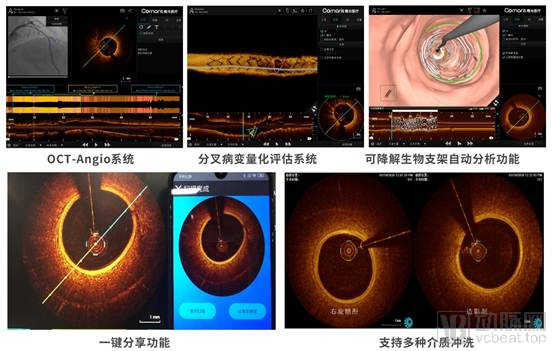
Vivolight OCT: Multiple Intelligent Research Functions
Director Chen Yundai pointed out: Vivolight’s cardiovascular OCT system features unique Pencil-beam technology, offering superior imaging depth compared to imported counterparts. In terms of image depth and detail, particularly its intelligent service software, it holds certain advantages.
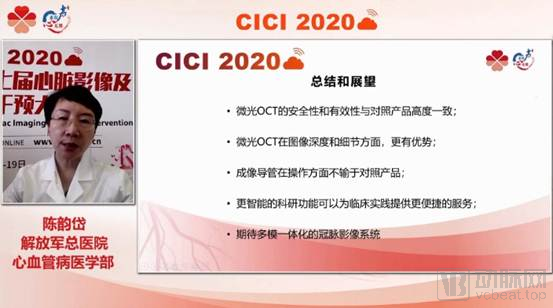
Professor Chen Yundai’s Summary and Outlook on Vivolight’s Cardiovascular OCT
At the conference, two experts from the Cardiovascular Disease Department of the Chinese People's Liberation Army demonstrated the superior imaging quality and innovative features of Vivolight’s cardiovascular OCT through real-world case studies.
Director Jin Qinhua shared two case studies at the conference, focusing on Micro-light OCT-guided management of bifurcation lesions and implantation of bioresorbable stents. Director Jin pointed out that post-market research on Micro-light OCT has been launched at the Chinese PLA General Hospital. Micro-light OCT can optimize bifurcation treatment strategies by calculating the branch ostium area through 3D reconstruction, and its clear imaging can precisely guide the application of the PSP technique during bioresorbable stent implantation. Furthermore, Director Jin emphasized that Vivolight attaches great importance to the integration of medicine and engineering, ensuring that physicians’ feedback from clinical use is promptly incorporated for optimization.
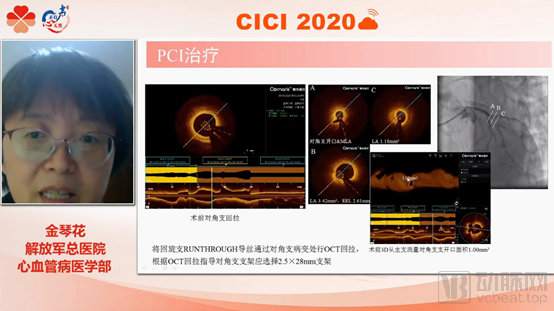
Vivolight OCT-Guided Bifurcation Lesions
Director Gao Lei shared a case study on Vivolight OCT-guided treatment of in-stent restenosis complicated by severe calcified lesions. In response to questions from panelists, Director Gao pointed out that OCT offers advantages over IVUS in analyzing the thickness of calcified lesions and the nature of neointimal plaques within stents, and that the imaging catheter of Vivolight OCT demonstrates excellent trackability.
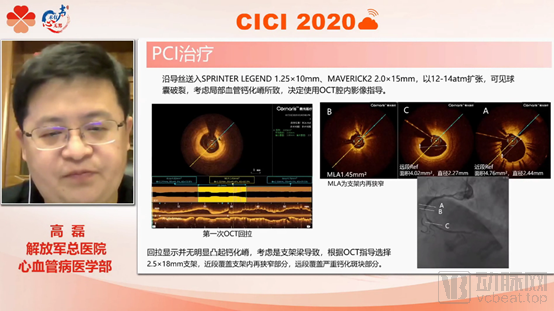
Vivolight OCT-Guided In-Stent Restenosis
Prominent domestic cardiovascular experts attending the launch event unanimously gave high praise to Vivolight’s cardiovascular OCT.
Professor Zhou Yujie noted that the fiber-optic probe of Vivolight’s OCT imaging catheter demonstrates excellent stability, with no instances of probe fracture observed across various lesion applications in clinical trials. Although Vivolight entered the OCT field later than some competitors, it started from a high baseline, having addressed certain inherent weaknesses from the outset, and delivers superior image quality. The device features a premium, sophisticated, and high-end aesthetic design; its appearance was so impressive that nursing staff at his hospital initially mistook it for imported equipment and stored it accordingly.
Professor Zeng Hong from Jiangxi Provincial People's Hospital, who has personally experienced Vivolight’s OCT system, also expressed that he was greatly impressed by its high resolution, excellent catheter deliverability, and 3D analysis capabilities. The device’s research-oriented analytical functions, such as bifurcation and angle measurements, as well as branch area assessments, are features not available on the latest imported OCT systems.
Professor Qian Juying described the market launch of Vivolight’s OCT system as “living up to expectations.” She stated that, based on the cases shared today, the image quality of Vivolight’s OCT system shows little difference from that of imported products.
Professor Gao Chuanyu of Fuwai Central China Cardiovascular Hospital commented that Vivolight’s ability to develop such a high-performance device in such a short time, with imaging quality comparable to imported products, is a breakthrough worthy of congratulations.
Professor Wang Liansheng from Jiangsu Province Hospital also stated that, compared with similar competing products, Vivolight’s OCT system provides clear visualization of branch ostia and apertures, expressing his expectation that it will benefit more patients in the future.
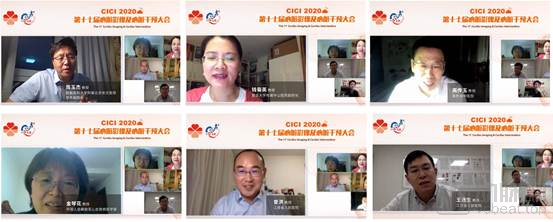
Expert Professors’ Comments on Vivolight’s OCT
Zhu Rui, founder of Vivolight, stated: “In the future, Vivolight will continue to deepen its research and development and innovation in intravascular imaging technologies, thoroughly implement the innovative concept of medical-engineering integration, refine its products with precision and excellence, and actively promote the domestic production of high-end medical devices.”
It is reported that Vivolight is currently developing a new generation of multimodal fusion (four-in-one) intravascular imaging system, which will be more user-friendly and intelligent, with an expected launch in 2021.
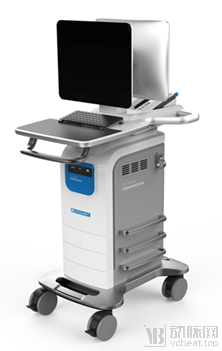
Multimodal Fusion (Four-in-One) Intravascular Imaging System
The market launch of Vivolight’s OCT system represents a strategic leap for China in the global high-end medical device sector. By providing more precise imaging guidance, reducing costs, and enabling smarter surgical procedures, it will promote the widespread adoption of OCT in cardiovascular interventional therapy. This offers cardiologists an additional tool option, ensuring that more patients with coronary heart disease receive more accurate diagnosis and treatment.