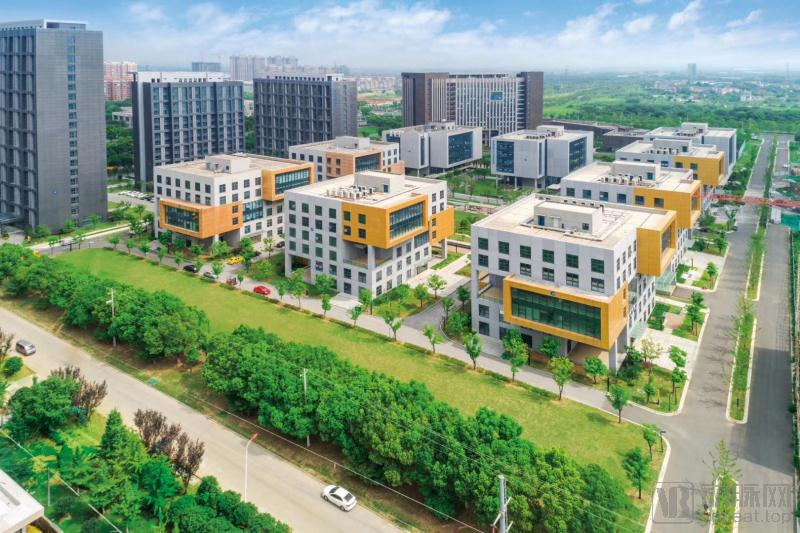
Gaochun, Nanjing: From 'Slow City' to Smart Medical Device Cluster – Accelerating Toward Global Leadership
In China, the medical device industry is a strategic emerging sector receiving key national support. Driven by continuous government policy support, an improving external environment, and sustained capital investment, the industry is experiencing robust growth.
In China’s first “International Slow City,” Gaochun District in Nanjing is steadily gaining momentum amidst the surging tide of medical device development. As a rising star in the medical device industry, the Gaochun Medical Device Industrial Park, despite its late start, boasts significant late-mover advantages in terms of growth speed and development potential. Looking ahead, Nanjing’s Gaochun will gradually achieve “acceleration within the Slow City,” building an intelligent manufacturing cluster for the medical device industry.
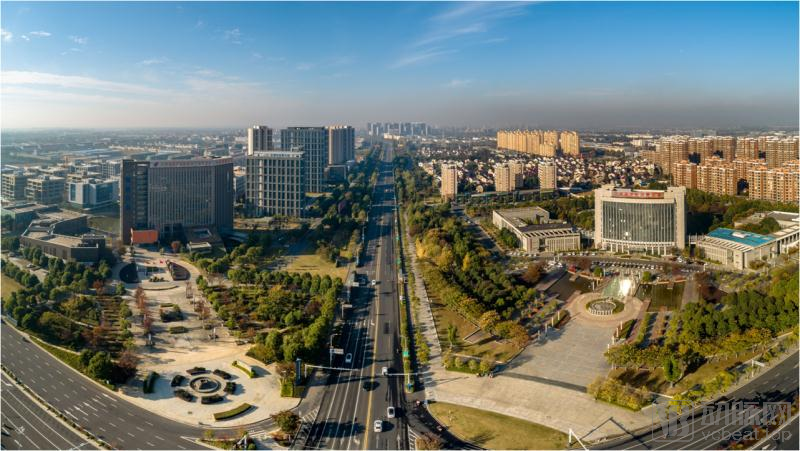
Drawing on History to Inform the Present: The Foundation for Building a World-Class Medical Device Industry Cluster
Massachusetts, USA, is the world’s premier biotechnology supercluster, home to six major biotech hubs, more than 550 biotechnology and pharmaceutical companies, and over 300 drug development firms. As the core of Massachusetts, the Greater Boston area is the most dynamic life sciences cluster globally, with medical devices representing a particularly significant sector within this industry.
In terms of the global development of the medical device industry, the United States is undoubtedly the leader. As of 2020, the U.S. ranks first worldwide in annual output value, number of employees, and per capita output value in the medical device sector. The Boston medical device industry accounts for a significant share of the overall performance of the U.S. medical device industry. According to data from the U.S. Department of Commerce, Massachusetts ranks among the top five states in the medical device sector in terms of shipment value, employment, wages, and value added, both on a per capita basis and in absolute scale.
By examining the developmental trajectory of Boston from 1950 to the present, we can identify several essential elements required for the development of a medical device industry cluster:
● Level of Industrial Development: The “Strategic Defense Initiative” (SDI), commonly known as the “Star Wars” program, during the Reagan era elevated technological R&D and the commercialization of scientific achievements to an unprecedented level. It was precisely this national strategic orientation that propelled U.S. military capabilities and industrial development to their zenith during the Reagan administration. The development of the medical device industry, which hinges on production and R&D capabilities, is closely intertwined with the overall level of industrial development. A global overview of the medical device industry reveals that countries and clusters holding a significant market position—such as the United States, Germany, and Japan—are underpinned by formidable industrial production capabilities. The prosperity of Massachusetts’ medical device industry is also inseparable from its long-standing history in precision engineering and instrument manufacturing. This historical foundation has undergone numerous design iterations, evolving from defense technologies to microcomputers, then to information and communication technologies, and ultimately to the current life sciences sector.
● Government Support and Guidance: Government policy support has strengthened industrial development, particularly in the areas of talent and project recruitment as well as the commercialization of scientific and technological achievements. In 2008, Massachusetts launched the Life Sciences Initiative, with the goal of investing $1 billion over the following decade in life sciences research. Policy support measures include fiscal subsidies for scientific research outcomes and various tax incentives, financing channels, and grants, such as the “Job Creation Incentive Program,” “Research and Development Tax Credits,” and the “Massachusetts Emerging Technology Fund.” Furthermore, the government has attracted innovative talent and enhanced the capacity for technology transfer by improving living conditions and social welfare, and by providing practical platforms for industry professionals.
● Technological R&D and Research Ecosystem: The establishment of an R&D system is critical to the development of the medical device industry. Technology has become the core driver of medical device advancement, and the capacity for technological development along with the robustness of R&D systems determine the long-term vitality of the medical device industry and its clusters. The Boston area in Massachusetts boasts world-class academic institutions such as the Massachusetts Institute of Technology (MIT) and Harvard University, as well as high-quality clinical medical resources including Massachusetts General Hospital and New England Medical Center. Furthermore, the region is home to numerous globally leading disciplinary groups and laboratories in fields related to life sciences, molecular biology, new materials, and chemistry.
● The development of industrial clusters evolves from nothing to something, with the city’s inherent characteristics serving as the incubator for industrial growth. For industrial clusters, core competitiveness lies in building a complete industrial ecosystem and integrating the entire industrial chain. Any regional industrial cluster must not only coordinate with the local industrial value chain but also integrate into the global industrial value system, which is an inevitable requirement of economic globalization.

Industrial clusters, or urban economic circles, are not arbitrarily delineated by the government; rather, they originate from a city’s inherent characteristics, with the government guiding the development of comprehensive entrepreneurial mechanisms and ecosystem construction. In the medical device sector, the industries in the Yangtze River Delta and the Pearl River Delta have already become highly competitive in terms of growth speed. Specifically, within the Yangtze River Delta Economic Belt, the pace of medical device industry development primarily depends on national strategic guidance for this economic belt and the intrinsic characteristics of its constituent cities.
Centered on Shanghai, with Hangzhou and Nanjing as its flanks, the Yangtze River Delta Economic Belt comprises cities in Jiangsu and Zhejiang that are outwardly oriented. These cities are at the forefront of development in the medical and health sectors. Nanjing, the ancient capital of six dynasties in Jiangsu Province, is home to more than 50 universities, over 800,000 enrolled college students, and more than 700,000 scientific research professionals. It also boasts 81 academicians from the Chinese Academy of Sciences and the Chinese Academy of Engineering, along with a large number of national-level laboratories, provincial key laboratories, and new-type R&D institutions hosted by universities. Consequently, Nanjing enjoys inherent advantages in both its talent ecosystem and its scientific research ecosystem.
In terms of industrial development, Nanjing has consistently maintained a robust growth trajectory among numerous cities. Currently, the industrial economy serves as the backbone of Nanjing’s real economy. The overall operation of Nanjing’s industrial economy remains stable, demonstrating favorable trends characterized by rapid growth in industrial production, accelerated development of leading industries, and continuous improvement in economic quality and efficiency. Nanjing’s industrial economy has laid a solid foundation for the development of the Gaochun medical device industry cluster.
In terms of industrial foundation, Jiangsu and its surrounding areas are the primary clusters for China’s medical device industry, featuring a rich industrial ecosystem and a robust consumer market. Nanjing currently has 36 Grade A tertiary hospitals, 20 clinical trial institutions for medical devices, and nearly 800 enterprises engaged in the research, production, and trade of medical devices, all of which provide a solid foundational environment for the development of the Gaochun Medical Device Industry Cluster.
Finally, in terms of government support and guidance, first-class policy initiatives have strengthened the development safeguards for the Gaochun medical device industry cluster, particularly in supporting innovative development, the real economy, and independent entrepreneurship. To encourage and support enterprises in applying for product registration, the government provides additional district-level subsidies, with financial assistance for product R&D and registration costs reaching up to RMB 5 million. To alleviate the investment burden on enterprises in the real economy, the government offers subsidies equal to 10% of equipment investments for completed projects listed in provincial and municipal emerging industry catalogs where equipment investments exceed RMB 2 million, with a maximum subsidy of RMB 16 million. In support of independent entrepreneurship, the government has established dedicated “green channels” and implemented a “one enterprise, one policy” service model to help Gaochun-based enterprises accelerate their growth.
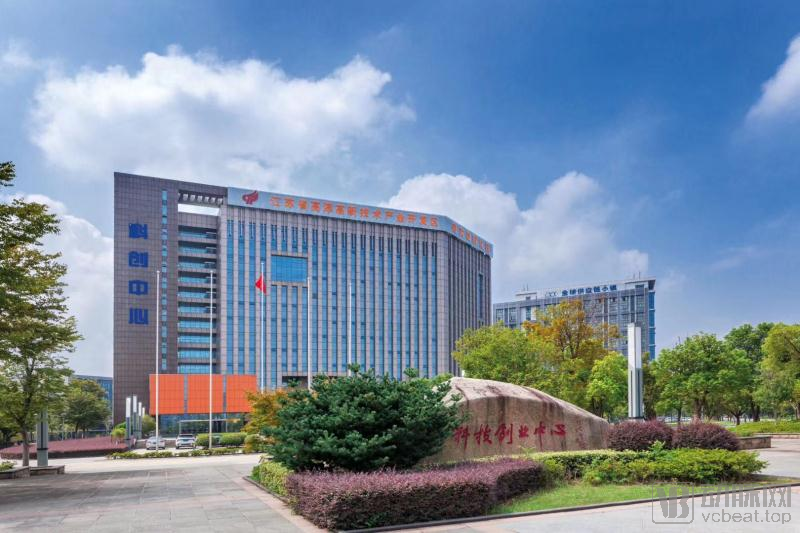
Within the Gaochun industrial cluster, the focus is on the medical device sector, prioritizing the development of forward-looking, differentiated, high-tech, and high-value-added enterprises specializing in in vitro diagnostics (IVD) products, high-value consumables, and rehabilitation equipment. Furthermore, to attract companies across the entire medical device industry chain as well as cross-sector enterprises, Gaochun provides a comprehensive suite of services, including market access and registration, manufacturing, specialized logistics, public R&D platforms, policy support, industrial capital, exhibition and trading facilities, and industrial supporting services.
To date, Gaochun has gathered 428 medical device manufacturing and operating enterprises, including 65 medical device manufacturers. Among them, 27 companies such as Youdebang Medical Technology, Siruiqi Medical Supplies, and Runjing Latex Products have been put into production, while 38 new investment projects under construction or preparation include Wuyuedao Medical and Fanbo Bio. The industrial park has established five new-type R&D institutions in the healthcare sector, including the Zhejiang University Nanjing Health Industry Research Institute.
Next, Gaochun will continue to prioritize the development of forward-looking, differentiated, high-tech, and high-value-added niche segments in the medical device industry, including high-value consumables, in vitro diagnostic (IVD) products, rehabilitation equipment, and home medical devices. Secondly, Gaochun will promote the coordinated development of high-tech R&D and high-end advanced manufacturing industries, such as stem cell therapy, gene testing and diagnostic equipment, wearable devices, medical imaging equipment, medical software, and rehabilitative assistive devices. Finally, Gaochun will also expand into related specialized medical services, including premium health check-ups, high-end elderly care and wellness, medical aesthetics, and traditional Chinese medicine (TCM) diagnosis and treatment.
By continuously optimizing its development direction and urban infrastructure, the Gaochun Medical Device Industrial Park aims to achieve a main business revenue of over RMB 12 billion in the medical device sector by 2025. The park plans to attract more than 300 medical device manufacturing enterprises, cultivate 8–10 leading companies in niche segments, foster 3–5 listed companies, and develop 1–2 unicorn enterprises. It will focus on forming 1–2 industrial clusters in specialized fields. In terms of talent aggregation, the park will not only attract a cohort of high-level technical professionals but also train a workforce of skilled laborers in the medical device industry.
In the future, an increasing number of medical device industrial parks will join the tide of development. However, regardless of how industry dynamics shift, Nanjing Gaochun remains confident about its future prospects. Building on its strong urban foundation and through continuous optimization of park planning, Gaochun will cultivate a smart manufacturing-oriented medical device industry cluster, thereby gradually moving to the center stage of the global medical device sector.