

How China's Tech Giants—Alibaba, Tencent, Baidu, JD, and Huawei—are Shaping the Future of Healthcare in 2026
Giants May Arrive Late, But They Never Miss the Show.
In any profitable sector.
Tech giants, including domestic players such as Baidu, Alibaba, Tencent, JD.com, and Huawei, are not only continuing to strengthen their core businesses but also actively pursuing diversification and cross-industry expansion, leveraging their technology, capital, and business models to make strategic moves across various sectors.
Beyond securing a second growth curve for their own development, they are also betting on the next high-potential industry or the next yet-to-be-named era, wagering that they will not only be present but also emerge as the most frequently cited players.
Healthcare is one sector that all the major players are eyeing.
“"In ten years, the health and wellness industry will become the largest sector, surpassing real estate and automotive."“Chen Dongsheng, founder of Taikang Insurance Group, said at a forum in 2019. Jack Ma has also publicly stated on various occasions that the healthcare sector is most likely to give rise to the next enterprise of BAT scale.”
The assertions made by industry leaders are well-founded. In 2019, China’s healthcare expenditure accounted for 6.6% of its GDP, whereas in the United States, this figure stood at 19.4%, with healthcare spending continuing to rise year on year. Consequently, tech giants have already been entrenched in the healthcare sector—characterized by its vast market scale and significant social demand—for many years.
Using market capitalization, the proportion of healthcare operations, and the volume of dynamic healthcare activities as benchmark indicators, this article takes BATJH as case studies to address the following two questions:
What moves have the tech giants made in their healthcare businesses in the first half of this year? What does their prior healthcare landscape look like?
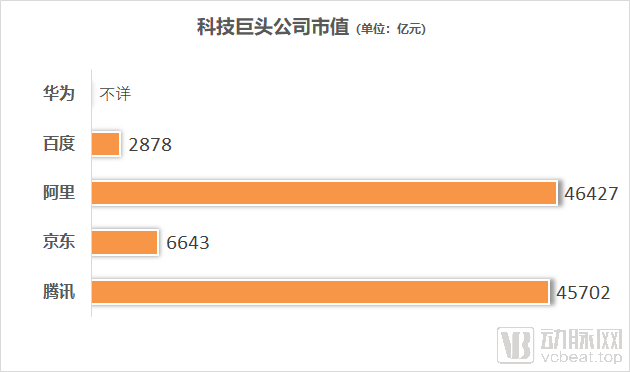
Data as of July 26, 2020 (Beijing Time). Currency conversion rates: 1 HKD = CNY 0.905; 1 USD = CNY 7.016.
Among the internet giants analyzed in this article, Alibaba has the highest market capitalization, followed closely by Tencent, with both companies reaching a scale of 4.5 trillion yuan. JD.com and Baidu, which rank behind them, trail significantly behind AT; JD.com’s market cap is approximately twice that of Baidu. Huawei has not disclosed its market capitalization data.
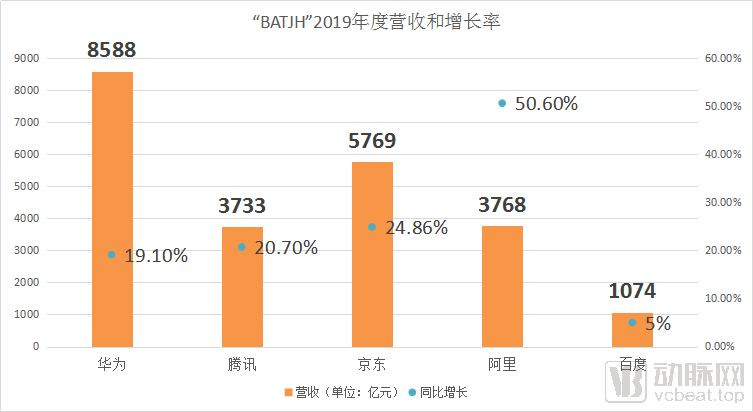
In terms of 2019 revenue, Huawei recorded the highest scale, with annual revenue reaching RMB 858.8 billion. Based on its 19.10% growth rate, Huawei’s annual revenue in 2020 is projected to reach the trillion-yuan level.
In terms of year-on-year revenue growth, Alibaba saw a 50.6% increase, while Baidu recorded only a 5% growth.
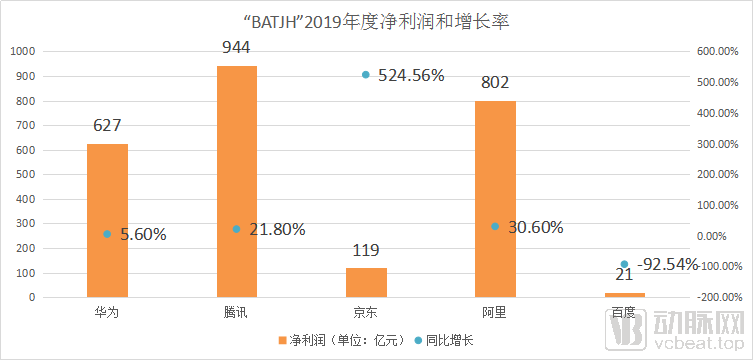
In terms of net profit, Tencent recorded the highest net profit in 2019 at RMB 94.4 billion, followed by Alibaba at RMB 80.2 billion. Based on projected growth rates, both Tencent and Alibaba are expected to achieve net profits exceeding RMB 100 billion in 2020.
Among the year-on-year growth rates of annual net profit, JD.com recorded the highest growth, with a 5.2-fold increase year on year; however, its net profit has only just reached the tens of billions of yuan level. Baidu posted the lowest growth rate, with a negative growth of -92.54%, representing a nearly twofold year-on-year decline. Notably, in Baidu’s first-quarter report for 2020, the company achieved a net profit of RMB 3.1 billion, a year-on-year increase of 219%. One driver of this positive business performance was the growth generated by the commercialization of its AI operations. The remaining four companies exhibited relatively stable changes in Q1 2020 and will therefore not be discussed further.
What We Aim to Explore Below: How Are These Five Tech Giants Engaging in Healthcare? Unless otherwise specified, all corporate dynamic information in this article is sourced from the Arterial Orange Database News Flash.
In 2014, Alibaba Group announced a strategic investment totaling US$170 million in CITIC 21st Century Limited, a subsidiary of CITIC Group, in partnership with Yunfeng Capital. In October of the same year, the Hong Kong-listed company CITIC 21st Century (00241.HK) issued an announcement officially changing its name to “Alibaba Health.”
Since then, Alibaba Health has become the implementation and practice platform for Alibaba Group’s “Double H Strategy” (Happiness & Health) in the broader healthcare sector. Within the comprehensive commercial ecosystem built by Alibaba, Alibaba Health plays a pivotal role in providing “Internet + Healthcare” service solutions to China’s 1.4 billion people. (Note: The term “Alibaba Health” mentioned in this article carries two meanings: it refers either to Alibaba Group’s strategic layout in the medical and health industry or to the Hong Kong-listed company “Alibaba Health.”)
In the first half of this year, Alibaba Health experienced significant business changes. In February, Alibaba Health announced its plan to acquire Tmall’s pharmaceutical e-commerce business for RMB 8.075 billion. In March, a leadership transition occurred, with Zhu Shunyan succeeding Shen Difan as CEO. In May, Alibaba Health disclosed two key figures: first, the cumulative net active users of the healthcare channel on Alipay exceeded 390 million; second, for the fiscal year 2020, Alibaba Health reported revenue of RMB 9.597 billion, representing an 88.3% year-on-year increase.
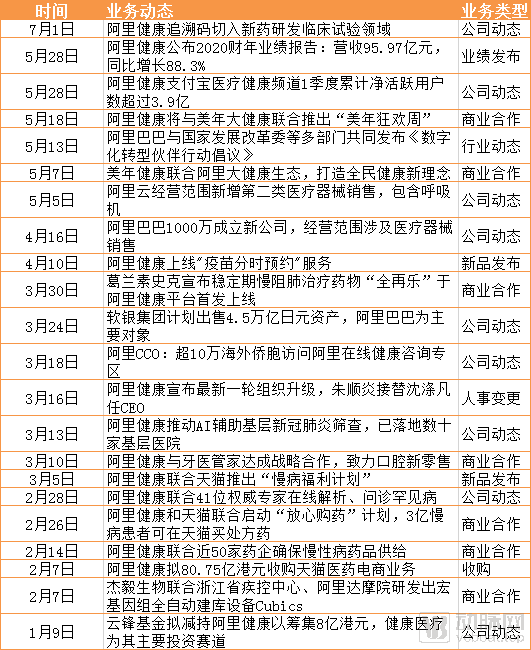
Note: In the analysis of business developments across major companies, this article excludes pandemic-related updates to better highlight core information. Following the outbreak, these companies fulfilled their social responsibilities by actively combating the virus, a commendable effort that VCBeat has reported on multiple times. Therefore, this article will not further discuss the pandemic response efforts of these industry giants.
In its previous healthcare layout, Alibaba Health primarily operated four major business segments: pharmaceutical e-commerce, internet healthcare, smart healthcare, and consumer healthcare.
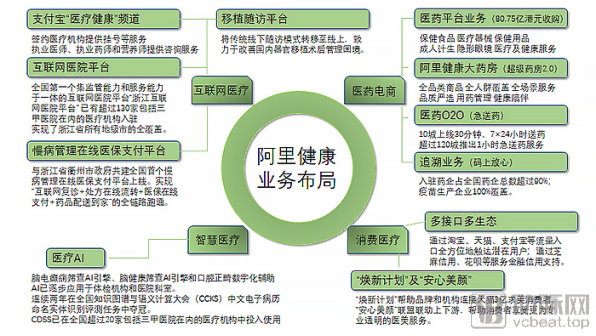
This business layout map is current as of March 31, 2020.
Pharmaceutical e-commerce is Alibaba Health’s traditional business and currently its core operation. In the financial data disclosed by Alibaba Health in May, the company reported annual revenue of RMB 9.597 billion and a GMV exceeding RMB 83.5 billion, with the pharmaceutical e-commerce segment undoubtedly contributing the majority of both figures.
In the realm of internet healthcare, Alibaba Health leverages Alibaba Cloud to help Zhejiang Province establish a provincial-level internet hospital platform, achieving full coverage at the prefectural and municipal levels. Furthermore, Alibaba Health works in close synergy with its sister business units within the Alibaba ecosystem, such as Alipay and DingTalk, to provide users with services including medical consultations, appointment registration, patient management, and expert health lectures. In chronic disease management, Alibaba Health has jointly built the Quzhou Chronic Disease Management Platform with the Quzhou Municipal Government of Zhejiang Province, pioneering a new model that integrates “online follow-up consultations, electronic prescription circulation, online medical insurance payment, and home delivery of medications.”
In the realm of smart healthcare, Alibaba Health’s medical algorithms are beginning to see partial application in areas such as electronic medical records (EMR), AI-based screening for various diseases, and clinical decision support systems (CDSS).
According to insiders at Alibaba Health, the company’s business layout will undergo significant changes in the second half of this year. VCBeat will continue to follow up on these developments.
In addition to building its own businesses, Alibaba has also made significant acquisitions in both the primary and secondary markets. For instance, in the niche sector of health checkups, in early 2019, Alibaba’s Taobao, together with Suning.com (in which Alibaba holds an investment) and other parties, jointly financed the privatization of all shares of iKang Healthcare Group, a leading player in the industry, in a deal valued at $1.5 billion. Subsequently, entities affiliated with Alibaba collectively invested RMB 7.265 billion to become the second-largest shareholder in Meinian Onehealth.
Thus, in the field of domestic health checkups, who would still question Alibaba’s position?
Based on its current business layout and past strategic moves, Alibaba’s health strategy is trending toward building a large-scale platform, aiming to become the core gateway for the entire industry in the future. The path to achieving this overall strategy involves a combination of organic development and acquisitions, integrating internal resources across the Alibaba ecosystem to continuously move closer to the core of healthcare and medical services.
On January 26 this year, during the COVID-19 pandemic, Tencent officially launched the Medical Health module on the WeChat Pay page (commonly known as the “WeChat Nine-Grid”), providing medical services to over 1 billion users.
This move has drawn widespread acclaim from industry insiders: Is Tencent Health, with over 1 billion users, about to make its grand entrance?
In late March, as the pandemic stabilized, Tencent Healthcare made a series of moves. After reaching strategic partnerships with several companies in succession, it executed two investment and financing transactions: investing $500 million in Gaoji Medical and participating in LaoBaixing’s private placement fundraising.
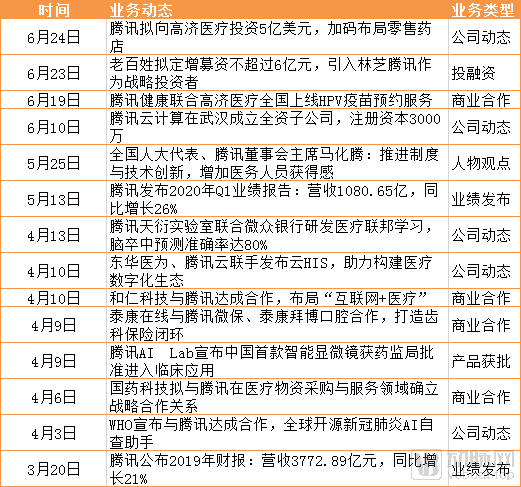
In its past medical business layout, Tencent has actually been making strategic moves under the radar. In recent years, relying on social platforms such as WeChat and QQ, and supported by technologies like AI, big data, and cloud computing, Tencent has built a vast healthcare empire encompassing medical services, hospital management, health insurance, and pharmaceutical R&D and distribution.
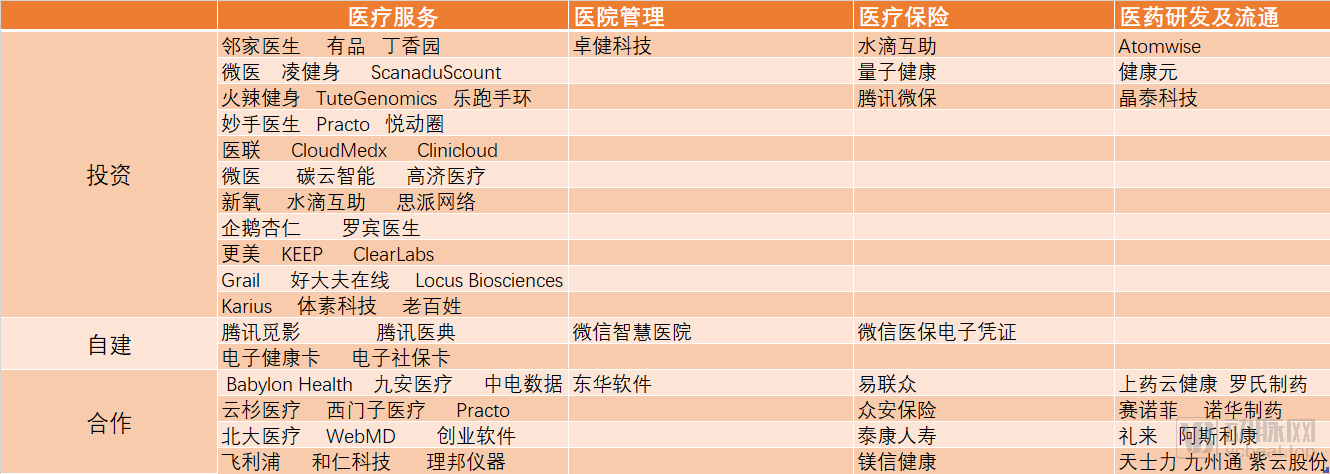
(Tencent's Healthcare Layout)
According to incomplete statistics from Analysys, Tencent’s total investment in the healthcare sector exceeded RMB 24 billion between 2014 and May 2020. Judging by the current development of its portfolio companies, Tencent’s investment performance has been remarkable; across multiple sectors such as medical aesthetics, internet healthcare, and sports and fitness, its invested enterprises either rank first or at least within the top five in their respective industries. For instance, in the field of internet healthcare, Tencent has successively invested in companies including WeDoctor, DXY, Haodf Online, and Medlinker.
At this pivotal moment of explosive growth in internet healthcare, who would still question Tencent’s position in this field?
Tencent’s strategy has always centered on connectivity, an approach that has extended into the healthcare and medical sector. Based on Tencent’s current developments and historical investments in this industry, the company is working to close the loop of its healthcare ecosystem. This entails minimizing the steps users need to take within Tencent’s ecosystem to access healthcare services, enabling them to obtain any such service—such as consultations, health management, appointment scheduling, online diagnosis, and medication purchases—with a single click. This likely represents Tencent’s core strategic direction.
During the pandemic, Tencent officially launched a medical and healthcare page on the “Nine-Grid” interface of WeChat, which boasts over one billion users. This move can be regarded as a hallmark of Tencent’s initial establishment of a closed-loop healthcare ecosystem. In the short to medium term, as the capabilities of this closed loop deepen and the pathway for users to access services becomes shorter, “Tencent Health” is poised to emerge. At that time, Tencent Health’s capital scale and user base are likely to become an immensely formidable presence in the industry.
Over the past decade, Baidu has invested over RMB 80 billion in research and development, primarily focused on artificial intelligence.
Three Years After Shutting Down Its Healthcare Division, Baidu Returns with Its Algorithms
Unlike before, when Baidu’s business primarily focused on the medical sector, its latest return sees simultaneous expansion into both the health and medical sectors. With offerings such as Baidu Health Medical Encyclopedia, internet hospitals, AI imaging, and health management, Baidu is rapidly entering the healthcare market.
This year’s pandemic has provided Baidu with a near-perfect timing to extensively lay out its healthcare business. Baidu made a perfect debut with the strategic positioning of “content + service” dual ecosystem.
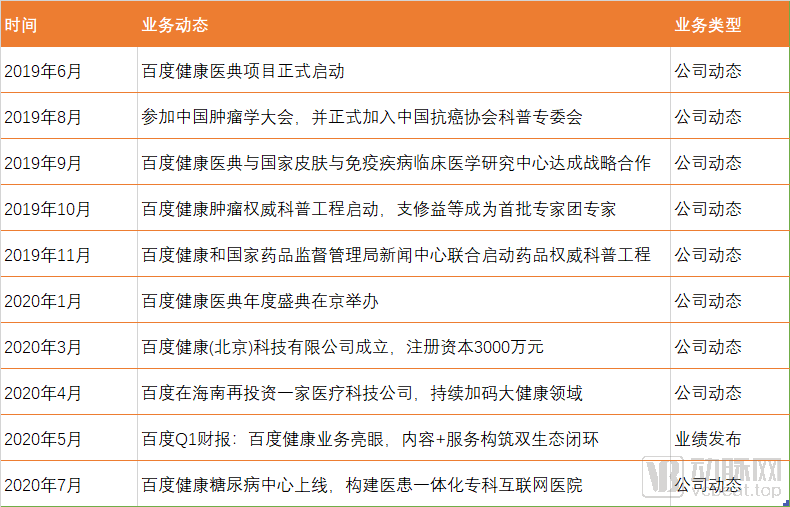
Note: As Baidu Health was established relatively recently, its healthcare developments for the second half of 2019 are consolidated herein.
In March this year, Baidu established a health subsidiary and launched the “Baidu Health” mini-program, which may signal that Baidu has officially set sail with its “Baidu Health” initiative, building a dual-ecosystem closed loop through content plus services. In July, the Baidu Health Diabetes Center was officially launched. By establishing an integrated specialist internet hospital for doctors and patients, it focuses on chronic disease management and provides multidimensional products and services to the vast number of diabetes patients, including diabetes health management and medication reminders.
Although Baidu re-entered the healthcare and medical sector somewhat later, it has already penetrated multiple niche segments within a relatively short period.
In summary, Baidu Health is building a commercial closed loop that spans from a content ecosystem—covering health and medical science popularization, Q&A, and live streaming—to healthcare services such as online consultations and health management.
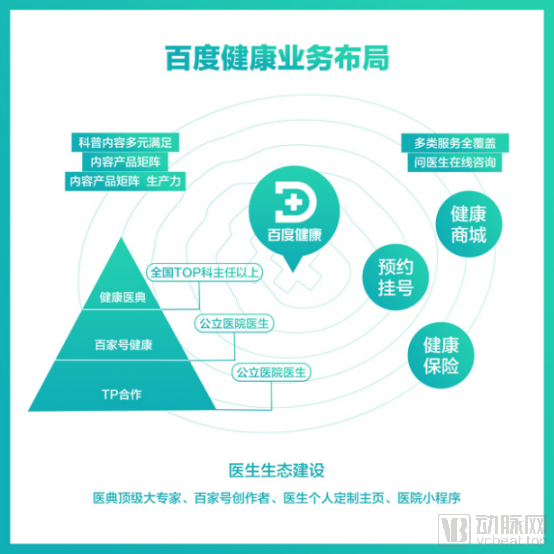
In terms of its content ecosystem, Baidu Health announced it would provide RMB 50 million in cash and 50 billion units of targeted traffic exposure to support authoritative contributors in the health sector, including physicians, pharmacists, nurses, and registered dietitians. Content formats encompass videos, live streams, articles with images, Q&A sessions, and status updates. Regarding the healthcare services ecosystem, the Baidu Health platform aggregates diverse medical services, covering online consultations, medication delivery appointments, hospital registration appointments, psychological counseling, and insurance, thereby achieving a certain degree of integration between the medical service value chain and the health content ecosystem.
In addition, Baidu has demonstrated significant capabilities in AI and big data. In February this year, Baidu open-sourced its AI model for analyzing CT images of pneumonia for the first time. In June, Baidu further partnered with Miao Health, a well-known health management company, to deepen collaboration in the field of chronic disease management. Together, they are developing an intelligent family doctor solution based on the Xiaodu Smart Speaker, providing patients with chronic diseases with multi-scenario chronic disease management services.
With artificial intelligence as the core driver, search and information feeds as powerful engines, and self-built healthcare services as the foundation, can Baidu secure its rightful place in the healthcare industry in the future?
In May this year, Baidu Health made its debut in Baidu’s Q1 financial report. The report revealed that during the pandemic, Baidu Health’s “Ask a Doctor” service provided tens of millions of online health consultations, establishing itself as the primary entry point for Chinese-language online health consultations.
In the long run, Baidu’s algorithmic investments exceeding RMB 80 billion may bring significant incremental growth and new possibilities to digital healthcare.
In May 2019, JD.com announced the official establishment of its subsidiary, JD Health. At its inception, JD Health secured $1 billion in Series A financing. According to a report by Tencent News’ “Yixian” column, JD Health’s post-money valuation was approximately $7 billion.
This revelation sent shockwaves through the industry: Is another internet giant poised to launch a large-scale expansion into healthcare?
At the time of its spin-off, JD Health’s most mature business was pharmaceutical retail, with its core product being JD Pharmacy. Following the spin-off, it expanded from initial drug retail into the deeper realms of pharmaceutical care services and internet-based medical services. Currently, within a little over a year, JD Health has achieved preliminary coverage across the entire pharmaceutical industry chain, the full spectrum of medical processes, all health-related scenarios, and users’ entire life cycles, thereby building a relatively comprehensive “Internet + Healthcare” ecosystem within the industry.
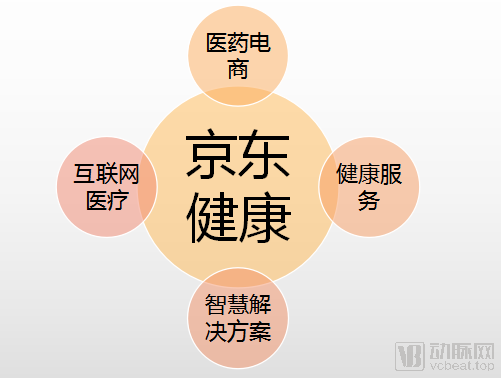
Leveraging AI technology, JD Health has implemented a series of products and applications in the healthcare sector, including AI triage, AI-assisted diagnosis and treatment systems, AI-powered customer service for follow-up care, and AI-driven rational medication use and prescription review systems. Furthermore, JD Health has signed strategic “Healthy City” cooperation agreements with multiple cities and regions, covering areas such as pharmaceutical retail, internet hospitals, online medical insurance, and smart healthcare.
In the first half of this year, JD Health continued to drive growth across multiple business lines. In April, the launch of the “Nankai-JD Internet Hospital” integrated medical insurance into healthcare and medication purchasing services, enabling users to make online payments via medical insurance. In June, JD Health established a subsidiary whose business scope covers the sales of Class I and Class II medical devices, remote health services, and more. At the end of June, JD Health announced a strategic partnership with Siemens, a global healthcare giant. According to Xin Lijun, CEO of JD Health, in an interview, both parties will jointly explore solutions for medical equipment procurement and supply chain services for non-public healthcare institutions.
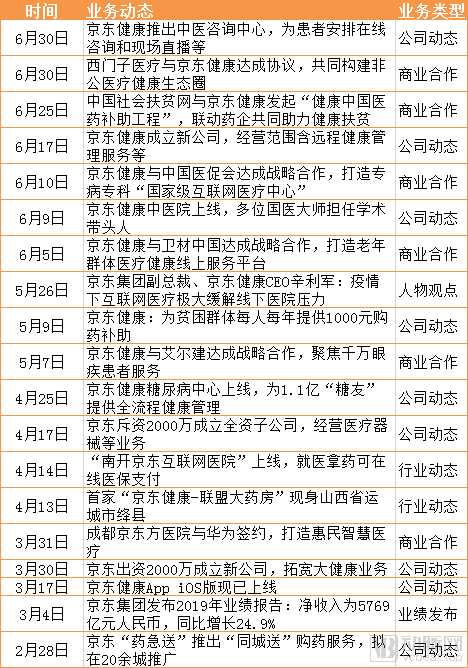
Although JD Health is a newcomer in the healthcare industry, it boasts a powerful growth engine, backed by JD Group’s nearly 400 million user base, robust supply chain system, and extensive logistics network.
In an interview, JD Health CEO Xin Lijun shared his insights into the industry: “Healthcare is like a Go board. The vertical lines, centered on individuals, connect medical services, online consultations, and chronic disease management. The horizontal lines are dominated by physical operations such as pharmaceutical distribution and offline services. The hallmark of internet healthcare lies in its need to place every move at the intersection of these two axes to generate impact.”
JD Health’s future strategic focus may also unfold and deepen along these lines, namely, by enhancing the accessibility and service capacity of medical care across all user health scenarios and throughout the entire life cycle.
Huawei, though low-key, has been strategically positioning itself in the healthcare sector for many years. From its early smart wearable devices to its medical business initiatives in the past couple of years, Huawei has gradually moved closer to the core of healthcare. Currently, Huawei provides comprehensive, secure, controllable, easy-to-maintain, and future-oriented wireless network solutions for the healthcare industry, covering areas such as digital hospitals, regional healthcare informatization, and tiered diagnosis and treatment.
Huawei’s digital hospital business encompasses mobile healthcare, digital hospital networks, and networks for small and medium-sized hospitals. Huawei’s regional medical information platform features innovative ICT solutions such as virtualized cloud platforms, full-lifecycle management of health records, and cloud networking. Huawei’s tiered diagnosis and treatment system is built on a new ICT architecture characterized by “one network, one cloud, one platform,” which enables medical collaboration, cloud-based sharing, and open compatibility, and involves partnering with ecosystem partners to develop comprehensive tiered diagnosis and treatment solutions.
In the first half of this year, Huawei made frequent moves in its healthcare business. In March, Huawei launched two smartwatches featuring underwater monitoring and scientific sleep tracking capabilities. By April, it had established a new Honor terminal company, with its business scope covering the sales of Class I, II, and III medical devices. In the same month, Huawei Cloud announced that it would offer its medical AI services free of charge globally.
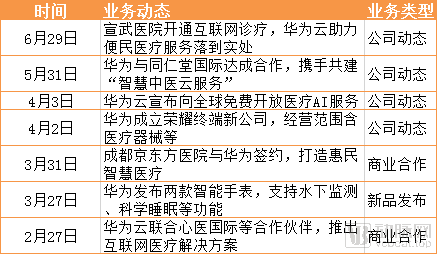
From a strategic perspective, Huawei will continue to uphold and advance the implementation of cutting-edge technologies such as artificial intelligence, 5G, and the Internet of Things (IoT) in the healthcare industry. Given that Huawei has developed the HarmonyOS operating system, what expectations can be placed on the impact of applying its suite of advanced proprietary technologies to the health and medical sector?
Currently, at the consumer level, Huawei’s primary products remain limited to smart wearable devices. However, in the B2B sector, Huawei has been actively promoting the application and implementation of its 5G, cloud computing, artificial intelligence, and Internet of Things (IoT) technologies within the healthcare industry. The company has established deep collaborations with multiple stakeholders across the industrial chain, including hospitals, medical device manufacturers, healthcare IT vendors, and government entities. As a result, several disruptive application scenarios and products are currently in development.
Overall, Huawei Healthcare’s strategic focus is on empowering the industry chain by helping participants achieve technological upgrades. In the future, Huawei is likely to be present in most products and services across the entire healthcare sector.
This year’s outbreak has not only exposed immense healthcare demands but also catalyzed improvements on the supply side of the industry. More directly, the pandemic has accelerated the entry of major players and their rapid expansion and rise across multiple niche sectors.
At a pivotal moment of vigorous growth across multiple policy-driven sectors—including tiered diagnosis and treatment, prescription outflow, internet-based healthcare, and commercial health insurance—the walls surrounding public hospitals are crumbling. Large volumes of medical-grade data are either flowing out of hospitals or being generated externally, while an innovative healthcare service system is taking shape.
In the past, public hospitals virtually constituted the entirety of medical services; in the future, they may become just one node within the health service ecosystem—albeit an immensely important one.
In the process of building innovative healthcare service systems and innovative healthcare payment systems, the strategic aim of BATJH is arguably to become giants in the new healthcare ecosystem. From a longer-term perspective, the current business layouts of these five companies have only identified one or a few small pieces of the future healthcare puzzle; the evolution of future healthcare has, in a sense, only just begun.
This industry is attracting an increasing influx of talent, enterprises, and capital. In January 2018, Meituan established an independent medical aesthetics division to enter the consumer healthcare market; in October, Pinduoduo launched its medical health segment. This May, ByteDance announced the full acquisition of Baike Mingyi Network. With these moves, all major internet giants have now entered the arena.
On the capital front, government funds, industrial capital, and venture capital are allocating an increasingly larger share of their investments to the healthcare and medical industry. Established firms such as Hillhouse Capital, Sequoia Capital, and Northern Light Venture Capital have shifted their focus to healthcare and medicine, with at least 30% of their investment portfolios dedicated to this sector.
Based on the experience of industry giants and capital surging into specific fields or sectors, even when competitors have been deeply entrenched in the track for many years, these new entrants can still rapidly ascend to the first tier within an extremely short period.
However, in the healthcare industry, even giants with hundreds of millions or billions of user traffic, and even with substantial capital in RMB, USD, or HKD, find it difficult to truly disrupt or transform the entire industry in a short period. In fact, it can be said that they struggle to genuinely disrupt or change even a specific niche segment within the industry.
This industry has, through countless failures, validated a fundamental truth:
What truly transforms healthcare must be rooted in compassion, guided by reverence, and forged through time.