

Li Tiantian: For 20 Years, We’ve Grown Along Our Own Curve
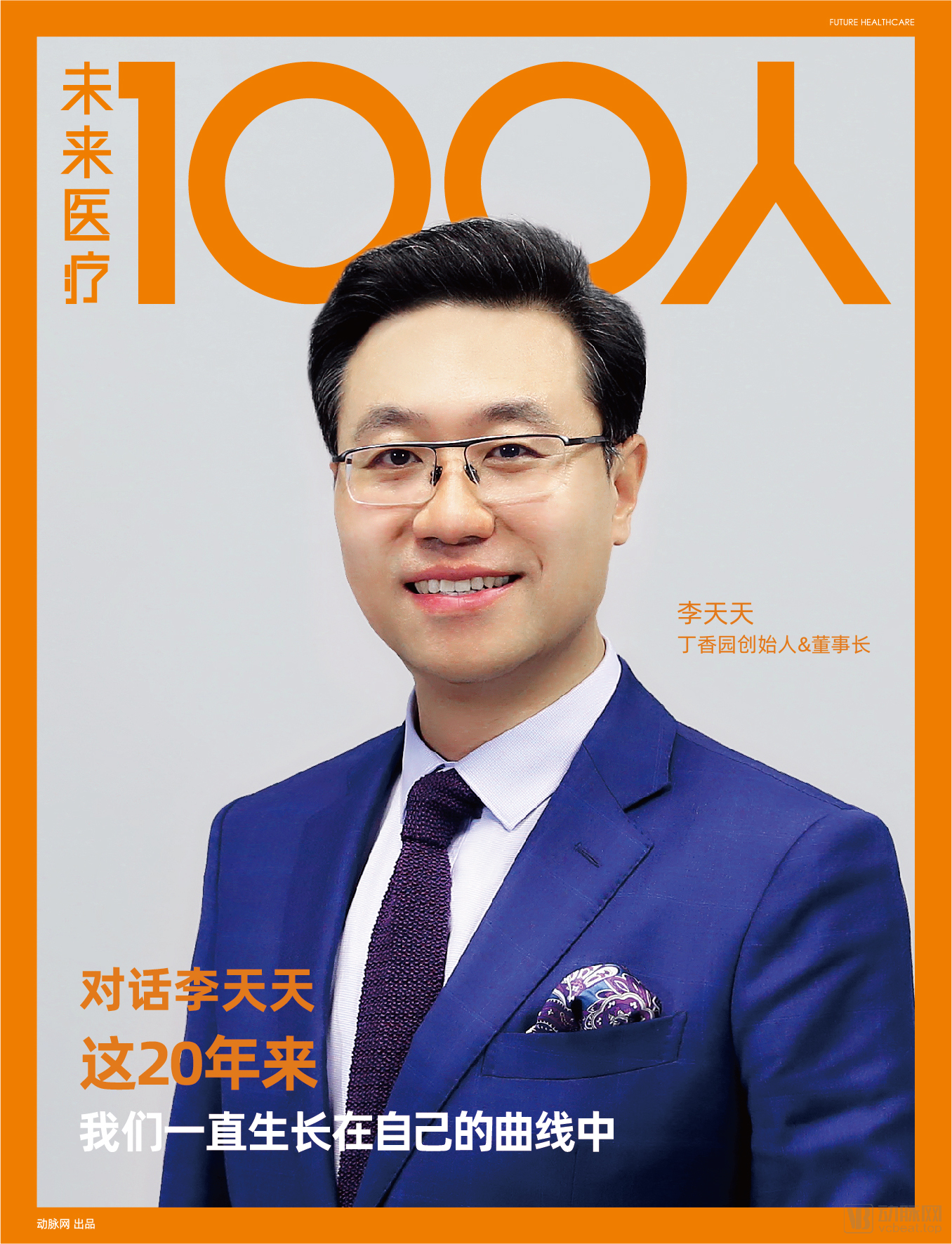
20,45。
Yesterday, DXY held an event at its Hangzhou headquarters to commemorate the company’s 20th anniversary. DXY has turned 20, while its founder, Li Tiantian, is now 45 years old.
Over such an extended period, both Li Tiantian and DXY, the company he founded, can be regarded as industry veterans in both the internet and healthcare sectors.
In 2000, Li Tiantian, then a medical student, founded the “DXY” website to facilitate medical literature searches for his peers. Over the next five years, the platform amassed hundreds of thousands of users. At that point, Li Tiantian, who had completed his master’s degree in tumor immunology at Harbin Medical University, found himself unexpectedly perplexed by this side project he had developed in his spare time: “Should I continue with my doctoral studies or leave academia to pursue entrepreneurship full-time?” He sought advice from various sources and ultimately embarked on a career path distinct from that of the vast majority of medical students.
Today, DXY has achieved many remarkable accomplishments.
Not to mention the Quanjian incident, which had significant social impact, or the COVID-19 epidemic map that was launched first and garnered over 4 billion visits. Specifically, from a business perspective: On the D (Doctor) side, DXY has connected 5.5 million professional users, including 2.1 million physicians, accounting for 71% of the total number of doctors in China. On the C (Consumer/Patient) side, DXY operates 8 apps and 62 WeChat official accounts, with its top three accounts having nearly or already exceeded 10 million subscribers each. In terms of connecting with the B side (pharmaceutical companies, hospitals, and insurance firms), DXY leverages its strong resources on the C and D sides to build a highly profitable business model, making it one of the few companies in the industry capable of achieving sustained, scalable profitability.

(The photo shows the three co-founders of DXY; from left to right: Li Tiantian, Zhou Shuzhong, and Zhang Jin)
The number of employees at DXY has grown from just Li Tiantian, to three (with former DXY forum moderators Zhou Shuzhong and Zhang Jin joining as co-founders), and now to nearly 1,500. Its office space has also evolved, from a student dormitory to partner Zhang Jin’s 8-square-meter bedroom, and now to the five-story “Flower Factory.”
In the capital markets, DXY has also been highly sought after, securing a total of four rounds of funding since its establishment. Investors include prominent firms such as DCM China, Tencent, and Shunwei Capital, with cumulative financing approaching USD 200 million. During its Series D round in 2018, led by Trustbridge Partners, the company’s valuation exceeded USD 1 billion.
Only when the water is deep can the fish grow large. Over the past two decades, the industry landscape surrounding DXY has undergone significant transformation, with a diverse array of players taking turns entering the internet healthcare sector.
As early as around 2000, companies such as Gamma Doctor and Feihua Health Network began exploring online consultation models. With the advent of mobile internet, enterprises like Chunyu Doctor and WeDoctor ushered the industry into the first year of mobile healthcare. Following the introduction of policies on internet-based healthcare in 2018, and particularly since the onset of the pandemic, public hospitals across various regions have successively entered the field, leading to the establishment of more than 400 internet hospitals.
For DXY, which has a 20-year trajectory on the development curve of internet healthcare, it has not only fully witnessed and experienced the peaks and troughs of the industry cycle but also made strategic choices distinct from its peers at key junctures such as mobile healthcare. For instance, in 2015, it comprehensively expanded into the consumer market by launching new media operations focused on health science communication.
While many companies in the industry with valuations or market capitalizations exceeding billions or even hundreds of billions remain unprofitable, DXY has consistently maintained stable operational performance. As investment hype subsided and the sector entered a policy-driven freeze, causing many enterprises to collapse during the downturn, DXY managed to secure $100 million in financing against the tide.
Li Tiantian and DXY may possess qualities that are unknown to us yet worth learning from.
What pivotal moments shaped Li Tiantian into who he is today, and how does he define the essence of healthcare?
What exactly was the catalyst that shaped DXY into what it is today? And as the development of internet hospitals gained momentum, why did DXY shift its business focus to the consumer (C-end) market?
On the occasion of DXY’s 20th anniversary, the VCBeat profile team interviewed Li Tiantian at DXY’s Hangzhou headquarters, seeking responses to certain questions—though not necessarily definitive answers.
The interview was scheduled to begin at 2:00 p.m. At 1:45 p.m., Li Tiantian returned to his desk after a workout, with sweat covering his forehead and arms. It is said that he once lost 20 kilograms in seven months and has since maintained consistent exercise and a balanced diet. The conversation started with this topic.
Below is an excerpt from the interview:
“My dream as a student was to become a doctor. I was 100% certain I would become one, with absolutely no second choice.”
VCBeat: You have lost a significant amount of weight compared to a few years ago. What motivated you to manage your health and lose weight?
Li Tiantian: We are in the healthcare industry to begin with; if we are overweight and not in good health, it creates a poor professional image.
Let me tell you a joke. When I was interning at a hospital, I saw a parent bringing their child to a weight management clinic. The little boy was extremely obese. Probably due to his overweight issue, the child walked in and immediately came back out. His mother asked, “Why did you come out?” He replied, “Look, that doctor is even fatter than I am. I don’t want him to treat me. He can’t even manage his own weight; how could he possibly manage mine?”
Therefore, as we operate within the healthcare industry, we pay close attention to many health-related issues. I personally read articles from Dingxiang Doctor every day to acquire health knowledge.
VCBeat: If time could turn back 20 years, when you were still a student, did you ever dream of what kind of person you would become?
Li Tiantian: I will become a doctor, 100% certain. There is absolutely no second choice.
VCBeat: Interest or?
Li Tiantian: My undergraduate, graduate, and doctoral studies were all in medicine; I have been pursuing medical education throughout. Whether it was coursework, internships, or serving as a resident physician in hospitals, the entire process continuously reinforced my career choice. The more I engaged in this field, the more I realized how meaningful and valuable it is.
So my idea at the time was to become a doctor, and specifically, I hoped to be a pure clinician. I remember that during my surgical rotation in the hospital, my underwear was never dry; I was running around every day, drenched in sweat, yet I felt an immense sense of accomplishment.
VCBeat: What motivated you to forgo a career as a physician and choose entrepreneurship instead?
Li Tiantian: At the time, I was deeply torn when making the decision. On one hand, I wanted to leave my previous position to work on DXY full-time, as it already had hundreds of thousands of users back then. I was acutely aware that without me or someone else dedicating themselves full-time to the project, DXY would likely have faded into obscurity within three to five years, given the rapid pace of internet development.
But on the other hand, I have already completed systematic medical education at the undergraduate and master’s levels, am currently pursuing doctoral studies, and will soon obtain my Ph.D. degree.
VCBeat: Hmm.
Li Tiantian: So I was truly torn. At the time, on the DXY Forum, there were many physicians in situations similar to mine. I kept posting questions, asking myself whether I should leave my current path and whether I should join DXY. Yet, the more I asked, the more confused I became. The more inquiries I made, the more complex the advice I received grew. Everyone had different perspectives, and each person’s argument sounded compelling, backed by their own coherent logic. Many urged me to remain in clinical practice, pointing out that my degree was just within reach and it would be a pity not to obtain it. They emphasized that upon earning my degree, my specialty would be highly sought-after both in China and abroad, paving the way for me to become an esteemed medical expert or scientist. In contrast, very few encouraged me to step out and embark on an entrepreneurial venture.
VCBeat: What prompted you to make the decision?
Li Tiantian: There was a user on the DXY Forum with the screen name “Purple Bear,” whose real name is Zhang Nan. He is currently the Director of the Department of Neurosurgery at Huashan Hospital in Shanghai and served as a forum moderator on DXY at that time. After he made one remark, I immediately understood. He said, “Tian Tian, stop asking questions. You’ve already made up your mind; you’re just looking for validation. Stop searching, and go ahead to do what you truly love.”
Looking back, I realize that’s indeed the case. I had already made up my mind to start a business, but because there were so many things I was reluctant to leave behind, I kept seeking validation from others.
VCBeat: At that time, the BAT companies were still in their growth phase. Did you assess the potential risks of starting your own business, given that the outlook was far from certain?
Li Tiantian: In fact, physicians are characterized by risk aversion. We are committed to minimizing all risks, as we deal with patients and cannot afford any negligence; clinical practice has taught us this lesson time and again. Physicians invariably anticipate various potential scenarios and strive to mitigate risks to the lowest possible level. This is a professional predisposition inherent to the medical profession. When faced with high uncertainty and significant risk, most physicians will choose not to proceed in that direction.
My classmates and peers on the DXY forum mostly advised me to stay in clinical practice and research, as this path is absolutely promising. However, I still had an inner desire to venture into entrepreneurship and give it a try, so I decided to step out.
What Turning Point Shaped Li Tiantian into the Person He Is Today?
VCBeat: Looking back, how do you view this choice?
Li Tiantian: Both are right; neither is wrong. There is nothing wrong with being a physician, nor is there anything wrong with venturing into entrepreneurship. Starting a business has changed the way I view and think about problems, which differs from my approach as a physician. As a physician, the focus is more on the individual, dealing with one patient at a time, and at most, considering the patient’s family members. In running a company, whether addressing internal employees, clients, or users, the emphasis shifts to team and group dynamics, focusing on identifying their core needs.
VCBeat: Over the past 20 years, what do you consider to be your greatest strength or advantage?
Li Tiantian: I believe that over the past 20 years, I have benefited from a keen sensitivity to needs and pain points, which may also encompass emotional aspects. When I worked as a physician, I had to engage with patients, understand their perspectives, and persuade them when they rejected the treatment plan I recommended as most suitable for them, always acting in their best interests. This training began from the moment I stepped into the hospital.
I am perhaps more attuned to users’ needs and pain points than the average person. When I founded DXY, it stemmed from a simple observation: many of my peers struggled to use the internet for literature searches.
VCBeat: This is the origin of DXY.
Li Tiantian: Yes. I recognized this pain point among my peers, understood the solution, and was eager to share it.
VCBeat: How do you currently evaluate yourself?
Li Tiantian: No comment; it’s not the time. I think any evaluation should wait until a final verdict can be rendered.
VCBeat: What do you think was the turning point that made Li Tiantian who he is today?
Li Tiantian: First, I believe it was the broader context of reform and opening-up that provided commercial enterprises and the market economy with such an opportunity for development.
Secondly, I would like to express my gratitude to the internet industry, particularly those influential figures who emerged in its early days. The founders of these leading internet companies have set an example and a model for people like us. They made me realize that there are so many opportunities to pursue within a market economy.
Finally, seeing so many pioneers achieve such remarkable success in the internet industry gives us confidence that there is a viable path forward and a high probability of success.
VCBeat: It is one thing to have a path to follow, and quite another to walk it well. Why have you been able to keep going until now?
Li Tiantian: It wasn’t just one person, but a group of people—the entire DXY team—that has brought us to where we are today. The entrepreneurial journey of DXY has been quite interesting. The three founders were neither classmates nor colleagues; we were initially online acquaintances. Zhang Jin and Lao Zhou both served as moderators on the DXY forum.
When they joined, it was not for financial gain, but because they believed that here they could find a group of like-minded individuals to effectively execute and successfully accomplish our mission. This has likely been the driving force that has brought us to where we are today. We do not focus on how illustrious one’s social titles may be, or how vast their personal wealth is; these are, in fact, of secondary importance.
All three of us founders also hope that after we pass away, our bodies can be donated to medical schools to serve as cadaveric donors.
“Before 2015, we were very well-behaved and focused solely on building the doctor community.”
VCBeat: What do you think is the core driving factor that has enabled DXY to sustain its development to this day?
Li Tiantian: Positioning and Selection.
VCBeat: Having spent enough time in the industry and witnessed the peaks and troughs of its development curve, how do you view statements such as “the first year of mobile health” that characterize the industry as being at a particular stage?
Li Tiantian: I do not look at Year One, the harsh winter, spring, the first half, or the second half. Personally, I have always been very careful and cautious about using metaphors, as they can mislead your judgment.
Metaphors make certain concepts easier to grasp, but they can also mislead your judgment. For instance, if we label something as a “social cancer,” the implied remedy is surgical removal. Yet, if excision becomes the only perceived solution to a social problem, this approach may not be appropriate. Reform might be a better and more cost-effective alternative. However, once you are locked into such a metaphor, it constrains the boundaries of your thinking.
VCBeat: So, what is your approach or methodology for understanding the industry?
Li Tiantian: Our approach is to understand users and gain deep insights into their needs. If users have a genuine, acute pain point—one that causes significant distress—and we possess the capability to address it, then we will take action.
VCBeat: Since the rise of mobile internet, many peers have developed very rapidly in the industry, whether in terms of financing or user numbers, with a very strong momentum. What was your perspective at that time? Were you anxious?
Li Tiantian: I generally don’t focus on individual companies; instead, we prioritize examining the industry and its users. From a media perspective, the sector may appear to have experienced a sudden surge in recent years. However, my observations indicate that this growth began well before that point—internet healthcare already saw a boom during the PC era.
VCBeat: What were the reasons why DXY chose not to follow the trend and engage in online consultations at that time?
Li Tiantian: We initially started with a physician community, and to this day, our physician community prohibits users from seeking online medical consultations or prescriptions. Why? Because DXY has created a professional environment for healthcare professionals, serving as an academic platform. Imagine attending an academic conference when suddenly a group of patients rushes in, pleading, “Doctor, please examine me; I’m in critical condition.” This scenario is inappropriate.
Therefore, we positioned the DXY Doctor Community as an academic platform. It was not until 2015 that we decided to expand to consumer-facing users. Prior to 2015, we remained firmly focused on our core mission, dedicating ourselves solely to building and maintaining the physician community.
Internet healthcare already experienced a boom during the PC era, and the advent of mobile internet has ushered in its second wave.
VCBeat: How does DXY view the overall internet healthcare industry? What key milestones have been identified?
Li Tiantian: That’s a good question. First, internet healthcare certainly did not emerge only after 2010; it already existed in 1998. By the time it gained significant traction more than a decade later, it was already in its second wave, which was driven largely by mobile internet. During the first 12 years, internet healthcare was primarily PC-based. Starting in 2011, the industry entered the mobile internet era.
This is my fundamental assessment of the industry.
VCBeat: What do the nodes and curves for DXY look like?
Li Tiantian: During the PC internet era, we remained committed to our physician community business. After 2010, we closely monitored how mobile internet would transform healthcare and health services.
At that time, we reached the conclusion that with the advent of mobile internet, the walls of hospitals would be broken down.
VCBeat: How should this be understood?
Li Tiantian: With the advent of mobile internet, the walls of hospitals will be broken down due to the emergence of 5G, the Internet of Things (IoT), and a wide array of wearable devices. These technologies and devices enable the collection of medical-grade data. Why were hospital walls impenetrable during the PC era? Because data was inaccessible; it remained confined within hospitals, requiring patients to visit in person for tests such as blood and urine routine analyses, electrocardiograms (ECG), and chest X-rays. However, with mobile internet, mobile devices can now be worn on the body or even implanted inside it, thereby extracting medical-grade data from within the human body.
Although these have not yet become widespread to this day, we anticipated at the time that this would be the prevailing trend.
VCBeat: Well, this judgment was very important at the time.
Li Tiantian: Yes, we continuously assessed the industry landscape and our own capabilities. At that time, we had not yet immediately focused on product development, but we had already decided to extend our business into the consumer (C-end) market.
As the mobile Internet emerges, an increasing number of users will become proactive seekers of healthcare and wellness services.
VCBeat: So has DXY always been growing along its own trajectory?
Li Tiantian: Yes.
Dingxiang Yuan aims to become a guide for out-of-hospital healthy lifestyles.
VCBeat: In your understanding, what is the essence of healthcare?
Li Tiantian: Better living. DXY’s original vision was “more health, less disease.” Then, last year, we revised it to “more health, better life.”
I believe that a better life is the first principle I pursue.
VCBeat: What is DXY's future strategy?
Li Tiantian: Adhere to our current B2B and B2C strategies. Our B2B strategy focuses on providing high-quality content and efficient tools to support the professional development of Chinese physicians, while our B2C strategy serves as a guide for healthy lifestyles outside hospital settings.
VCBeat: This sentence has three keywords.
Li Tiantian: Correct. The first area is out-of-hospital care. I won’t elaborate further on this, as I believe mobile internet excels most in out-of-hospital scenarios rather than within hospitals. The second area is healthy lifestyles. We focus on daily essentials such as clothing, food, housing, and transportation, as well as minor, common ailments—some of which may not even qualify as diseases but are merely nuisances, such as facial pimples or acne. When we initially developed consumer-facing (C-end) products, we assumed that demand for healthy living solutions might be too niche. However, we later realized this was not the case. The third area is guidance: accompanying users with health needs along their journey, educating them, and addressing their questions.
Combining these three words defines our positioning: to guide an individual or a group with health needs through the phase of their life cycle that most critically requires professional assistance, by imparting knowledge, addressing their concerns, and recommending tailored solutions.
———
On July 11, DXY held the Third Clinic Development Conference in Hangzhou, where Li Tiantian also delivered a speech and shared insights.
Following the presentation, a Q&A session began. An audience member hurriedly jogged in a half-crouch from the rear of the venue to the front row, raised their hand to signal the moderator, and secured the opportunity to ask a question.
Her name is Ma Jingyi. She was a student of the 2010 cohort at Harbin Medical University and currently works as a pediatrician in Harbin.
Taking the microphone from the staff, she began to speak. After a brief background introduction, she asked, “Senior Brother Tiantian, should I choose to start my own business now, or continue to devote myself fully to my career as a physician?”
“Follow your heart; perhaps you already have the answer, but are merely seeking validation, much as I did in my day,” said Li Tiantian. “However, I recommend allowing yourself a buffer period of six months to a year before making a formal decision. After all, positions within the state system still offer significant advantages. But if you believe that entrepreneurship aligns well with your circumstances and aspirations, then proceed boldly with your choice.”
After the conference concluded, I got in touch with Ma Jingyi. She told me the story of the lilac flowers.
She told me that at Harbin Medical University, lilacs herald the arrival of a beautiful season. No matter whether you leave your dormitory to head to the anatomy lab, the physiology and vascular laboratory, or anywhere else—even on the way to the affiliated teaching hospitals—the air is filled with the fragrance of lilacs all along the path.
She also explained to me that human memory is categorized into several types, but olfactory memory may last longer.
“The aroma was intensely fragrant and remarkably serene.” (End)
(Liu Wenwen, Lu Ying, and Ding Yan also provided assistance with the interviews for this article; their contributions are hereby acknowledged.)