

China's Antibody Drug Industry in Early Development Stage: 'Report on Healthy Development of China’s Antibody Drug Industry' Released
Today, the China Drug Safety Cooperation Alliance and IQVIA China jointly released the "Report on the Healthy Development of China's Antibody Drug Industry."
This research report was initiated by the Drug Safety Cooperation League and jointly completed with IQVIA China. The report is based on seven industry surveys, six months of data analysis, and three rounds of expert review. It focuses on the current status and policy environment of China’s antibody drug industry, exploring ways to promote its healthy development. Pan Guangcheng, Chairman of the Drug Safety Cooperation League, stated, “Antibody drugs have significant value in the treatment of major diseases such as cancer. Promoting the development of China’s antibody drug industry can enrich treatment options, drive improvements in drug quality, further enhance medication safety, and better benefit patients in China.”
Antibody drugs are a special class of large-molecule biologics that have demonstrated remarkable efficacy in the treatment of major diseases such as cancer. China has the highest cancer incidence rate globally, with more than 10,000 new diagnoses each day. The continuous innovation and development of antibody drugs will benefit cancer patients. For example, rituximab, launched in 1997, provided an improved immunochemotherapy regimen for patients with non-Hodgkin lymphoma; trastuzumab significantly increased the survival rate and extended the survival duration of breast cancer patients. In recent years, PD-1 antibody therapies have introduced a new option for immunotherapy, enabling cancer patients to achieve higher survival rates and longer overall survival.
Regulatory authorities in various countries also highly recognize the therapeutic efficacy of antibody drugs. Since 2012, the U.S. Food and Drug Administration (FDA) has implemented the “Breakthrough Therapy” designation policy, providing regulatory incentives for drugs with significant clinical benefits. By the end of 2019, among the 165 therapies designated as “Breakthrough Therapies” by the FDA, 62 were antibody-based treatments. In China, the National Medical Products Administration (NMPA) has released two batches of lists featuring overseas new drugs urgently needed for clinical use, comprising a total of 78 drugs, of which 22 are antibody drugs.
Antibody drugs offer high efficacy and specificity, yet their development is fraught with challenges and is by no means an easy endeavor. Unlike small-molecule chemical drugs, antibody drugs are large-molecule biologics characterized by complex structures, high R&D difficulty, and significant manufacturing complexities. The development of a single antibody drug can take over a decade and cost billions of yuan. Furthermore, antibody drugs are highly sensitive to manufacturing processes; their production involves thousands of procedural steps, where even minor variations can impact product quality and therapeutic efficacy. It is imperative to place great emphasis on process optimization and quality control to ensure patient safety. Therefore, sufficient time must be allowed for the accumulation and enhancement of both R&D and manufacturing capabilities within the antibody drug industry.
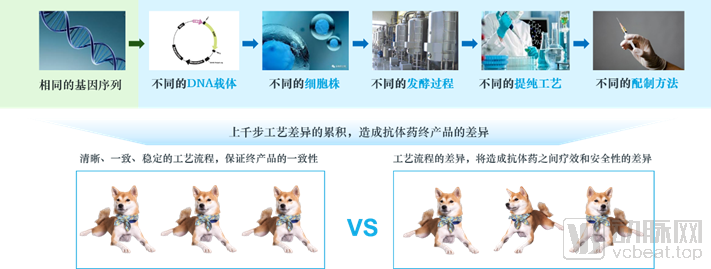
Figure 1. Differences in Manufacturing Processes Affect the Properties of Antibody Drug Products
The difficulty of developing generic versions of antibody drugs is significantly higher than that of generic small-molecule drugs. If producing generic small-molecule drugs is akin to manufacturing bicycles, then developing biosimilars is comparable to building a Boeing 747 aircraft. It is extremely challenging for manufacturers to fully replicate the production processes and protein structures of the reference listed drug (i.e., the comparator product, typically the originator drug). Consequently, these copies are termed "biosimilars." Biosimilars are "similar but not identical" to their reference products, which may lead to differences in quality and efficacy between the two.
Differences between biosimilars and reference products impose higher requirements on clinical medication. In clinical practice, switching may occur between originator drugs and biosimilars, as well as between different biosimilars. Notably, given the very short time since the market launch of domestic biosimilars in China, it is essential to prioritize the accumulation of clinical experience with biosimilars to ensure medication safety and promote scientifically sound clinical decision-making.
China’s antibody drug industry is still in its early stages of development, with both production capacity and core technologies requiring improvement. Addressing these transitional challenges will necessitate long-term technological accumulation and innovative development to bridge existing gaps.
First, China’s total production capacity for antibody drugs needs to be substantially increased. Currently, the actual total production capacity for antibody drugs in China is less than 200,000 liters, with the highest single-enterprise capacity standing at 38,000 liters. In contrast, neighboring South Korea has a total capacity of 760,000 liters, while multinational corporations typically maintain capacities exceeding 200,000 liters. Due to the extreme complexity of antibody drug manufacturing, expanding production capacity is a protracted process. It is worth paying close attention to whether existing capacity can adequately meet patient demand and accommodate market fluctuations.
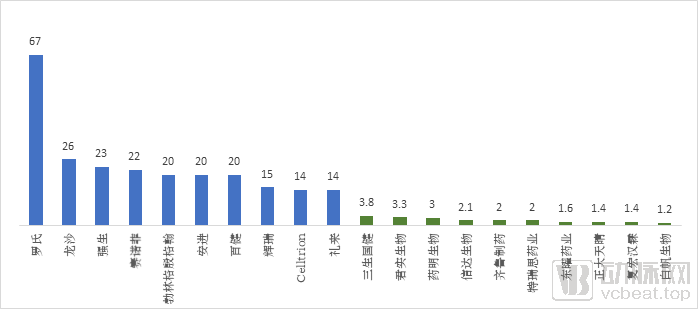
Figure 2. Comparison of production capacity for antibody drugs among the top 10 companies in China and abroad (unit: 10,000 liters, based on mammalian cell culture capacity)
Secondly, there is a deficiency in key technological capabilities within the industry. Due to a late start and weak foundations, China’s antibody drug industry lacks core competencies. Basic research in China’s antibody drug sector still lags behind the leading levels in Europe and the United States; the capability to translate research into production needs improvement; the construction of key technology platforms is just beginning; and critical materials have not yet been domestically produced, relying primarily on imports. Consequently, the production cost of antibody drugs remains high, and cost-control capabilities are insufficient. These shortcomings constrain technological innovation and the enhancement of competitiveness in China’s antibody drug industry, necessitating sufficient time to cultivate competitive strength for the overall development of the sector.
The healthy development of the industry relies not only on its own capacity building but also on government support and guidance (Figure 2). Gu Xuefei, an expert from the research team and Director of the Medical Security System Research Office at the Health Development Research Center of the National Health Commission, pointed out, “The development of China’s antibody drug industry is driven by the dual engines of industrial capacity building and policy optimization.” Currently, China’s antibody drug industry is in a growth phase. The industry itself needs to strengthen talent and financial guarantees, while building capabilities in R&D and innovation, quality assurance, cost optimization, and product supply. Government policies should focus on promoting technological progress, ensuring clinical safety, and maintaining positive development expectations, with particular attention to improving and optimizing policies related to innovation-driven development, quality and safety, and medical insurance procurement.
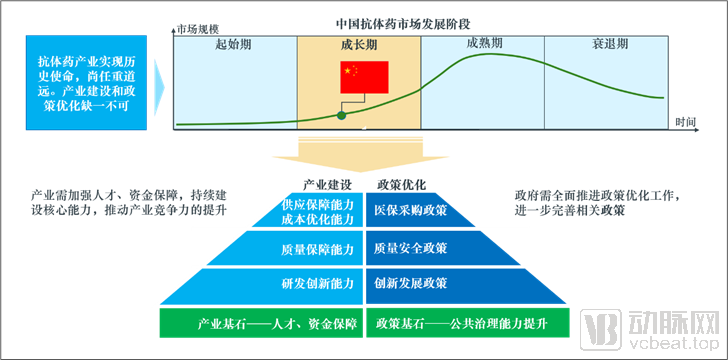
Figure 3. Framework for the Development of China’s Antibody Drug Industry
It is worth noting that health insurance procurement policies are closely linked to clinical medication practices, drug supply, and industrial development. Jin Chunlin, Director of the Shanghai Health and Development Research Center and an expert in the research group, emphasized that “health insurance procurement policies must adhere to a patient-centered approach, ensuring clinical medication safety through rational drug use.” To safeguard patient medication safety, it is essential to promote the standardized use of antibody drugs in clinical settings. In particular, for patients already receiving antibody therapy, efforts should be made to avoid the risks associated with mid-treatment drug switching. It is recommended that further in-depth research and deliberation be conducted on procurement policies for antibody drugs, fully taking into account product characteristics, stages of industrial development, clinical needs, and patient safety. Greater synergy should be fostered between procurement policies and those related to drug regulation and clinical practice guidelines. The aim is to achieve a win-win-win outcome for patient medication safety, health insurance cost containment, and industrial development through scientifically sound procurement policies.