

CICC Report on 'Internet Plus' Healthcare Industry: Urgent Need to Scale Integrated Online Solutions for 'Medical Care + Pharmacy + Insurance'
Author: CICC February 29, 2020
Analyst: Tu Weiying, SAC License No.: S0080516040001, SFC CE Ref: BHM709
Analyst: Zou Peng SAC License No.: S0080513090001, SFC CE Ref: BCC313
Contact: Feng Xipeng SAC License No.: S0080119030029
During the pandemic, “Internet + Insurance” achieved significant policy breakthroughs, enabling the initial implementation of a fully online “Medical Care + Pharmaceuticals + Insurance” model in certain scenarios. This marked a milestone shift in traditional healthcare and medication procurement processes (transitioning from face-to-face to face-to-screen interactions), resulting in the comprehensive decoupling of patients from medical/pharmaceutical institutions, physicians/pharmacists, prescriptions, health insurance cards, and medications.
We believe that as health-tech accelerates its penetration, the traditional linear development pattern of the pharmaceutical industry—spanning “manufacturing–distribution–end-user–consumer”—is undergoing restructuring. Numerous traffic platforms are breaking through the linear relationships among various segments of the pharmaceutical industry, accelerating the evolution toward a consumer-centric, platform-based development model.
Looking ahead, as the information technology infrastructure across healthcare, pharmaceuticals, and insurance sectors is comprehensively advanced, big health data from all domains is expected to achieve interconnectivity within a unified network. This will accelerate the pharmaceutical industry’s entry into the era of health data, where the ability to legally and reasonably “accumulate + operate” comprehensive data assets—spanning both consumer-facing (C-end) and business-facing (B-end) segments—is likely to become one of the core competitive advantages for enterprises. For various stakeholders in the traditional pharmaceutical industry, their industrial positioning, development strategies, and organizational structures may undergo adjustments in this new ecosystem.
Current State of China’s “Internet + Healthcare” Ecosystem: Initial Implementation of the “Internet + Medical Care + Pharmaceuticals” Model
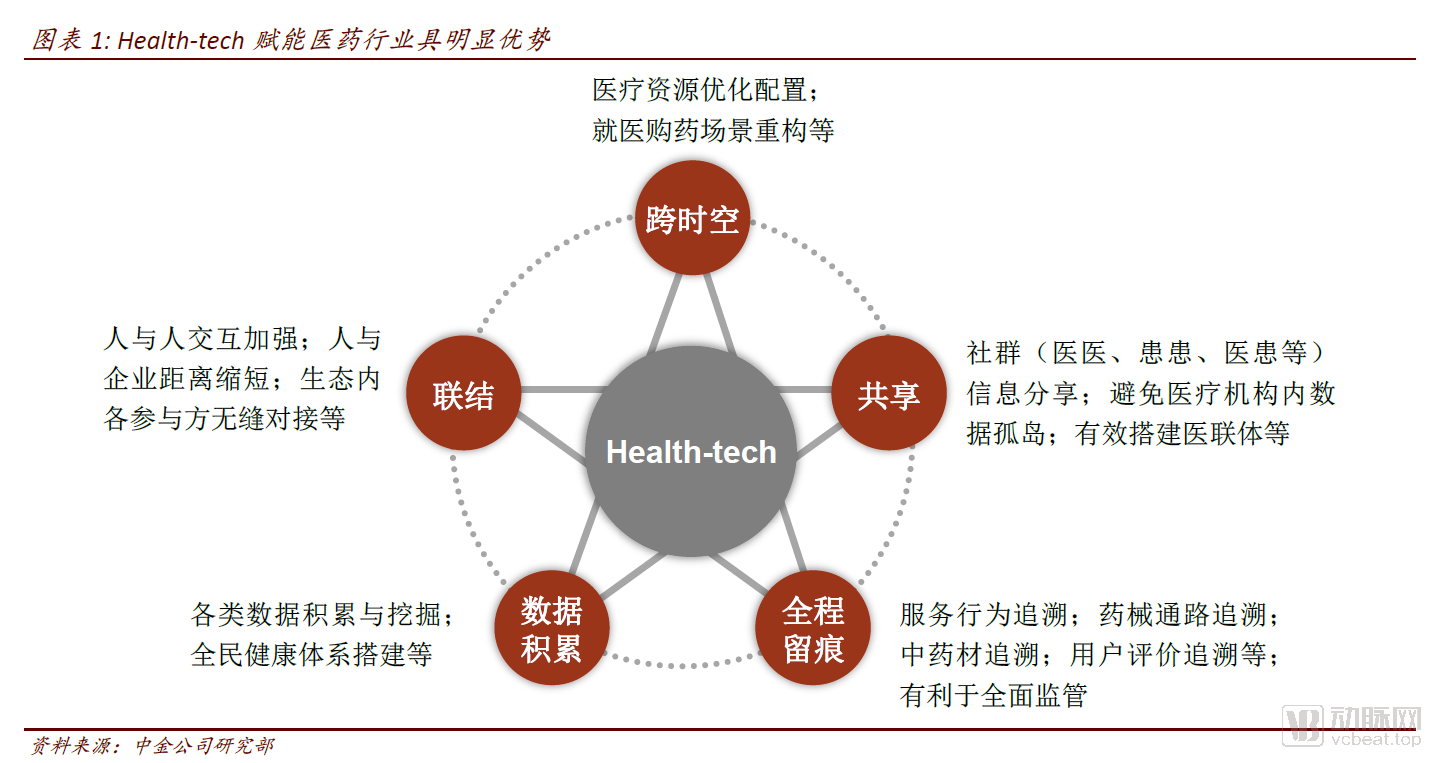
Characteristics such as cross-temporal and spatial reach, connectivity, shareability, data accumulation, and full-process traceability give health-tech a distinct advantage in empowering the pharmaceutical industry, breaking through traditional pain points. In the early stages, “Internet + Healthcare” and “Internet + Pharmaceuticals” developed independently, reshaping consultation and medication purchasing scenarios, respectively. Currently, the integrated online “Healthcare + Pharmaceuticals” model has been initially implemented, with B2C and O2O medication purchasing scenarios becoming increasingly widespread, further enhancing patient experience. However, online payment via medical insurance has not yet been realized.
The pandemic has further spurred demand for the “Internet + Healthcare + Pharmaceuticals + Insurance” model, with many regions actively breaking through barriers in “Internet + Insurance.”
During the pandemic, non-COVID-19 patients, particularly those with chronic diseases, struggled to meet their basic medical needs in a timely manner. This further spurred demand for the full online integration of “medical care + pharmaceuticals + insurance,” with many regions actively exploring and breaking through barriers in the “Internet + Insurance” model.
Mode 1: Primarily centered on individual medical institutions, leveraging their proprietary internet hospitals to provide follow-up consultations; they offer remote follow-up services to eligible patients with chronic diseases and enable online payment via medical insurance. Representative examples include Guangdong Provincial People's Hospital and Chengdu Hi-Tech Haier Sen Internet Hospital (operated as a platform-based internet hospital, thereby breaking through the limitations of physician resources).
Mode 2: City-level coordination is adopted to establish municipal internet hospital platforms, with online medical insurance policies accessible only to local physical medical institutions qualified as internet hospitals; representative cities include Quzhou, Nanjing, and Yichang.
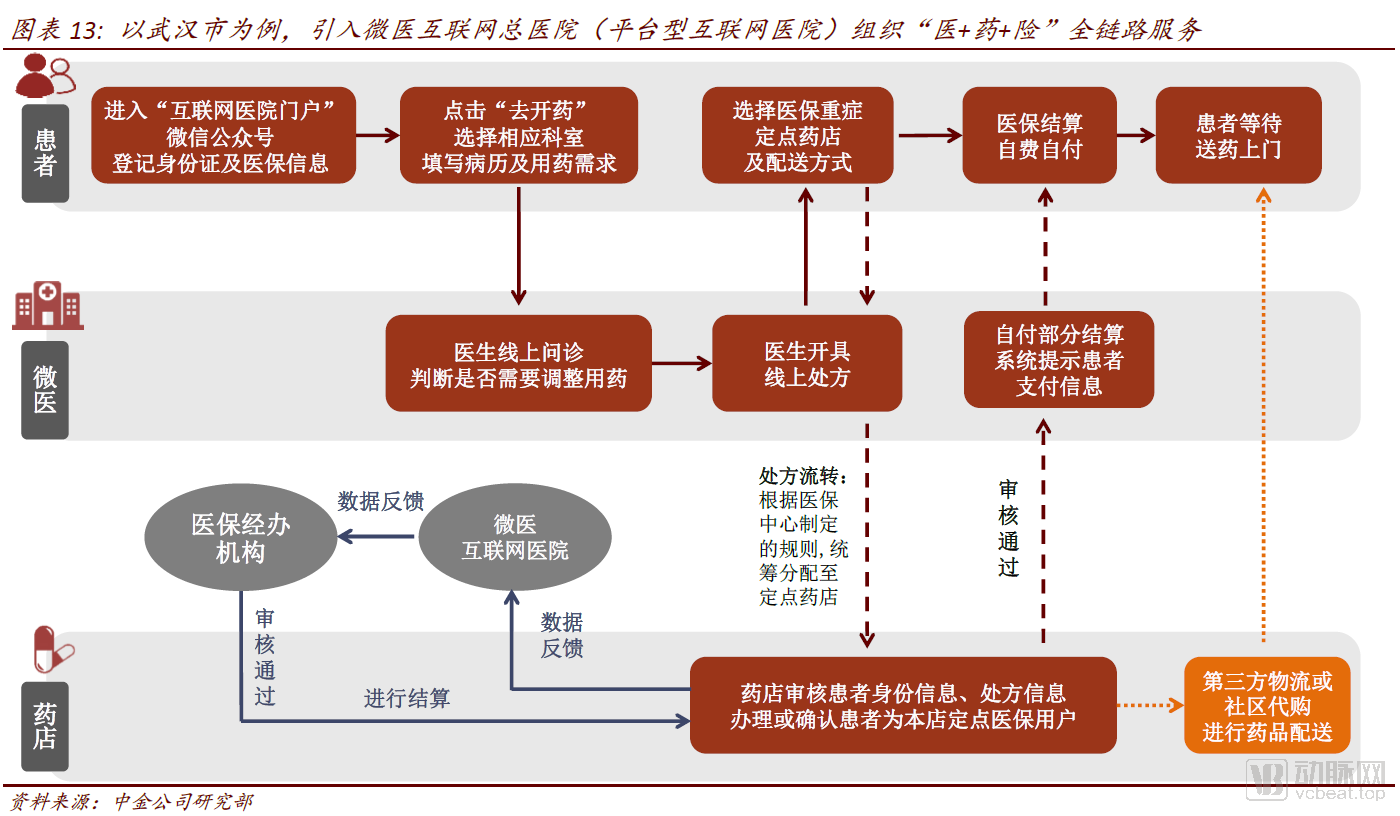
Mode 3: With city-level coordination, it pioneered the introduction of platform-based internet hospitals integrated with medical insurance, and organized locally qualified pharmacies to provide end-to-end services for patients with chronic diseases, as exemplified by Wuhan (which has unique characteristics).
Existing Solutions Still Face Pain Points
We believe that existing solutions still have pain points, and a large number of patients with chronic diseases still find it difficult to meet their basic medical needs in a timely manner.
Limited Service Providers: Apart from Wuhan, the service providers under the programs in other provinces and municipalities are limited to local physical medical institutions with qualifications for operating internet hospitals, which are few in number, and these programs have not been opened to third-party internet hospital platforms;
Limited Patient Services: In many regions, limited to patients with prior medical records at healthcare institutions that provide remote follow-up consultations;
Restricted Scope of Covered Medical Conditions: In many regions, remote follow-up consultations and medical insurance reimbursement are limited to only certain types of chronic diseases.
We Recommend: Accelerate the Widespread Adoption of End-to-End Online Integration for “Healthcare + Pharmaceuticals + Insurance”
We believe that for patients with chronic diseases, the needs for “medical care + pharmaceuticals + insurance” form an integrated triad. Only by simultaneously advancing the development of “Internet + medical care,” “Internet + pharmaceuticals,” and “Internet + insurance” can we achieve widespread adoption of fully online, end-to-end integration of “medical care + pharmaceuticals + insurance.”
“Internet + Healthcare”: Accelerate the development of internet hospitals within physical medical institutions to support more service providers in meeting local patient needs; primary care and remote areas may leverage medical consortia or third-party internet hospitals to deliver services;
“Internet + Pharmaceuticals”: Accelerate the omnichannel deployment of industrial and retail enterprises to meet patients’ medication needs;
“Internet + Insurance”: Accelerate the development of medical insurance information systems across regions; expedite the nationwide promotion and application of electronic medical insurance certificates, and explore a model for patients with chronic diseases that enables "remote cross-regional medical consultations with local medical insurance settlement"; under controllable regulatory conditions, extend equal medical insurance policy support to third-party internet hospitals and online pharmaceutical retail platforms as those afforded to offline institutions;
“Internet + Supervision”: Comprehensive oversight of online medical consultations, pharmaceutical sales, health insurance payments, and personal data security.
Technically, Health-tech Empowers the Pharmaceutical Industry with Clear Advantages
The internet era has been able to reshape the development trajectory of traditional industries and transform consumer habits, enabling individuals to pursue a more efficient, convenient, and personalized lifestyle. This transformation is primarily driven by several core characteristics: transcendence of time and space, connectivity, sharing, accumulation of fragmented data, and comprehensive traceability. China’s pharmaceutical industry has long suffered from numerous pain points and faces severe challenges: an imbalance in the distribution of medical resources, unmet primary care needs, and difficulty for patients in accessing medical services; hospital terminals relying on drug markups to subsidize medical operations, distorted drug pricing mechanisms, and high costs for patients; retail terminals prioritizing high-margin profits, with concerning deficiencies in professional pharmaceutical care awareness and standards; inadequate health insurance management capabilities, insufficient monitoring against insurance fraud and abuse, and significant difficulties in cross-regional health insurance settlement. Many of these pain points in the healthcare sector can be addressed through appropriate technological solutions, thereby enhancing operational efficiency and improving the patient experience.
At the industry level, “Internet + Healthcare” and “Internet + Pharmaceuticals” have continued to develop, further realizing the integration of “Internet + Healthcare + Pharmaceuticals.”
“Internet + Healthcare” initially focused on online appointment registration and has continuously expanded to include online consultations.In the early stages, companies represented by Guahao.com (now renamed “WeDoctor”) provided patients with online appointment registration services, establishing connections with major medical institutions; meanwhile, enterprises such as Chunyu Doctor offered online communication platforms for physicians. As the industry continued to evolve, “Internet + Healthcare” began to feature online consultation scenarios, enabling patients to communicate with doctors through third-party internet hospital platforms via text and images, video, and voice calls. Common diseases and chronic conditions have become the primary domains of online consultations. Furthermore, many physical medical institutions have developed their own internet hospital platforms, offering online services such as time-slot-based appointment scheduling, intelligent triage and guidance, waiting reminders, access to laboratory and examination results, point-of-care settlement, and mobile payments, thereby optimizing service workflows and enhancing service efficiency.
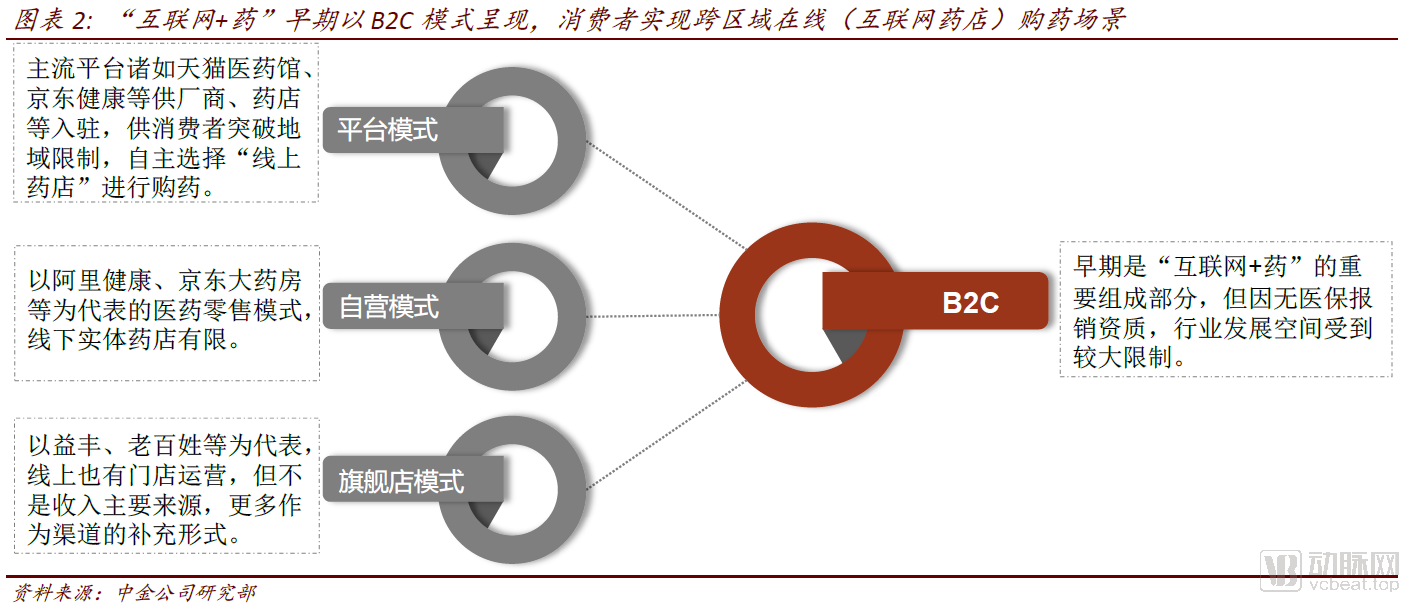
“Internet + Pharmaceuticals” initially emerged in the B2C model.Traditional medication purchases were primarily made through offline physical channels, such as hospitals and community pharmacies. Since the “Internet+” initiative began to permeate the pharmaceutical industry, consumer purchasing scenarios have been continuously evolving. In its early stages, “Internet+ Pharmacy” operated mainly under a B2C model, allowing consumers to select vendors on platforms such as Tmall Medicine and JD Health. These vendors included the platforms’ own self-operated stores (if available) or flagship stores operated by traditional chain pharmacies on these platforms, with final delivery handled by logistics companies.
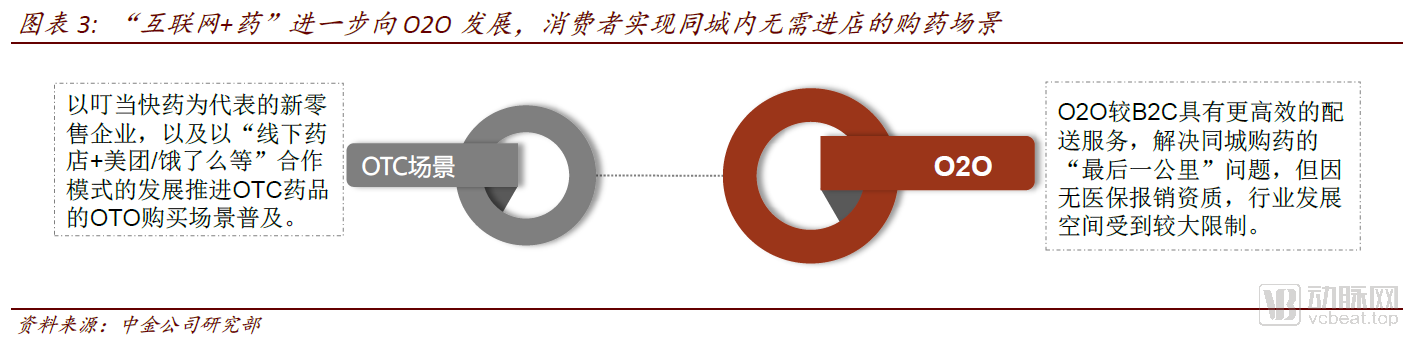
“Pharmacy + Delivery” Model Provides O2O Scenarios for “Internet + OTC”With the continuous strengthening of China’s domestic logistics infrastructure, O2O industry leaders such as Ele.me and Meituan have further enhanced delivery efficiency, addressing last-mile delivery challenges across various sectors. Consequently, the O2O model has gradually been integrated into the “Internet + Healthcare” landscape. In recent years, pharmaceutical new retail companies represented by Dingdang Kuaiyao have experienced rapid growth. Since 2018, the collaborative model of “offline pharmacies partnering with platforms like Meituan and Ele.me” has rapidly popularized O2O medication purchasing among consumers. The primary consumer demographic consists of young adults, with product categories mainly focused on medications for common ailments, particularly over-the-counter (OTC) drugs and health supplements.
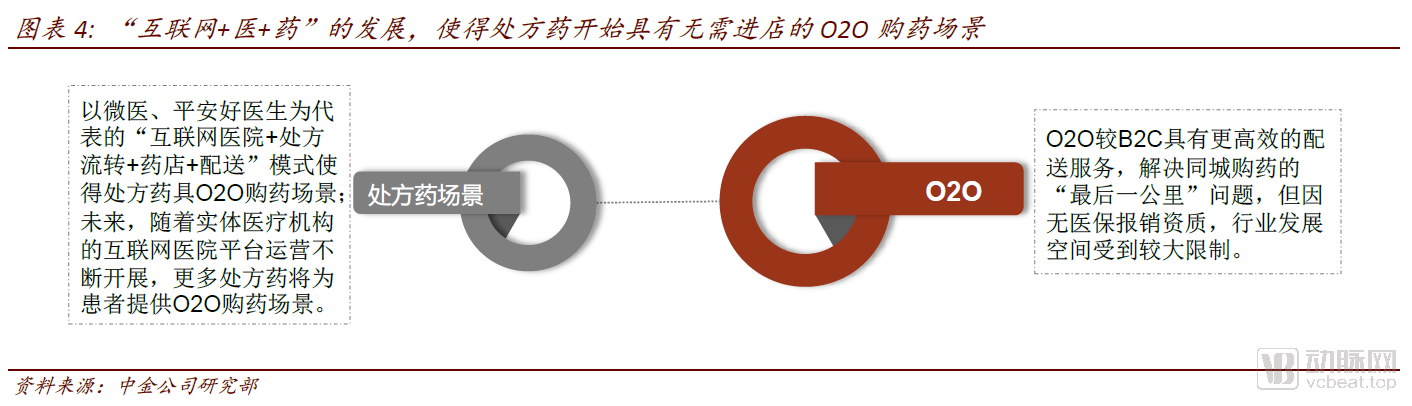
“Internet + Healthcare” and “Internet + Pharmaceuticals” are further evolving into “Internet + Healthcare + Pharmaceuticals.”For patients, medical services and pharmaceuticals are typically inseparable. The independent development of “Internet + Healthcare” and “Internet + Pharmaceuticals” has led to a phenomenon of “separation between diagnosis and medication.” Starting in 2017, various stakeholders—including healthcare providers, pharmaceutical companies, and logistics partners—began to collaborate, integrating their functions around patients’ healthcare needs. This gradual integration of online and offline services gave rise to the “Internet + Healthcare + Pharmaceuticals” model.
► Companies represented by Alibaba Health and JD Health transfer electronic prescriptions from their proprietary internet hospitals to their self-operated pharmacies, and deliver B2C “door-to-door medication” services through third-party or in-house distribution systems.
► Companies represented by WeDoctor and Ping An Good Doctor allocate e-prescriptions from their proprietary internet hospitals to brick-and-mortar pharmacies in the consumers’ local areas, and leverage third-party delivery networks to provide O2O “door-to-door medication delivery” services. This has also enabled prescription drugs to be purchased through O2O channels.
In the future, as physical medical institutions accelerate the construction and operation of internet hospitals and integrate with prescription circulation systems to achieve “separation of prescribing and dispensing” with external pharmacies, we believe that more prescription drugs will be made available to patients through O2O purchasing scenarios.
At the policy level, the state has continuously issued documents to promote the development of “Internet + Healthcare”.
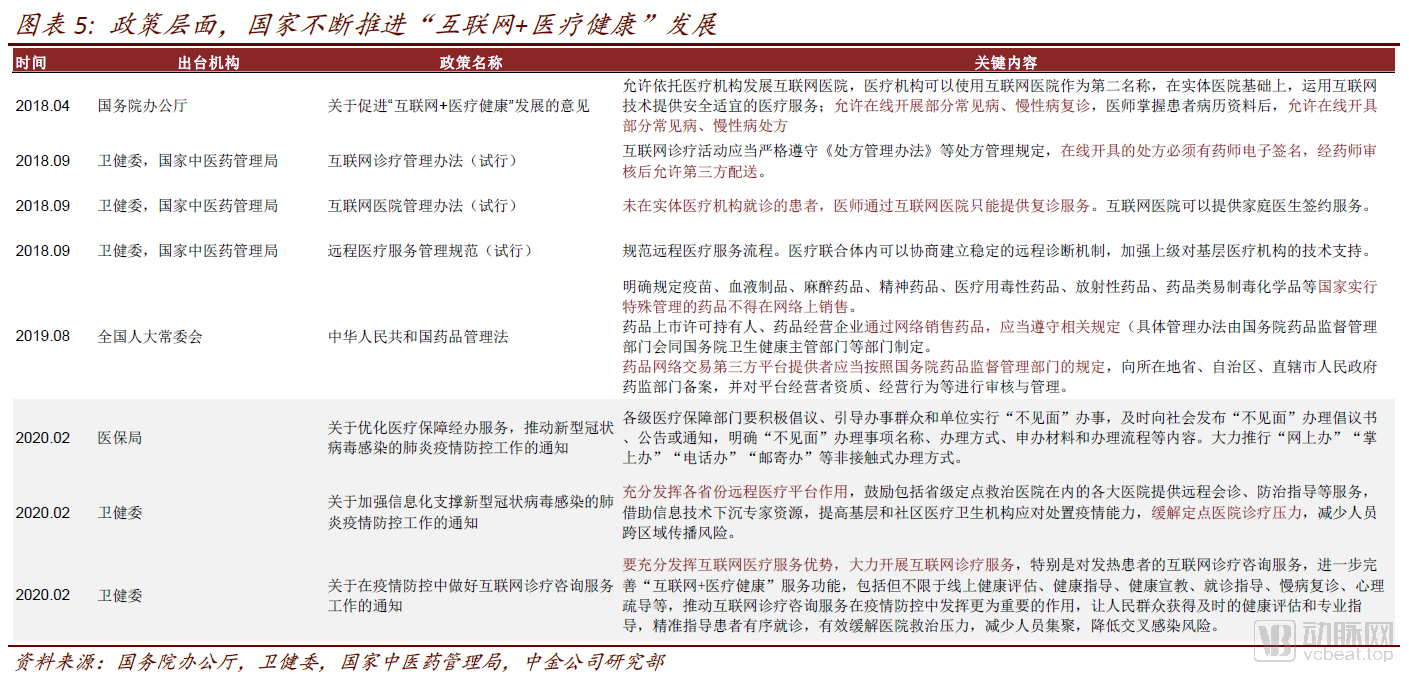
Frequent Policy Releases Reflect Strong National Emphasis on the Development of “Internet + Healthcare”In recent years, national policies have provided clear support for this sector. In April 2018, the General Office of the State Council officially issued the Guiding Opinions on Promoting the Development of “Internet + Healthcare,” underscoring the high priority attached to its development. In September 2018, the Administrative Measures for Internet-Based Diagnosis and Treatment (Trial), the Administrative Measures for Internet Hospitals (Trial), and the Specifications for the Management of Telemedicine Services (Trial) were released, further detailing the implementation rules for “Internet + Healthcare.” In August 2019, the newly revised Drug Administration Law was enacted, adhering to the principle of applying identical standards and integrated regulation to both online and offline channels. It did not prohibit the online sale of prescription drugs (except for certain specially regulated pharmaceuticals), thereby leaving room for further practical exploration of online prescription drug sales in the future.
During the pandemic, the state comprehensively promoted the application of Health-tech in the field of internet-based diagnosis and treatment. Since the outbreak of the novel coronavirus pneumonia, the state has actively promoted online consultation services nationwide. In February, multiple documents were issued in a concentrated and timely manner to advance the application of Health-tech in internet-based diagnosis and treatment, giving full play to the important role of Health-tech in epidemic prevention and control efforts.
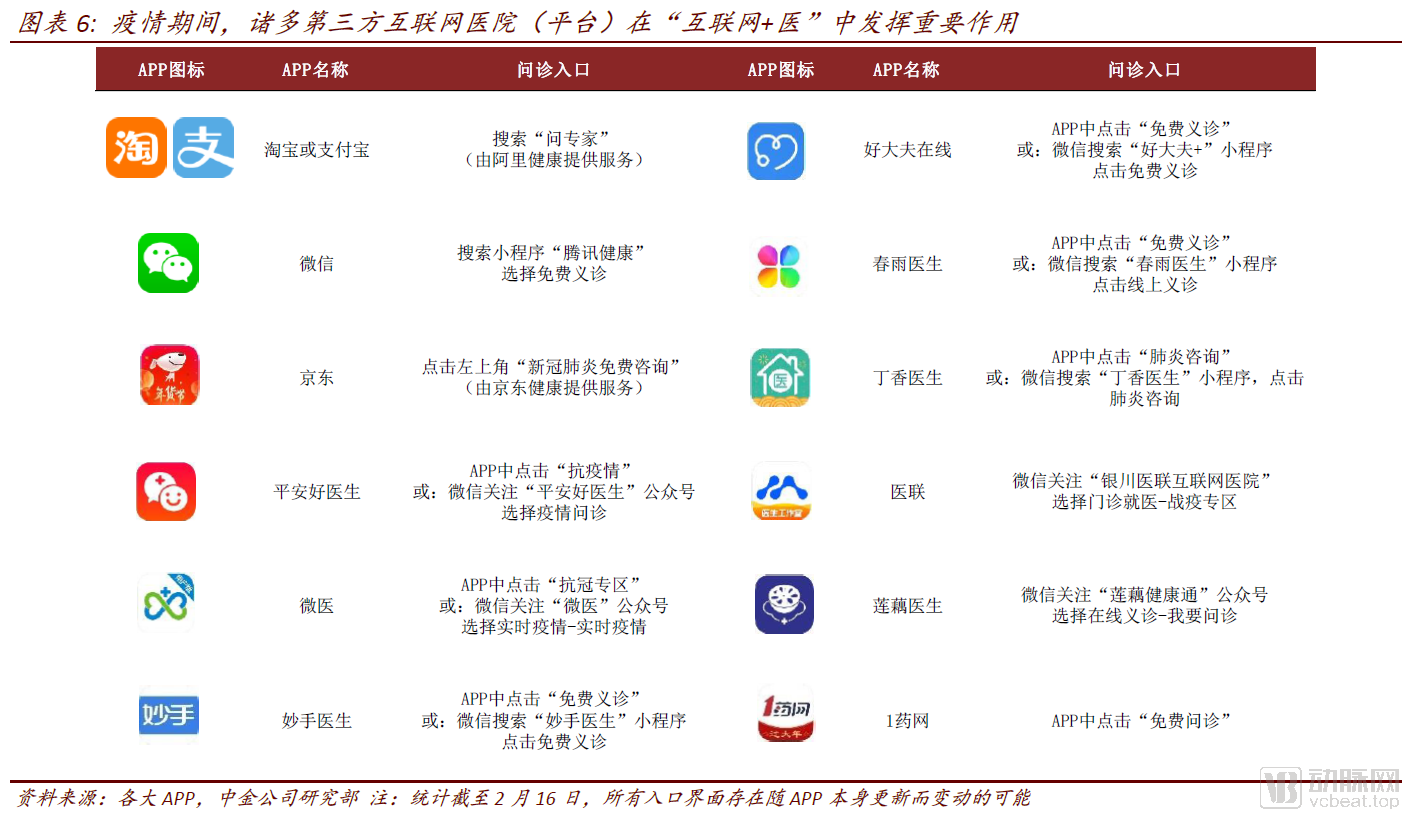
During the COVID-19 pandemic, the entire population cultivated habits of using “Internet + Healthcare/Pharmaceuticals” services
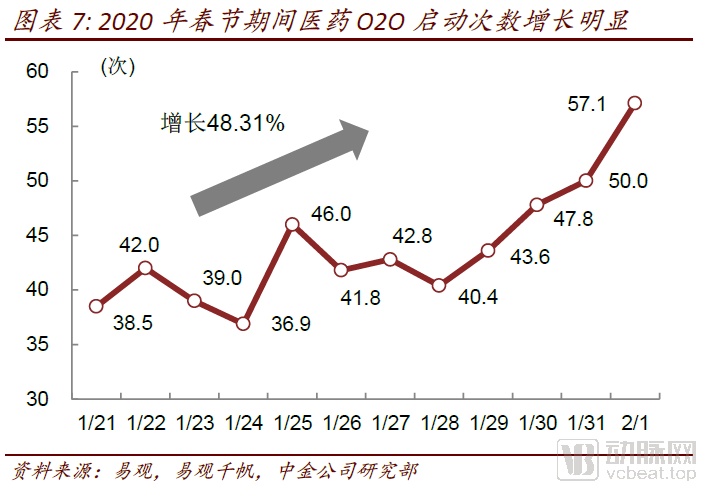
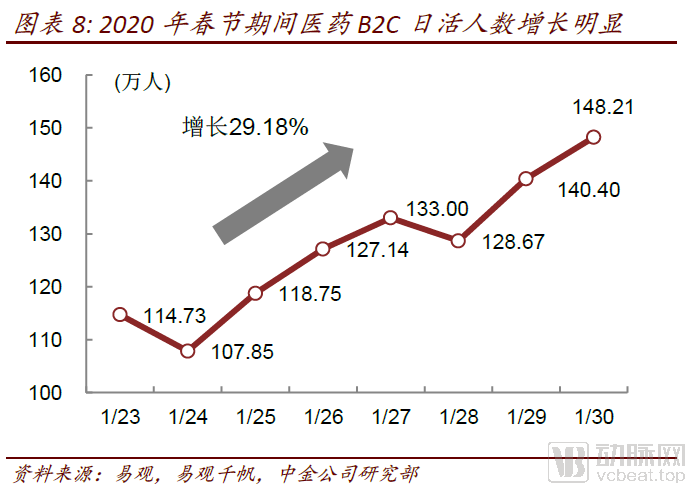
During the pandemic, the Chinese government continuously issued policy documents to promote the development of online medical consultation services. Major traffic platforms such as Douyin, Kuaishou, Weibo, Toutiao, Baidu, and Tencent opened access points for third-party internet hospitals to provide free COVID-19 consultations, thereby accelerating the nationwide adoption of “Internet + Healthcare” habits. Platforms such as Haodf, WeDoctor, Chunyu Doctor, Ping An Good Doctor, Ali Health, JD Health, and Miaoshou Doctor actively provided consultation services to the general public, resulting in increased consultation volumes across their respective applications. Furthermore, to facilitate the online purchase of epidemic prevention products—including masks, alcohol, cold medications, and immunity-boosting health supplements—the public simultaneously increased their frequency of using various “Internet + Pharmacy” services (encompassing both B2C and O2O models).
Beyond COVID-19 Prevention and Control, the Inability to Timely Meet Basic Healthcare Needs Has Emerged as a New Dilemma
Since the outbreak of the COVID-19 pandemic, medical resources across China have been concentrated to support frontline efforts, with united actions aimed at achieving an early victory in epidemic control. However, in the process of responding to public health emergencies, there has been a growing phenomenon where the basic healthcare needs of the population are not being met in a timely manner, particularly among patients with chronic diseases. This new dilemma is primarily attributed to both objective and subjective factors.
Objective factors: Epidemic prevention and control measures were implemented across various regions, including the temporary suspension of some outpatient services in hospitals and the closure of certain pharmacies.
Subjective Factors: Patients with chronic diseases have unique characteristics, and offline follow-up visits increase the risk of cross-infection; they hope to leverage "Internet Plus" solutions.
►High risk of infection:Primarily affects the elderly or individuals with weak constitutions, showing a high degree of overlap with populations susceptible to COVID-19;
► Regular Follow-up Visits Required:Long-term medication use requires regular follow-up visits to medical institutions, increasing the risk of cross-infection;
► Treatment Must Not Be Stopped:For some patients with chronic diseases, discontinuing medication may pose a life-threatening risk.
Pain Points of Chronic Disease Patients Emerge, Driving Demand for the “Internet + Healthcare + Pharmaceuticals + Insurance” Model
The unique needs of patients with chronic diseases necessitate leveraging “Internet+” to enable remote diagnosis, treatment, and medication procurement, thereby reducing the risk of cross-infection. However, these patients also face various pain points, driving demand for end-to-end online integration of “medical care + pharmaceuticals + insurance.”
► Varying Levels of Internet Hospital Development Across Regions: Although the country has promptly advanced internet-based diagnosis and consultation services, the development level of internet hospitals in medical institutions across various regions remains uneven. Some provinces and municipalities have not approved qualifications for internet hospitals, while others suffer from low levels of local healthcare informatization, hindering the timely construction and operation of internet hospitals.
► "Separation of Diagnosis and Prescription" Emerges Outside Hospitals: As the state encourages online consultations for chronic diseases, many platform-based internet hospitals have mobilized physician resources across China to conduct follow-up visits for chronic conditions and provide prescription renewal services. However, discrepancies exist in the supply of certain medications between in-hospital and out-of-hospital settings, as well as across different regions. Consequently, even when patients complete follow-up consultations and obtain renewed prescriptions through out-of-hospital channels, they are often unable to purchase the relevant medications externally, leaving their actual medication needs unmet.
► “Internet + Insurance” Has Not Been Deregulated: Even though patients with chronic diseases can remotely “renew prescriptions” and “purchase medications,” since local governments have largely not opened up “Internet + Insurance,” payments are primarily out-of-pocket. Consequently, most chronic disease patients in remote follow-up consultations across the majority of provinces and municipalities cannot enjoy the same medical insurance reimbursement rights as those available for in-person hospital follow-ups.
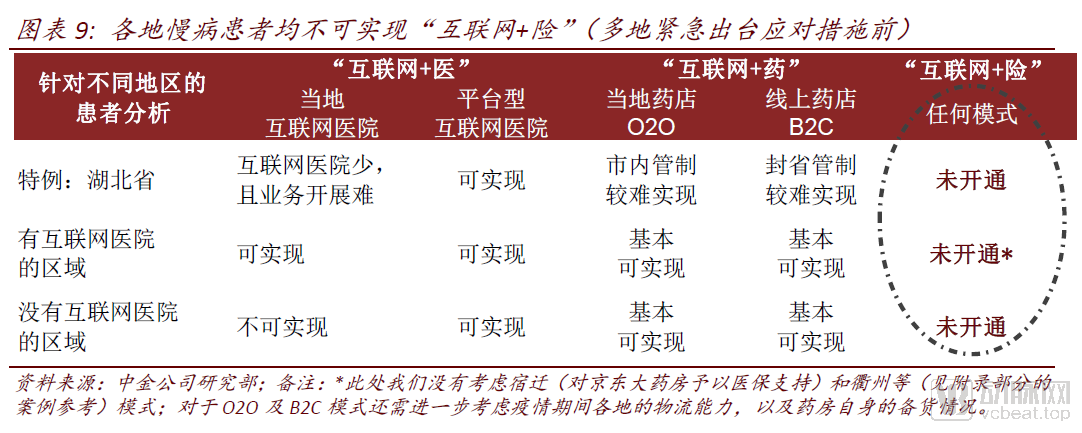
The State attaches great importance to this issue; Tianjin, Jiangsu, and Shanghai have taken the lead in issuing policies to include “Internet+” medical services in medical insurance coverage.
The State has attached great importance to the issue and urgently issued directives to guide localities in meeting the public’s basic healthcare needs.On February 17, 2020, the General Office of the National Health Commission issued the "Notice on Strengthening Medical Service Management During the Epidemic Period to Meet the Public's Basic Healthcare Needs." We believe that this document aims to guide localities in enhancing medical service management during the epidemic and meeting the public’s basic healthcare needs. The notice proposes: adapting measures to local conditions to strengthen medical service management during the epidemic; implementing refined management to ensure well-organized medical services; providing categorized treatment to effectively meet the medical needs of different patient groups; strengthening infection prevention and control to minimize cross-infection; and enhancing public education to guide patients in making appropriate choices for medical care. Meanwhile, Jiangsu Province and Shanghai responded swiftly by issuing policies to include "Internet+" medical services for follow-up visits of patients with common and chronic diseases in medical insurance coverage.
► Tianjin: First in China to Enable Online Reimbursement for Internet-Based Medical Services Through Provincial-Level Health Insurance Integration
On February 14, 2020, the Tianjin Municipal Healthcare Security Administration issued the “Notice on Supporting Designated Medical Institutions in Providing Internet Diagnosis and Treatment Services During the COVID-19 Prevention and Control Period” (Jin Yi Bao Ban Fa [2020] No. 10), taking the lead nationwide at the provincial level in opening up online reimbursement channels for internet diagnosis and treatment services under the basic medical insurance scheme. The document stipulates that medical insurance support shall be provided for internet diagnosis and treatment services. Eligible institutions are physical designated medical institutions that are included in local medical insurance agreement management and have obtained registration and approval qualifications for internet hospitals or internet diagnosis and treatment platforms. Furthermore, internet hospitals and internet diagnosis and treatment platforms are required to share a single medical insurance quota management indicator with their affiliated physical designated medical institutions, subject to real-time monitoring and strict oversight of medical practices and expenses.
► Jiangsu Province: Province-wide Promotion of Medical Insurance Payment for Selected “Internet+” Medical Services
On February 19, 2020, the Jiangsu Provincial Healthcare Security Administration and the Jiangsu Provincial Health Commission jointly issued the "Notice on Conducting Certain 'Internet+' Medical Services During the Prevention and Control of the Novel Coronavirus Pneumonia Epidemic." The document clarified pricing for "Internet+" medical service items, medical insurance payment policies, and medical insurance settlement procedures. It encouraged designated hospitals with internet hospital qualifications to provide "Internet+" diagnosis and treatment services to locally insured patients requiring follow-up care for common and chronic diseases. Upon filing with the medical insurance authorities, these services were temporarily included in the scope of medical insurance coverage. Meanwhile, the document encouraged eligible designated medical institutions to take the lead in piloting these initiatives, accelerating system upgrades to meet functional requirements such as identity verification via medical insurance cards, provision of diagnosis and treatment services, and online fee settlement for "Internet+" medical services. For cases where information systems could not support these functions in the short term, designated medical institutions providing "Internet+" medical services were required to issue electronic invoices to patients. Localities were permitted to adopt reimbursement methods such as mail-in reimbursement, appointment-based reimbursement, and deferred reimbursement to complete fee settlement services.
► Shanghai: Launches “12 Medical Insurance Measures,” Piloting the Inclusion of “Internet+” Medical Services in Medical Insurance Payment
On February 23, 2020, Shanghai introduced the “12 Medical Insurance Measures” to comprehensively support epidemic prevention and control while ensuring routine medical security. These measures supported the pilot inclusion of “Internet+” medical services into medical insurance payment. Shanghai designated medical institutions offering internet-based diagnosis and treatment services, as well as “Internet+” medical services provided for follow-up visits of insured patients with common and chronic diseases, were included in the pilot scope of medical insurance coverage. This initiative leveraged the advantages of remote internet healthcare, enabling residents to access medical services without leaving their homes. Furthermore, building upon the existing policy of issuing long-term prescriptions for chronic diseases during the epidemic, Shanghai supported medical institutions in further improving and continuing the payment policies for community-based “long-term prescriptions” and “extended prescriptions.”
Multiple provinces and cities are actively innovating and exploring ways to address the full-chain online integration of “medical care + pharmaceuticals + insurance.”
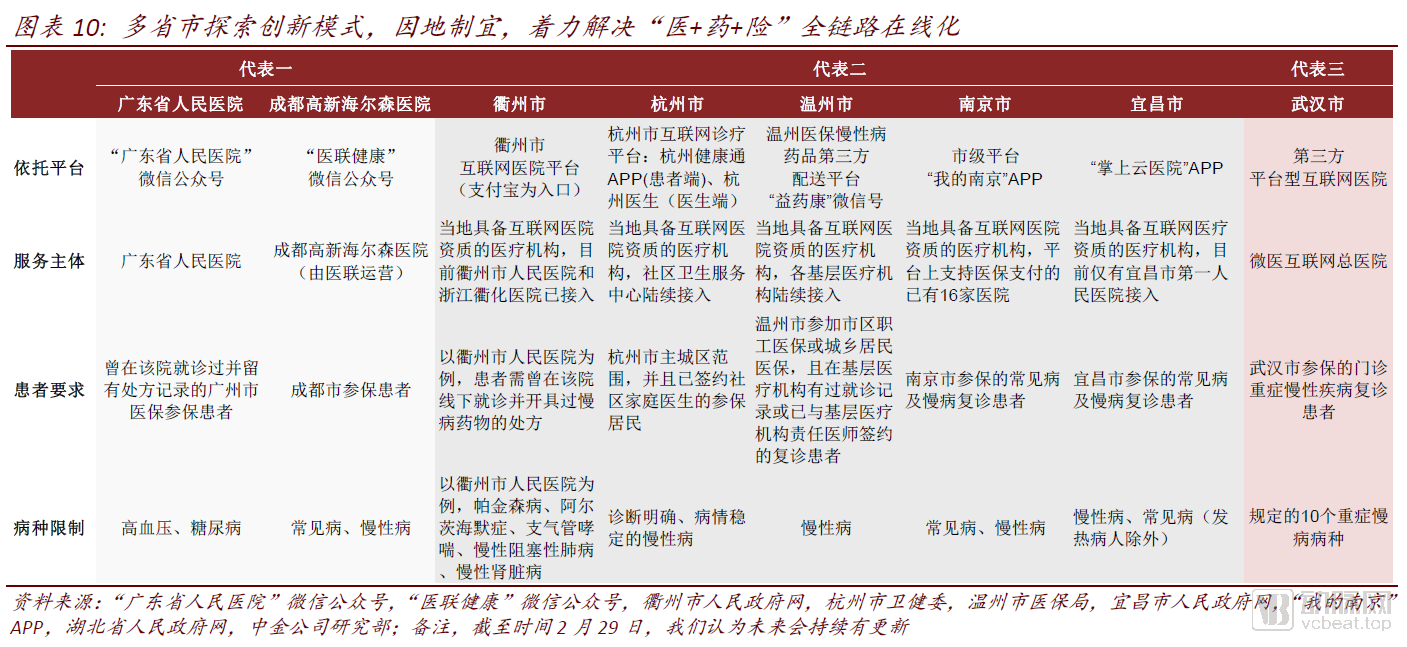
To effectively address the pain points of patients with chronic diseases, certain provinces and municipalities have actively pursued innovative initiatives, focusing on achieving full online integration of the “medical care + pharmaceuticals + insurance” value chain. This aims to prevent patients from having to return to healthcare facilities for medication refills during the pandemic, thereby reducing the risk of cross-infection. The primary models include:
► Focusing on individual medical institutions and leveraging their proprietary internet hospitals, this approach enables online medical insurance payment for patients who have previously received offline consultations.
Typical representatives: Guangdong Provincial People's Hospital, Chengdu High-Tech Haier Sen Hospital (operated by a platform-based internet hospital)
► At the municipal level as the coordinating unit, establish a municipal-level internet hospital platform that enables online medical insurance payment exclusively for local healthcare institutions.
Typical representatives: Quzhou, Hangzhou, Wenzhou, Nanjing, and Yichang
► City-level coordination to introduce third-party internet hospitals, organize local pharmacies with medical insurance qualifications, and enable online payment.
Typical Representative: Wuhan City
Through these locally adapted and distinctive models, eligible patients with chronic diseases in the area can access fully online “medical care + pharmaceuticals + insurance” services. This effectively addresses challenges associated with remote follow-up consultations and medication purchases, while enabling online medical insurance payments, thereby meeting the integrated healthcare needs of “medical care + pharmaceuticals + insurance” without leaving home.
Taking Guangdong Provincial People's Hospital as an Example: The Hospital Built Its Own Platform to Enable Online Insurance Payments for Chronic Disease Management
During the pandemic, as Guangdong Province did not actively coordinate efforts, Guangdong Provincial People’s Hospital took the lead in launching an outpatient chronic disease prescription renewal system platform (accessible via its WeChat official account). This platform serves patients with common chronic conditions such as hypertension, coronary heart disease, and diabetes, including both insured and self-pay patients, while also providing medication delivery services. For locally insured patients, the platform offers the following distinctive features:
► Disease Restrictions: Currently, only a limited number of conditions are covered. Reimbursable conditions are restricted to follow-up visits for hypertension and diabetes under special outpatient programs (self-pay patients may obtain prescription renewals for coronary heart disease).
► Patient Restrictions: Patients must have previously visited Guangdong Provincial People's Hospital; the system will retrieve prescription records from the past three months to determine eligibility for prescription renewal.
►Consultation Fee Price: The consultation fee is uniformly set at 20 yuan per visit, of which 7 yuan can be reimbursed for medical insurance patients with hypertension or diabetes;
►Drug Prices: Drug specifications and prices are consistent with those of the hospital, with zero markup applied across the board;
► Drug Source: Primarily through external pharmacies; patients may opt for self-pickup at hospital pharmacies when necessary.
We believe that this model is primarily suitable for medical institutions in regions without a unified reimbursement scheme, but which possess strong IT infrastructure and the capability to build and operate internet hospitals (with local authorities willing to provide support for internet hospital licensure). Such designated medical institutions can provide insured patients with chronic diseases with full-chain online services integrating “medical care, pharmaceuticals, and insurance.” For non-affiliated patients, they may still offer self-paid prescription refill and medication purchase services, although challenges may arise due to varying prescribing habits among different physicians. Furthermore, we believe that internet hospitals led by physical medical institutions mainly rely on independent operations, utilizing their own employed physicians and not enabling multi-site practice for doctors from other medical institutions. In contrast, Chengdu High-Tech Haiersen Internet Hospital has achieved a breakthrough by adopting a platform-based operational model, which facilitates the coordinated allocation of physician resources across China for multi-site practice, thereby overcoming limitations in doctor availability.
Taking Quzhou City as an example: By building its own municipal-level platform, the city is well-positioned to explore the full online integration of the “healthcare + pharmaceuticals + insurance” value chain.
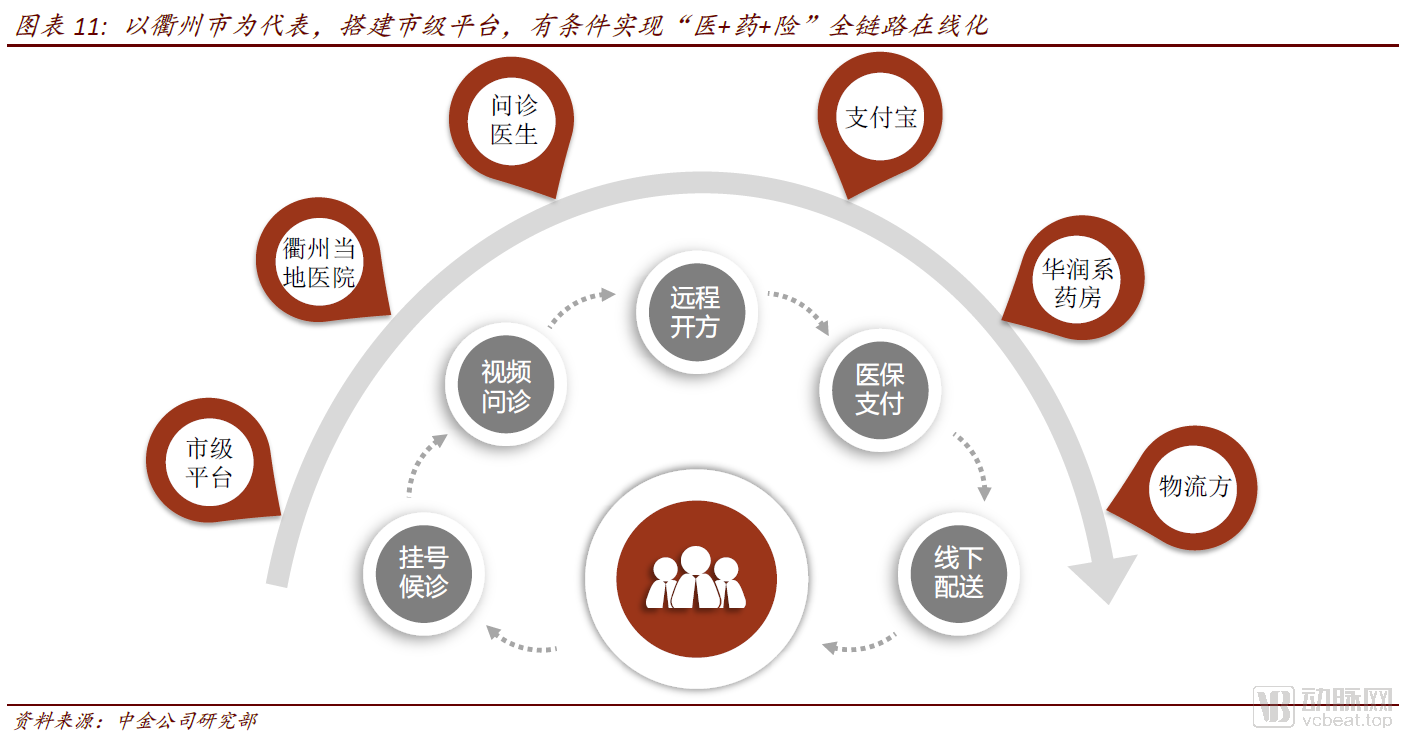
During the pandemic, many cities established their own internet healthcare platforms and enabled local medical institutions with internet healthcare qualifications to connect to these platforms. This initiative provided patients insured locally who suffer from chronic diseases or common illnesses with comprehensive online services integrating “medical care, pharmaceuticals, and insurance.” Under this model, eligible patients can access end-to-end services online, including appointment registration, video consultations, remote prescription issuance, medical insurance payment, and offline home delivery of medications. This ecosystem is underpinned by the interconnection of various resources through internet technologies, involving medical institutions, physicians, prescription circulation platforms, mobile medical insurance payment providers, medical insurance agencies, out-of-hospital pharmacies, and third-party logistics providers.
Taking Quzhou City as an example, the Quzhou Healthcare Security Administration, in collaboration with Ali Health, has jointly launched a local open online payment platform for chronic disease management. This platform integrates internet hospitals, medical insurance systems, pharmacies, and related logistics services into a unified ecosystem. Enrolled patients in the area can access end-to-end online services, including “online follow-up consultations via internet hospitals, electronic prescription circulation, online medical insurance payment, and home delivery of medications.”
Currently, two local medical institutions have been integrated. Taking Quzhou People's Hospital as an example, it must meet the following requirements when providing fully online end-to-end services encompassing "medical care, pharmaceuticals, and insurance":
► Disease Requirements: Currently, follow-up consultations for chronic diseases are available only for five conditions: Parkinson's disease, Alzheimer's disease, bronchial asthma, chronic obstructive pulmonary disease (COPD), and chronic kidney disease.
► Patient Requirements: The patient must have previously visited the hospital in person and been prescribed medication for chronic diseases.
Although specific regulations in other cities differ somewhat from those in Quzhou, the overall approach is largely consistent: only brick-and-mortar medical institutions with local qualifications for operating internet hospitals can provide “Internet+” medical services that are included in the local medical insurance reimbursement scope and enable online medical insurance payments. Third-party internet hospital platforms have not received equivalent medical insurance policy support. We believe that this city-level coordinated model adopts a dual approach of “service provision plus regulatory oversight,” requiring no significant adjustments to the local medical insurance system; cities such as Hangzhou have further integrated this model with the family doctor contract system. In terms of operational feasibility, this model is poised for replication in more cities and is also expected to accelerate the outflow of prescriptions, thereby further promoting the separation of prescribing and dispensing.
Taking Wuhan as an example: Introducing platform-based internet hospitals and implementing more flexible medical insurance policy frameworks.
During the pandemic, Wuhan introduced platform-based internet hospitals and enabled online medical insurance payments. As the first city to extend medical insurance policy support to third-party internet hospital platforms, its initiatives were pioneering. Meanwhile, we believe that Wuhan’s timely and flexible rollout of this model was driven by certain contextual factors:
► Measures such as regional lockdowns and traffic controls have led to severe medication shortages for patients with chronic diseases, necessitating urgent solutions.Strict regional lockdowns and comprehensive traffic controls in Wuhan, particularly at the grassroots level such as counties, townships, and villages (where traffic restrictions have hindered pharmaceutical supply to many areas), have led to severe medication shortages for patients with chronic diseases, urgently necessitating solutions to: 1) prescription renewals; 2) medication procurement; 3) delivery logistics; and 4) reimbursement processes.
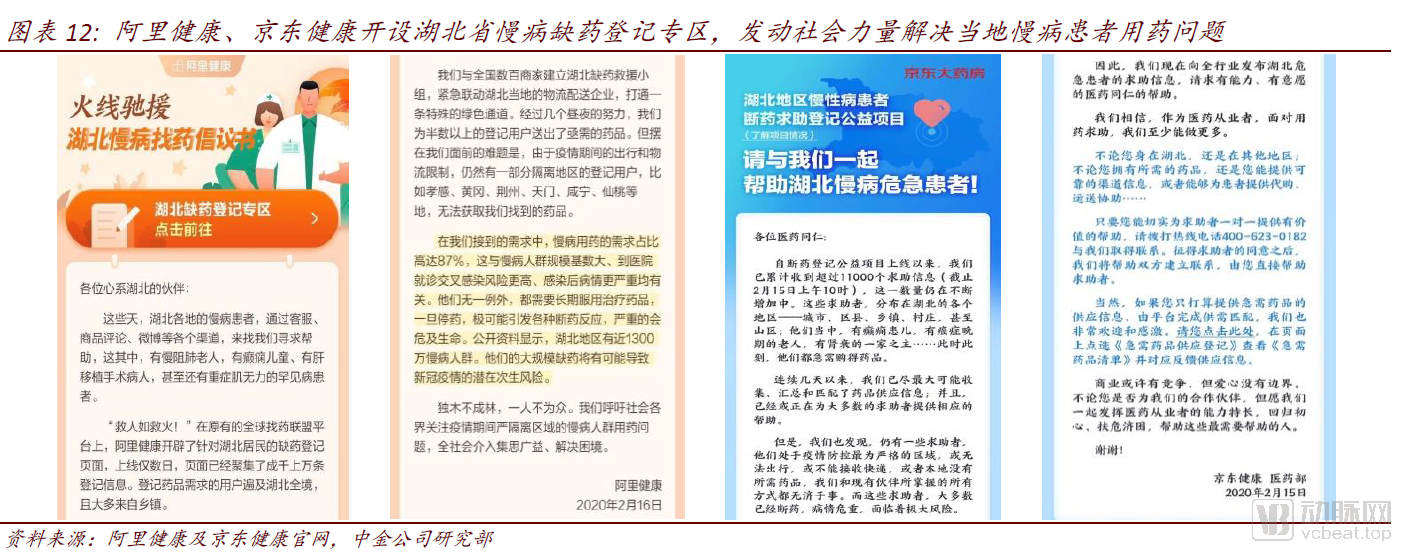
►Wuhan Faces a Shortage of Medical Resources and Challenges in Implementing Internet Hospitals.As a hard-hit area during the outbreak, Wuhan was largely in a state of all-out epidemic response, with severe shortages of medical resources. Qualified physical medical institutions capable of establishing local internet hospitals were all deployed on the front lines of the fight against the epidemic. Whether in terms of urgent construction (which requires mobilizing resources to build information technology systems) or subsequent operations (which entails training in-house physicians for online practice, allocating their time and energy to follow-up visits for chronic disease patients, and organizing external pharmacies to handle outsourced prescriptions), these institutions faced considerable burdens. Therefore, having local medical institutions in Wuhan independently establish internet hospitals to provide chronic disease patients with fully online “medical care + pharmaceuticals + insurance” services presents potential pain points related to implementation difficulties.
► National coordination encouraged multi-party support to Hubei.On February 26, 2020, the State Council issued the “Notice on Carrying Out Online Services to Further Strengthen Epidemic Prevention and Control in Hubei Province,” which coordinated multi-party resources to support epidemic control efforts in Hubei. The notice covered seven key areas, including strengthening telemedicine services, promoting artificial intelligence applications, and standardizing online diagnosis and treatment services, with the aim of expanding the scope of online services, alleviating pressure on offline clinical care, and establishing an integrated online-offline service model. The document encouraged internet hospitals and online diagnosis and treatment platforms that had already obtained registration and approval to prioritize providing online follow-up consultations for common and chronic diseases, as well as medication delivery services, to patients in Hubei, thereby promptly addressing and meeting the basic healthcare needs of the local population.
We believe that the launch of this model is based on the unique characteristics of Wuhan, where it is difficult to rely on a city-level integrated internet hospital platform or on individual hospitals operating internet hospitals independently to address the urgent medication needs of patients with chronic diseases. By promptly collaborating with third-party platforms, national physician resources can be effectively organized, while the local pharmaceutical supply chain can be streamlined through a prescription circulation platform. This multi-stakeholder approach enables the provision of comprehensive online services integrating “medical care + pharmaceuticals + insurance” for local patients with chronic conditions. We consider that Hubei Province shares similar characteristics with Wuhan, making the “Wuhan model” more suitable for promotion within the province. However, it is essential to promptly facilitate system integration between internet hospitals and qualified pharmacies via prescription circulation platforms, while ensuring the realization of last-mile delivery.
Existing Solutions Still Face Multiple Pain Points
The pharmaceutical industry has its unique characteristics, and "Internet + healthcare," "Internet + pharmaceuticals," and "Internet + insurance" need to develop in tandem.For drugs included in the National Reimbursement Drug List (NRDL), particularly prescription medications, the payer, decision-maker, and consumer are often distinct entities. When patients purchase NRDL-listed drugs, physicians typically determine which medications to prescribe, while settlement is handled through medical insurance reimbursement or out-of-pocket payments. In the overall healthcare delivery process, “medical care, pharmaceuticals, and insurance” form an integrated triad. Therefore, the comprehensive development of “Internet + Healthcare” requires the synchronized advancement of “Internet + Medical Care,” “Internet + Pharmaceuticals,” and “Internet + Insurance.” Only by achieving full online integration across the entire “medical care–pharmaceuticals–insurance” value chain can the needs of consumers (patients) be truly met.

Existing solutions have been actively explored, each with its own unique features, yet multiple pain points persist.We believe that the existing solutions launched in various regions to date were formulated by balancing two key needs during the pandemic: access to medical care for chronic diseases and manageable regulatory oversight, with each plan tailored to local conditions. However, from an overall perspective, multiple pain points still persist:
►Pain Points from Patients: Currently, most plans require patients with chronic diseases who are insured locally to have offline medical records at the hospitals where they conduct remote follow-up consultations. Moreover, many hospitals offer a limited range of chronic disease conditions for such services. However, only a small number of hospitals across various regions possess qualifications for operating internet hospitals, meaning that a large number of local chronic disease patients cannot access fully online "medical care + medication + insurance" integrated services.
►Pain Points from Healthcare Institutions: Providing patients with chronic diseases with fully online, end-to-end services integrating “medical care, pharmaceuticals, and insurance” requires qualification as a local internet hospital, as well as robust internal information technology infrastructure and advanced application of electronic medical records, to better facilitate the construction and operation of internet hospitals. We believe this means that, across China, a large number of medical institutions will find it difficult to launch comprehensive remote services in the short term.
►Pain Points from Relevant Enterprises: Apart from Wuhan, the current schemes lack corresponding medical insurance support policies for chronic disease patients who seek follow-up consultations via third-party internet hospitals (platforms) or purchase medications through third-party online pharmaceutical retailers. However, it is precisely these third-party internet hospitals (platforms) and online pharmaceutical retailers that can overcome geographical barriers, organize physician and medication resources across China, and meet the healthcare needs of chronic disease patients.
►Pain Points from Regulatory Authorities: From a regulatory perspective, the pooled fund serves as the most robust backbone of universal health insurance. Currently under localized management, it is subject to strict oversight by local healthcare security administrations. As “Internet + Healthcare” remains an innovative sector, national regulators are still in the exploratory phase regarding supervision of “Internet + Medical Services” and “Internet + Pharmaceuticals.” Therefore, we believe that healthcare security administrations will adopt a cautious approach toward deregulating “Internet + Insurance.”
We Recommend: Accelerating the Full-Scale Online Integration of "Healthcare, Pharmaceuticals, and Insurance"
We believe that as the healthcare security authorities, medical institutions, retail pharmacies, and other relevant sectors accelerate their informatization efforts, data interoperability and sharing among these departments are expected to be achieved, thereby enhancing regulatory oversight. Consequently, third-party internet hospital (platform) and third-party online retail (platform) enterprises are poised to receive medical insurance policy support equivalent to that afforded to offline models. Furthermore, we anticipate that the rapid development of commercial health insurance will facilitate the integration of the entire value chain within the commercial insurance system in the future.
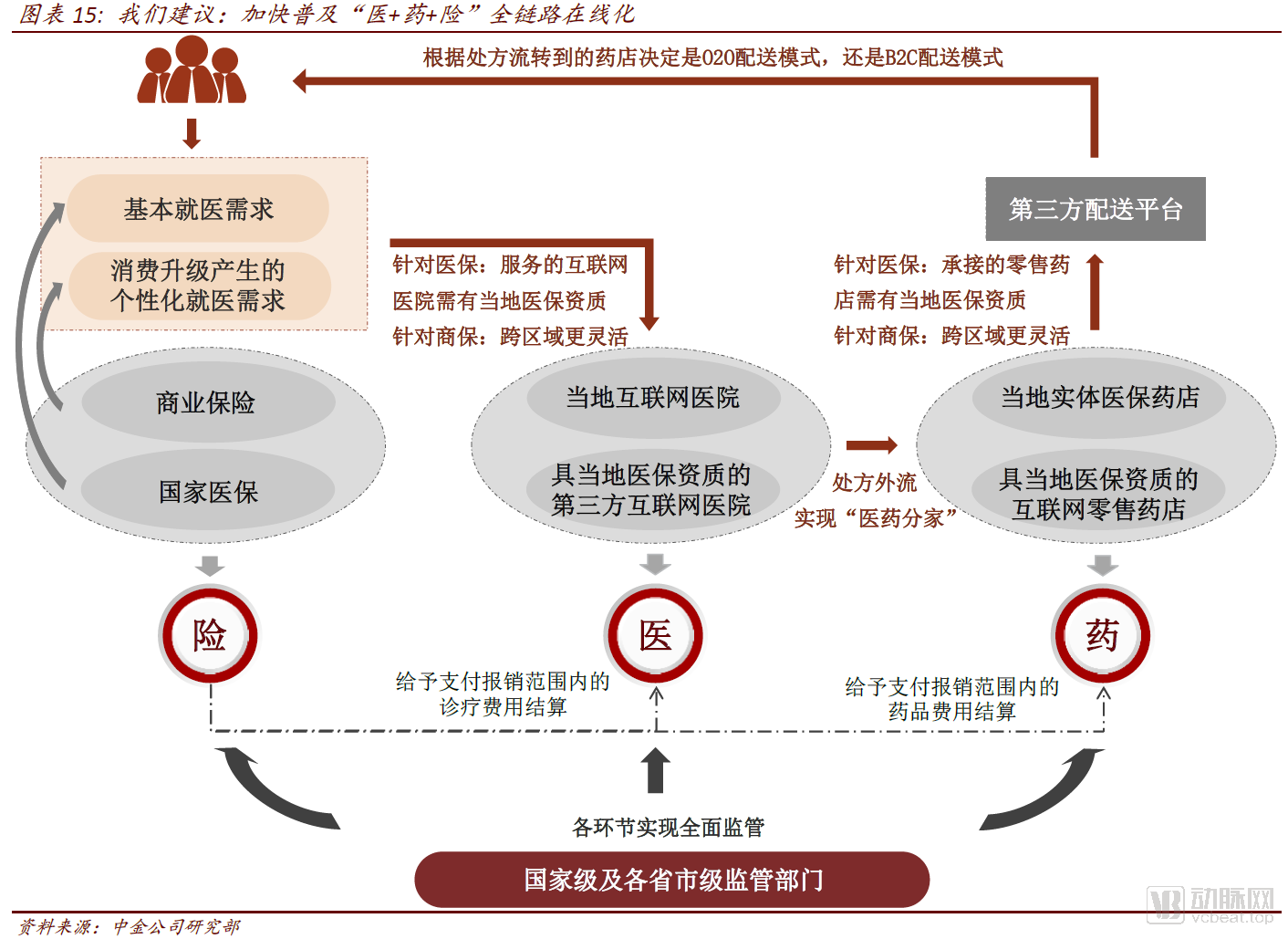
Drawing on the implementation plans already adopted by various provinces and municipalities, and addressing the persistent pain points faced by all stakeholders, we recommend accelerating the development of internet hospitals from four perspectives: “Internet + Healthcare,” “Internet + Pharmaceuticals,” “Internet + Insurance,” and “Internet + Regulation.” This will expedite the full online integration of “healthcare + pharmaceuticals + insurance” for common and chronic diseases.
“Internet + Healthcare”: Accelerating the Development of Internet Hospitals by Physical Medical Institutions
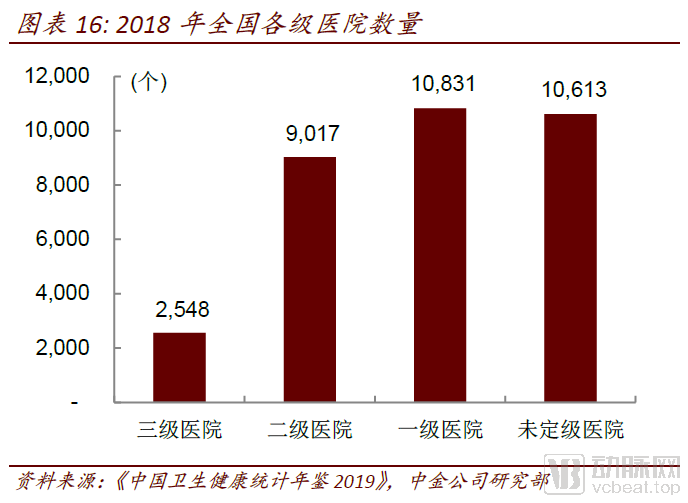
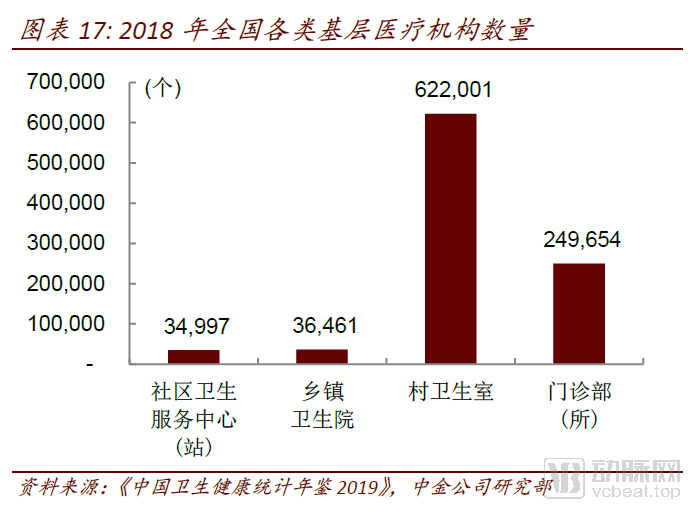
As of the end of 2018, there were 2,548 tertiary hospitals and 9,017 secondary hospitals in China, along with 21,000 other hospitals and 943,000 primary healthcare institutions. A large number of medical institutions lack the capacity to build and operate internet hospitals, and many provinces and cities have not yet opened up approval for internet hospital qualifications. Consequently, it is difficult for a vast number of chronic disease patients across China to access online diagnosis and treatment solely through local medical institutions. We believe that provinces and cities with the necessary conditions should accelerate the approval of internet hospital qualifications and speed up the development of internet hospitals by local physical medical institutions. For primary care and remote areas, if local medical institutions face difficulties in building their own internet hospitals, it is recommended to leverage medical consortia or third-party internet hospitals to provide services.
“Internet + Pharmaceuticals”: Industrial and Retail Enterprises Accelerate Omnichannel Expansion
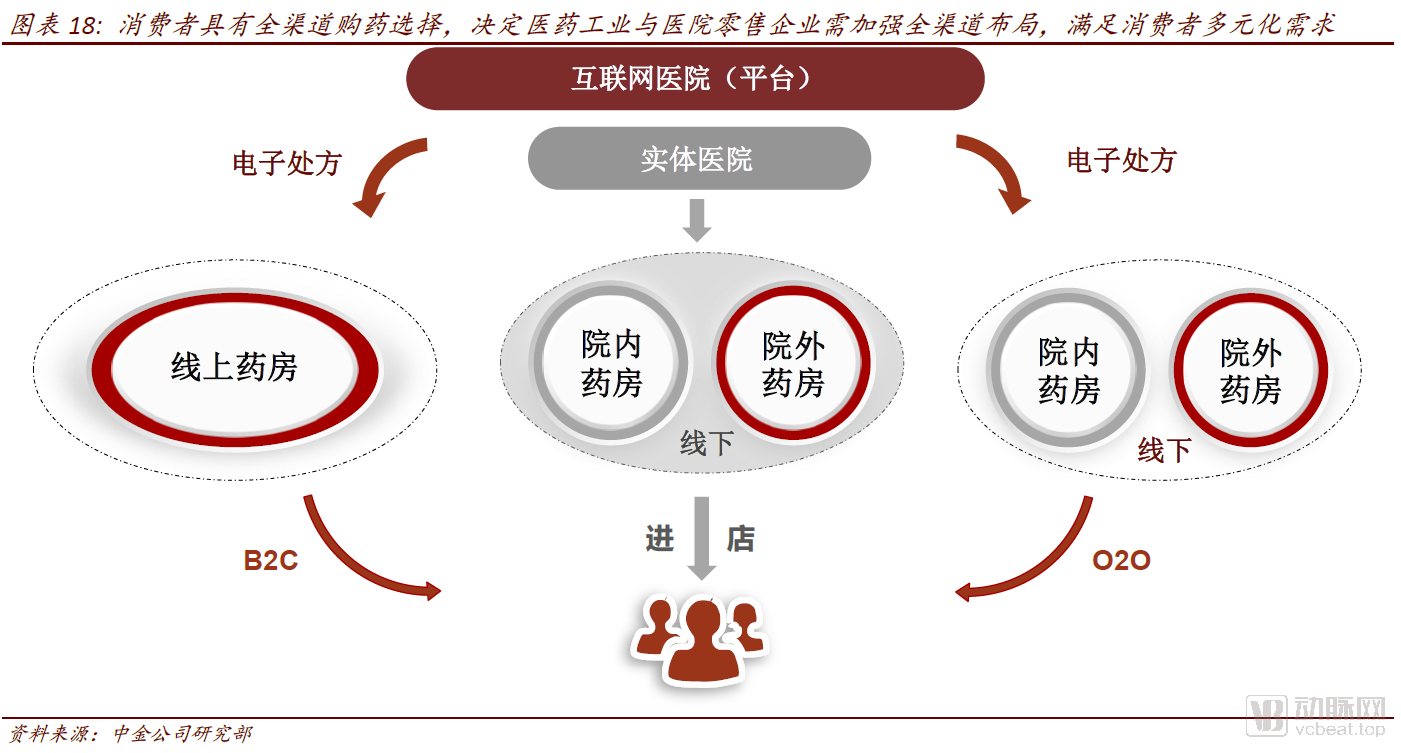
From the consumer perspective, the development of full-link online integration of “medical services + pharmaceuticals + insurance” has further diversified consumers’ choices in medication purchasing scenarios: they can choose to purchase medications at offline physical stores; opt for O2O (Online-to-Offline) channels; or select B2C (Business-to-Consumer) platforms. We believe that in this consumer-centric era, pharmaceutical manufacturers and retail enterprises need to accelerate their omnichannel layout, streamline product supply chains across all domains and channels, and better meet consumers’ medication needs.
“Internet + Insurance”: Accelerating the Construction of Medical Insurance Information Platforms Across Regions
The comprehensive adoption of online medical insurance payments requires the integration and interoperability of local healthcare security information systems, as well as data connectivity and sharing with relevant institutions. Therefore, the development of local healthcare security informatization platforms and the accelerated nationwide promotion and application of electronic medical insurance vouchers not only facilitate online medical insurance payments for patients with common and chronic diseases across China, but also enhance regulatory oversight and control over medical insurance accounts.
1) Accelerate the integration of the medical insurance information platform with in-hospital and out-of-hospital institutions: Achieving interoperability and sharing of healthcare service information facilitates the comprehensive coordinated management of medical insurance accounts for all medical institutions and retail pharmacies within a region by medical insurance authorities. The real-time nature of data generation, retention, and flow enables regulatory bodies to implement real-time oversight and proactive cost containment for medical insurance accounts.
2) Accelerate the integration of the medical insurance information platform with the “Internet + Healthcare + Pharmaceuticals” model: Data generated by “Internet + Healthcare + Pharmaceuticals” services are fully traceable, queryable, and auditable. As online user data accumulate, individual profiles become more distinct (e.g., medical insurance cards can be linked to names, ID numbers, mobile phone numbers, online payment accounts, bank card numbers, location information, etc.), which helps healthcare security authorities prevent fraudulent use of medical insurance cards in offline settings due to information asymmetry during regulatory oversight.
Based on existing models, the primary scenario involves eligible local patients accessing fully online “medical care + pharmaceuticals + insurance” services for specific conditions through locally qualified physical medical institutions. The service framework is anchored by local physical medical institutions with internet hospital credentials, supported by local offline retail pharmacies with corresponding medical insurance qualifications, and facilitated by qualified third-party O2O delivery providers; meanwhile, the local medical insurance system remains largely unchanged.
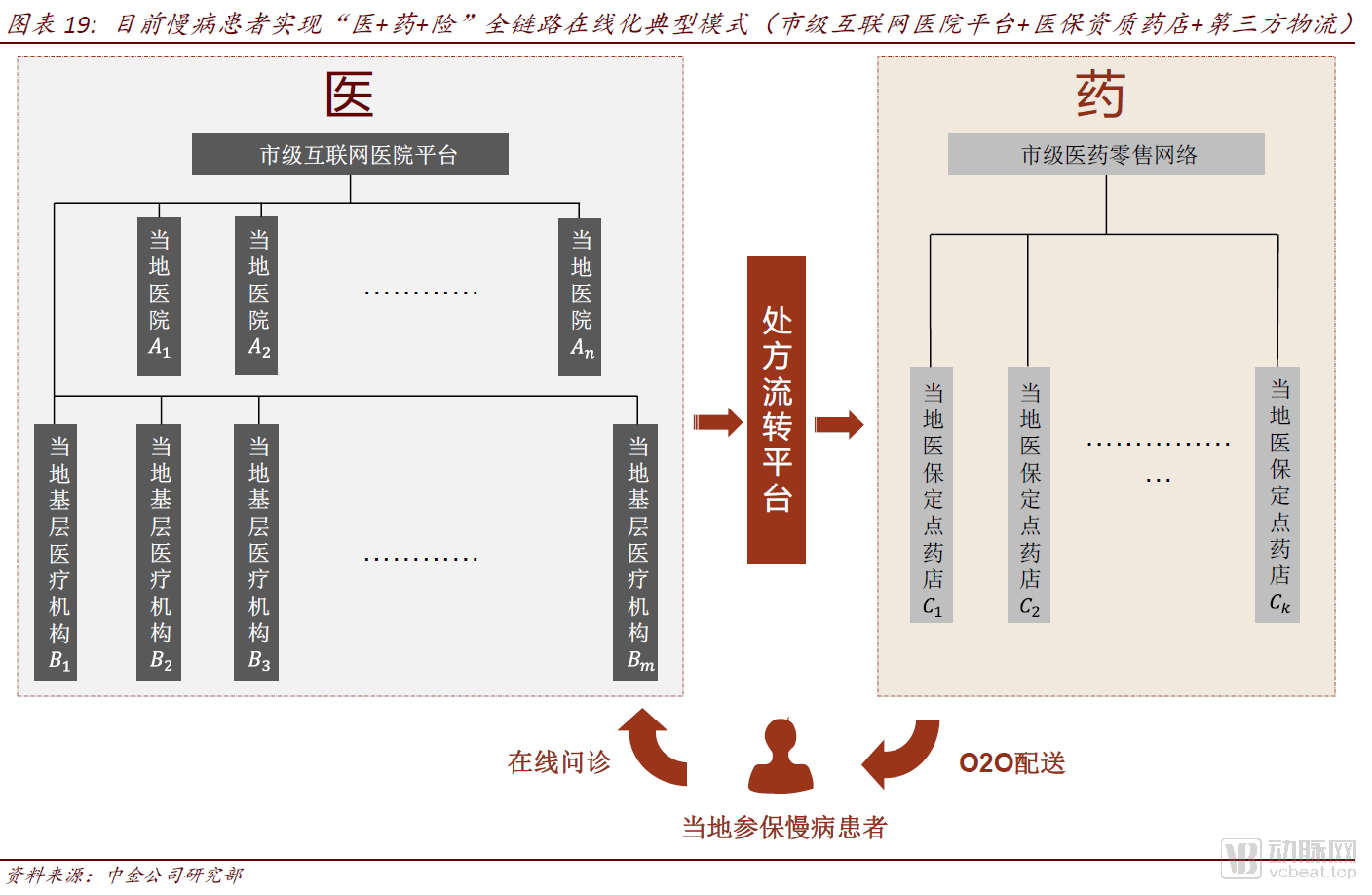
We believe that as the construction of information platforms by various departments, including medical insurance agencies, healthcare institutions, and retail pharmacies, advances across different regions, municipal-level internet healthcare platforms will integrate both "service and regulation." This integration is expected to significantly enhance the regulatory capabilities of supervisory authorities. Therefore, we recommend granting third-party internet hospitals (platforms) and third-party online pharmaceutical retailers the same medical insurance policy support as their offline counterparts, provided that they remain under controllable and manageable conditions.
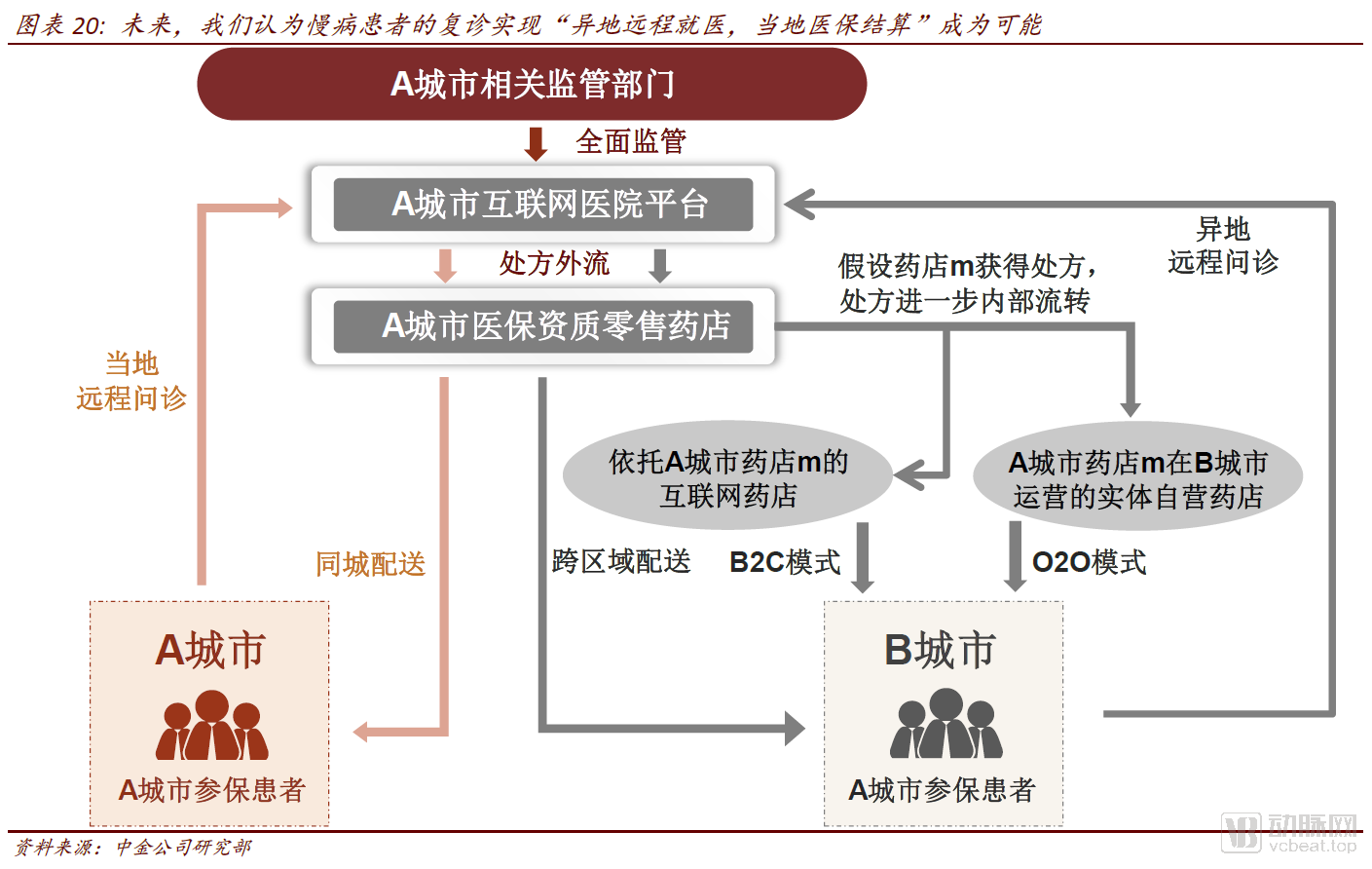
Meanwhile, we believe that the further application of Health-tech is expected to enable follow-up visits for patients with chronic diseases through “remote cross-regional consultations with local medical insurance settlement.” The core conditions for achieving this are as follows:
1) Patient: For patients with chronic diseases who have had their initial diagnosis locally and are enrolled in the local insurance scheme;
2) Internet Hospital: for local physical medical institutions that have obtained qualifications for internet hospitals; and, in the future, as regulatory capabilities improve, third-party internet hospitals (platforms) that comply with local practice regulations for internet hospitals may also be included;
3) Retail Pharmacies: For brick-and-mortar pharmacies that have obtained local medical insurance designation and prescription circulation qualifications, this model enables the sale of medications to other regions, direct cross-regional delivery, or operates as an online pharmacy that applies for medical insurance designation by leveraging its affiliated local brick-and-mortar pharmacy (in January 2020, the National Healthcare Security Administration mentioned in the Interim Measures for the Administration of Medical Insurance Designation for Medical Institutions (Draft for Comments) and the Interim Measures for the Administration of Medical Insurance Designation for Retail Pharmacies (Draft for Comments) that online pharmacies may apply for medical insurance designation by relying on their physical counterparts), or establishes self-operated brick-and-mortar pharmacies in other regions with real-time data connectivity to facilitate internal prescription circulation.
4) Regulation: It is necessary to ensure that services on internet healthcare platforms are controllable and manageable. Furthermore, technologies such as blockchain can be leveraged to achieve full-process traceability and uniqueness of prescriptions. Meanwhile, the use of traceability codes enables end-to-end tracking of pharmaceuticals, safeguarding patient medication safety across multiple stages.
“Internet + Supervision”: Strengthening Regulatory Oversight Across All Stages of the “Internet + Healthcare” Sector
Given that “Internet + Healthcare” is still in the process of development, the emergence of numerous new models presents more challenging tests for regulators. It is necessary to leverage technological means to comprehensively strengthen regulation over all aspects of the “Internet +” sector, including online consultations, pharmaceutical sales, medical insurance payments, and drug delivery, as well as personal data security.
1) Diagnosis and Treatment Process: We believe that third-party platform enterprises need to strengthen the qualification review and management of physicians and pharmacists providing online services. Meanwhile, supervision over prescription issuance by physicians and prescription review by pharmacists in online diagnosis and treatment processes should be enhanced. It is recommended that internet hospitals where these physicians and pharmacists practice adopt periodic random sampling and re-evaluation methods to audit prescriptions, thereby raising the awareness and sense of responsibility among prescribing physicians and reviewing pharmacists regarding drug prescriptions, while also strengthening safeguards for medication safety among patients with chronic diseases.
2) Pharmaceutical Sales SegmentWe believe that third-party platform enterprises need to strengthen the qualification review of merchants listed on their platforms, as well as enhance supervision over online drug sales and other related processes. Given that safety concerns permeate the entire pharmaceutical distribution and sales system, we consider it worthwhile to establish a full-process traceability system for online drug sales. This would ensure that information at every stage—from manufacturing and factory release to final delivery to patients—is accurate, complete, and traceable.
3) Medical Insurance Cost Control Phase: We believe that with the gradual opening of online payment for medical insurance, real-time monitoring of medical insurance supervision is expected to be achieved, making it possible to actively control costs through technical means and effectively prevent insurance fraud.
4) Personal Data Security: The inherent nature of “Internet Plus” healthcare means that patients leave behind substantial amounts of personal information and data across various stages, including searching for medical services, consulting with physicians, purchasing medications, and drug delivery. Consequently, we believe that regulatory oversight of patient data security warrants significant attention. Relevant enterprises must strictly comply with laws and regulations concerning information security and the confidentiality of medical data, properly safeguard patient information, and refrain from illegally trading or disclosing such information.
What Profound Impacts Will the Development of “Internet + Healthcare” Bring After the End of the Pandemic?
We believe that the epidemic has significantly cultivated the habit of seeking medical consultations and purchasing medications via digital platforms among the general public. Meanwhile, physical medical institutions across China are continuously advancing the development of internet hospitals, which will have a profound impact on the pharmaceutical and healthcare industry.
► From a Medical Perspective: We believe that local governments and medical institutions may place greater emphasis on the development of the “Internet + Healthcare” sector. In the future, the construction of internet hospitals across various regions is expected to accelerate, along with the establishment of provincial- and municipal-level internet healthcare service platforms. As the operational capabilities of internet hospitals improve, we anticipate that the development and functioning of medical consortia will become smoother, thereby facilitating the implementation of tiered diagnosis and treatment, optimizing resource allocation, and enhancing the accessibility of healthcare services in central and western regions, impoverished rural areas, and remote border regions.
► From the Perspective of “Drugs”: We believe that as the full online integration of “medical care + pharmaceuticals + insurance” for patients with common and chronic diseases advances, the pace of prescription outflow is likely to accelerate, thereby speeding up the expansion of the pharmaceutical retail market. Retail pharmacies that connect to prescription circulation platforms within their regions, possess both wholesale and retail qualifications, and can meet the product supply needs of local medical institutions are expected to benefit more significantly. We anticipate that while the retail market expands, traditional brick-and-mortar pharmacies may face potential pressure from declining foot traffic. On one hand, young consumers can meet their medication needs for common ailments through O2O (Online-to-Offline) services; on the other hand, patients with chronic diseases (primarily the elderly) will have reduced need to visit physical stores due to the fully online “medical care + pharmaceuticals + insurance” model, making the service-oriented transformation of pharmacies urgent. Furthermore, we believe that as national regulations on pharmacies tighten and new pharmaceutical retail enterprises continue to emerge, small and medium-sized pharmacies will face increased survival pressures. This is expected to accelerate consolidation in the pharmaceutical retail market and drive higher market concentration, which in turn may lead to the rise of branded OTC companies that previously suffered from low industry concentration due to fragmented terminals and terminal interception practices.
► From the perspective of “risk”: We believe that the National Healthcare Security Administration may increase its investment in the development of national and local healthcare security information platforms, promote online payment for medical insurance, leverage technological means to achieve an integrated “service + supervision” model for more real-time and controllable oversight, and accelerate the adoption of universal electronic medical insurance vouchers and electronic health records.
Legal Disclaimer
General Disclaimer
This report is solely a summary of previously published reports by China International Capital Corporation Limited (which has obtained approval from the China Securities Regulatory Commission to engage in securities investment advisory business). The information contained herein is derived from public sources that we consider reliable; however, China International Capital Corporation Limited and its affiliates (collectively referred to as “CICC”) make no representations or warranties regarding the accuracy or completeness of such information. The information, opinions, and other content contained in this report are for reference purposes only and do not constitute an offer or solicitation to buy or sell any securities. Such information and opinions do not take into account the specific investment objectives, financial conditions, or particular needs of the recipients of this report and shall not be construed as a personal recommendation to any person at any time. Recipients of this report should independently evaluate the information and opinions contained herein and should simultaneously consider their own investment objectives, financial conditions, and particular needs. Where necessary, recipients should seek professional advice on legal, commercial, financial, tax, and other matters. CICC and/or its affiliated personnel shall not bear any legal liability for any consequences arising from reliance on or use of this report.
The opinions, assessments, and forecasts contained in this report represent only the views and judgments as of the date of publication. Such opinions, assessments, and forecasts are subject to change at any time without prior notice. Past performance should not be regarded as an indication or guarantee of future results. CICC may issue other research reports with opinions, assessments, and forecasts that are inconsistent with those contained in this report at different times.
This summary of the report may be republished with a delay compared to the officially released version, and may become inaccurate or invalid due to changes in circumstances or other factors after the report’s release date. CICC may issue other research reports at different times that contain information, views, or data inconsistent with those presented in this report. Sales personnel, traders, and other professionals of CICC may orally or in writing provide market commentaries and/or trading views that differ from the opinions and recommendations contained in this report, based on different assumptions, standards, and analytical methods. CICC assumes no obligation to update inaccurate or outdated information, views, or data, and will not provide separate notice when making changes or updates to such information. CICC makes no express or implied representations or warranties regarding the fairness, accuracy, completeness, reasonableness, or timeliness of the information, views, forecasts, or valuations contained in this report.
This report is provided in Hong Kong by CICC Hong Kong Securities Limited, which is regulated by the Securities and Futures Commission of Hong Kong.
This report is provided in Singapore by China International Capital Corporation (Singapore) Pte. Ltd. (“CICC Singapore”), which is regulated by the Monetary Authority of Singapore, to accredited investors and/or institutional investors as defined under the Securities and Futures Act and the Financial Advisers Act of Singapore. In providing this report to such investors, the relevant financial adviser is exempt from the requirement to disclose any interest or any interest in securities held by it or its representatives under Section 36 of the Financial Advisers Act of Singapore.
This report is provided in the United Kingdom by China International Capital Corporation (UK) Limited (“CICC UK”), which is authorised and regulated by the Financial Conduct Authority. The investments and services to which this report relates are available only to persons who fall within the categories specified in Articles 19(5), 38, 47 and 49 of the Financial Services and Markets Act 2000 (Financial Promotion) Order 2005. This report is not intended for retail clients. In other European Economic Area countries, this report is directed at persons who are considered professional investors (or equivalent) under their respective national laws.
The content of this report may be provided in other countries or regions in accordance with their respective laws, regulations, and regulatory requirements.
Special Notice
To the extent permitted by law, CICC may hold positions in the securities issued by the companies mentioned in this report and engage in trading activities, and may also provide or strive to provide investment banking services to these companies. Therefore, recipients of this report should take into account that CICC and/or its relevant personnel may have potential conflicts of interest that could affect the objectivity of the views expressed in this report. This report should not be regarded as a basis for making investment or other decisions.
For disclosures related to the specific companies mentioned in this report, please visit https://research.cicc.com/footer/disclosures, or refer to the recently published specific research reports on these companies.
The copyright of this report is solely owned by CICC. Without written permission, no institution or individual may forward, reproduce, copy, publish, distribute, or cite it in any form.