

HeRui Gene Unveils "Large Panel 654" Tumor Detection Product Targeting a Market Exceeding RMB 100 Billion
The pandemic has brought a genetic technology into the public spotlight: nucleic acid testing.
All living organisms rely on two fundamental substances: DNA and proteins. Even the simplest form, such as the novel coronavirus, is no exception. The virus can be identified by recognizing specific segments of its genetic material. This task is both simple and complex: while one can recognize a person by their face, would it still be possible to accurately identify them by looking only at their eyes?
First-generation gene testing technologies, represented by PCR, are akin to recognizing a person by their face: they have a single, straightforward objective, identifying only whether the target is present or absent. Although the underlying technical principles are simple, these methods offer high development efficiency and rapid detection.
Some institutions that have long been engaged in basic scientific research and third-party diagnostic services, such as BGI Genomics and Dian Diagnostics, were able to rapidly develop COVID-19 test kits, which is attributable to their extensive experience in similar fields.
However, PCR technology struggles when faced with more complex gene identification tasks. For instance, searching for lung cancer-related genes within human DNA can be likened to finding a specific individual in a megacity like Beijing or Shanghai, while also requiring comprehensive, high-resolution details such as photographs of one ear, an eyebrow, and a wrinkle at the corner of the eye—the difficulty is self-evident.
Next-generation sequencing (NGS), the second-generation gene sequencing technology, has made it possible to identify such genes. In recent years, companies have successively developed tumor genetic testing products capable of detecting several specific gene segments. Since the second half of 2018, the National Medical Products Administration has approved six such products in succession.
However, tumor detection kits that target only a few gene combinations have their limitations. The human body and disease conditions are complex; the causes of tumors are not limited to just a few factors, and actionable treatment options such as chemotherapy and immunotherapy continue to emerge. This is akin to the rising prevalence of “internet celebrity faces” today: if one identifies individuals solely based on large beautiful eyes, long hair, and a straight nose, one might end up with hundreds of indistinguishable matches.
Developing testing products that cover more genetic loci to achieve more precise identification is the shared dream of all companies engaged in next-generation sequencing.
Huirui Gene has taken the lead in this area. On July 14, Huirui Gene unveiled its new comprehensive genomic profiling product for solid tumors, the “He Quan An” large panel (654 genes), to the public.
In the field of genetic testing, a "panel" refers to a combination comprising varying numbers of genes. Combinations consisting of only a few genes are commonly referred to as small panels, whereas those generally encompassing hundreds of genes are termed large panels.
The rationale for testing a broader panel of genes lies in the profound heterogeneity of cancer.
Take lung cancer, which has the highest incidence rate in China, as an example. The general public is only aware that malignant tumors arising in the lungs are termed lung cancer. However, modern medicine classifies lung cancer into small cell lung cancer (SCLC) and non-small cell lung cancer (NSCLC) based on differing etiologies. NSCLC further includes squamous cell carcinoma, adenocarcinoma, and large cell carcinoma, among others. Currently, oncology has entered the era of molecular subtyping, where cancers are categorized into distinct types according to specific genetic variations. Cancer is no longer regarded as a single disease but rather as a constellation of various diseases.
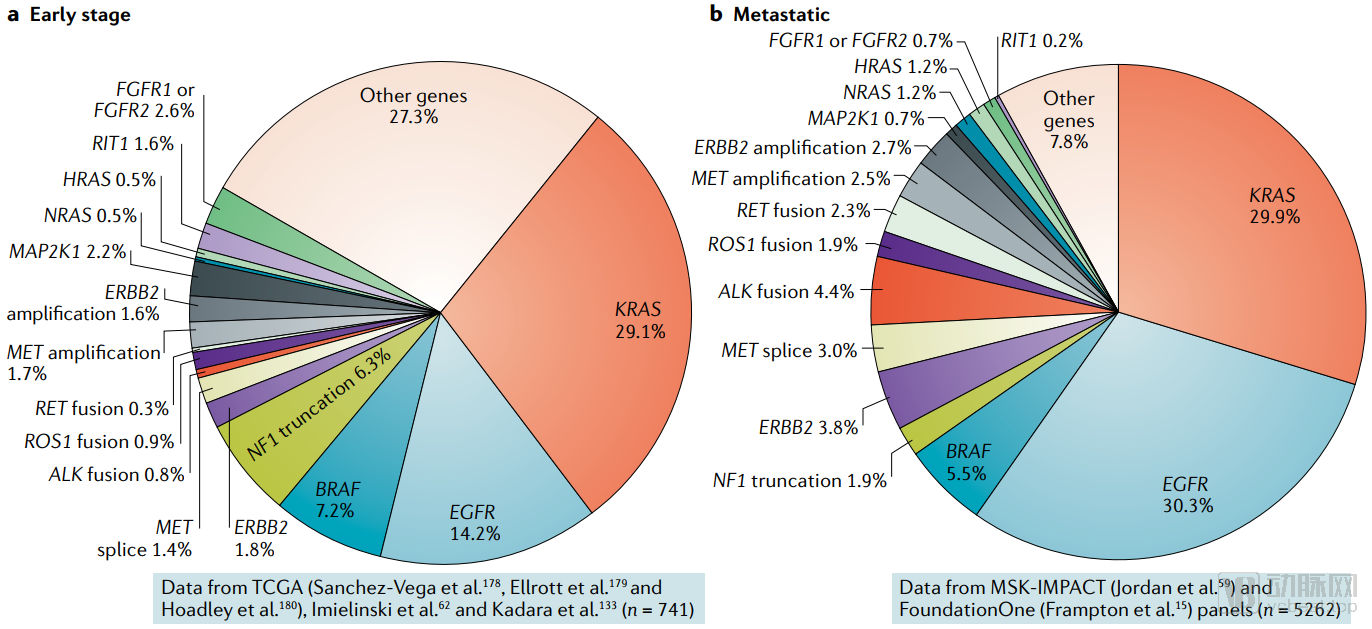
Molecular Subtyping of Lung Adenocarcinoma
Since the 21st century, various targeted cancer therapies developed have essentially been “weapons” specifically designed for different molecular subtypes of cancer. To ensure precise treatment, it is essential first to identify the specific molecular subtype of the disease; otherwise, targeted therapy will be ineffective. This not only results in unnecessary financial burden for patients but also delays the critical window for effective treatment.
Molecular subtyping of cancer requires genetic testing.
Small-panel testing can accurately identify gene mutations in several common tumor drug targets at a relatively low cost. In most scenarios, it meets the needs of clinical diagnosis and enables physicians to guide medication with precision.
However, the mechanisms underlying tumorigenesis and tumor progression are complex. With the deepening of research into tumor genomics, an increasing number of genes and biomarkers associated with tumor therapy have been identified. As achieving precise molecular subtyping of tumors requires the detection of a growing number of genes and variant types, the clinical importance of large-panel testing has become increasingly prominent.
Previously, large-panel testing held limited clinical significance because, even with comprehensive genomic insights, there were often no available therapeutic options. Today, as an ever-growing array of oncology drugs and treatment modalities emerges, clinicians find themselves equipped with more “weapons” yet plagued by “choice anxiety.”
Certainly, the combination of several small-panel tests can also help physicians identify the appropriate “weapons.” However, whether patients can tolerate multiple tissue biopsies and whether they can afford the waiting time are both considerations that physicians must take into account.
The ability to achieve comprehensive, multi-dimensional detection of various tumors in a single test is a requirement set by the U.S. FDA for genetic testing companies. The concept of developing large-panel tests has been around for a long time. To date, only three large-panel sequencing products have been approved for market launch by the U.S. FDA worldwide: FoundationOne CDx, MSK-IMPACT, and Omics Core. No large-panel products have yet been approved in China.
Large panels can only serve as effective “weapons” for patients and physicians when they provide sufficiently broad coverage of target genes. The utility of these “weapons” is further reflected in the sensitivity and specificity of the assay. Currently, nucleic acid amplification is required during genetic testing, and errors may be introduced at every step. From nucleic acid extraction and sequencing library preparation to sequence reading, each stage can contribute to detection errors. It is essential to filter out artifactual mutations caused by such errors, accurately identify true patient-specific mutations, and balance both the breadth of gene coverage and the accuracy of detection. Precisely identifying hundreds of genes demands robust technical capabilities and stringent quality control.
It can be said that large-panel testing only emerges when therapeutic drugs, diagnostic technologies, and the physician-patient philosophy have all advanced to a certain level. Berry Oncology stands precisely at the confluence of these three advancing fronts.
In 2017, when Huirui Gene was spun off from Berry Genomics’ oncology division, few outsiders knew what Huirui Gene actually did.
The Human Genome Project, a grand endeavor spanning 13 years, claimed to have deciphered the “Book of Life” containing the human genetic code. However, genetic testing technologies, particularly high-throughput sequencing, remained largely confined to scientific research for a long time, with minimal progress in their clinical application for identifying tumor gene fragments over the years.
Huirui Genomics was founded with the determination to tackle challenging problems. Over the past few years, the company has been engaged in fundamental research, consistently investing substantial amounts in R&D annually. Meanwhile, Huirui Genomics has adopted a forward-looking strategy in its oncology business, entering the cutting-edge field of tumor gene testing—particularly early cancer screening—at an early stage.
The field of genetic testing has never ceased its research into bodily fluids such as blood. Theoretically, minute fragments of DNA from deceased cancer cells circulate in the bloodstream. If these DNA markers can be used to detect early signs of tumors before large-scale tumor formation and metastasis occur, there is hope for achieving early intervention and treatment.
Theoretically straightforward, yet practically challenging. In the very early stages of tumorigenesis, the quantity of cell-free DNA fragments derived from cancer cells is extremely low. Identifying these fragments and accurately determining the tumor’s origin from them represents a world-class technological pinnacle.
HeRui Genomics is tackling precisely such challenges, having set its sights from the outset on liver cancer, which has a high incidence rate in China.
In 2019, the PreCar project, jointly initiated by Helisense Genomics, the National Center for Liver Cancer Science, and Nanfang Hospital, released data from the first prospective cohort study of its kind worldwide on liver cancer. The findings confirmed that ultra-early warning of liver cancer can be achieved through a simple peripheral blood-based test. Compared with existing conventional diagnostic methods, the project team identified patients with ultra-early-stage liver cancer 6–12 months earlier than the current gold standard for diagnosis. These patients may experience a more than five-fold increase in their 5-year survival rate and have a significantly higher chance of cure.
This represents the most significant achievement in prospective cancer research in China. According to the detection performance reported by Genetron Health, more than 40% of early-onset liver cancer cases can be detected at an early stage.
In the latest national cancer statistics released by the National Cancer Center in January 2019, it was mentioned that there are as many as 370,000 new cases of liver cancer patients in China each year. If 40% of these cases could be detected through early screening, it might save the lives of hundreds of thousands of people.
In the future, tumor genetic testing may become a market sector worth over RMB 100 billion, and human approaches to combating cancer may undergo fundamental changes due to the application of genetic testing technologies.
The pioneering research conducted by Huirui Gene represents only a fraction of the full scope of tumor genetic testing. As Zhou Jun, General Manager of Huirui Gene, stated, “What we are doing now is just the tip of the iceberg; there is still a vast amount of work awaiting our collective efforts.”
Through its strategic layout in the oncology sector, Huirui Gene is weaving an extensive network for gene testing applications. In the long journey to explore the clinical application of the human genetic code, Huirui Gene has taken a leading position!