

Post-Pandemic Era Internet Healthcare Development Summit Held Online During the 2020 China Internet Conference
On July 25, the “2020 China Internet Conference – Summit on the Healthy Development of Internet Healthcare in the Post-Pandemic Era” grandly opened online. The conference was jointly hosted by the Internet Society of China, the Internet Medical Health Industry Alliance, and the National Internet+ Health Poverty Alleviation Promotion Group, with Baidu Health and Shilian Medical serving as strategic partners for the summit. Attendees included Mao Qun’an, Director of the Department of Planning, Development, and Informatization of the National Health Commission; Liu Yulin, Deputy Director of the Department of Information and Communications Development of the Ministry of Industry and Information Technology; Zhang Xuying, Deputy Director of the China Population and Development Research Center; and Wang Zhiqin, Vice President of the China Academy of Information and Communications Technology. The meeting was moderated by Wang Aihua, Deputy Chief Engineer of the China Academy of Information and Communications Technology.
The pandemic has catalyzed the development of China’s internet healthcare market, highlighting the urgent need for the construction of internet-based medical services. Centered on the theme “Internet Healthcare in the Post-Pandemic Era,” this conference brought together experts and scholars in smart healthcare, industry practitioners, and leaders from regulatory authorities. Participants engaged in discussions on key issues of concern to both industry insiders and outsiders, including development strategies, industry regulation, and standardization for internet healthcare in the post-pandemic era. They also explored topics such as normalized management, operations, service system development, and application innovation in internet healthcare. Mao Qunan, Director of the Department of Planning, Development, and Informatization under the National Health Commission, and Liu Yulin, Deputy Director of the Information and Communications Development Department under the Ministry of Industry and Information Technology, delivered opening remarks at the summit.
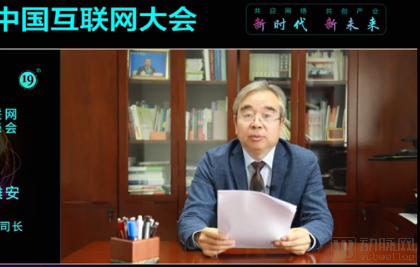
In his address, Director Mao Qun'an noted that during the pandemic, internet-based diagnosis and treatment services at hospitals affiliated with or under the administration of the National Health Commission increased 17-fold compared to the same period in 2019, while consultation services on certain third-party platforms surged more than 20-fold. In the post-pandemic era, internet healthcare should further consolidate and expand the practices adopted during the fight against the epidemic to enhance public satisfaction; secondly, it should further promote the integration of online and offline services. Emphasis should be placed on cultivating and building diverse internet healthcare capabilities to provide patients with continuous, end-to-end services; thirdly, it should further support and encourage pilot innovations. Based on the principles of encouraging innovation and adopting an inclusive yet prudent approach, support should be extended to all provinces, particularly the 11 demonstration provinces for "Internet + Healthcare." Fourthly, regulation and supervisory services should be further standardized and strengthened. Focusing on improving the standard system, regulating data collection, and enhancing cybersecurity, efforts should be made to strengthen regulatory capacity for internet healthcare and medical artificial intelligence services, promote the implementation of responsibilities for network information and data security within the health sector, and reinforce data security, medical ethics, and personal privacy protection.
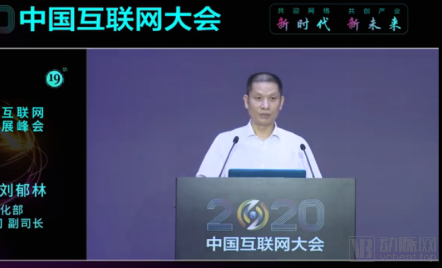
In his address, Deputy Director-General Liu Yulin drew upon the application of “Internet + Healthcare” in the previous phase and the development of new-generation information and communication technologies to propose recommendations for industry development from three aspects: improving new infrastructure, strengthening innovation-driven growth, and enhancing standard-led guidance. First, strengthen coordination and collaboration to improve the construction of new infrastructure for internet-based healthcare. Second, emphasize integrated innovation to help elevate the service quality of internet healthcare. Third, reinforce standard-led guidance by establishing a system of standards and evaluation for internet healthcare, thereby improving the standardization and normalization of healthcare services.
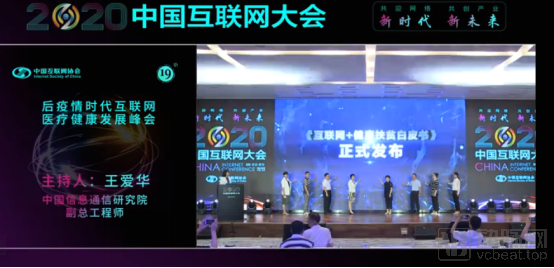
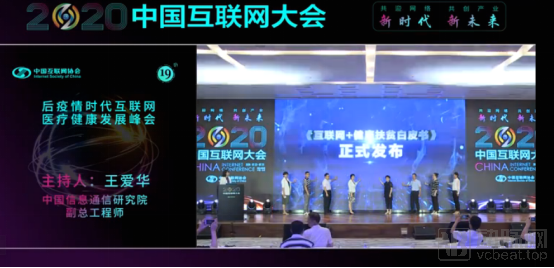
Led by the National Internet Plus Health Poverty Alleviation Promotion Group, more than ten related institutions and enterprises jointly released the White Paper on Internet Plus Health Poverty Alleviation at the conference. Zhang Xuying, Deputy Director of the China Population and Development Research Center, provided a detailed interpretation of the White Paper on behalf of the National Internet Plus Health Poverty Alleviation Promotion Group.
During the conference, Wang Zhiqin, Deputy President of the China Academy of Information and Communications Technology (CAICT), and Sun Hui, Deputy General Manager of CITIC Healthcare Industry Group, signed a strategic cooperation agreement on behalf of their respective institutions. The two parties will further strengthen collaboration in promoting the integration of industry and finance in internet healthcare, as well as fostering the aggregation and development of the “Internet+ Healthcare” industry.
During the fight against the epidemic, medical institutions at all levels across China actively supported Wuhan’s anti-epidemic efforts. This conference also invited representatives from the front lines of the epidemic response, such as Liu Yun, Vice President of Jiangsu Province People’s Hospital, and Lv Yongtao, President of Shandong Provincial Third Hospital, along with Lu Qingjun, Director of the National Telemedicine and Internet Medical Center. They delivered insightful reports on topics including the construction, management, and innovation of internet hospitals, as well as telemedicine.
Vice President Liu Yun shared insights on the development of internet-based services at Jiangsu Province Hospital. She analyzed that hospital service models are undergoing transformation, with technological advancements making internet-based medical services feasible. Strengthening support for the development of internet healthcare across three dimensions—policy, security, and services—and establishing a diversified, interconnected architecture will lay the foundation for future medical development. The new service model, built upon big data, artificial intelligence, and network technologies, will serve as the cornerstone of this evolution.
Director Lu Qingjun of the National Telemedicine and Internet Medicine Center delivered a keynote address titled “5G New Infrastructure Supporting ‘Internet+’ Medical Services.” He stated that hospital development in China is entering the phase of smart hospital construction. As a foundational element for growth, 5G new infrastructure aligns closely with the needs of smart healthcare. Telemedicine, internet hospitals, tiered diagnosis and treatment, and smart hospitals will all achieve greater development potential on this foundation, thereby providing stronger support for the Healthy China initiative.
Professor Lu Yongtao, President of Shandong Provincial Third Hospital, shared the construction experience and achievements of the “145 Model” for their internet hospital. As one of the first batch of internet hospitals in Shandong Province, it has implemented comprehensive practices across management, standards, regulations, applications, and operations, establishing a benchmark for internet hospitals in the province. Since launching online fever clinics on Chinese New Year’s Eve in 2019, more than 70 doctors from the hospital have collectively conducted over 30,000 online consultations during the pandemic, contributing jointly to the fight against the outbreak. Currently, the development of the internet hospital at Shandong Provincial Third Hospital has entered a critical phase, requiring gradual and substantive implementation of various projects. The hospital hopes to engage in discussions and share experiences with colleagues from all sectors to co-develop internet hospitals and promote their collective advancement.
Yang Jianchun, Dean of Baidu Health Internet Hospital, analyzed the current challenges faced by internet healthcare enterprises and internet hospitals. He believes that China’s internet healthcare sector is still on its journey of development. During the pandemic, Baidu Health delivered over 1 billion authoritative science-based health education contents. Its internet healthcare strategy has evolved from connecting people with information to connecting people with services. In the future, Baidu Health will adopt a patient-centric approach, exploring healthcare services that connect individuals with a comprehensive health ecosystem.
Lai Yongchen, Deputy General Manager of Hainan Shilian Medical Health Big Data Co., Ltd., shared the company’s proactive explorations and initiatives in several key areas: establishing an ultra-high-definition (UHD) medical and health private network with nationwide coverage; supporting epidemic prevention and control efforts by aiding medical treatment, alleviating trauma, and delivering care; innovating service models to better serve the public; and building big data platforms to contribute to the “Healthy China” initiative. Shilian Medical’s overarching vision is to construct a nationwide UHD medical and health private network spanning provinces, cities, counties, townships, and villages across China, as well as a provincial-level UHD medical and health private network centered on the application of healthcare big data.
Although the conference was held online, enthusiasm for exchange remained high, with more than 2 million participants from various sectors joining via over 30 platforms. The experts’ insightful presentations and forward-looking perspectives provided valuable recommendations for the future development of internet-based healthcare. Looking ahead, there was a broad consensus on actively embracing emerging technologies and capabilities such as 5G and artificial intelligence, promoting the normalized, orderly, and healthy operation of internet-based and smart healthcare, and establishing a standardized system of industry norms.