

BoBeng FangZhou and Tsinghua University Co-Develop Non-Invasive Glucose Monitor, Targeting a Billion-Dollar Market
According toData released by the IDF (International Diabetes Federation), 2019In [year], the number of diagnosed diabetes patients in China reached1.16100 million people, plus 140 millionof the prediabetic population, the total number of diabetes-related individuals has exceeded 2.6 billion, becoming the country with the largest diabetic population in the world. By 2030In 20XX, the diabetic population in China will reach2.0hundred million, creating a vast diabetes market.
According to the "Digital Innovation Report on Diabetes Management" authored by VCBeat, the diabetes market primarily comprises the smart blood glucose meter market, the personalized services market, the oral hypoglycemic agents market, and the insulin market. The total potential market size is projected to reach RMB 134.9 billion in 2025, with the smart blood glucose meter segment accounting for approximately RMB 18.4 billion.
However, most blood glucose meters currently on the market require finger-prick blood sampling, resulting in low patient compliance and utilization rates. So, is there a non-invasive product capable of accurately measuring blood glucose? The answer is yes.
The non-invasive glucose monitor developed by Bobang Fangzhou Medical Technology (Beijing) Co., Ltd. (hereinafter referred to as “Bobang Fangzhou”) can non-invasively estimate blood glucose concentrations in adults. It is intended for home use by healthy individuals and patients with type 2 diabetes who are not undergoing insulin therapy, making it suitable for daily self-monitoring of blood glucose levels.
Qiu Zan, Chairman of Bobang Fangzhou, stated: “The non-invasive glucose meter achieves completely non-invasive measurement without requiring any consumables. This reduces the risk of infection and lowers the overall cost of self-managed blood glucose monitoring, while enabling continuous glucose monitoring.”
Bobang Fangzhou, formerly known as Beijing Sanlian Yonghui Medical Technology Co., Ltd., was established in 2005. It is a Chinese national high-tech enterprise integrating the research and development, production, and sales of high-end medical devices. It is reported that the non-invasive blood glucose meter project was jointly developed by Bobang Fangzhou and Tsinghua University. From R&D to clinical trials, the project has accumulated measurement data from tens of thousands of individuals, and its core technologies have been granted multiple national invention patents.
Tsinghua University has been conducting research on non-invasive blood glucose monitoring technology since 2002, refining the theoretical framework and algorithms of the Metabolic Heat Integration Method, and developing a non-invasive blood glucose meter based on this method. The fundamental principle is that the heat generated by human metabolism is positively correlated with blood glucose concentration and oxygen supply.
The research team uses monitoring devices such as temperature sensors, infrared sensors, humidity sensors, and optical measurement devices to digitize data on temperature, humidity, blood flow velocity, and blood oxygen saturation that reflect metabolic heat. They then calculate the glucose concentration by analyzing the functional relationship between the heat generated by metabolism and the glucose concentration and oxygen supply, ultimately obtaining the glucose concentration value.
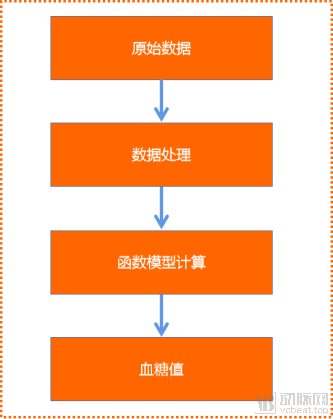
(Blood Glucose Measurement Process, Graphic by VCBeat)
Qiu Zan introduced, “The non-invasive glucose meter project originated in 2002 from the National 863 Program’s ‘Development of a Microsystem for Multi-Parameter Biochemical Detection in Whole Blood.’ After the completion of this project, Tsinghua University continued its research and successfully developed an engineering prototype of a non-invasive glucose meter in 2008. Subsequently, Tsinghua University collaborated with Bobang Fangzhou to develop the first-generation product in 2013, gradually transforming scientific achievements into commercial products.”
The decision to commercialize non-invasive glucose monitors was driven by Qiu Zan’s recognition of the pain points associated with finger-prick blood glucose testing: the invasive nature of this method reduces patient compliance and decreases the frequency of glucose monitoring. This, in turn, complicates diabetes management and imposes a significant economic burden on both patients and society.
After committing to the field of blood glucose monitoring, Bobang Fangzhou spent a decade finally achieving market approval for its non-invasive glucose meter:
In 2016, the first-generation product completed large-scale clinical trials;
In 2017, the product received special approval status for innovative medical devices from the National Medical Products Administration (NMPA).
In 2018, the product underwent a multicenter clinical trial;
In 2019, the product obtained a medical device registration certificate.
During this process, Bobang Fangzhou collaborated with medical institutions such as Peking University First Hospital, Peking University People’s Hospital, Peking Union Medical College Hospital, Shanghai Sixth People’s Hospital, Zhongda Hospital Southeast University, and Nanjing Drum Tower Hospital to conduct clinical trials, gaining recognition from both hospitals and physicians. Notably, in 2018, Bobang Fangzhou was approved as a National High-Tech Enterprise, further demonstrating that its efforts have been recognized by the state and society.
Compared to existing finger-prick blood glucose monitoring products on the market, the Bobang Fangzhou non-invasive glucometer utilizes multi-sensor integration technology to achieve non-invasive blood glucose measurement within one minute. Featuring a clip-on design, the device is simple and convenient to use, eliminating the risk of infection associated with skin puncture. Patients demonstrate good tolerance to this non-invasive glucometer, allowing for multiple daily tests. The device automatically stores measurement results and provides an intuitive display of blood glucose trends, thereby effectively enhancing the efficiency of blood glucose management and facilitating more precise control. Additionally, the main unit of the non-invasive glucometer measures only seven inches, making it compact and portable. It supports multiple user profiles and requires no consumables for testing, offering excellent cost-effectiveness.
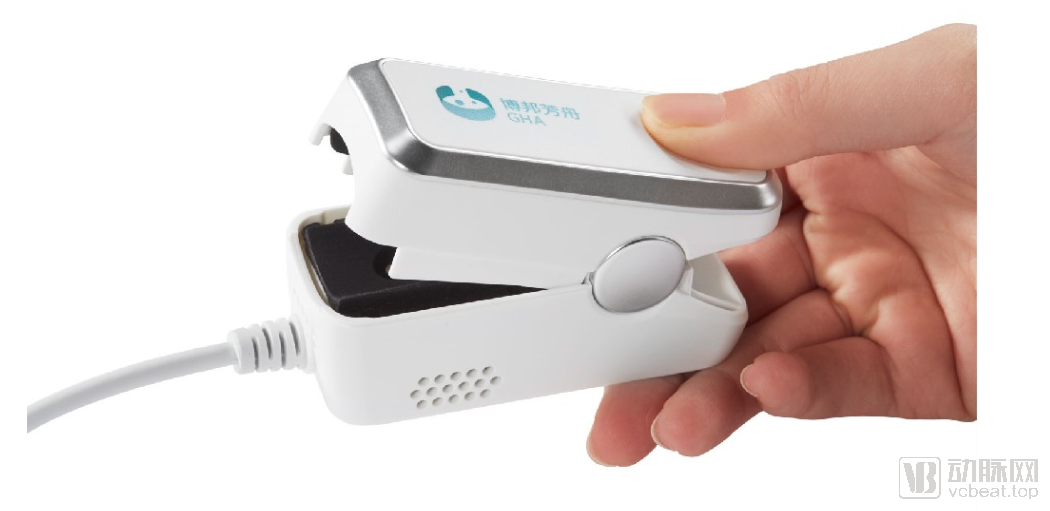
(Product wearing diagram, image from the company's official website)
In terms of accuracy, clinical trials have demonstrated that the non-invasive glucose meter achieves a concordance rate of 94.5% when compared with venous blood test results, and 94.4% when compared with capillary blood (fingerstick) test results, indicating high accuracy. Notably, as the mathematical modeling algorithms are employed, the precision of the measurements will further improve with an increasing sample size.
The non-invasive glucose monitor project took Tsinghua University 17 years from R&D to clinical registration, while Bobang Fangzhou underwent a ten-year development process. During this extended period of research and development, Bobang Fangzhou secured four national invention patents based on its core technologies. The technological leadership has been recognized by relevant national authorities, filling a gap in the specialized medical device sector both domestically and internationally.
Currently, Bobang Fangzhou has developed its second-generation non-invasive glucose meter, and the registration approval process has entered the stage of responding to supplementary requests. Qiu Zan revealed, “The second-generation non-invasive glucose meter is expected to be approved within this year, and market launch and sales activities will commence.”
In terms of product promotion, Bobang Fangzhou plans to collaborate with high-quality product distributors to boost sales. It is reported that Bobang Fangzhou has already entered into partnerships with leading domestic distributors and expects to launch its marketing campaigns in the second half of the year. Furthermore, adhering to a global strategy, Bobang Fangzhou aims to use the Chinese market as a starting point and gradually expand into North American and European markets. Currently, the company is preparing for FDA and CE certifications.
In 2019, Bobang Fangzhou obtained a Medical Device Production License. To handle large-volume orders, Bobang Fangzhou signed an entrusted production agreement with Yizhuang Futaijing Precision Electronics (Beijing) Co., Ltd., a wholly-owned subsidiary of Foxconn Group, under which the latter would be responsible for raw material inspection, production process control, and product release for Bobang Fangzhou. It is reported that Bobang Fangzhou is actively working to include its collaboration with Foxconn in the first batch of pilot programs for the Medical Device Registrant System administered by the Beijing Municipal Medical Products Administration.
Regarding future plans, Bobang Fangzhou intends to develop its non-invasive glucose meter toward miniaturization and portability, while also researching real-time continuous monitoring solutions. “We will also leverage artificial intelligence technology to expand the scope of detection and improve the accuracy of test results,” added Qiu Zan.
Currently, Bobang Fangzhou is undertaking a new round of financing, aiming to raise RMB 150–200 million. The funds will be primarily used to expand sales channels, increase R&D investment, accelerate the development of new products, and prepare for overseas market expansion.

Beijing Chaoshan Capital Investment Management Co., Ltd. operates “Jianyi Club,” China’s most active investor community, which was established in 2011. The company positions itself as a service platform leveraging its investor community. Its shareholders include prominent angel investor Wu Shichun, former Secretary-General of the Asset Management Association of China Jia Hongbo, Wang Zhimin, Chairman of Baodao Optical, and Jiu Wan, one of China’s first-generation angel investors. Through various activities organized by Jianyi Club, the company identifies high-quality projects for early-stage investment or services, and has invited Professor Sun Liying, former team leader of the U.S. FDA review division, to serve as Chief Medical Officer and project evaluator.
As of June 1, 2020, Jianyihui had organized more than 300 related events, assisted over 50 companies in securing financing, and built a pipeline of more than 300 high-quality post-Series A enterprises (primarily in the healthcare, cloud computing, big data, Internet of Things, artificial intelligence, and high-end equipment manufacturing sectors). It has also established collaborative ties with nearly 20 local governments. Currently, its implemented and profitable business lines include co-investment funds for projects, financial advisory services, and government relocation advisory services.